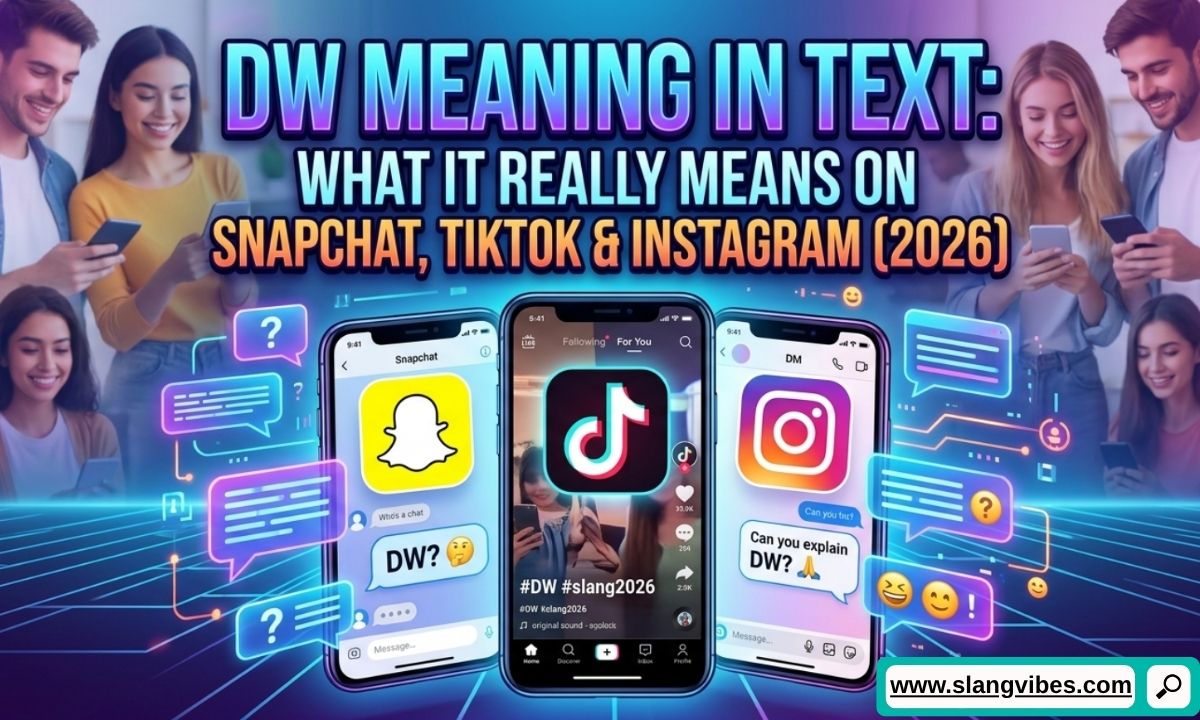
I texted my friend “I’m so sorry I forgot to call you back” at 11pm, heart in my throat. She replied two seconds later. Two letters. That’s it. “dw.” I stared at my screen longer than I’d like to admit, trying to figure out if she was actually okay with it or lowkey done with me. Turns out she was fine. More than fine. The DW meaning in text is something so simple, and yet so easy to overthink when you don’t know what you’re looking at.
If you’ve ever frozen up after reading those two letters in a message, you’re not alone. So let’s get into exactly what DW means, how it reads differently across Snapchat, TikTok, and Instagram, and when to use it without putting your foot in your mouth.
What Does DW Mean in Text? The Core Definition
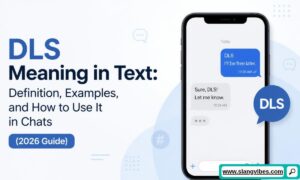
The DW meaning in text is almost always “Don’t Worry.” It’s a shorthand reassurance, a way of telling someone to breathe and stop stressing without writing out a full paragraph. People use it when they want to keep things light, move on quickly, or show that something isn’t a big deal.
Since the abbreviation is so short, it fits right into fast conversations where typing full sentences feels like too much effort. You’ll see it after apologies, during tense check-ins, or whenever someone wants to smooth things over without making a moment bigger than it needs to be.
Here are the most common situations where DW shows up:
- Someone apologizes for being late, and you reply “dw, take your time”
- A friend cancels plans and you say “dw, we can reschedule”
- Someone panics about a mistake, and you respond “dw, it’s already fixed”
Occasionally, DW stands for something else entirely. In online forums and parenting communities, it sometimes means “Dear Wife.” In Doctor Who fan spaces, it’s a shorthand for the show. However, in everyday texting, those meanings are rare. If you get a “dw” from your friend after a stressful moment, they almost certainly mean “Don’t Worry.”
DW Meaning in Text on Snapchat: Why It Hits Differently There
Snapchat has a specific culture around messaging. Because snaps disappear and conversations move fast, people on that platform tend to keep their words short and their tone casual. The DW meaning in text on Snapchat follows the same pattern as anywhere else, but the context adds a new layer.
Think about streaks. Someone forgets to send their daily snap, panics, and messages you “omg I’m so sorry I broke our streak.” You reply “dw lol.” On Snapchat, that reply doesn’t just mean “don’t worry.” It signals that the friendship is chill, that the streak doesn’t define your relationship, and that you’re not holding it against them. It’s doing a lot of emotional work in two letters.
The capitalization matters here too. Take a look at this:
| How It’s Written | How It Feels |
|---|---|
| dw | Warm, casual, friendly |
| DW | Neutral, clear, slightly more firm |
| DW. | Slightly cold, conversation might be closing |
| dw!! | Playful, reassuring, lighthearted |
| dw… | Might need a follow-up to check on them |
On Snapchat specifically, lowercase “dw” is the warmest version. It feels effortless, like the sender typed it without overthinking. That’s the vibe most people go for on that platform.
Example Conversation on Snapchat:
Alex: i totally forgot to open your snap yesterday i’m so sorry
Jordan: dw!! i didn’t even notice honestly
DW Meaning on TikTok: Slang, Captions, and Comment Culture
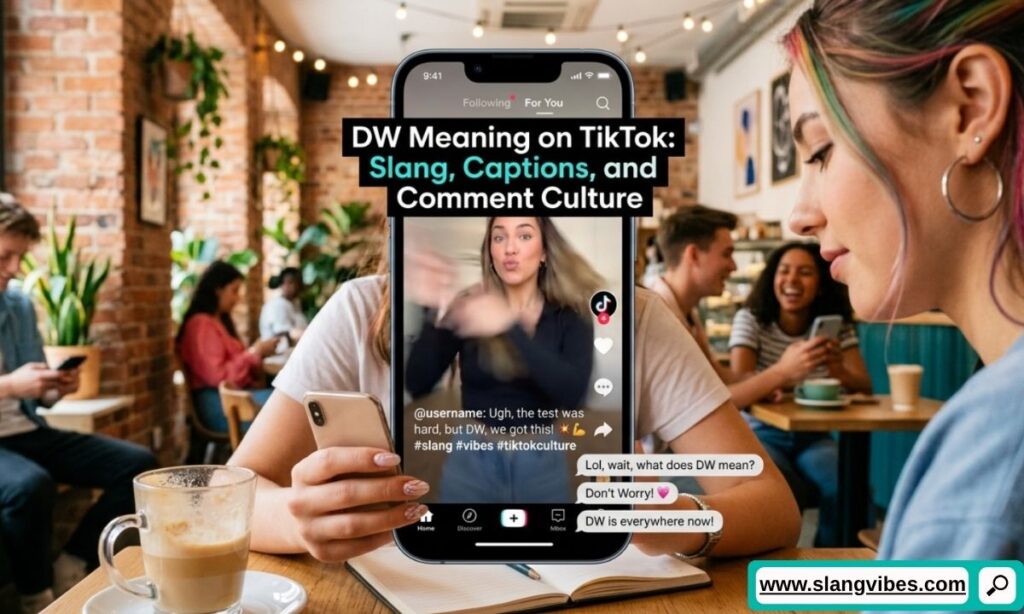
TikTok is where internet slang spreads faster than anywhere else online. So it’s no surprise that the DW meaning on TikTok shows up constantly, and not always in the way you’d expect.
Creators use DW in captions to reassure viewers before they even hit play. A cooking video might open with “dw it’s easier than it looks.” A skincare creator might caption a before photo with “dw it gets better.” In these cases, DW functions like a soft handshake: it lowers the viewer’s guard and pulls them in.
In the comment section, DW appears as comfort, agreement, or humor. When someone posts a stressed comment under a video, other users often reply with “dw you’re not the only one” or just “dw bestie.” It builds community fast.
Here’s where TikTok adds something the other platforms don’t: sarcastic DW. Because TikTok humor leans heavily on irony and dry delivery, you’ll see DW used in ways that mean the opposite of reassurance.
Read More : HG Mean in Text: What It Really Means in Messages (2026)
Example Conversation in TikTok Comments:
User 1: I’ve been doing this skincare routine wrong for two years
User 2: dw me too
User 3: dw we’re all disasters here
That’s sincere comfort. However, compare it to this:
Creator caption: “dw I definitely didn’t film this six times”
That’s sarcastic. The creator absolutely did film it six times. TikTok trained an entire generation to read DW in both directions, and the tone usually comes from the surrounding content.
DW Meaning on Instagram: DMs, Comments, and Group Chats
Instagram runs on a slightly more polished energy than Snapchat or TikTok. That said, DMs and comment sections are still casual spaces where the DW meaning on Instagram follows the same “Don’t Worry” rule.
In DMs, DW usually shows up after an apology or a small awkward moment. It keeps things moving without making the other person feel guilty. In comments, it often appears as public reassurance, especially under posts where someone shares a mistake or a rough day.
Group DMs add an interesting twist. When DW comes from one person in a group chat, it’s not always clear who it’s directed at. Because of that, people in group settings often add a name or tag: “dw [name], we’re not mad.” That specificity changes everything.
Here’s how emojis shift the meaning:
| DW + Emoji | What It Signals |
|---|---|
| dw 🙏 | Genuine, grateful tone |
| dw 😂 | Playful, no big deal |
| dw ❤️ | Warm, caring, emotional |
| dw 😐 | Might be a little passive-aggressive |
| dw 🙄 | Probably sarcastic or dismissive |
Example Instagram DM Conversation:
Maya: ugh I just realized I double-tapped your post from 2019 while stalking your page
Sam: dw I’ve done worse 😂 welcome to my archive
DW Slang Meaning by Tone: Sincere, Sarcastic, or Dismissive?
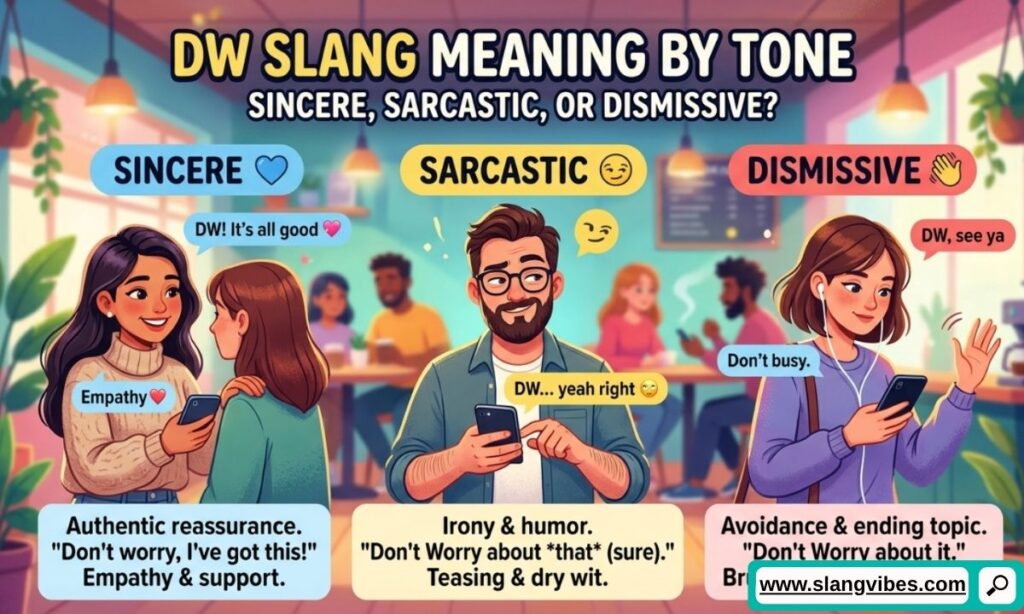
This is the section most articles on DW meaning in text completely skip. The word is the same. The tone is not.
The same two letters carry entirely different emotional weight depending on how they’re delivered, and knowing the difference helps you avoid misreading a message or sending the wrong signal yourself.
Sincere DW: This is the most common version. It’s warm, reassuring, and genuine. The sender actually wants you to feel better. You’ll usually see it alongside a follow-up message or an emoji that softens things further.
Sarcastic DW: This version shows up in humor-heavy conversations. The sender is being ironic, either making light of a shared struggle or gently teasing you. Context is everything here, and the relationship matters.
Dismissive DW: This is the version you need to watch out for. It shows up when someone wants to end a topic or shut down a conversation without engaging further. A period after it (“DW.”) or no follow-up message at all are signs the sender isn’t in a comforting headspace.
Example of All Three in Context:
Sincere:
“dw about the project, we’ll figure it out together”
Sarcastic:
“dw, I’m totally not stressed about this at all” (with a chaotic GIF)
Dismissive:
“DW.” (full stop, no follow-up)
If you’re on the receiving end of that last one and something feels off, a simple “are you sure everything’s okay?” goes a long way.
How to Reply to DW in Text Without Sounding Awkward
Most people overthink their reply to DW. Here’s the good news: it doesn’t need to be complicated. The DW meaning in text is essentially “I’ve got you, now let’s move on.” So your reply should match that energy.
Your response depends on the relationship and the context. Here’s a breakdown:
When DW comes after your apology:
- “Thank you, that really means a lot”
- “Okay, I appreciate it”
- “You sure? I felt bad about it”
- “Okay cool, I owe you one”
, When DW comes as comfort during something hard:
- “Thanks for saying that”
- “That helps honestly”
- “You’re the best, seriously”
And When DW feels cold and you’re not sure how to read it:
- “Are you sure? We can talk about it if you want”
- “Okay, just wanted to make sure you weren’t upset”
What you should avoid saying after someone sends DW: overexplaining again, repeating your apology three more times, or sending a wall of text. They’ve already told you it’s fine. Trust it and move on, unless your gut says otherwise.
Read Other Article: CYC Meaning in Text: Complete Guide to This Popular Texting Slang
When NOT to Use DW and What to Say Instead
Here’s another gap most articles miss when covering DW meaning in text: knowing when not to use it.
DW works great between friends, in casual conversations, and in low-stakes situations. However, it falls flat or even comes across as rude in certain moments. In professional settings, sending “dw” to a coworker or manager can read as dismissive or unprofessional, even if you mean it warmly. A better option in those situations is “no worries at all” or “please don’t stress about it.”
DW also fails when someone is genuinely upset. If a friend is going through something serious and texts you a long emotional message, replying with “dw” feels like you’re brushing them off. In that case, the situation calls for more.
Here’s a quick reference:
| Situation | Instead of DW, Try This |
|---|---|
| Professional email or Slack | “No worries at all” |
| Friend going through something hard | “Hey, I hear you. Let’s talk about it” |
| Someone who feels guilty about a big mistake | “Seriously, it’s okay. Here’s what we can do…” |
| Formal or semi-formal texting | “Please don’t stress, it’s completely fine” |
Did You Know: DW is one of the few texting abbreviations that works across Gen Z and Millennials with almost no generational gap. Both groups use it and understand it without any translation needed.
Other Things DW Stands For Beyond Texting
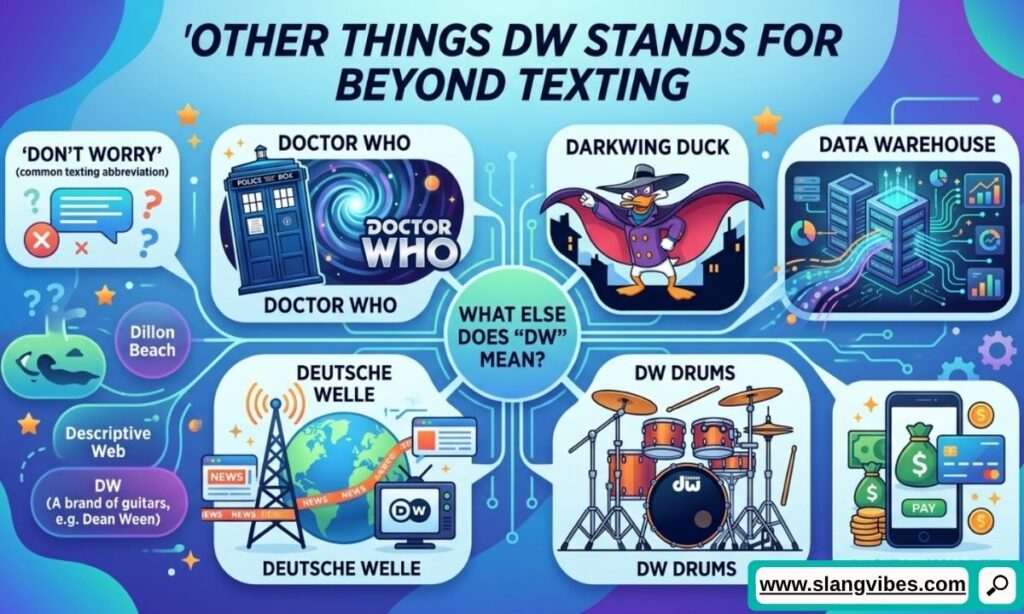
The DW abbreviation meaning changes completely outside of texting. While “Don’t Worry” dominates digital conversations, DW carries different definitions in professional and technical spaces.
In medical settings, DW stands for Distilled Water, and shows up in prescriptions, clinical notes, and lab documentation, In aviation, DW means Downwind, a term used in flight patterns to describe the direction parallel to a runway during landing. In physics, DW refers to either Domain Wall or Density Wave, both highly specialized terms used in research and academic papers.
Pop culture fans know DW as the shorthand for Doctor Who, especially in fan forums and Reddit communities. In parenting forums and older blog spaces, DW sometimes appears as “Dear Wife.”
None of these meanings show up in everyday texting. When your friend texts you “dw,” they’re not discussing aviation patterns or physics research. They want you to relax.
Read New Article: IFG Meaning in Text Messages and Social Media Explained
Frequently Asked Questions
It means “Don’t Worry,” regardless of who sends it. The gender of the sender doesn’t change the meaning. Context and tone tell you far more than who typed it.
It depends on how it’s sent. A warm “dw!!” is reassuring and kind. A flat “DW.” with no follow-up can feel cold or dismissive. Read the punctuation and the context around it.
DW means “Don’t Worry” and focuses on calming someone down. NP means “No Problem” and is a response to a thank-you. They’re similar in tone but serve different conversational moments.
The core DW meaning in text stays the same across Snapchat, TikTok, Instagram, and regular SMS. However, the tone shifts with each platform’s culture, and sarcastic DW is more common on TikTok than anywhere else.
It’s better to avoid it in formal work communication. Stick to “no worries” or “please don’t stress about it” in professional messages. Reserve DW for casual conversations with people you know well.

Alex Carter is a language enthusiast and internet culture expert at SlangVibes. He explains the latest slang terms and text meanings in simple, clear English so everyone stays in the loop.