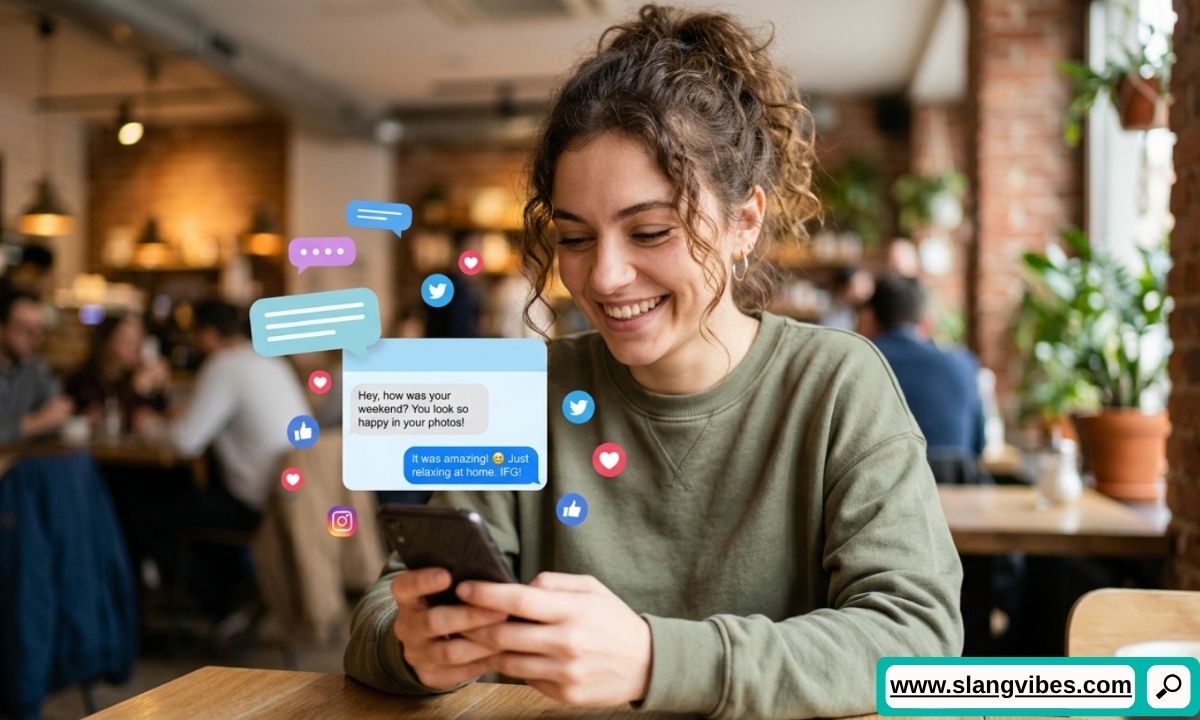
Last year, my friend sent me “IFG” right after a long gym session. I sent back a bunch of fire emojis because I thought she was pumped up. Turns out she felt guilty about skipping our dinner plans. The whole conversation went sideways because I had no idea what the message meant in that context. If you’ve ever stared at a three-letter acronym wondering whether to celebrate or comfort someone, you’re not alone. The IFG meaning in text messages is something millions of people Google every day, and there’s a solid reason for that: this one tiny abbreviation carries more than one meaning, and picking the wrong one changes everything.
What Does IFG Mean in Text Messages?
Here’s the thing. IFG doesn’t have one clean definition you can memorize and move on. It has two primary meanings, and both show up constantly in everyday text conversations.
The first, and most common, reading is “I Feel Good.” Someone texts IFG after a workout, a great meal, a solid night’s sleep, or a productive day. It’s a quick emotional update, a shorthand mood report that doesn’t require a paragraph. You see this one a lot in group chats and on Snapchat stories.
The second meaning is “I Feel Guilty.” This one carries a completely different emotional weight. People use it after canceling plans, forgetting something important, or doing something they’re not proud of. The tone of the surrounding message almost always makes this version obvious, but not always.
Read Also : CYC Meaning in Text: Complete Guide to This Popular Texting Slang
Quick Answer: IFG stands for “I Feel Good” in most positive contexts and “I Feel Guilty” in emotionally heavy ones. Context, platform, and conversation tone tell you which one applies.
Here’s a fast look at both meanings side by side:
| IFG Reading | Emotional Tone | Common Trigger |
|---|---|---|
| I Feel Good | Upbeat, positive, energized | After exercise, good news, relaxed mood |
| I Feel Guilty | Heavy, remorseful, uncomfortable | After canceling, forgetting, or messing up |
Neither meaning is more “correct” than the other. Both are widely used across messaging platforms, and you need both in your mental dictionary.
Where Did IFG Come From? The Origin of This Slang
Texting abbreviations didn’t start with Gen Z. They go back to early SMS culture when character limits made every letter count. Back in the early 2000s, people were shortening everything: LOL, BRB, GTG. Three-letter emotional shortcuts became a natural part of digital communication because they were fast, familiar, and low-effort.
IFG followed that same pattern. As smartphones replaced flip phones and messaging apps replaced plain SMS, emotional check-in abbreviations evolved too. WhatsApp and BBM culture in the mid-2010s pushed shorter, warmer expressions of feeling. Instead of typing “I feel really guilty about what happened,” people shortened it to IFG and kept moving.
By the time TikTok comment sections became their own social universe, IFG had settled into everyday use for both meanings. The rise of wellness culture and emotional openness on social media also made “I Feel Good” a natural phrase to abbreviate. Telling your group chat IFG after a meditation session felt natural, fast, and relatable.
What makes IFG interesting is that it grew organically across platforms without anyone declaring it official slang. That’s how most durable texting shorthand works. It earns its place through repeated, genuine use in digital talks between real people.
All the Different Meanings of IFG You Should Know
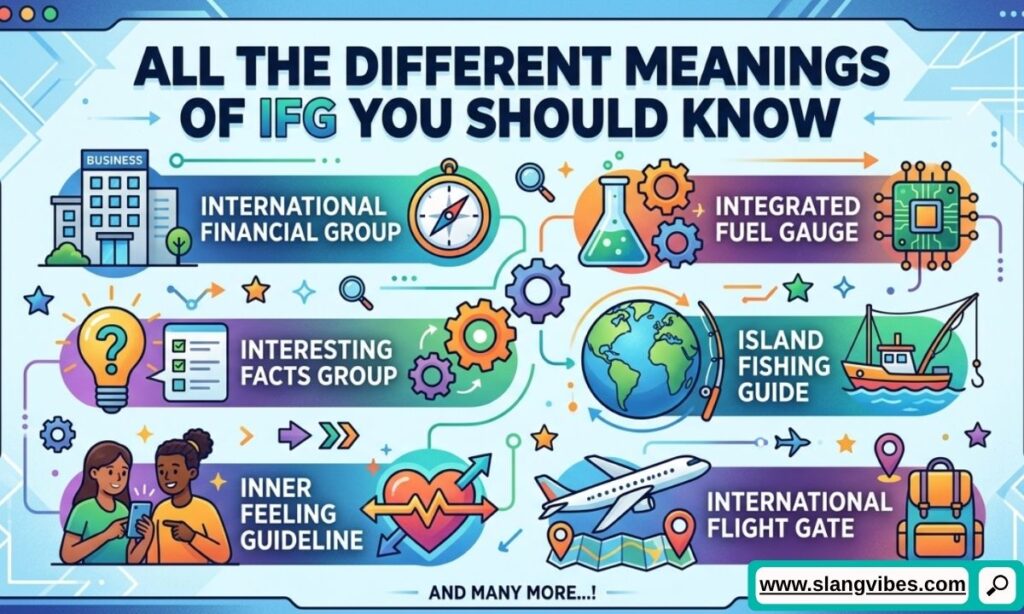
Most articles stop at two meanings. This one won’t.
IFG shows up in multiple contexts depending on where you find it, and some of those readings have nothing to do with emotions at all.
Here’s the full picture:
I Feel Good — The default emotional meaning. Used in personal texts, group chats, and social media captions to share a positive mood or good emotional state.
I Feel Guilty — The emotional counterpart. Used when someone wants to acknowledge regret without writing a full apology text.
I Feel Great — A less common but legitimate variant. Some people use IFG with this meaning, especially when responding to a “how are you” text conversation starter.
Invite For Gaming — This one catches people off guard. In gaming communities, particularly on Discord and multiplayer game lobbies, IFG means someone is inviting others into a game session. The context makes it obvious: you won’t see this one in an emotional conversation about canceled dinner plans.
Impaired Fasting Glucose — A medical term used in health discussions. If you’re in a diabetes support group or a wellness forum, IFG carries this clinical meaning. It refers to a blood sugar reading that’s higher than normal but not high enough for a diabetes diagnosis.
International Flavors and Fragrances — A business and finance abbreviation. Investors and industry professionals use IFG to refer to this company in stock discussions and financial news.
| IFG Meaning | Where You’ll See It |
|---|---|
| I Feel Good | Personal texts, social media, group chats |
| I Feel Guilty | Emotional texts, apology messages, DMs |
| I Feel Great | Casual check-in replies |
| Invite For Gaming | Discord, Xbox party chats, gaming lobbies |
| Impaired Fasting Glucose | Health forums, medical discussions |
| International Flavors and Fragrances | Finance, business news |
How to Tell Which IFG Meaning Someone Is Using
This is the section nobody else explains properly, and it’s the most useful one in the whole article.
Knowing all the definitions of IFG doesn’t help you if you can’t figure out which one applies in the moment. Here’s a simple reading approach that works every time.
Start with the full message, not the abbreviation. Read the whole text before zeroing in on IFG. The surrounding words almost always signal the intent. “Ugh IFG” feels very different from “Just got home from the gym, IFG.”
Next, notice the emotional tone before IFG appears. If the conversation has been light and positive, “I Feel Good” is almost certainly the reading. If the person just mentioned forgetting your birthday or bailing on plans, “I Feel Guilty” makes far more sense.
Check the platform. A Discord message in a gaming server that says “IFG, you in?” is almost certainly an invite for gaming. The same message on iMessage from your best friend is almost certainly an emotional check-in.
Look at conversation history. People who tend to use emotional shorthand regularly will have used IFG in a consistent way before. A quick scroll tells you a lot.
When you’re still unsure, ask. A simple “you mean you’re feeling good or feeling guilty?” takes two seconds and avoids a completely misread message exchange.
Read Also: RS Meaning in Text: The Complete Guide for Beginners (2026)
How IFG Is Used Across Social Media Platforms
The IFG meaning in text doesn’t behave identically across every platform. Where someone sends it shapes what it means and how it lands.
iMessage and WhatsApp are where the emotional meanings dominate. These are close-contact messaging spaces. When your friend texts you IFG here, they’re almost always sharing a quick mood update, either upbeat or remorseful.
Snapchat sees a lot of “I Feel Good” usage. People snap their gym selfies, their brunch spreads, or their cozy Sunday setups and add IFG as a caption. It’s mood-sharing made visual.
TikTok comment sections use IFG in a more layered way. Gen Z users sometimes drop IFG ironically in response to a relatable video about guilt or emotional chaos. The comment reads sincere but carries self-aware humor. You won’t always be able to tell from text alone; the video context matters.
Twitter and X see IFG as a low-effort emotional update in reply threads. Someone posts about working out at 5am, a follower replies IFG, and that’s the whole exchange. Brief, effective, very platform-appropriate.
Discord and gaming platforms are where “Invite For Gaming” lives. Gaming communities have their own dense vocabulary, and IFG fits naturally in the “who’s online, let’s play” type of message exchange. If you see IFG in a gaming chat right before a party invite, now you know.
Real Text Conversation Examples Using IFG
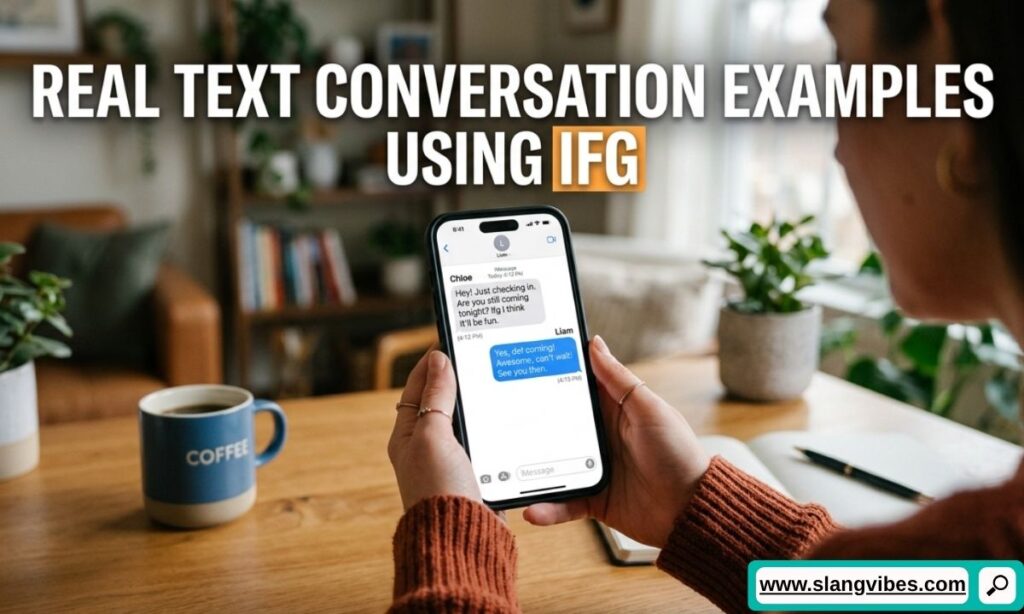
Seeing IFG in actual conversation examples makes the meanings click faster than any definition. Here are six realistic scenarios.
Example 1: Post-Workout Positivity
Jordan: How’s the morning going? Alex: Just finished a 5-mile run. IFG honestly. Jordan: Let’s go! That’s a new record for you right?
Now Example 2: Guilt After Canceling Plans
Sam: Hey, you’re still coming tonight right? Priya: I’m so sorry, I have to cancel. IFG about it. Sam: Don’t worry about it, we’ll reschedule.
3: Ironic Gen Z Use
Tyler: How are you surviving finals week? Morgan: IFG. Totally fine. Crying once per hour. Living my best life. Tyler: Same honestly.
4: Gaming Group Chat
Marcus: IFG? We’re starting a lobby in 10. Devon: Yeah I’m in, give me 5. Marcus: Cool, inviting now.
Example 5: Wellness Check-In Reply
Ava: How are you feeling after everything last week? Lena: IFG now, took a few days but I’m getting there. Ava: So glad. You deserve it.
Example 6: TikTok Comment Thread
Video: POV you canceled plans and now you feel terrible Comment from user: IFG watching this at 11pm instead of sleeping
How to Reply When Someone Texts You IFG
Knowing the IFG meaning in text is step one. Knowing how to reply is step two, and it’s the part most people fumble.
Your reply strategy depends entirely on which meaning you’re working with.
When IFG means “I Feel Good,” match the energy. Celebrate with them. Ask what’s going on. Short, warm replies work best here.
Good replies:
- “That’s what I like to hear!”
- “Same energy, what happened?”
- “Okay tell me everything.”
When IFG means “I Feel Guilty,” lead with acknowledgment before anything else. Don’t jump straight into advice or reassurance. Let them know you heard them first.
Good replies:
- “Hey, it happens. You good though?”
- “What’s going on? Talk to me.”
- “Don’t be too hard on yourself.”
When you genuinely don’t know which meaning applies, ask without making it awkward. You don’t need to explain that you didn’t understand the acronym. A natural question gets you there:
- “In a good way or a guilty way?”
- “Are you celebrating or do you need to vent?”
These questions feel conversational, not confused. Nobody’s feelings get hurt, and you get the context you need to actually respond well.
Read Also: JSP Meaning in Texting and Social Media (2026)
Slang Terms Related to IFG You’ll See in the Same Conversations
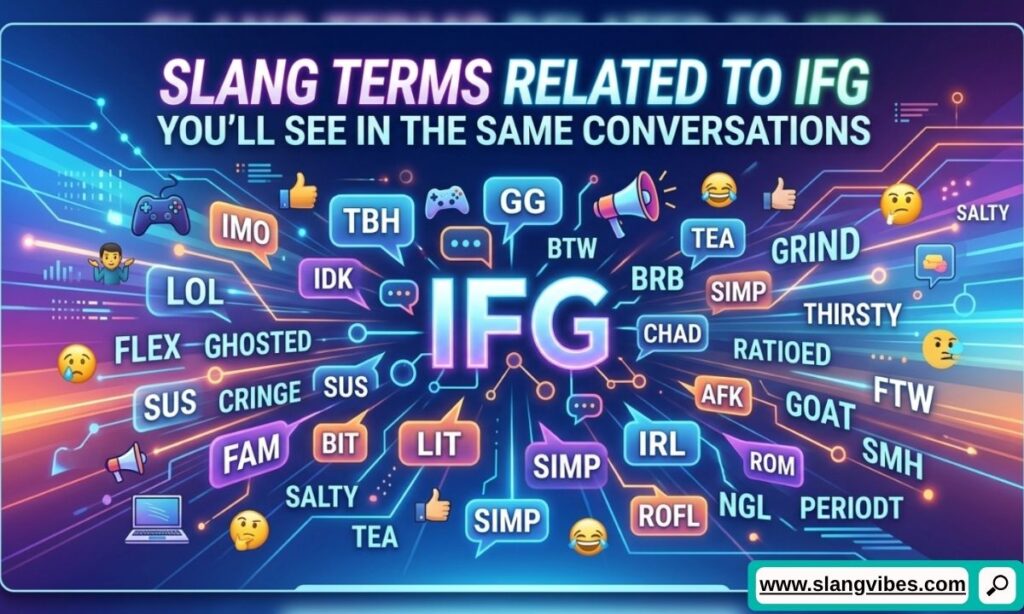
IFG rarely shows up alone. Certain related slang terms travel in the same message exchanges, and knowing them helps you read the full tone of a conversation.
Here’s how they group together by function:
Emotional check-in slang (you’ll see these near IFG in personal texts):
- HYB: How You Been
- WYD: What You Doing
- NGL: Not Gonna Lie
- TBH: To Be Honest
Positive mood shortcuts (appear alongside “I Feel Good” readings):
- IFY: I Feel You (empathy, agreement)
- No cap: Not lying, being genuine
- Slay: Used to celebrate good moments
Guilt and apology territory (travel with “I Feel Guilty” readings):
- SMH: Shaking My Head (disappointment)
- My bad: Informal apology
- FR: For Real (emphasis on sincerity)
Gaming-adjacent terms (appear when IFG = Invite For Gaming):
- GG: Good Game
- AFK: Away From Keyboard
- LFG: Looking For Group
Understanding these clusters helps you read the full emotional tone of a message exchange, not just one abbreviation in isolation. IFG next to NGL and TBH is almost always a personal, emotionally honest conversation. IFG next to GG and AFK is a gaming session.
Frequently Asked Questions
IFG stands for “I Feel Good” when the tone is positive and “I Feel Guilty” when the message carries regret or remorse. Context tells you which one.
Mostly yes. Both platforms lean toward the emotional meanings, either “I Feel Good” or “I Feel Guilty.” The difference is that Snapchat users often pair IFG with a photo or story, making the “I Feel Good” reading more common there.
IFG is a mood report: the person is telling you how they feel. NGL is an honesty qualifier: the person is flagging that they’re about to say something candid. They serve different functions, though they often appear in the same emotionally open conversations.
Yes, a little. Millennials tend to use IFG as a straight emotional update without layers. Gen Z users often add irony or self-awareness to it, especially in TikTok comments where the “I Feel Good” reading gets used sarcastically to describe a chaotic situation.
In gaming communities on platforms like Discord or Xbox party chats, IFG means “Invite For Gaming.” It’s a quick way to signal that a session is starting and to ask if others want in.
The next time IFG lands in your messages, you won’t need to guess. You’ve got both emotional meanings, the gaming meaning, the platform-specific patterns, and a full reply guide to work from. You’ll know in seconds whether your friend is riding a high or needs a little support. And you’ll know exactly what to say back.

Alex Carter is a language enthusiast and internet culture expert at SlangVibes. He explains the latest slang terms and text meanings in simple, clear English so everyone stays in the loop.