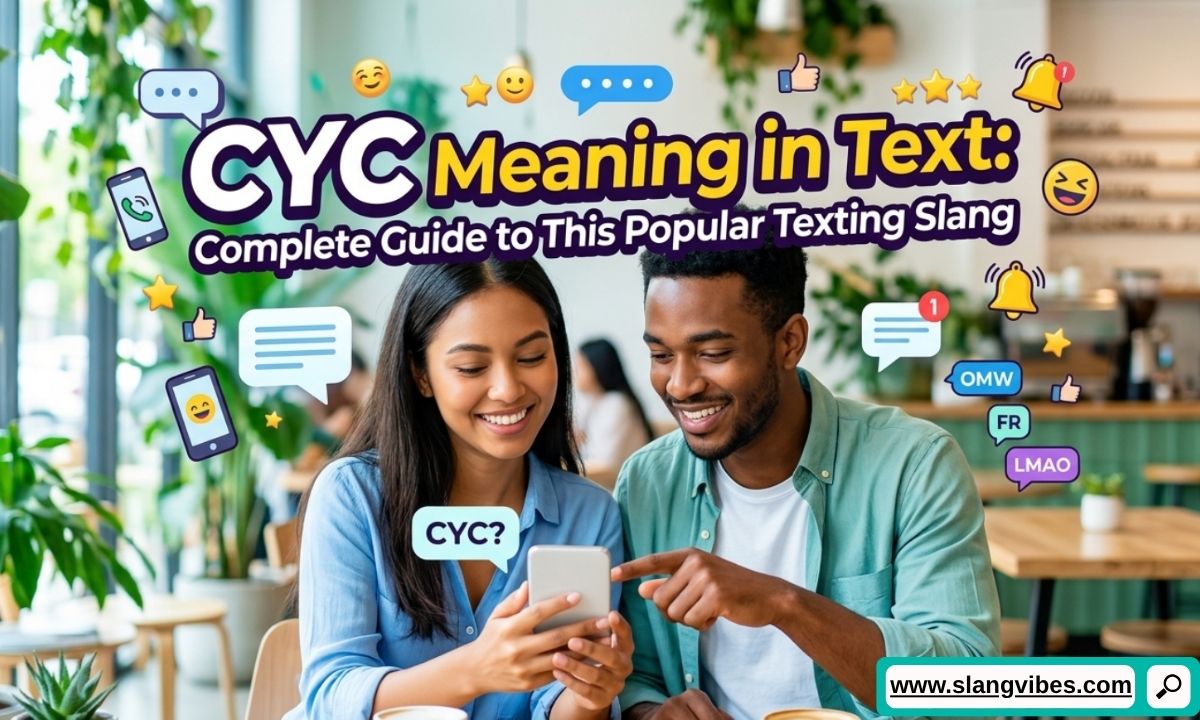
Last year, a friend texted me after a long catch-up call and ended with “cyc.” I stared at my phone for a solid 30 seconds. Was it a typo? A weird autocorrect? I typed back “what?” like the confused millennial I am. She replied with a laughing emoji and said, “See you cutie, obviously.” I felt equal parts flattered and out of the loop.
If you’ve had a moment like that, you’re not alone. CYC meaning in text is one of those abbreviations that looks almost familiar but stops you cold when you see it for the first time. This guide breaks down everything you need to know, from what it means and where it came from, to how to use it correctly and what to say when someone sends it to you.
What Does CYC Mean in Text?
The short answer is: CYC stands for “See You Cutie.” It’s a warm, flirtatious, or affectionate sign-off people use to close out a conversation with a compliment attached. Instead of a plain “bye” or “ttyl,” CYC does two things at once. It says goodbye and leaves the other person feeling good about the exchange.
Quick Answer: CYC meaning in text = “See You Cutie.” It’s a flirty sign-off used at the end of DM conversations, text threads, and late-night chats between people who are comfortable with each other.
You’ll see CYC pop up at the end of Snapchat streaks, Instagram DMs, and long late-night text conversations. Three letters that pack a compliment and a farewell into one smooth exit. That’s why people reach for it instead of typing something longer. It’s efficient, warm, and lands with a little personality.
The CYC meaning in text works because it sits right in the sweet spot between casual and affectionate. It’s not too intense, It’s not too cold. It’s the text equivalent of waving goodbye with a wink.
Also read: RS Meaning in Text: The Complete Guide for Beginners (2026)
Where Did CYC Come From? The Real Origin Story
Affectionate sign-off culture in texting goes back to the early days of SMS messaging. Think XOXO, TTYL, and the countless other abbreviations people invented to add personality to short messages on tiny keyboards. People wanted farewells that carried more warmth than a plain “bye” but didn’t require writing out a whole sentence.
CYC fits into that same tradition. It grew out of Snapchat and Instagram DM culture, where flirtatious, fast-paced personal exchanges between people who like each other are a core part of daily interaction. On those platforms, you’re not writing emails. You’re sending quick bursts of warmth, humor, and personality. An abbreviation like CYC fits that format perfectly.
The phrase “see you cutie” itself isn’t new. People have been saying it out loud and writing it in notes for decades. Turning it into a three-letter abbreviation is what made it fit the texting era. Once a phrase gets shortened and starts circulating in DM conversations, it spreads fast among close friend groups and then outward from there.
What’s worth noting is that CYC didn’t go viral in a single moment. It spread the way most texting slang does: one person used it, the person on the other end thought it was charming, and they started using it too.
Every Meaning of CYC You Need to Know
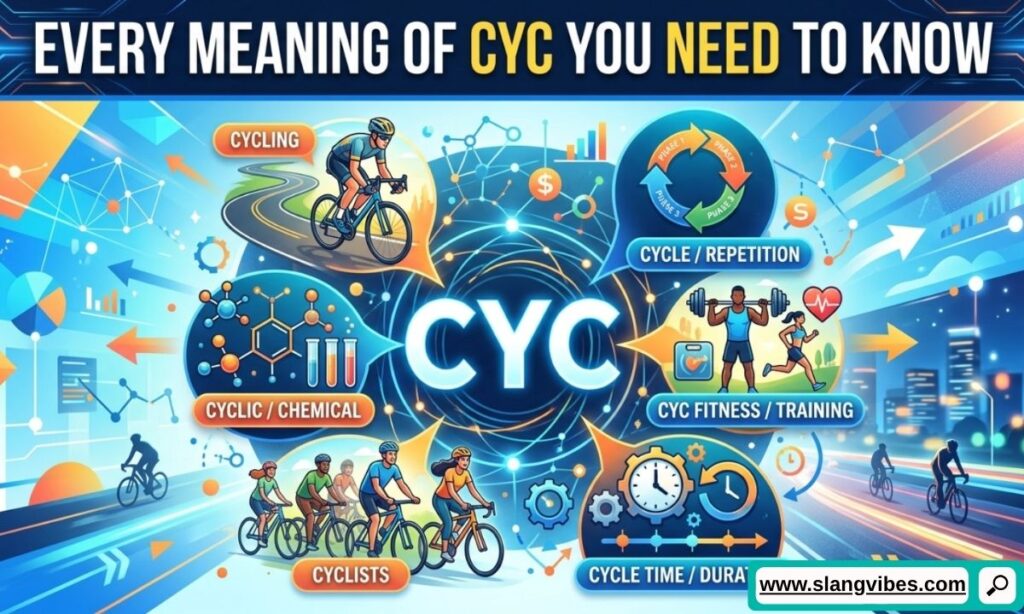
Here’s the thing: CYC doesn’t always mean “See You Cutie.” The same abbreviation shows up in a few completely different contexts, and knowing which one applies comes down to reading the situation around it.
Here are the four main meanings and where each one lives:
| Context | What CYC Means |
|---|---|
| Personal texting, DMs, romantic or friendly exchanges | See You Cutie |
| Work messages, scheduling threads, event planning | Check Your Calendar |
| Fitness communities, athletic training discussions | Cycle (as in training cycle) |
| Educational admin, childcare policy documents | Centre for Young Children |
The key to reading CYC correctly is never looking at the abbreviation in isolation. A warm personal text conversation ending in CYC has nothing to do with calendar management. A message in a gym group chat about weekly programming is about cycles, not compliments. Context does all the heavy lifting here.
If you receive CYC in a flirty or personal conversation, it’s “See You Cutie” every single time. That’s the dominant meaning in casual texting, and it’s the one this guide focuses on.
How CYC Is Used Differently by Gen Z vs Millennials
This is where things get interesting, and it’s something the other articles on this topic completely skip over. The same three letters hit differently depending on who’s sending them.
Gen Z treats affectionate abbreviations as flexible social tools. CYC between two people developing romantic feelings lands as genuinely sweet. The same CYC sent between two close friends reads as playful and a little ironic. Gen Z doesn’t see those two tones as contradictory. They stack warmth and humor on top of each other constantly, and CYC fits that layered communication style naturally.
A Gen Z sender signing off with “k cyc bestie lol” isn’t being sarcastic about the compliment. They’re wrapping genuine affection in irony because that’s how their communication register works. The recipient understands it immediately without any explanation needed.
Millennials tend to use CYC more straightforwardly. When a millennial ends a flirtatious conversation with CYC, it usually lands as a sincere, deliberate compliment rather than a layered ironic statement. That doesn’t mean millennials can’t use CYC playfully. It means the default mode is different.
Here’s a quick breakdown of how each generation typically uses it:
| Generation | Typical CYC Usage | Default Tone |
|---|---|---|
| Gen Z | Romantic interest, close friends, ironic stacking | Warm and layered |
| Millennials | Flirtatious sign-off, genuine compliment farewell | Sincere and direct |
Both uses are completely valid. Knowing which register the sender operates in helps you read the message correctly.
Also Read: FS Meaning in Text: What It Actually Means in 2026 (Don’t Get Confused!)
Real Conversation Examples of CYC in Action
No amount of explanation beats seeing CYC used in actual context. Here are five realistic conversation examples showing how the CYC meaning in text plays out across different relationships and situations.
Example 1: Romantic Interest
Alex: This was fun, we should do it again sometime Jordan: 100%, text me when you’re free this week Alex: Will do, cyc
Clean, warm, and intentional. That sign-off does the work of “I like you and I want you to know it” without making the conversation heavy.
Example 2: Close Friends (Platonic, Ironic)
Maya: okay I’m literally falling asleep on my phone Priya: SAME go to bed Maya: hahaha fine, cyc loser Priya: cyc bestie
The “loser” takes away any romantic weight and the whole thing lands as affectionate banter between people who are completely comfortable with each other.
Example 3: Post-First Date
Chris: I had a really good time tonight Sam: Me too, glad we finally did this Chris: Get home safe, cyc
Short and confident. That CYC says “I’m interested and I’m not going to be weird about it.” It closes the night on a high note without overstaying its welcome.
Example 4: Group Chat
Kira: okay I’m out, work tomorrow Dom: same, this was chaotic Kira: the best kind of chaotic, cyc everyone
CYC doesn’t have to be one-on-one. Used in a group context, it reads as warm and playful rather than flirtatious. The plural context removes any romantic implication automatically.
Example 5: Casual Acquaintance
Lee: thanks for the recommendation, gonna try it this weekend Bex: let me know how it goes! Lee: for sure, cyc
Low stakes, friendly, and completely appropriate. CYC works in this context because the conversation was warm even if the relationship isn’t close yet.
Does Punctuation Change What CYC Means?
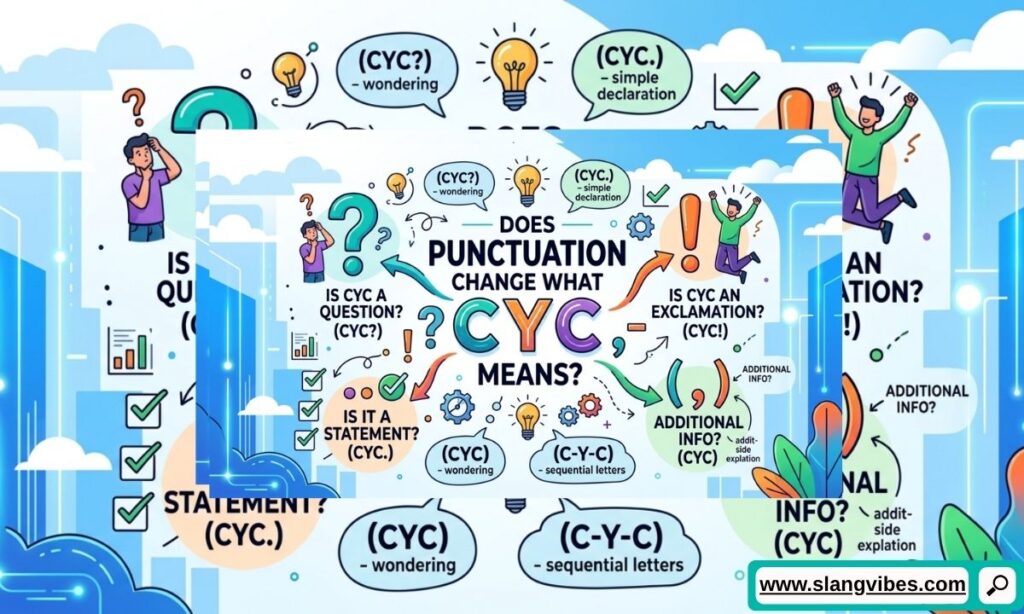
Nobody talks about this, and it’s one of the most useful things to understand about texting slang in general. The CYC meaning in text doesn’t change based on punctuation, but the emotional tone shifts significantly.
Here’s what different versions of CYC actually signal to the reader:
| How It’s Written | What It Signals |
|---|---|
| cyc | Casual, relaxed, no pressure |
| CYC | More intentional, the caps add a little emphasis |
| cyc!! | Enthusiastic, upbeat, high energy exit |
| cyc lol | Playful, slightly self-aware, softens any flirtatious edge |
| cyc 🙂 | Warm and sincere, the emoji confirms the friendly tone |
| cyc… | Wistful, slightly lingering, suggests the person didn’t want to end the conversation |
The lowercase version is the most common because it matches the casual register most text conversations operate in. When someone takes the time to capitalize it or add exclamation marks, they’re signaling that the sign-off was intentional rather than automatic. That detail matters when you’re reading between the lines of a conversation.
When Should You NOT Use CYC?
Most guides tell you what slang means. Few tell you when to leave it in your pocket. Here are the situations where CYC isn’t the right call.
First, don’t open with it. CYC is a sign-off, not a greeting. Sending “cyc!” as your first message to someone lands as confusing at best and presumptuous at worst. It needs the context of a full conversation behind it to hit correctly.
Second, skip it in professional or semi-professional exchanges. CYC in a work context reads as either confusing or inappropriate depending on the relationship. Stick to “check your calendar” abbreviations in scheduling threads and leave the affectionate sign-off for personal conversations.
Third, think twice if you’re in the very early stages of getting to know someone. CYC works well when there’s already some warmth or playfulness established in the exchange. As the very first sign-off with a new contact, it can feel like it’s moving faster than the relationship warrants.
Fourth, be aware of the US vs UK gap. In the US, affectionate text slang tends to land more casually between people who’ve just met. In the UK, the same warmth can sometimes read as more forward because the social baseline for affection between acquaintances is different. Neither is wrong, but the context matters.
Also Read: What Does WSP Mean in Text? Real Meaning in Chat & Social Media
How to Respond When Someone Sends You CYC
Getting a CYC at the end of a conversation is a good sign. The sender liked the exchange enough to close it with a compliment. Here’s how to respond without overthinking it.
If the conversation was warm and easy, match their energy. A few options that work well:
| Their Message | Your Response Options |
|---|---|
| cyc | “cyc too 😊” or “haha bye cutie” |
| cyc!! | “omg stop, cyc!!” |
| cyc 🙂 | “haha, cyc :)” |
| cyc lol | “lol cyc, text me later” |
If the CYC felt more intentional, like the relationship is building toward something and this sign-off was a small signal of that, you don’t need to make a big deal of it. “Haha okay, text me tomorrow” picks up the thread and moves it forward naturally. Let the next conversation do the rest of the work.
What you want to avoid is overanalyzing two letters into a paragraph-long response. The sender kept it light on purpose. Respond in kind and let the warmth carry forward.
CYC vs Similar Texting Slang: What’s the Difference?
CYC shares space with a handful of other warm sign-offs in the texting world. Knowing the difference helps you pick the right one for the right moment.
Here’s how CYC stacks up against the closest alternatives:
| Abbreviation | Full Phrase | Warmth Level | Best Context |
|---|---|---|---|
| CYC | See You Cutie | High, flirtatious | Personal chats, romantic interest, close friends |
| CYA | See You Around | Low, neutral | Casual acquaintances, general sign-off |
| TTYL | Talk To You Later | Medium, friendly | Any relationship type |
| GN | Good Night | Low to medium | Time-specific, general |
| NN | Night Night | Medium to high | Affectionate, close relationships |
| XOXO | Hugs and Kisses | High, affectionate | Close friends, romantic partners |
| ML | Much Love | High, warm | Friends and romantic interests |
The main thing that separates CYC from these alternatives is the embedded compliment. Every other sign-off on this list says some version of goodbye or good wishes. CYC says goodbye AND you’re cute. That combination is what makes it memorable and why people choose it when they want their exit to land with a little extra warmth.
Frequently Asked Questions
Both, depending on context. Between people who are romantically interested in each other, CYC is a low-key flirtatious sign-off. Between close friends who use affectionate language as their normal communication style, it’s warm and playful without any romantic implication. The relationship between the two people is what decides which reading applies.
The CYC meaning in the text is the same across both platforms: “See You Cutie.” On Snapchat, it shows up at the end of personal DM streaks and warm back-and-forth exchanges. On Instagram, it closes out flirtatious or affectionate DM conversations. The platform changes; the meaning doesn’t.
CYC grew out of North American DM culture, particularly Snapchat and Instagram usage in the US. It’s used in the UK too, but affectionate texting abbreviations tend to be adopted slightly later and sometimes read differently in British social contexts where the baseline warmth between acquaintances sits at a different register. Both audiences understand it; it’s just more native to US texting culture.
Now that you know the CYC meaning in text inside and out, you’ve got everything you need: what it means, where it came from, how Gen Z and millennials use it differently, when to send it, and exactly what to say back. Next time CYC shows up at the end of a conversation, you’ll know whether to send “cyc too 😊” or quietly laugh at yourself for needing Google last time.

Alex Carter is a language enthusiast and internet culture expert at SlangVibes. He explains the latest slang terms and text meanings in simple, clear English so everyone stays in the loop.