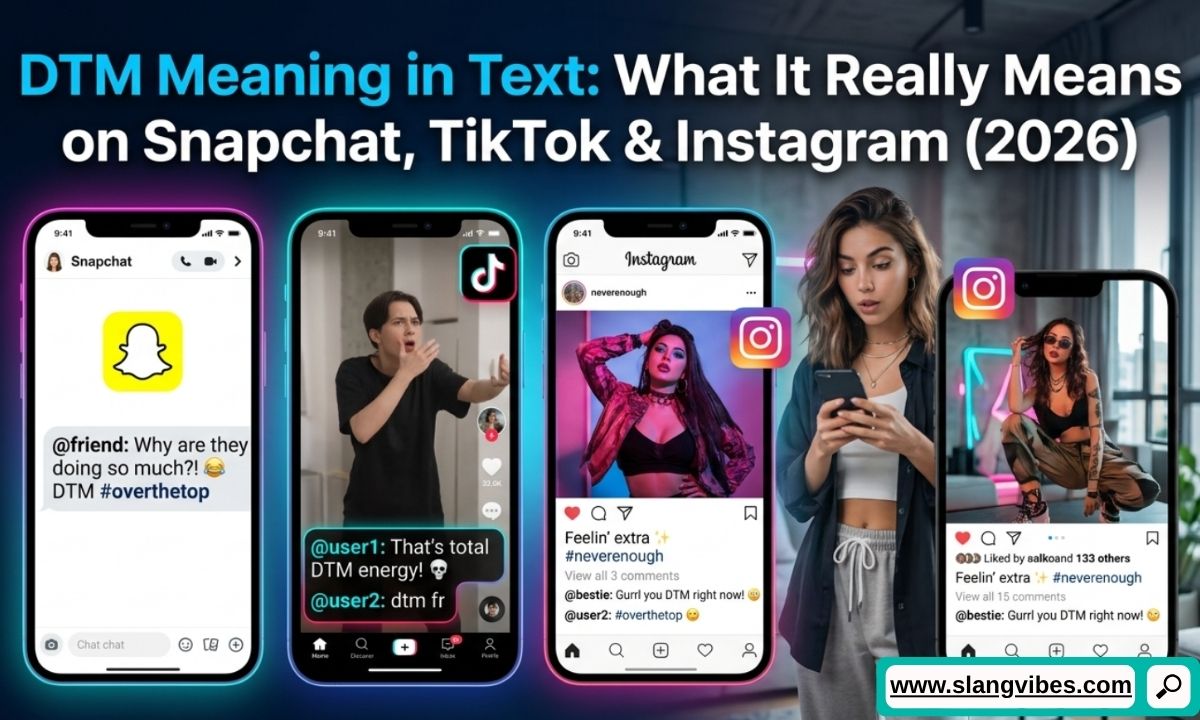
My friend texted me “DTM” after our group chat blew up over weekend plans, and I sat there staring at my phone like it owed me an explanation. Was she mad? Did I do something? I typed “wait what” about four times before deleting it. If you’ve ever wondered about the DTM meaning in text, you’re not alone. Here’s the thing: this little acronym shows up everywhere now, from Snapchat streaks to TikTok comment sections. And it doesn’t always mean what you think.
So let’s break down exactly what DTM means. We’ll cover how it changes depending on where you see it, and what you should say back.
DTM Meaning in Text: Quick Answer
Quick Answer: The most common DTM meaning in text is “Don’t Text Me.” People use it when they want space or need a break from a conversation. The second popular meaning is “Down to Meet.” This shows up in dating apps or when friends are planning to hang out.
Context is everything here. Your friend might type DTM after an argument. That’s a boundary request. However, someone on a dating app might say “DTM this weekend?” That’s a totally different vibe.
This dual meaning makes shorthand texting tricky. People who didn’t grow up swimming in internet slang often miss it. The same three letters can mean “leave me alone” or “let’s hang out.” It all depends on tone, punctuation, and who’s sending it.
Because of this, understanding the DTM meaning in text isn’t about memorizing one definition. Instead, it’s about reading the room. Check the relationship. Look at what came before the message. Once you get the hang of that, you’ll rarely get it wrong again.
DTM Meaning in Text on Snapchat: The Most Common Use
Snapchat moves fast, and so does its slang. On this platform, the DTM meaning in text almost always leans toward “Don’t Text Me.” This usually happens in private chats after a disagreement or a long, draining conversation.
Snapchat’s whole culture revolves around quick, casual exchanges. When someone wants out of a conversation, they don’t write a paragraph explaining why. They just send DTM and move on. As a result, it can feel a little blunt if you’re not used to it.
Here’s a real example of how this plays out:
Conversation Example 1:
- Sarah: “I told you I was busy tonight, why do you keep asking”
- Jake: “ok sorry”
- Sarah: “DTM for a bit, I need space”
In this case, DTM isn’t rude exactly. But it’s a clear signal. Sarah isn’t mad forever. She’s just asking Jake to back off for now.
On the flip side, friends sometimes use DTM jokingly in Snapchat captions. They might exaggerate annoyance over something small, like losing a game or missing a meme. So while the literal meaning stays the same, the emotional weight behind it can shift completely. Tone and emoji use make all the difference.
Read More: STG Meaning in Text: What This Popular Acronym Really Means 📱💬
What Does DTM Mean in Text on TikTok? Comments, Captions, and Trends
TikTok has its own rhythm when it comes to slang. DTM fits right into that fast-scrolling, reaction-heavy world. Here, the DTM meaning in text often shows up in comment sections, where users respond to videos with quick, punchy phrases.
Sometimes people comment “DTM” under a video to mean “Don’t Text Me.” This happens a lot when joking about overly persistent group chats or clingy friends. Other times, creators use it sarcastically to poke fun at dramatic situations. It’s almost like saying “yeah, I’m done with this.”
Conversation Example 2:
- Comment under a video about annoying group chats: “this is literally me rn, DTM for the rest of the day”
- Reply: “lmaooo same, my notifications are at 999+”
What’s interesting is that TikTok trends move quickly. A phrase like DTM can pick up new flavors depending on what sounds or formats are popular that week. Because of this, the same acronym might feel playful in one trend and genuinely serious in another.
Therefore, if you see DTM in a TikTok comment, check the tone of the video first. A lighthearted video probably means a lighthearted comment. But if the video is about boundaries or mental health, DTM likely carries its more literal “leave me alone” meaning.
DTM on Instagram: DMs, Stories, and Captions
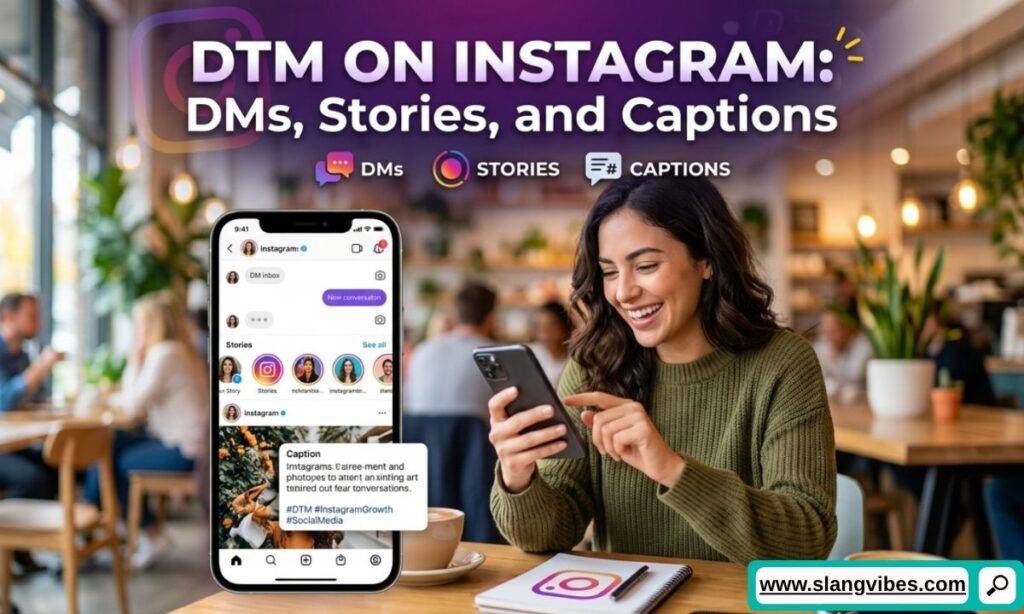
Instagram is where a lot of personal conversations happen, especially through DMs. This makes the DTM meaning in text particularly important to understand here. Unlike TikTok, where DTM often appears in public comments, Instagram usage tends to be more private and direct.
Someone might send DTM in a DM after a tense exchange. Sometimes they’re just feeling overwhelmed by messages. For example, influencers dealing with a flood of DMs might post “DTM” in their story to signal they’re stepping back for a bit.
Conversation Example 3:
- Friend 1: “why didn’t you answer my story”
- Friend 2: “I’m just overwhelmed rn, DTM until tomorrow ok?”
- Friend 1: “got it, take your time”
This shows how DTM can actually be a healthy boundary, not just a cold response. Meanwhile, on Instagram captions, people sometimes use DTM humorously. They might joke about how many notifications they’re getting after posting something popular.
Instagram blends public posting with private messaging. Because of that, the same acronym can show up in both spaces with slightly different energy. A caption might be playful, while a DM reply is usually more serious. Reading both the platform and the relationship helps you figure out which one you’re dealing with.
“Down to Meet” vs “Don’t Text Me”: How to Tell the Difference
This is where things get genuinely confusing, so let’s slow down. The two biggest meanings behind DTM sound nothing alike. Yet “Don’t Text Me” and “Down to Meet” look identical on screen. Luckily, there are clues that help you figure out which one applies.
First, look at the punctuation and emoji. “DTM?” with a question mark often signals “Down to Meet.” This is especially true if it follows plans being discussed. On the other hand, “DTM.” with a period usually points to “Don’t Text Me.” The same goes for “DTM” with no emoji after an argument.
Second, consider the platform. On dating apps, DTM almost always means “Down to Meet.” After all, the whole point of those apps is meeting people.
Conversation Example 4 (Dating App):
- Match: “we’ve been talking for a week now, DTM this weekend? ☺️”
- You: “yeah I’d love that, what did you have in mind?”
Conversation Example 5 (After an Argument):
- Partner: “I just need to think for a bit, DTM tonight”
- You: “ok, I understand, talk tomorrow ❤️”
Notice how the second example feels heavier, even though the acronym is identical. The relationship context matters. So does the situation leading up to it. The tone of the rest of the message also reveals the real meaning.
Read Now : FS Meaning in Text: What It Actually Means in 2026 (Don’t Get Confused!)
| Example / Context | What It Means / How It Feels |
|---|---|
| “DTM this weekend? 😊” on a dating app | Down to Meet, friendly invitation |
| “DTM.” after an argument, no emoji | Don’t Text Me, needs space |
| “DTM for now, talk later” between friends | Temporary break, not permanent |
| “lol DTM 😂” in a group chat | Joking, not a real boundary |
Other Meanings of DTM You Should Know
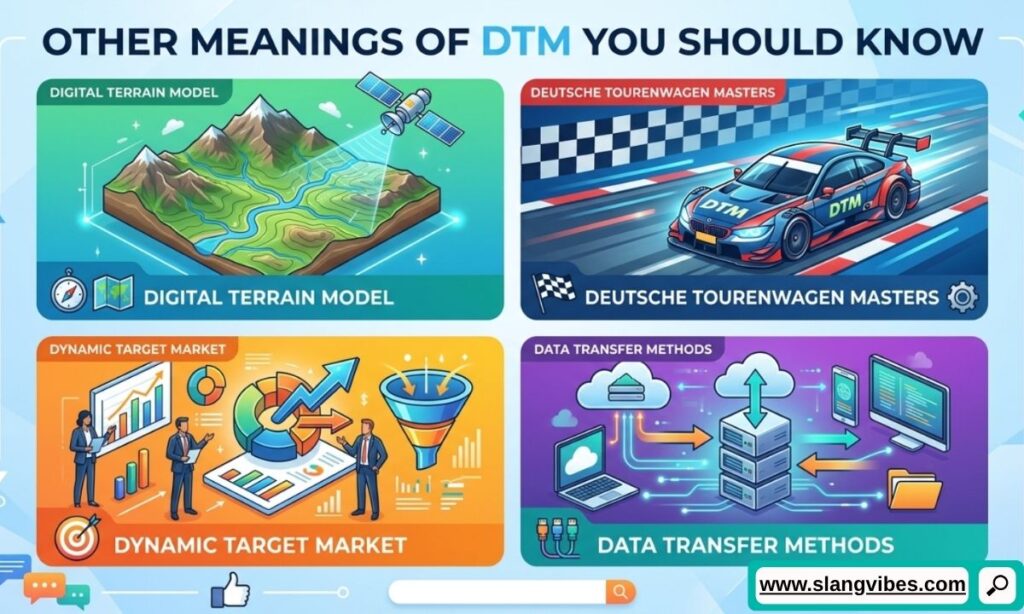
The texting world mostly cares about “Don’t Text Me” and “Down to Meet.” Still, DTM pops up in a few other corners too. Gamers sometimes use DTM in Discord servers to mean “Down to Match.” This usually happens when organizing online games.
Outside of casual chats, DTM also has technical meanings. In mapping and engineering, DTM stands for Digital Terrain Model. This term represents the Earth’s surface for simulations and design projects. You’ll find it common in industries like construction, geography, and urban planning.
In IT circles, DTM occasionally refers to “Desktop Management.” This term comes up when companies discuss how they handle employee computers and software updates. This meaning rarely shows up in everyday texting. But it’s worth knowing if you work in tech or see DTM mentioned in a workplace email.
So, while the slang versions dominate social media, the acronym carries weight in specialized fields too. The short answer is that you probably won’t run into these technical meanings in your group chat. But if a coworker mentions DTM during a planning meeting, they’re likely not talking about texting boundaries at all.
How to Respond to DTM (With Real Examples)
Knowing the DTM meaning in text is one thing. Knowing how to respond is just as important. Your reply depends heavily on which meaning applies and how the conversation got there.
A friend might send DTM after a tense moment. The best response is usually a short acknowledgment, like “ok, talk later” or “no worries, take your time.” This respects their space without making things awkward. Pushing back or asking “why” right away can make the situation worse, even if you’re confused.
DTM might appear in a flirty or dating context meaning “Down to Meet.” If so, respond with enthusiasm but keep it natural. Something like “yes! when works for you?” keeps the momentum going without sounding overly eager.
Sometimes you’re unsure which meaning someone intended. In that case, it’s perfectly fine to ask. A simple “wait, do you mean don’t text or down to meet lol” can clear things up instantly. It often gets a laugh instead of awkwardness.
Bottom line, respecting the boundary version of DTM matters most. Someone needs space? Give them that space, even if it stings a little. Conversations go a lot smoother when people feel heard instead of pressured.
DTM vs Similar Slang Terms
DTM isn’t the only acronym floating around in casual conversations. Mixing it up with similar terms can lead to some seriously awkward moments. To help you avoid that, here’s a quick breakdown of how DTM compares to other common texting abbreviations.
| Term | Meaning / Vibe |
|---|---|
| DTM | “Don’t Text Me” or “Down to Meet,” depends on context |
| DTF | Sexual or hookup-related interest, much more direct |
| DND | “Do Not Disturb,” often a phone setting, not just slang |
| BRB | “Be Right Back,” temporary and casual |
| GTG | “Got To Go,” signals an immediate exit |
As you can see, DTM stands apart because of its double meaning. Honestly, this trips people up more than any other term on this list. DTF, by contrast, only really has one interpretation. There’s less guesswork involved.
Understanding these differences helps you avoid sending the wrong vibe entirely. Mixing up DTM and DTF, for example, could turn an innocent message into something way more awkward than intended.
US vs UK Usage: Any Differences?
American and British users tend to share most online slang these days. Social media has made everyone pretty connected. Still, there are a few small differences worth mentioning.
In the US, DTM tends to lean slightly more toward the “Don’t Text Me” meaning in everyday texting. This is especially true among younger users on Snapchat and Instagram. UK users, meanwhile, seem to use DTM a bit more loosely in group chats. Sometimes it’s a playful joke rather than an actual boundary.
That said, these differences are subtle. Most Gen Z and Millennial users across both countries understand the term the same way overall. What matters more than location is the specific group chat, friend group, or platform you’re using. Slang often develops its own local flavor within communities regardless of country.
Read More Articles: What Does WSP Mean in Text? Real Meaning in Chat & Social Media
FAQ Section
Not at all. While DTM can signal that someone needs space, it’s often used jokingly between friends or as a quick way to say “down to meet” in a positive context.
No, they’re completely different. DTM usually relates to texting boundaries or meeting plans, while DTF refers to something much more direct and sexual in nature.
It can, but rarely in the slang sense. In professional environments, DTM more often refers to terms like Digital Terrain Model in engineering or mapping fields.
Look at the context first. If you’ve been planning to hang out, DTM likely means “down to meet.” If it follows an awkward exchange, give them space and respond later.
DTM is still actively used across Snapchat, TikTok, and Instagram in 2026. Its popularity can shift depending on current trends and platform culture.

Alex Carter is a language enthusiast and internet culture expert at SlangVibes. He explains the latest slang terms and text meanings in simple, clear English so everyone stays in the loop.