I still cringe thinking about it. A girl I’d been talking to for weeks sent me “wsp” at 11 PM on a Friday, and I typed back “Good thanks!” like an absolute fool. She didn’t respond for three days. The worst part? She wasn’t asking how I was doing. She was opening a conversation. WSP mean in text is one of the most common digital greetings flying around chats right now, and misreading it cost me a whole weekend of awkward silence. If you’ve ever frozen looking at those three letters and wondering what to say back, this article is for you.
What Does WSP Mean in Text? The Simple Answer
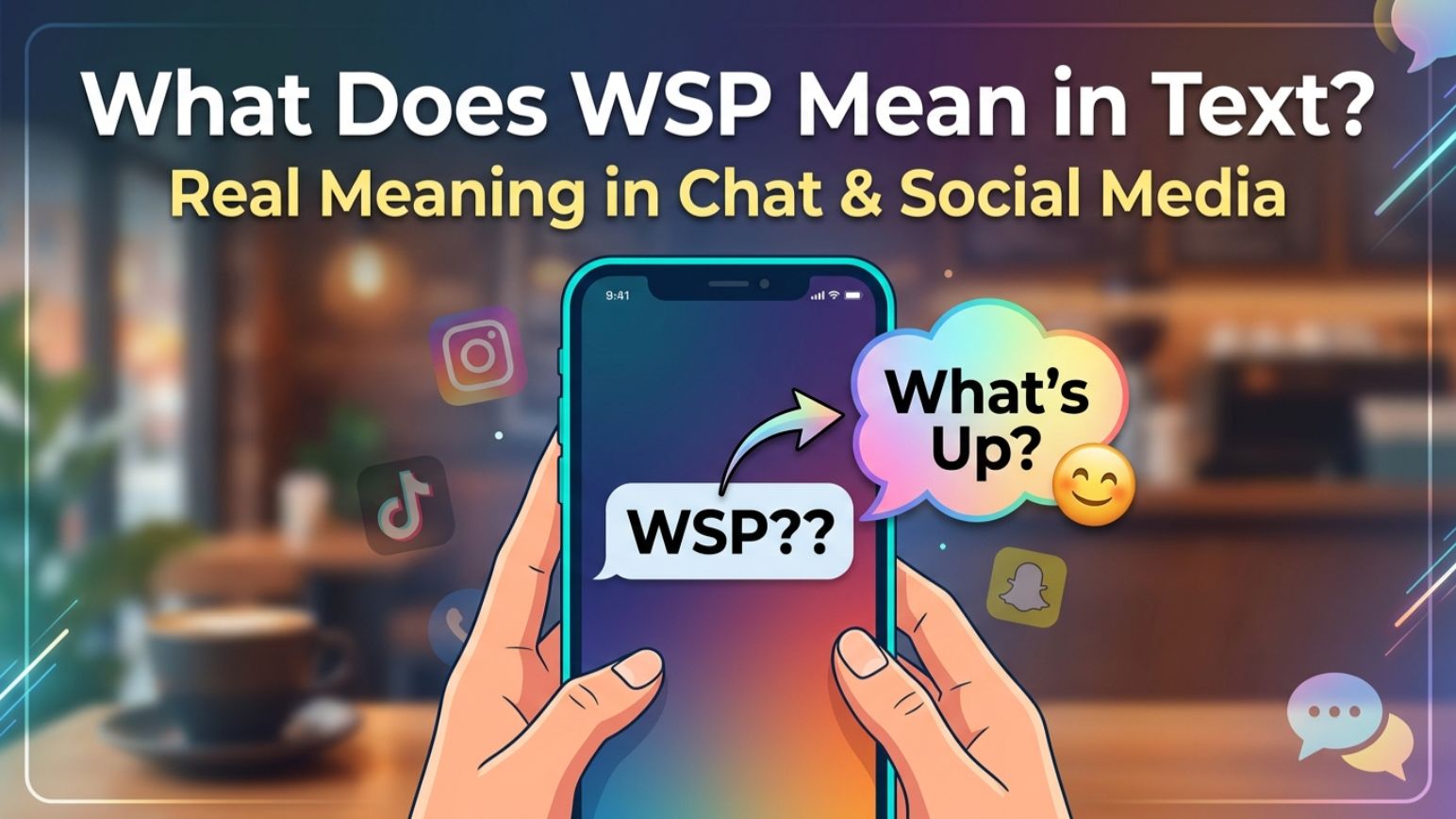
WSP stands for “What’s up?” Full stop. It’s a casual, low-pressure way to start a conversation in a text message, DM, or comment thread. Think of it as the digital version of a head nod. No deep meaning. No hidden agenda. Someone sends WSP, and they’re saying: hey, I’m thinking about you, let’s chat.
The wsp meaning in text stays pretty consistent no matter where you see it. It’s friendly, informal, and works in almost any casual setting between two people who know each other. The short answer is it’s a greeting, not a question that needs a detailed answer.
Did You Know: WSP is one of the top 20 most-used texting acronyms among people aged 18 to 29 in the US, sitting alongside classics like LOL, BRB, and OMG.
There’s one other thing worth knowing upfront. WSP has a couple of secondary meanings in completely different contexts: it’s sometimes used as a shorthand for WhatsApp itself, and it’s a real technical term called Wireless Session Protocol in older telecom systems.also We’ll cover those later. In a regular text conversation though, WSP in text slang means “What’s up?” about 99% of the time.
Where Did WSP Come From? The Real Origin Story
To understand this WSP acronym, you have to go back to the early 2000s. SMS texting had a brutal 160-character limit per message, and those messages weren’t free. Every word cost you. People got creative fast.
“What’s up?” became “Whats up?” which became “sup,” which eventually got compressed further into WSP for typing convenience. BlackBerry Messenger users popularized a lot of these shortcuts in the mid-2000s, and when smartphones arrived and iMessage, WhatsApp, and BBM took over, the habits stuck.
Here’s the thing: abbreviations like WSP didn’t die out when unlimited texting arrived. They became part of internet identity. Using proper shorthand signals you’re comfortable in digital spaces. Typing out “What is going on with you today?” in an opening message now feels almost weirdly formal.
Gen Z picked WSP back up and made it their own. Millennials used it out of necessity. Gen Z uses it as an aesthetic choice. The irony isn’t lost on anyone that millions of people send “wsp” every day inside an app literally called WhatsApp. It’s become its own cultural layer on top of the original phrase.
The lowercase version “wsp” is the Gen Z stamp. Millennials were more likely to type “WSP” or “Wsp?” with proper punctuation. That difference in capitalization says more about the sender’s age and texting energy than it does about the meaning.
WSP Meaning on Every Platform: Snapchat, Instagram, TikTok, iMessage
The core wsp definition stays the same everywhere, but the context shifts depending on where you’re seeing it.
Snapchat is where WSP does the most work. People use it to open streaks, check in with friends they haven’t talked to in a while, or slide into a conversation they want to start without seeming too eager. A snap with “wsp?” on a plain background is a classic low-effort opener.
Example conversation on Snapchat:
Alex: wsp Jordan: nm just watching stuff, u? Alex: same fr, wanna ft later?
Instagram DMs are where WSP shows up when someone wants to transition from a public interaction (liking posts, watching stories) to a private one. It’s a social signal: I noticed you, I’m comfortable enough to message you directly.
Read also:GMFU Mean in Text Explained: Definition, Usage & Examples (2026)
Example conversation on Instagram:
Riley: WSP Morgan: hey!! not much, saw your story looked fun Riley: haha yeah it was, we should hang sometime
TikTok uses WSP less in DMs and more in comment sections as a call-out greeting, like “wsp @username” to get someone’s attention under a video.
iMessage and Android texting are where the most casual wsp text meaning usage lives. Between close friends and family, WSP is shorthand for “I’m bored and I want to talk to you.” It’s not a question requiring a real answer. It’s an invitation.
Example conversation over iMessage:
Sam: wsp Taylor: nothing eating cereal at 2pm lol Sam: same energy, want to go get food later
How Capitalization Changes the Vibe of WSP
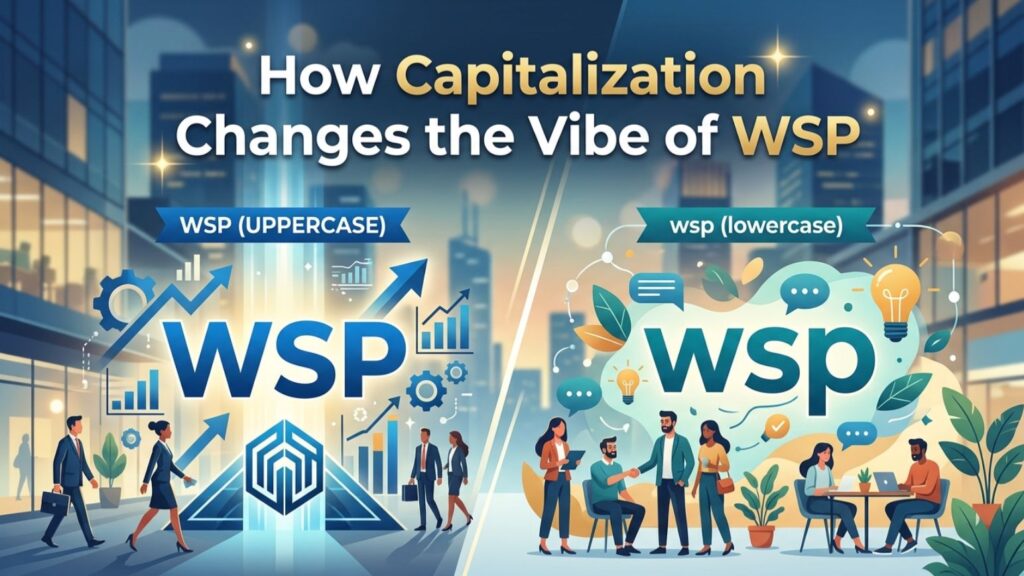
This is something no one talks about, but everyone feels intuitively. The way someone types WSP tells you a lot about their energy going into the conversation. These aren’t official rules. They’re observed digital behavior patterns that most people pick up without realizing it.
Here’s a breakdown:
| How It’s Typed | What It Signals |
|---|---|
| wsp | Chill, unbothered, very casual, Gen Z default |
| WSP | More deliberate, slightly more awake, could be slightly urgent |
| Wsp? | Somewhere in the middle, friendly but not trying too hard |
| WSP?? | Checking in more seriously, slightly impatient |
| WSP!! | Excited or enthusiastic, they have something to tell you |
| wsp. | Oddly dry or ironic, often used humorously |
The difference between “wsp” and “WSP??” in a text is real. One says “I’m here whenever.” The other says “okay where are you.” Context matter but so does the energy someone brings to those three letters.
How to Reply to WSP: 15+ Real Responses for Every Situation
Most people overthink this. Responding to wsp in a chat doesn’t need to be complicated. The whole point of WSP is that it’s low-stakes. Here’s how to match the energy based on who sent it and what kind of mood you’re in.
Read also:IIRC Meaning in Text: What It Actually Means and How to Use It Correctly!
When, you’re busy:
- “at work, hmu tonight”
- “in class, text later?”
- “swamped rn, what’s up though”
and When you’re bored:
- “nm, bored out of my mind”
- “literally nothing, save me”
- “watching [show], wbu?”
and When it’s from someone you like:
- “heyy, nothing much, was just thinking about you actually”
- “nm!! finally free, wbu?”
- “nothing, how are you??” (the double punctuation matters here)
When it’s from a friend you haven’t spoken to in a while:
- “omg hey!! it’s been forever”
- “wsp!! we need to catch up”
- “nm, wow haven’t talked in ages, you good?”
Funny or witty replies:
- “saving the world, give me ten minutes”
- “existential crisis, the usual”
- “just vibing in the void, wbu”
Short one-word reply when you’re busy but want to acknowledge them:
- “nm”
- “busy”
- “later?”
Example conversation showing a natural wsp exchange:
Jamie: wsp Chris: nm fr, just made coffee finally. you? Jamie: same lol almost noon and I just woke up Chris: haha valid, wanna do something later?
WSP in Dating Apps and Flirting: What It Actually Signals
On Tinder, Hinge, and Bumble, WSP has earned a complicated reputation. It’s the most common opening message on dating apps among men, and it gets criticized constantly for being low effort. Here’s the thing though: it’s low effort in both directions. Sending it is easy. Responding to it is also easy. That’s why it keeps showing up.
When someone sends you WSP on a dating app, they’re signaling one of two things. Either they’re genuinely interested but not sure how to start, or they’re testing the water with minimal investment to see if you respond at all.
| Situation | What WSP Usually Means |
|---|---|
| First message on a dating app | Casual opener, low commitment, waiting to see your energy |
| After a few days of silence | I haven’t forgotten about you, are we still talking? |
| From someone who usually texts more | Something is off, checking in passively |
| Late at night on a weekend | The intention is pretty clear |
If you’re on the receiving end and you like the person, the best move is to respond with a bit more energy than they gave you. It shows interest without desperation.
Example conversation on a dating app:
Marcus: wsp Nina: hey! just got back from the gym, wbu? Marcus: nice, what gym do you go to? I’ve been trying to find a good one
WSP in this context opened a real conversation. Nina added texture. Marcus followed her lead. That’s how it’s supposed to work.
If WSP from a match bothers you because it feels lazy, it’s completely fair to want more effort. But knowing it means “What’s up?” helps you decide whether to engage or move on, instead of staring at three letters wondering if it’s a typo
When NOT to Use WSP: Know the Room
WSP is a great casual greeting until you send it to the wrong person at the wrong time, and this section saves you from that mistake.
WSP works great in casual digital communication between peers. It doesn’t work everywhere, and knowing when to leave it out of a message is worth paying attention to.
Never open with WSP in a work context. A Slack message to your manager, an email to a client, or a message in a professional group chat are not places for internet slang greetings. Even in a casual startup environment where people type informally, leading with WSP to someone you don’t have a close personal relationship with reads as unprofessional.
Age matters too. Sending WSP to someone significantly older than you, especially in a context where respect is expected, risks coming across as dismissive or overly casual. It’s not that the word is offensive. It’s that the register is wrong.
Here are situations where WSP doesn’t land well:
- First message to someone you’ve never spoken to in a professional setting
- Group chats with mixed audiences including older family members or colleagues
- Reconnecting with someone after a serious falling-out (the tone is too breezy)
- Any formal introduction or networking context
There’s also a generational cringe factor to be aware of. When older adults try to use WSP to seem relatable to younger people, it often lands awkwardly. The term works because it’s natural in context. Forced use of any internet slang, WSP included, tends to read as trying too hard.
In the UK, WSP is understood but used less frequently than in the US. British texting culture leans slightly more toward full words in casual greetings. Americans, especially younger ones, have fully adopted wsp as a natural opener.
WSP vs Other Slang Greetings: Which One Should You Use?
WSP doesn’t exist in isolation. There’s a whole ecosystem of casual digital greetings, and they don’t all mean the same thing or carry the same energy.
Here’s how the most common ones compare:
| Slang Term | Meaning | Energy | Best Used When |
|---|---|---|---|
| WSP | What’s up? | Casual, neutral, friendly | Starting any casual conversation |
| WYD | What you doing? | More direct, slightly nosy | You want to know their plans specifically |
| HMU | Hit me up | An invitation, not a greeting | You want them to contact you |
| SUP | What’s up? | Older, slightly bro-ish | Works but feels more 2012 than 2025 |
| YO | Hey / What’s up? | Abrupt, urban, very casual | Close friends only |
| IKY | I know you | Flirty acknowledgment | Newer Gen Z usage, flirtatious |
WSP vs WYD is the most common comparison. WSP is open-ended. WYD is asking specifically what you’re doing right now, often because the person wants to make plans or join you. If someone sends WYD, they want logistical information. If they send WSP, they want conversation.
WSP vs HMU is a different category entirely. HMU isn’t a greeting. It’s an invitation. “HMU when you’re free” means contact me later. WSP means I’m contacting you now.
Other Things WSP Stands For (Beyond “What’s Up?”)
In a text message between two people, WSP almost always means “What’s up?” But in other contexts, the same letters point to something completely different.
WhatsApp: Some people use WSP as shorthand for the messaging app itself, especially in contexts like “send it to me on WSP” or “I’ll add you on WSP.” This is more common in regions where WhatsApp is the dominant messaging platform, including parts of Europe, Latin America, and South Asia.
Wireless Session Protocol: A technical communication protocol used in early mobile internet technology. You’ll only see this in tech documentation or very old telecom materials. It has nothing to do with text slang.
WSP (engineering firm): WSP is the name of a large global engineering and professional services company. If you see WSP in a business or news context, it’s likely referring to the company.
Workplace Safety Plan: In corporate and HR settings, WSP sometimes appears as shorthand for Workplace Safety Plan. Context makes this obvious since no one’s filing safety documents over Snapchat.
The rule for figuring out which WSP someone means is simple: look at where you are. In a DM or text? It’s “What’s up?” In an engineering report? It’s not.
Frequently Asked Questions
It means the same thing it means from anyone else: “What’s up?” When a guy sends WSP, he’s opening a conversation in the most casual, low-pressure way possible. The meaning doesn’t change based on gender. What might differ is the intent behind it, and that depends on the relationship and context, not the word itself.
On Snapchat, WSP is used as a casual conversation opener, often to keep a streak going or to check in with someone you want to talk to. It shows up on plain snaps, in DM threads, or as a quick reply. The meaning stays the same as everywhere else: “What’s up?” The platform doesn’t change the wsp definition.
WSP is used more frequently in the US. American texting culture, shaped by early SMS habits and platforms like iMessage and Snapchat, adopted WSP as a standard opener. In the UK, it’s understood and sometimes used, but British texters often default to slightly fuller expressions in casual online conversations. The gap is closing as global social media continues to blend texting habits.
Some replies that land well: “saving the world, be with you shortly,” “existential dread with a side of coffee,” “nothing but somehow very tired about it,” or the classic “not much, avoiding responsibilities as usual.” The key is to match the casual energy of WSP while adding a bit of personality. One dry line beats a long explanation every time.
Wrapping It U
WSP is one of those pieces of internet slang that looks tiny but carries a lot of social weight. Three letters that open thousands of conversations every day, start friendships, spark flirtations, and sometimes, when misread as “I’m good thanks,” create three days of confused silence.
Now you know what WSP means in text, how the capitalization shifts the tone, where it works and where it really doesn’t, and exactly how to reply in any situation. From Snapchat to dating apps to late-night iMessages, you’ve got the full picture.
Next time you see WSP in a text, you’ll know exactly what to say back.

Alex Carter is a language enthusiast and internet culture expert at SlangVibes. He explains the latest slang terms and text meanings in simple, clear English so everyone stays in the loop.