My friend texted me last week asking if I could cover her shift this weekend. She ended the message with “TIA!” I stared at my phone for a solid ten seconds. Was that a typo? So I did what anyone does now: I searched TIA meaning in text before replying. I didn’t want to look clueless. Turns out, the answer is pretty simple once you see it. But the way people use it changes depending on the app and who’s texting. If you’ve landed here after that same moment of confusion, you’re in good company. By the end of this guide, you won’t have to pause before replying again.
What Does TIA Stand For? (The Quick Answer)
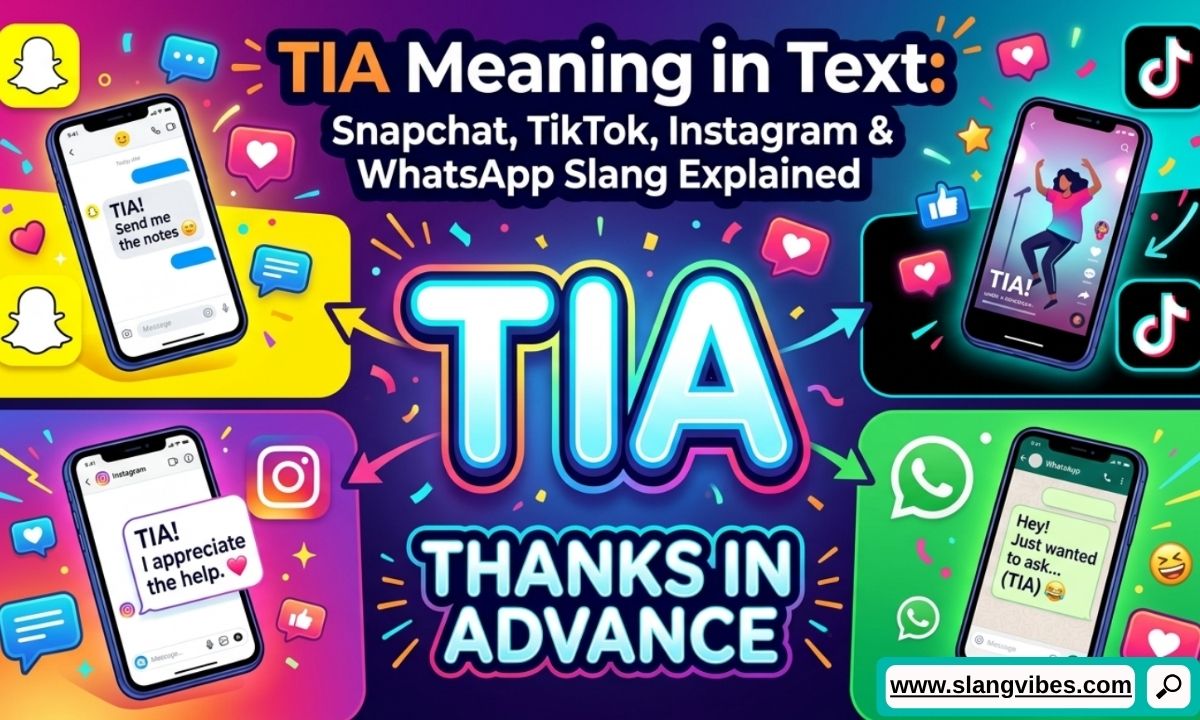
Here’s the thing: TIA stands for “Thanks In Advance.” People drop it at the end of a message. It comes right before someone agrees to help. It’s a polite nudge that says “I’m counting on you.” Instead of waiting to say thanks after the favor, the sender thanks you upfront.
Quick Answer: TIA = Thanks In Advance. It’s used to politely thank someone before they’ve actually done what you asked.
A simple example looks like this: “Hey, can you send me the notes from class? TIA!” The sender isn’t being demanding. They’re trying to sound appreciative and low-pressure at the same time. That said, TIA meaning in text isn’t always this cut and dry. The app, the relationship, and even the punctuation can all shift the tone. The same three letters can feel warm, casual, or a little pushy. We’ll break all of that down shortly. For now, just know the core definition stays steady across almost every platform.That’s the short version of TIA meaning in text, and it holds true across almost every app.
Where TIA Came From (Texting and Internet Slang History)
Believe it or not, TIA didn’t start on TikTok or Snapchat. The abbreviation traces back to early internet forums and email threads from the late 1990s and early 2000s. People signed off messages with “Thanks in advance for your help.” A full sentence felt unnecessary in fast-moving chatrooms. Then SMS texting took off, and character limits became a real concern. Shorthand like TIA, TY, and BRB became second nature.
From there, TIA moved naturally into instant messaging platforms like AIM and MSN Messenger. Later, it followed users into texting once smartphones became the norm. Social media gave it an entirely new life after that. Comment sections, DMs, and group chats turned TIA into a social reflex more than a deliberate word choice. Today, TIA text abbreviation usage spans casual Snapchat captions and professional Slack messages alike. That range says a lot about how flexible the phrase has become.
What’s interesting is that the core intent hasn’t really shifted in over two decades. People still use it to sound polite while asking for something. That something might be a favor, information, or just a quick reply. The platforms changed. The politeness instinct behind it didn’t.
Read More : FN Mean in Text: Popular Uses on Snapchat, TikTok & Instagram
TIA Meaning on Snapchat
Snapchat has its own rhythm. TIA meaning on social media shows up a little differently here compared to other apps. Snapchat leans heavily on quick, disappearing messages. So TIA often pops up when someone’s asking a friend for a favor. Think streaks, private stories, or a quick reply before the snap expires. TIA meaning in text shifts a little depending on which app you’re using.
Here’s a real example of how that looks in practice:
Conversation Example 1:
Jordan: “can u add me to the private story TIA” Maya: “yep just sent the invite!”
In this case, TIA softens what could otherwise feel like a blunt request. Snapchat messages disappear fast, so people keep things short. TIA works as a quick way to sound grateful without typing extra words. It also shows up in snap captions. Someone might ask followers for opinions on an outfit or want help naming a song playing in the background.
Snapchat is mostly used between close friends. So TIA here usually feels relaxed and genuine, not overly formal. Nobody’s overthinking it. It’s just part of the app’s casual texting culture.
TIA Meaning on TikTok
TikTok comment sections move fast, and TIA fits right into that energy. Someone posts a video, and viewers want extra information. Maybe it’s a sound name, a filter, or where an outfit came from. TIA often shows up at the end of that comment. This is a good example of TIA meaning in text changing tone from one platform to another.
Conversation Example 2:
Comment: “what’s the song in the background?? TIA” Reply: “it’s ‘Sunset Drive’ by Coral Bay :)”
TikTok comments are public, so TIA doubles as a way to seem polite in front of strangers. It’s not just for the original poster anymore. Nobody wants to come across as demanding in front of people they’ve never met. Adding TIA softens the tone instantly.
Captions use it slightly differently. Creators sometimes write things like “Drop your favorite skincare routine below, TIA!” That phrasing encourages engagement while still sounding approachable. In short, TIA meaning on TikTok leans toward community-driven politeness. It works the same way for a quick question to a stranger. It also fits a wave of replies from followers.
TIA Meaning on Instagram
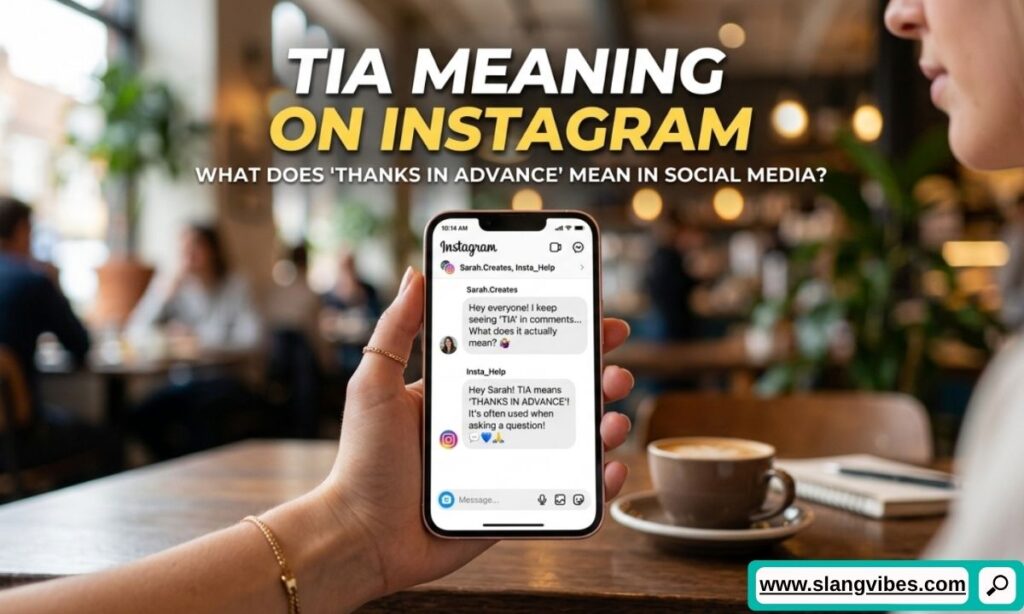
Instagram blends casual and semi-professional messaging these days. That’s largely thanks to influencer culture and small business DMs. As a result, TIA meaning on Instagram stretches across a wider range of situations than most other apps.
In DMs, TIA frequently shows up when someone’s reaching out for a collaboration. It also pops up when asking for a shoutout or requesting feedback on content.
Conversation Example 3:
“Hey! Loved your last reel. Would you be open to a collab post sometime this month? TIA for considering!”
Notice how formal that sounds compared to a Snapchat message. Instagram DMs often involve people who don’t know each other personally. TIA helps bridge that gap. It keeps the tone friendly instead of transactional.
In comments, though, it feels more casual, much like TikTok:
Conversation Example 4:
Comment: “can you link the jacket you’re wearing? TIA!”
So the core meaning stays the same either way. But the formality shifts depending on whether you’re in a public comment thread or a private conversation. That flexibility is part of why TIA has stuck around across so many corners of the platform.
TIA Meaning on WhatsApp
WhatsApp skews slightly older and more practical compared to Snapchat or TikTok. It’s commonly used for family group chats, coworker conversations, and logistics-heavy messaging. Because of that, TIA meaning on WhatsApp often feels a touch more grown-up. Once you understand TIA meaning in text on one app, it gets easier to spot on the rest.
Conversation Example 5:
“Can someone confirm the meeting time for tomorrow? TIA”
Here, TIA reads as professional courtesy rather than casual slang. It shows up often in group chats where someone needs a quick answer fast. That could mean coordinating a family dinner or confirming a work deadline.
WhatsApp conversations often involve people across different age groups, unlike Snapchat or TikTok. So TIA tends to stay closer to its original “Thanks In Advance” meaning. There’s not much irony or playfulness attached. It’s efficient and polite. Once you’ve seen it once or twice in a group thread, it doesn’t need explaining again.
Is TIA Rude or Polite? (Tone Guide)
This is where things get a little tricky. Honestly, it’s the question most people actually want answered. So, is TIA polite, or does it come off as presumptuous? The truth is, it depends heavily on context.
On one hand, TIA can sound genuinely thoughtful. Saying “Could you proofread this for me? TIA” feels warm and appreciative. It’s like acknowledging someone’s time before they’ve even given it. On the other hand, TIA can feel like it’s assuming a “yes” too soon. The other person hasn’t agreed to anything yet, and that can rub people the wrong way in formal settings.
Take a look at how the same three letters can land in very different ways:
Read Also: DTM Meaning in Text: What It Really Means on Snapchat, TikTok & Instagram (2026)
| Example / Context | What It Means / How It Feels |
|---|---|
| “Can you help me move this weekend? TIA!” sent to a close friend | Warm, casual, clearly appreciative |
| “Send me the file by EOD. TIA.” sent to a coworker you barely know | Can feel a bit demanding or presumptuous |
| “Could you share your honest thoughts on this? TIA :)” | Friendly and genuinely polite |
| “TIA.” used alone with no question attached | Confusing and slightly cold without context |
Texting tone is already hard to read on its own. So punctuation and emojis matter more than people realize. An exclamation point or a smiley face after TIA almost always softens it. A flat period, on the other hand, can make it feel more like an order. Bottom line: TIA itself isn’t rude. How it’s framed is what really changes how it lands.
TIA in Other Contexts (Medical, Aviation, Finance)
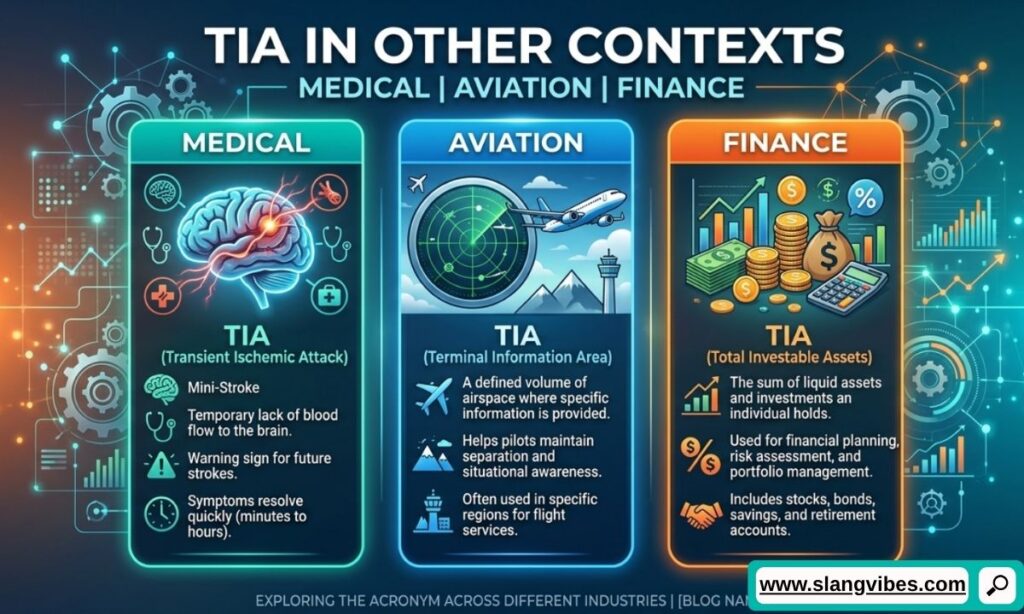
This article focuses on TIA meaning in text messages. Still, it’s worth knowing that TIA carries entirely different meanings outside of texting culture. In medical terminology, TIA stands for Transient Ischemic Attack. That’s a temporary disruption of blood flow to the brain. It mimics stroke symptoms and requires immediate medical attention. If you ever spot TIA in a health report or doctor’s note, it almost certainly refers to this. It’s not a casual thank-you.
In electronics and engineering, TIA can refer to a Transimpedance Amplifier. That’s a component used to convert electrical current into voltage. In aviation and tech circles, TIA sometimes appears as shorthand in technical documentation, though usage varies by organization. These meanings differ so much from the texting definition that context clues end up doing most of the work. Nobody’s going to confuse “Can you grab milk on your way home? TIA” with a medical diagnosis. Still, it helps to know the abbreviation isn’t exclusive to casual chatting.
Gen Z vs Millennial Usage: Does TIA Mean the Same Thing?
Interestingly, TIA meaning in chat doesn’t always feel the same depending on who’s typing it. Millennials tend to use TIA closer to its literal definition. For them, it’s a genuine, slightly formal way of saying thanks before a favor happens. It shows up often in work emails, scheduling texts, and practical requests.
Gen Z, meanwhile, tends to use TIA a bit more loosely. Sometimes there’s a layer of humor or irony attached. A Gen Z user might type “can someone explain why my plant is dying TIA 😭.” Here, TIA isn’t really about formal politeness. It’s more of a stylistic habit picked up from years of texting and scrolling through comment sections.
Gen Z users are also more likely to pair TIA with emojis, lowercase letters, or minimal punctuation. Millennials, on the other hand, often keep their phrasing slightly cleaner and more structured. Neither approach is wrong. But the generational difference explains something useful. It’s why the same three letters can feel casual in one chat and fairly formal in another.
TIA Alternatives and Similar Texting Acronyms
TIA isn’t the only online texting abbreviation built around gratitude. Several similar acronyms exist. They all express thanks, but the tone behind each one shifts slightly.
Before jumping into the list, it helps to see how these compare side by side.
| Acronym | Meaning | Typical Tone |
|---|---|---|
| TIA | Thanks In Advance | Polite, anticipatory |
| TY | Thank You | Casual, quick |
| THX | Thanks | Informal, breezy |
| TYVM | Thank You Very Much | Warm, appreciative |
| TYSM | Thank You So Much | Enthusiastic, genuine |
| TA | Thanks Again | Reflective, follow-up |
TY meaning in text usually applies after someone’s already helped. TIA, by contrast, applies beforehand. That’s really the biggest difference between the two. THX meaning leans even more casual than TY. It’s often used between close friends who don’t need much formality at all. TYVM meaning adds extra warmth on top of that. People reach for it when they genuinely want to emphasize how grateful they feel.
Choosing between these really comes down to timing and tone. If the favor hasn’t happened yet, TIA fits best. If it already has, TY, THX, or TYVM works better. It just depends on how enthusiastic you want to sound.
Common Mistakes People Make With TIA
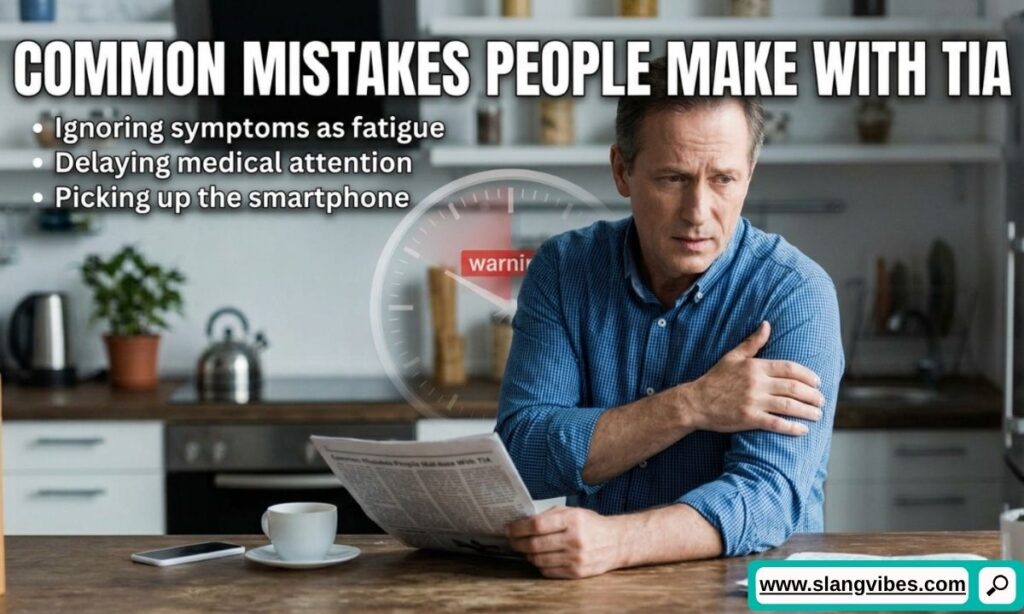
TIA seems simple on the surface. Even so, people misuse it more often than you’d expect, especially in digital communication that crosses into professional spaces.
Common Mistake: Using TIA with strangers or in formal emails, without softening the request first, can come across as presumptuous. It assumes the person will say yes before they’ve had a chance to respond.
A few other common slip-ups show up just as often:
- Using TIA in a serious or urgent message, where it can unintentionally downplay the importance of the request
- Confusing the texting meaning with the medical meaning when reading unfamiliar messages or documents
- Sending “TIA” completely on its own without context, leaving the recipient confused about what they’re even being thanked for
- Overusing it in every single message, which can make genuine gratitude feel repetitive or insincere
Avoiding these mistakes comes down to reading the room. A close friend probably won’t mind a blunt “TIA.” A coworker or someone you’ve just met might appreciate a softer, more complete sentence around it.
Read More Articles: WYLL Meaning in Text: What It Stands for on Snapchat & TikTok
How to Reply to TIA in a Text
Knowing how to reply to TIA depends largely on your relationship with the sender and the platform you’re using. With close friends, a short and casual response works perfectly fine.
Conversation Example 6:
“Can you watch my dog this weekend? TIA!” “Of course! Drop him off whenever.”
With coworkers or acquaintances, a slightly more complete reply tends to feel more professional:
“Sure, I’ll send that file over by end of day.”
Sometimes you’re just not able to help, and that’s fine too. It’s still polite to acknowledge the message rather than ignoring it. TIA already implies the sender is hoping for a yes, so silence can sting a bit more than usual. A simple “I wish I could, but I’m swamped this week!” keeps things respectful without leaving them hanging.
Replying well isn’t really about matching someone’s exact tone. It’s about reading the relationship and the platform. Then you respond in a way that feels natural for both of you.
Frequently Asked Questions
TIA means the same thing regardless of gender. It stands for “Thanks In Advance.” People use it to politely request a favor or information before getting a response.
Not quite. TIA gets used before a favor happens. TY and THX usually come after, once something’s already been done.
Yes, but use it sparingly. Pair it with a clear, complete sentence so it doesn’t come across as too casual in a formal setting.
On dating apps, TIA usually keeps its standard meaning. It often shows up when someone asks a question and wants to sound polite and low-pressure, like asking for restaurant recommendations.
Yes. In medical contexts, TIA stands for Transient Ischemic Attack. That’s a temporary, stroke-like event, and it’s completely unrelated to the texting abbreviation.
Final Thoughts
At the end of the day, TIA meaning in text comes down to one simple idea. Someone’s saying thanks before you’ve even said yes. It might show up in a Snapchat caption, a TikTok comment, an Instagram DM, or a WhatsApp group chat. The spirit behind it stays mostly the same either way, even if the tone shifts slightly from platform to platform. Once you start noticing how friends, coworkers, and strangers all use it a little differently, the abbreviation stops feeling confusing. It starts feeling pretty intuitive instead.

Alex Carter is a language enthusiast and internet culture expert at SlangVibes. He explains the latest slang terms and text meanings in simple, clear English so everyone stays in the loop.