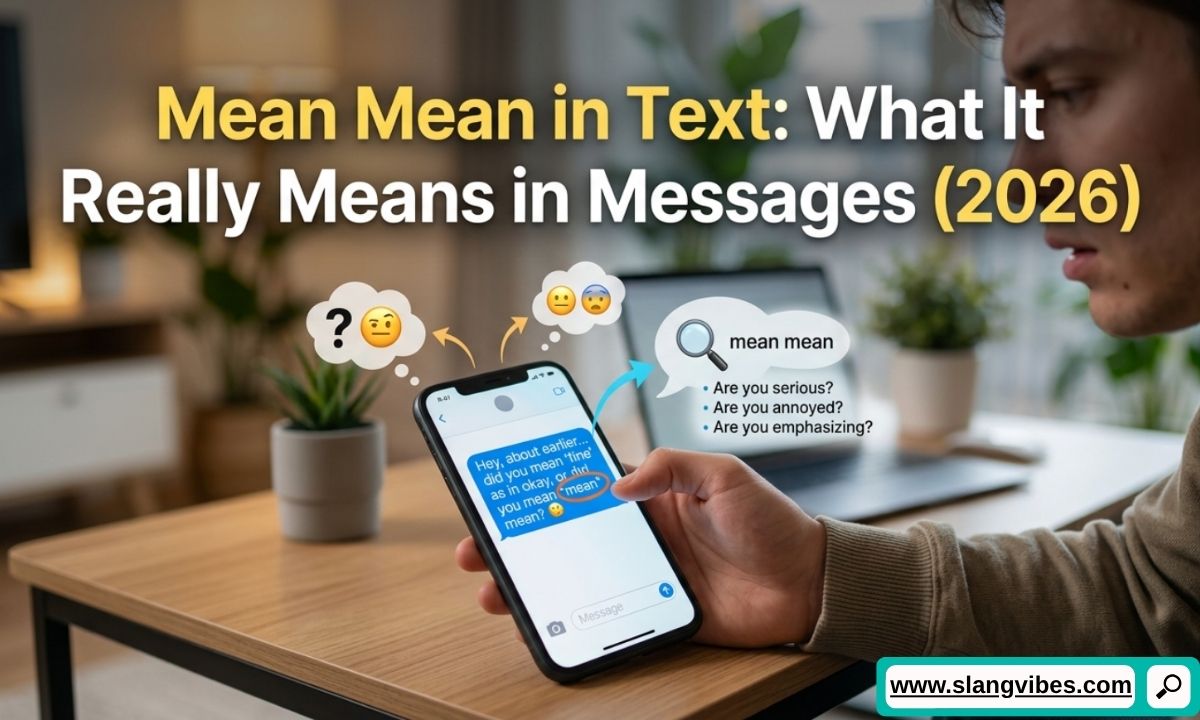
I remember staring at my phone screen, genuinely confused. My friend had texted me “omg you’re mean mean for not telling me about that party” and I had no idea if she was mad, joking, or somewhere in between. I typed back “wait, mean mean?” She replied with three laughing emojis. That’s when I realized this phrase had a whole layer of meaning I was missing.
If you’ve seen mean mean in text messages and felt that same confusion, you’re not alone. This double-word phrase is all over digital conversations right now, and knowing what it signals changes how you read the whole message.
What Does “Mean Mean” Mean in a Text Message?
Here’s the thing: “mean mean” is what linguists call emphatic reduplication. That’s a fancy way of saying someone repeated a word to crank up its intensity. When someone texts you “you’re mean mean,” they’re not writing a typo. They’re saying you’re genuinely, undeniably mean, not just a little rude.
The short answer is this: “mean mean” means the person is emphasizing that something or someone is seriously mean, not in a mild or joking way. It carries weight. It’s the texting equivalent of saying “no, I’m not kind of upset, I’m actually upset.”
Read also : TT Meaning in Text Messages and Social Media (2026)
Did You Know: Word doubling in English slang goes back centuries in spoken language, but it exploded in digital communication after Gen Z adopted it on TikTok and Twitter around 2021. Phrases like “dead dead,” “done done,” and “fine fine” all follow the same pattern.
You’ll see mean mean in text across all kinds of digital conversations: group chats, DMs, comment sections, and dating app messages. Context shapes what it means in each situation, and we’ll break all of those down below.
The “Mean Mean” vs Just “Mean” — What’s the Difference?
This is where most people get confused. On the surface, “mean” and “mean mean” look like the same word used twice. But in texting culture, the repetition completely changes the emotional weight of the message.
When someone texts “you’re so mean,” it’s light. It could be playful, mild frustration, or friendly teasing. It doesn’t land hard. But “you’re mean mean”? That hits differently. The doubling tells the reader: this isn’t casual, this isn’t throwaway, I want you to understand I’m being serious about this.
Think of it this way: “mean” is a nudge. “Mean mean” is a shove.
| Example Text | What It Really Means |
|---|---|
| “You’re so mean lol” | Light teasing, no hard feelings, probably laughing |
| “You’re mean mean for that” | Genuine emphasis, the act was notably unkind or unfair |
| “That was mean” | Mild disapproval, could be joking or slightly annoyed |
| “That was mean MEAN” | Strong disapproval, the person wants you to acknowledge it |
| “Why are you mean mean today” | Affectionate complaint, often flirtatious or playful |
This pattern isn’t unique to “mean.” Gen Z uses word doubling across dozens of words in digital conversations. “Dead dead” means you’re completely finished with a situation. “Done done” means there’s no coming back from something. “Fine fine” means everything is decidedly not fine. Once you understand the mechanic, you’ll spot it everywhere in online chat.
How Gen Z Uses “Mean Mean” on TikTok, Instagram, and Snapchat
The phrase took off on TikTok first, specifically in comment sections where people react to creators doing something unexpected or slightly unhinged. Someone posts a video eating the last slice of pizza their roommate was saving, and the top comment reads “you are MEAN MEAN for this.” It’s funny, it’s expressive, and it landed.
On Instagram, mean mean in text shows up mostly in DMs and story replies. Someone posts a thirst trap, their friend slides in with “mean mean for posting this without warning me.” It’s part compliment, part fake complaint. The tone is warm, the delivery is dramatic.
Snapchat usage leans more casual. In streak conversations or quick back-and-forth messages, “mean mean” pops up as a reaction to someone sharing tea (gossip) about another person, canceling plans, or winning a silly argument. It’s fast, expressive, and perfectly suited to the short-form energy of Snapchat messaging.
Here’s a conversation example from a typical TikTok comment exchange:
Example 1: TikTok Comment Section
Creator posts a video pretending not to know their friend at a restaurant
Commenter: “you are MEAN MEAN for this 😭😭”
Creator: “they knew what they signed up for lmaooo”
Reply: “the way they looked at the camera… mean mean behavior fr”
The phrase here is playful and affectionate. Nobody’s actually upset. It’s appreciation dressed up as mild outrage.
Read also : STG Meaning in Text: What This Popular Acronym Really Means 📱💬
Is “Mean Mean” Playful or Serious? Reading the Tone
This is the real skill you need when you see mean mean in text conversations. The words alone don’t tell you everything. You have to read the full context around them.
Emojis are your biggest clue. “You’re mean mean 😭😭” is almost always playful. The crying-laughing face or the sobbing emoji turns it into a dramatic joke. “You’re mean mean.” with no emoji and a period? That’s more likely genuine irritation.
Capitalization matters too. “mean mean” in lowercase feels softer, more casual. “MEAN MEAN” in all caps is theatrical, which almost always signals that the person is playing it up for effect rather than expressing real hurt.
Here’s a conversation showing how tone shifts:
Example 2: Playful vs Serious Tone Comparison
Playful:
Jamie: “I told everyone you cried at the dog movie lmao”
Alex: “JAMIE you are mean mean for that 😭💀”
Jamie: “the tears were running DOWN your face though”
Serious-leaning:
Sam: “I told them what you said about the project”
Jordan: “that was mean mean of you honestly”
Sam: “…”
See the difference? Same phrase, completely different energy. One has emojis and comedic escalation. The other is quiet and pointed. Trust the full message, not the words alone.
“Mean Mean” in Texting Between Friends vs Romantic Interests
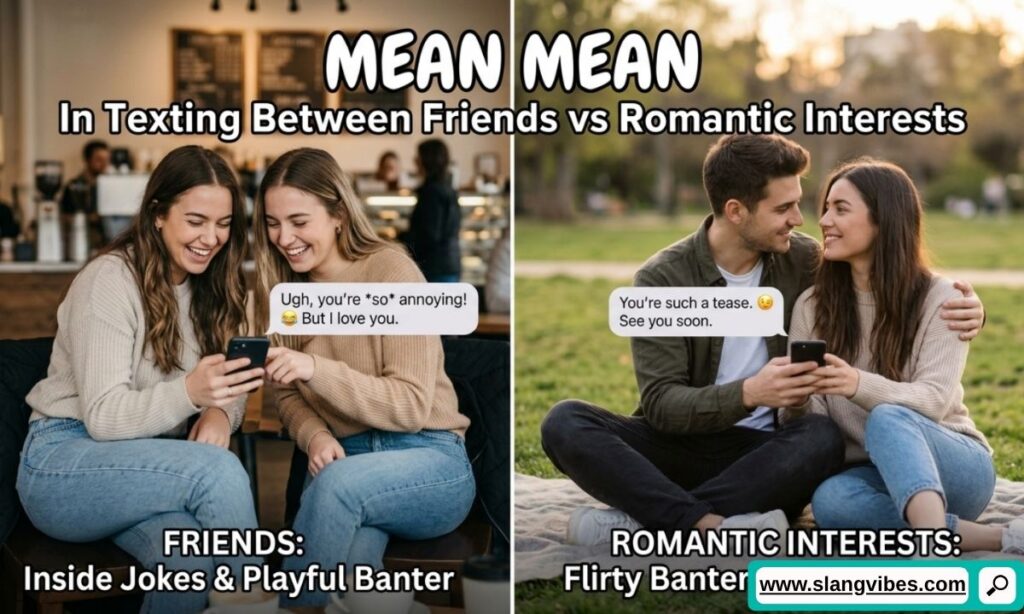
The relationship you have with someone rewrites what mean mean in text signals entirely. Between close friends, it’s almost always affectionate. It’s the texting version of punching someone’s arm lightly. It says “I see you, I’m calling you out, and I’m smiling while I do it.”
Between romantic interests or people who are flirting? It gets interesting fast.
Example 3: Flirtatious Use
Riley: “I already know the answer but I’m not telling you 😌”
Morgan: “you’re literally mean mean for that”
Riley: “maybe you should try harder to get it out of me 👀”
That exchange? That’s flirting. “Mean mean” here is doing double duty: it’s a mild complaint AND an invitation to push back. It opens a door. The person calling you mean mean often wants you to defend yourself, explain yourself, or lean into the teasing.
On dating apps, mean mean shows up after someone gives a witty response that stings a little. “okay that was mean mean but fair 😭” is one of the best responses you can get. It means your message landed, it got a reaction, and they found it charming enough to engage with.
| Context | What “Mean Mean” Signals |
|---|---|
| Friend group chat | Playful teasing, affectionate call-out, zero real anger |
| One-on-one with close friend | Mild complaint, usually funny, no action required |
| Crush or new person you’re talking to | Flirtatious friction, they want more engagement |
| Relationship argument | Slight hurt feelings, worth a quick check-in |
| Comment on a public post | Pure performance, comedic reaction for an audience |
How to Respond When Someone Texts You “Mean Mean”
The good news: most of the time you don’t need to apologize. Here’s how to play it depending on the vibe.
Example 4: Playful Response
Friend: “you didn’t invite me to that dinner, mean mean behavior”
You: “you were busy!! also you would’ve eaten all my fries again”
Friend: “that was one time 😭”
Lean back in. Match their energy. Playful accusation deserves a playful defense.
Example 5: Apologetic Response (when it’s warranted)
Partner: “you forgot to tell me your plans changed, that was kind of mean mean”
You: “you’re right, I’m sorry, I should’ve texted sooner”
Partner: “thank you, I appreciate that”
Sometimes the phrase carries enough genuine hurt that a simple, clean apology is the right move. Read the overall tone of the conversation before deciding which direction to go.
What you don’t want to do is overthink it into a spiral. “Mean mean” in texting culture is almost never the opening line of a serious conflict. If it were a real problem, the person wouldn’t be using playful slang to bring it up.
Other Double-Word Slang Terms You’ll See in Texts in 2026
Understanding mean mean in text unlocks a whole category of slang that works the same way. Here’s the full pattern in action:
The logic behind all of these is simple: repeat the word to signal you mean it at full intensity, not a watered-down version.
Read also : FS Meaning in Text: What It Actually Means in 2026 (Don’t Get Confused!)
| Slang Term | What It Means |
|---|---|
| “dead dead” | Completely done, finished, no recovery from this |
| “done done” | Through with something or someone for real this time |
| “fine fine” | Definitely not fine, heavy sarcasm in play |
| “serious serious” | No joking, I’m being completely genuine right now |
| “sad sad” | Deeply pathetic or genuinely sorrowful, depending on tone |
| “ugly ugly” | Very ugly, or jokingly calling something hideous |
| “tired tired” | Exhausted on a soul level, not just physically |
| “mean mean” | Genuinely unkind, unfair, or teasingly cruel |
All of these live in the same family. If you get comfortable with one, you get comfortable with all of them. Gen Z runs this pattern constantly in chat apps, WhatsApp groups, SMS threads, and social media comments.
Common Mistakes People Make When Interpreting “Mean Mean”
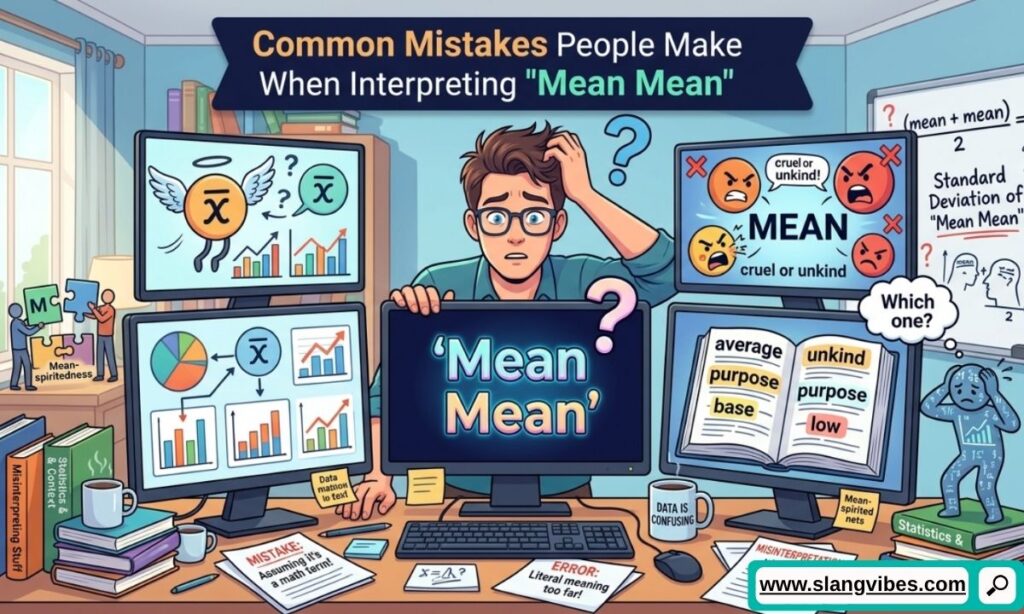
The biggest mistake people make when they see mean mean in text? They treat it like a genuine accusation and panic. Nine times out of ten, they didn’t need to.
Common Mistake: Over-apologizing when someone texts you “mean mean.” If there are emojis, if the conversation was already playful, and if the person is still texting you normally, they’re not hurt. A defensive “I’m SO SORRY I didn’t mean to be mean” response to a lighthearted “you’re mean mean for this 😂” is a tone mismatch that makes things awkward fast.
Here are the other mistakes worth watching for:
Assuming capitalization always means anger. “MEAN MEAN” in all caps is almost always theatrical, not furious. It’s performance.
Ignoring the relationship context. “Mean mean” from your best friend of five years reads completely differently than the same phrase from someone you just started talking to. Know your audience.
Missing sarcasm because there’s no tone of voice. Text strips out vocal tone, which means sarcasm sometimes lands flat. If “oh wow that was SO mean mean of you” feels unclear, look at the emoji trail and the conversation history for signals.
Taking it personally when it’s aimed at a situation, not you. “This app is mean mean for crashing right now” isn’t about you. It’s venting frustration at a tech problem using playful language.
Frequently Asked Questions
When a girl texts you “you’re mean mean,” it’s almost always a form of playful teasing. It signals she’s comfortable enough with you to call you out dramatically, which is a good sign. If there are emojis and the conversation is flowing normally, she’s not upset. She’s engaging.
It’s neither, and it’s both. Mean mean is a dramatic call-out that usually carries warmth behind it. Calling someone mean mean is a way of saying “you did something that got a reaction out of me and I’m making a performance out of acknowledging it.” In most texting contexts, it’s closer to a compliment than an insult.
In a direct message, “you’re mean mean” signals the person is reacting to something specific you did or said. It’s a heightened version of “that was mean.” Whether it’s playful or genuine depends on the emoji usage, the tone of the rest of the conversation, and how well you know each other.
No. Mean mean is slang for emphasis, not a serious moral accusation. Nobody texting “lol you’re mean mean for eating the last slice” thinks you’re a bad person. The word doubling is about intensity of expression, not severity of character judgment.

Alex Carter is a language enthusiast and internet culture expert at SlangVibes. He explains the latest slang terms and text meanings in simple, clear English so everyone stays in the loop.