I still remember the moment I stared at my phone screen for a full two minutes going completely blank. My friend had texted me, “You’ve been acting different lately, JSP mean in text doesn’t even cover how confusing you’ve been.” Half of that sentence made zero sense to me. I typed back “what’s JSP?” and got hit with the laughing emoji. If you’ve ever frozen up reading a text packed with slang you didn’t recognize, you’re not alone. This guide breaks down exactly what JSP means in text, where it came from, how people use it differently across platforms, and what to say when someone sends it to you.
What Does JSP Mean in Texting?
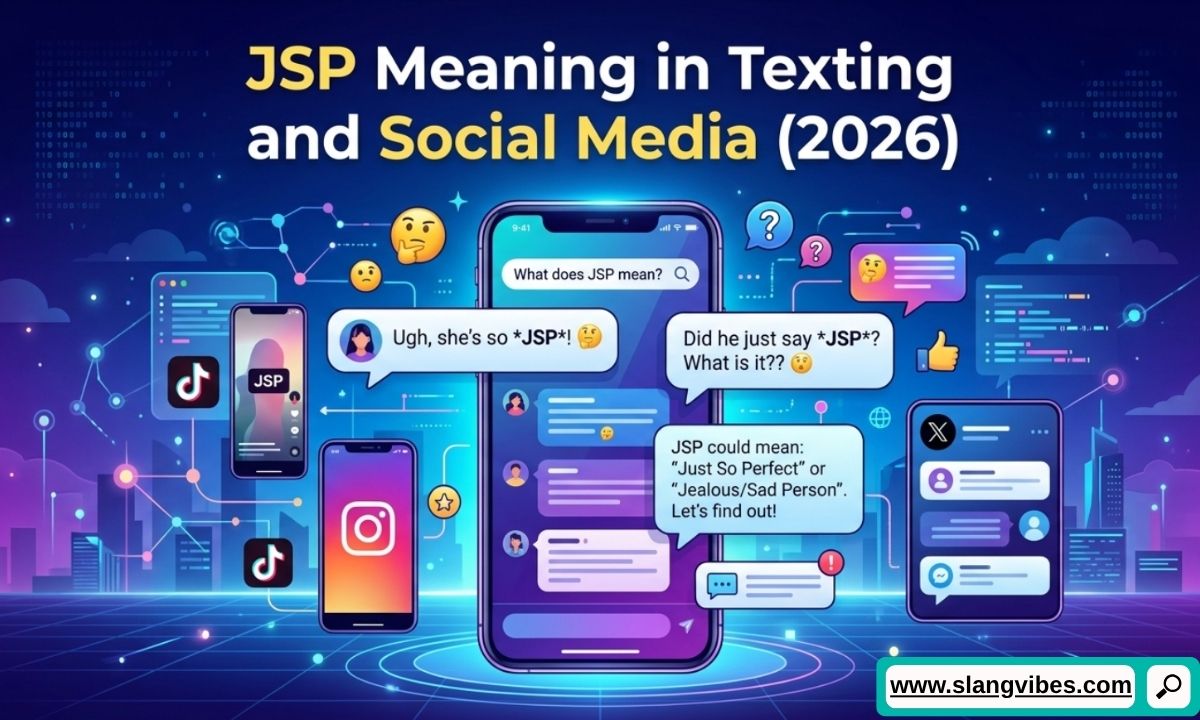
JSP mean in text stands for “Just Saying, Period.” It’s a text abbreviation people use to add a confident, no-debate energy to something they want to express. The “Period” part is the key. It signals finality. It means the person isn’t asking for your opinion, they’re making a statement and closing the door on pushback.
Quick Answer: JSP = Just Saying, Period. It’s used to make a point with confidence, sometimes playfully, sometimes with a subtle edge.
Think of it this way: “Just saying” on its own softens a statement. You’re dropping an opinion but leaving room for the other person to react. Add “Period” to the end, though, and the tone shifts. You’re standing firm. No apologies. No take-backs.
It’s different from plain “JS” (Just Saying), which feels lighter and more casual. JSP carries weight. When someone texts you “That outfit wasn’t it, JSP,” they’re not inviting a conversation. They’re done.
Short sentences hit differently in texting. JSP is proof of that.
Read also: Mean Mean in Text: What It Really Means in Messages (2026)
Where Did JSP Come From? The Origin of This Slang
Internet slang doesn’t come from a single inventor. It grows organically, spreads fast, and sticks around when it fills a need people didn’t know they had. JSP follows that same pattern.
The phrase “just saying” has been a spoken softener for decades. People use it to share blunt opinions without fully owning the bluntness. It’s plausible deniability in word form. As texting culture took over in the late 2000s and abbreviations became the norm, “JS” emerged as the shorthand version.
Then came the “Period” movement. Around 2016 to 2018, “period” and “periodt” started trending in Black Twitter and AAVE-influenced online spaces. The word became a cultural stamp of finality. Saying something and adding “period” meant the discussion was closed. It had weight, confidence, and attitude.
JSP is where those two trends fused. “Just saying” got married to “Period,” and the result was a slang term that let people share hot takes, shade, or soft opinions with a confident finish. It spread through Twitter, Instagram DMs, Snapchat group chats, and TikTok comments throughout the early 2020s.
By 2026, JSP is a stable part of Gen Z and millennial texting vocabulary across the US and UK, especially in casual digital chats and online conversations between close friends.
How JSP Is Used on Different Platforms (With Real Examples)
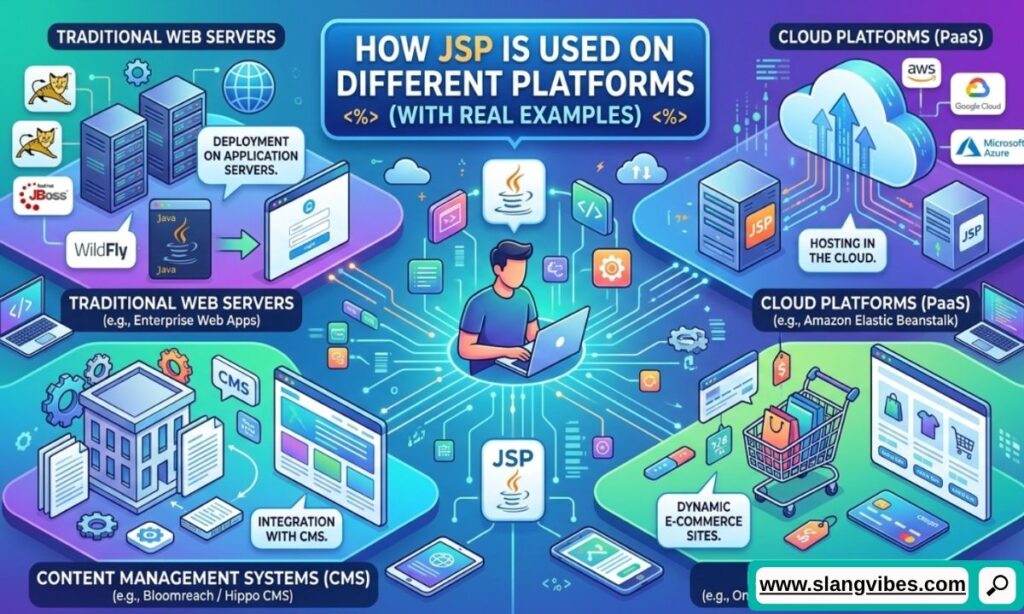
The way people drop JSP in text changes depending on where the conversation is happening. Platform culture shapes tone. Here’s what that looks like in practice.
TikTok Comments: JSP shows up a lot in comment sections, usually in response to hot takes or receipts being dropped. The tone is playful or slightly combative.
Instagram DMs and Captions: In DMs, JSP feels casual and close-range. In captions, it’s more performative, someone making a point to their audience.
Snapchat and iMessage Group Chats: This is where JSP gets most personal. It’s texted between friends, sometimes affectionate, sometimes blunt.
Twitter/X: On Twitter, JSP often lands with more sarcasm or shade. The platform’s culture rewards confident, punchy statements.
Here are five real-style conversation examples showing JSP mean in text in action:
example 1: Friendly Compliment
Alex: “You honestly have the best taste in music, JSP.” Jordan: “Lol okay I’ll take that.”
now Example 2: Blunt Opinion Between Friends
Mia: “His new haircut wasn’t giving what he thought it was giving, JSP.” Priya: “I said what I said too honestly.”
3: TikTok Comment Section
Video caption: “Am I wrong?” Top comment: “You’re 100% right, nobody wants to hear it but it’s facts, JSP.”
Now example 4: Group Chat Shade
Tyler: “The party was mid. The food was mid. Even the playlist was mid. JSP.” Leah: “Okay Tyler relax.” Tyler: “Period though.”
Example 5: Dating App DM
Sam: “You seem way more interesting than your bio lets on, JSP.” River: “Okay now I have to know more.”
Each of these shows a slightly different emotional register. Same abbreviation, different energy depending on context.
Read also : GMFU Mean in Text Explained: Definition, Usage & Examples (2026)
The Two Faces of JSP: Friendly vs. Passive-Aggressive
This is the section most articles skip, and it’s the one you actually need. JSP in text doesn’t always land the same way. It has two very different modes depending on how it’s used, and reading them wrong leads to real miscommunication.
The Warm Version: When a friend texts “You’re the most reliable person I know, JSP,” that’s affection with confidence. The “Period” adds weight to a compliment. It means they mean it fully, no qualifiers.
The Shady Version: When someone texts “Nobody asked for your input, JSP,” that’s not friendly. The same abbreviation becomes passive-aggressive, even cutting. Here, JSP functions like a verbal door slam.
Here’s a quick reference table to read the tone:
| Context / Example | What It Means / How It Feels |
|---|---|
| “You’re the funniest person, JSP.” | Warm, confident compliment. No edge. |
| “That wasn’t your best look, JSP.” | Honest but slightly blunt. Semi-shady. |
| “I didn’t ask, JSP.” | Dismissive. Passive-aggressive. |
| “Your advice actually helped, JSP.” | Genuine appreciation with finality. |
| “The old version was better, JSP.” | Opinionated but not necessarily hostile. |
The words surrounding JSP tell you everything. Warm language plus JSP equals a confident compliment. Dismissive or negative language plus JSP equals shade.
Emoji context matters too. A laughing face after JSP usually softens it. No emoji, or a flat period, often sharpens it.
JSP Across Age Groups and Online Communities
Not everyone uses JSP slang the same way. Gen Z and millennials both use it, but the flavor differs.
Gen Z tends to drop JSP fast and often, mixing it with other abbreviations like NGL, TBH, and IYKYK. For them, it’s shorthand that moves a conversation along quickly. It’s low-stakes, high-frequency.
Millennials use it more deliberately. When a millennial sends JSP, they usually mean it. It’s less habitual and more intentional, which means it lands with slightly more weight.
Online communities also shape usage. Reddit users tend to write it out (“just saying, period”) rather than abbreviate. TikTok comment culture uses JSP heavily in reply threads, especially in discourse-heavy comment sections. WhatsApp group chats see JSP mostly in close-friend circles where the tone is already established.
One important question: is JSP growing or fading in 2026? The short answer is it’s holding steady. It hasn’t exploded into mainstream usage the way “slay” or “no cap” did, but it hasn’t disappeared either. It’s part of the stable mid-tier internet slang vocabulary that people use without thinking too hard about it.
Read also : HG Mean in Text: What It Really Means in Messages (2026)
Other Meanings of JSP You Should Know
Here’s something worth knowing if you move between social and professional digital spaces. JSP mean in text culture and JSP in professional jargon are completely different things.
In the tech world, JSP stands for JavaServer Pages. It’s a server-side programming technology used to build dynamic web pages. If you’re in a developer Slack channel and someone mentions JSP, they’re not dropping slang. They’re talking about code.
In medical notes and clinical documentation, JSP sometimes appears as an abbreviation for Joint Surgical Procedure. Same letters, completely different world.
Common Mistake: Texting a developer friend “that code is clean, JSP” when you mean “just saying, period” and watching them reply with a five-paragraph explanation of JavaServer Pages architecture. Context is everything.
How do you tell which meaning applies? Look at the platform and the people. In casual texting, Instagram, or TikTok, it’s always the slang version. In a GitHub thread, a technical email, or clinical notes, it’s one of the professional meanings.
Similar Slang to JSP and How They Compare
If you’re building out your texting vocabulary or looking for the right tone in a specific situation, knowing the difference between similar acronyms helps. Here’s a clear breakdown:
| Slang / Acronym | Full Form | Vibe / When to Use |
|---|---|---|
| JSP | Just Saying, Period | Confident, final opinion. Friendly or shady. |
| JS | Just Saying | Softer version. More casual, less finality. |
| TBH | To Be Honest | Honest but open. Invites response. |
| NGL | Not Gonna Lie | Admitting something slightly embarrassing or bold. |
| IMO / IMHO | In My (Humble) Opinion | Opinion-sharing. Less confident than JSP. |
| FYI | For Your Information | Informational. Neutral or slightly condescending. |
The biggest contrast is JSP vs. TBH. TBH opens a conversation. JSP closes one. If you want someone to engage with your opinion, use TBH. If you’re done debating, use JSP.
In more professional digital settings like Slack or LinkedIn DMs, none of these work well. Stick to full sentences in those online communication spaces. Abbreviations like JSP don’t translate well when the relationship isn’t already casual.
How to Respond When Someone Texts You JSP

Not sure what to say back? Here are the smartest and most natural ways to respond when someone drops JSP in your chat.
So someone just sent you a message ending in JSP mean in text energy and you’re not sure how to reply. Here are three realistic scenarios with actual scripts.
Scenario 1: You Agree They said something you agree with and closed it with JSP.
Reply: “Honestly no notes, you’re right.” Or: “Facts. Couldn’t have said it better.”
Scenario 2: You Disagree (Calmly) They made a bold statement and you have a different take.
Reply: “I hear you but I’m not fully there with you on that one.” Or: “Okay but hear me out…”
Avoid matching their energy with an aggressive response if the tone was passive-aggressive. Engaging at the same level usually makes things worse.
Scenario 3: It Felt Shady and You Want to Address It
Reply: “Was that shade or am I reading that wrong?” Or: “You good? That felt pointed.”
On dating apps specifically, JSP often lands as playful flirting or bold complimenting. If someone on Tinder or Bumble texts you “You’re easily the most interesting profile I’ve seen today, JSP,” the best reply mirrors the energy back: “Okay I appreciate the confidence, love that for you.”
What not to do: over-explain your position in response to a JSP. They closed the conversation intentionally. A short, grounded reply respects that without letting it go unchallenged if it felt unfair.
Frequently Asked Questions
It means the same thing regardless of who sends it: Just Saying, Period. The sender is making a confident statement and signaling they’re done debating it. Read the surrounding context to understand whether the tone is warm, flirty, or shady.
Not on its own. JSP is neutral as a tool. Whether it lands as rude depends entirely on what comes before it. “You’re incredible, JSP” is a compliment. “Nobody asked, JSP” is dismissive. The words around it determine the tone.
No. JSP mean in text is informal slang built for casual online conversations between friends. It doesn’t belong in work emails, client messages, Slack channels with colleagues you don’t know well, or LinkedIn DMs. Save it for personal chats.
JS (Just Saying) is softer and leaves the door open. JSP (Just Saying, Period) adds finality. If you use JS, you’re sharing an opinion but staying open to pushback. If you use JSP, you’re closing the discussion. The “Period” carries all the extra weight.
Yes, it’s holding steady in Gen Z and millennial texting culture, particularly in the US and UK. It hasn’t broken into the mainstream the way some slang terms do, but it remains a consistent part of casual online communication and digital chats across WhatsApp, Instagram, and TikTok.
Wrapping It Up
JSP mean in text is one of those abbreviations that seems simple until you realize it has layers. It’s a confident opinion stamp. A conversation closer. A compliment with backbone or a quiet piece of shade depending on how it’s used. Knowing the difference between warm JSP and passive-aggressive JSP is the kind of social literacy that actually matters in 2026 when so much of how we relate to people happens over text and social media. Next time you see JSP in a message, you’ll know exactly what to say back.

Alex Carter is a language enthusiast and internet culture expert at SlangVibes. He explains the latest slang terms and text meanings in simple, clear English so everyone stays in the loop.