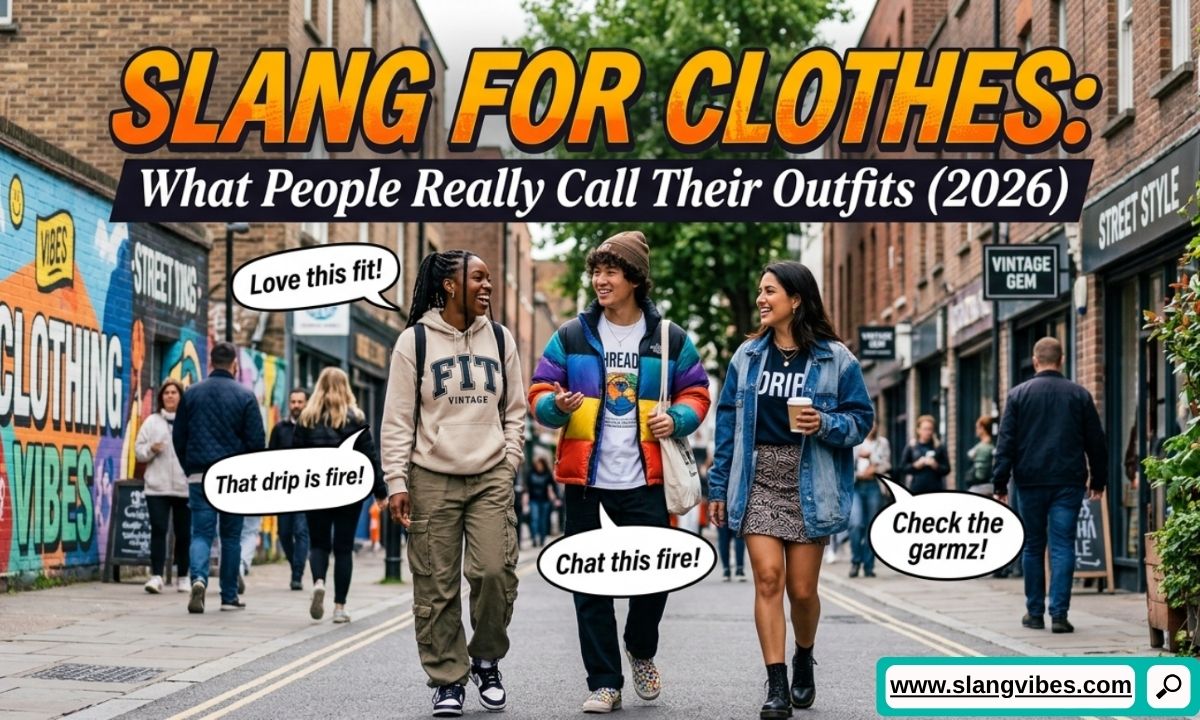
My cousin texted me a photo last week. The caption read “this fit ate, no crumbs left.” I sat there for two minutes, wondering if her outfit had food on it somehow. It didn’t. She meant her outfit looked amazing. This one text sent me down a rabbit hole of modern slang for clothes. I realized this language moved past “drip” and “fit” without me noticing. Slang for clothes shifts fast. If you haven’t kept up since 2020, half of what people say online sounds like a different dialect. This guide walks through every wave of it, from your uncle’s “threads” to your niece’s “core” era, so nothing catches you off guard again.
What Does Slang for Clothes Mean?
Slang for clothes covers casual, informal words people use instead of standard terms like “outfit,” “garment,” or “wardrobe.” It’s the language friends use with each other. You’ll hear it on social media or in text messages, rather than in a store or a job interview. This kind of language moves fast because fashion itself moves fast. A fresh term from three years back might sound dated today. A single viral video spreads a phrase to millions of people within days.
What makes clothing slang different from other slang categories is how visual it is. Most terms describe a look, a vibe, or a reaction someone has to an outfit. They rarely describe the clothing item itself. Saying someone’s “fit” is “clean” tells you nothing about the pieces they’re wearing. It tells you how the whole look lands, and this is the point.
This guide covers the full range, moving through several eras of style:
- Classic words your parents grew up saying.
- Terms Gen Z made mainstream.
- Aesthetic slang blowing up right now.
- Regional differences between the US and UK.
- Words people use when an outfit misses the mark completely.
Old-School Clothing Slang You’ll Still Hear Today
Before “drip” and “fit” took over, people had their own words for clothing. Plenty of them still stick around in everyday conversation, especially with Gen X and older Millennials.
“Threads” traces back decades. It came from jazz and early hip-hop circles, describing someone’s clothing, especially a sharp outfit. “Gear” works the same way in British and American English, referring to clothes or equipment in general. “Getup” leans playful or mocking, often used when someone’s outfit looks unusual or costume-like. “Garb” sounds formal on purpose, often used as a joke about someone dressing up. “Duds” and “rags” both mean clothes in general. “Rags” sometimes carries a humble tone, like picking up new rags at the mall.
“Glad rags” adds one more layer here. The term gets reserved for someone’s best clothing, worn to a special occasion like a wedding or a formal dinner. None of these words sound out of place today. A dad might tell his son to grab his gear before soccer practice. A grandmother might ask about someone’s getup at a wedding. Both show how naturally these terms still fit into daily conversation. They’re not dead slang. They’re the foundation everything newer got built on top of.
Mom: “Put on your glad rags. We’re leaving in an hour.” Teen: “For a dinner? Full glad rags energy tonight.” Mom: “Your grandmother expects it.”
These older terms rarely show up in a caption or a comment section. Yet they carry real staying power in spoken conversation, family group chats, and workplace small talk about weekend plans.
Read Now: MB Mean in Text: What It Really Means on Social Media (2026)
Gen Z Clothing Slang Everyone Picked Up
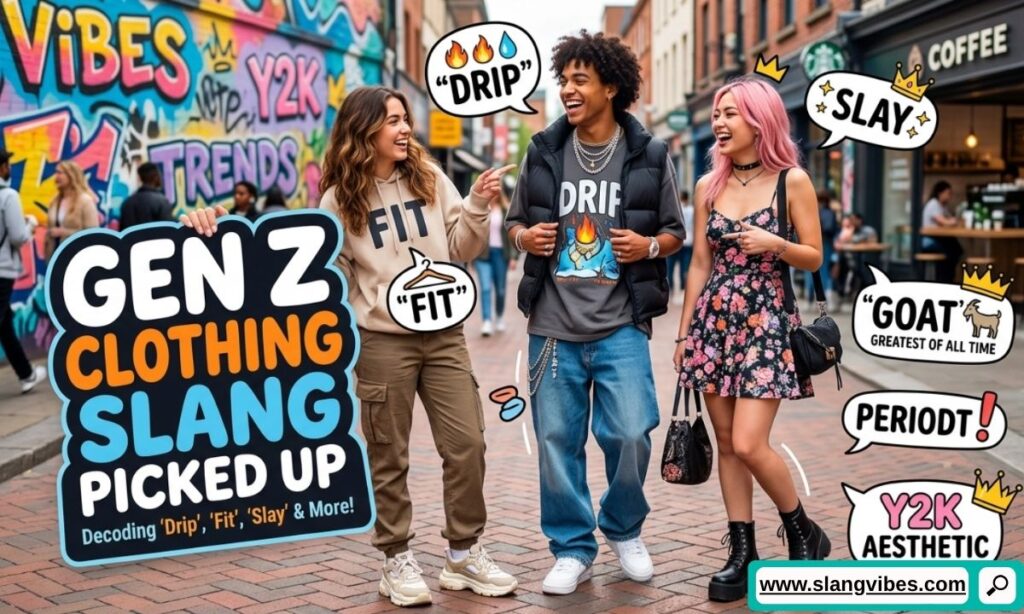
By the mid-2010s, a new set of words pushed the older ones aside. Most of it came out of hip-hop, streetwear communities, and eventually TikTok. These terms now show up in everyday texts among teens and young adults across the US and UK alike.
| Term | Meaning | Example |
|---|---|---|
| Fit | Short for outfit | “New fit for the party tonight” |
| Drip | Stylish, eye-catching clothing or accessories | “His sneakers got drip” |
| Fit check | Sharing or asking for opinions on an outfit | “Fit check before I leave” |
| Steeze | Style plus ease, effortless cool | “She’s got steeze without trying” |
| Fresh | Clean, new, well put together | “Those kicks look fresh” |
| Heat | Something highly desirable, often shoes | “Those Jordans are heat” |
“Drip” carries the most cultural weight of this group. It came out of Black music and internet culture. The word spread through platforms like Twitter and Instagram around 2018. Now it shows up everywhere, from casual texts to marketing campaigns from major sneaker brands. “Fit check” turned into a content format on its own. Millions of videos across TikTok and Instagram Reels ask viewers to rate an outfit. Streetwear slang like this spreads quickly, since sneaker culture and hip-hop fashion built massive online communities early, long before mainstream fashion brands caught up.
Friend 1: “Fit check, rate it 1 to 10.” Friend 2: “Easy 9. The jacket is doing all the work.” Friend 1: “The drip never lies.”
The Newest Slang for Clothes in 2026
If you stopped tracking clothing slang around 2020, this section feels like a whole new language. Slang for clothes in 2026 leans less on naming an outfit. It leans more on describing the feeling or reaction it causes.
“Core” attaches to nearly any aesthetic now, like “clean girl core,” “dark academia core,” or “streetwear core.” Each version describes an entire mood built around an outfit, rather than one single piece. “Giving” works as a stand-in for “carrying the energy of,” as in “this jacket is giving 90s runway.” “Ate” and its longer version, “ate and left no crumbs,” both mean an outfit performed at the highest level. Nothing gets left to critique. “Served” means someone presented themselves with confidence and precision. On the flip side, “mid” describes an outfit landing as fine but forgettable. “Cheugy” describes a style trying too hard to feel trendy while missing the mark entirely.
Did You Know? “Served” and “serving looks” both trace back to Black and Latino ballroom culture from the 1980s. Contestants there competed by presenting themselves with the highest level of confidence and polish.
Maya: “The airport fit today 👇” Jordan: “This is giving main character energy.” Priya: “No crumbs left, she ate.”
US Clothes Slang vs UK Clothes Slang
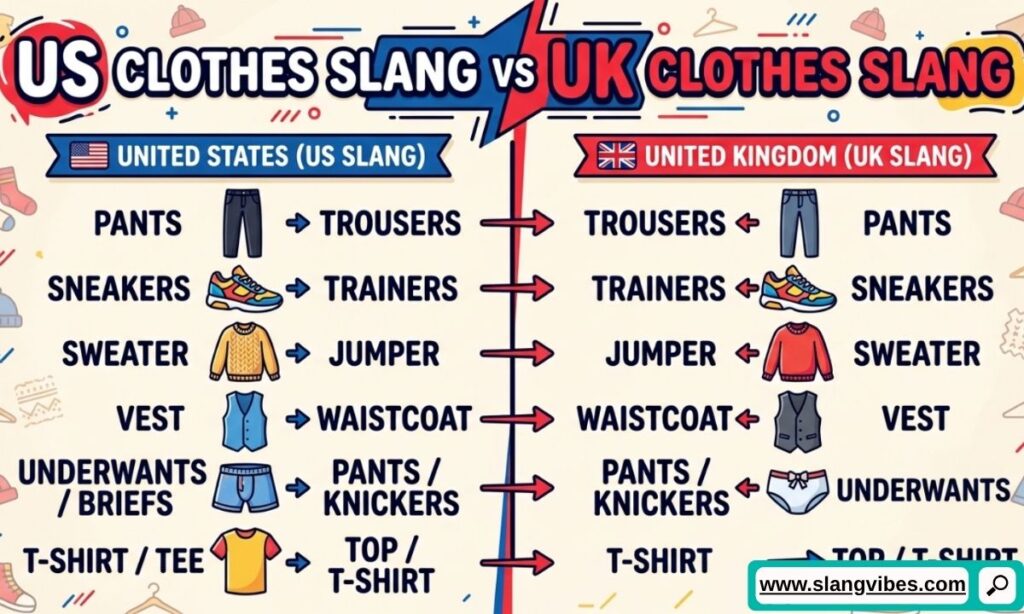
Fashion words split hard between American and British English. This goes beyond a few random spelling differences. Someone in London and someone in Chicago might describe the same item with completely different words. Neither one sounds wrong.
Read New Article: FB Meaning in Text: What It Really Means on Snapchat, TikTok & Instagram (2026)
| US Term | UK Term | Meaning |
|---|---|---|
| Sweater | Jumper | Long-sleeved knit top |
| Sneakers | Trainers | Athletic shoes |
| Pants | Trousers | Full-length leg clothing |
| Underwear | Pants / Knickers | Undergarments |
| Sweatpants | Joggers / Tracksuit bottoms | Casual elastic-waist pants |
| Fanny pack | Bum bag | Small waist bag |
| Raincoat | Mac | Waterproof coat |
This mix-up gets funny fast. An American telling a British friend they forgot their pants means something different, depending on which side of the ocean the conversation happens. British slang also holds onto older, regional words. “Kecks” means underwear or trousers, depending on the area. “Whistle” comes from old Cockney rhyming slang for a suit, short for “whistle and flute.” None of it’s wrong. It’s simply proof: clothing slang reflects local culture as much as global trends.
Emma (UK): “Wearing my new jumper and trainers tonight.” Alex (US): “Wait, is jumper a sweater? My brain did a double take.” Emma (UK): “Yes lol, same thing. Fancier name over here.”
Slang for Specific Clothing Items, Not the Whole Fit
Most clothing slang describes an entire outfit. Plenty of terms zoom in on one specific piece instead.
“Kicks” means shoes, especially sneakers, and shows up constantly in sneaker culture and resale communities. “Lid” refers to a hat or cap. “Groutfit” combines “gray” and “outfit,” describing an all-gray look, usually sweats or loungewear. “Alphet,” short for “alternative outfit,” became popular through TikTok videos, where creators show different styling options for the same pieces. “Bathers” means a swimsuit in British and Australian English, while Americans would say swimsuit or bathing suit. A “Canadian tuxedo” describes an outfit made entirely of denim. The term traces back to a famous performer getting turned away from a hotel for wearing head-to-toe denim.
Sibling 1: “Where’d you get those kicks?” Sibling 2: “Thrifted them last week. Only 12 bucks.” Sibling 1: “No way, those look brand new.”
A hoodie and joggers combination gets its own nickname too. People often call it a “loungefit” or simply a “comfy fit,” used when someone dresses for staying home rather than going out. Sneaker resale communities push this vocabulary further. A “grail” describes a highly wanted pair someone has chased for years. “Deadstock” describes shoes still in original, unworn condition. None of these words need the whole outfit as context. Each one zooms straight into a single item, which makes them useful shorthand for shopping, collecting, or getting dressed for a specific occasion.
Slang for Bad or Cheap Outfits (When the Fit Doesn’t Hit)
Not every piece of clothing slang works as a compliment. Plenty of phrases exist specifically for outfits missing the mark.
“The fit ain’t it” means an outfit isn’t working, plain and simple. “Corny fit” describes an outfit trying too hard for attention while landing awkward instead. “Fell off” gets used when someone’s style used to be sharp but has gone downhill over time. “Outfit repeater” started as a joke term from a kids’ show. It now describes someone wearing the same outfit twice in photos, though most people use it lightheartedly rather than as an insult. “Floordrobe” describes the pile of clothes on a bedroom floor, functioning as a makeshift closet. People usually say it with a laugh rather than judgment.
Coworker 1: “Be honest, is this fit giving corny energy for the meeting?” Coworker 2: “Nah, it’s clean. Don’t overthink it.”
How to Use Slang for Clothes Without Sounding Forced
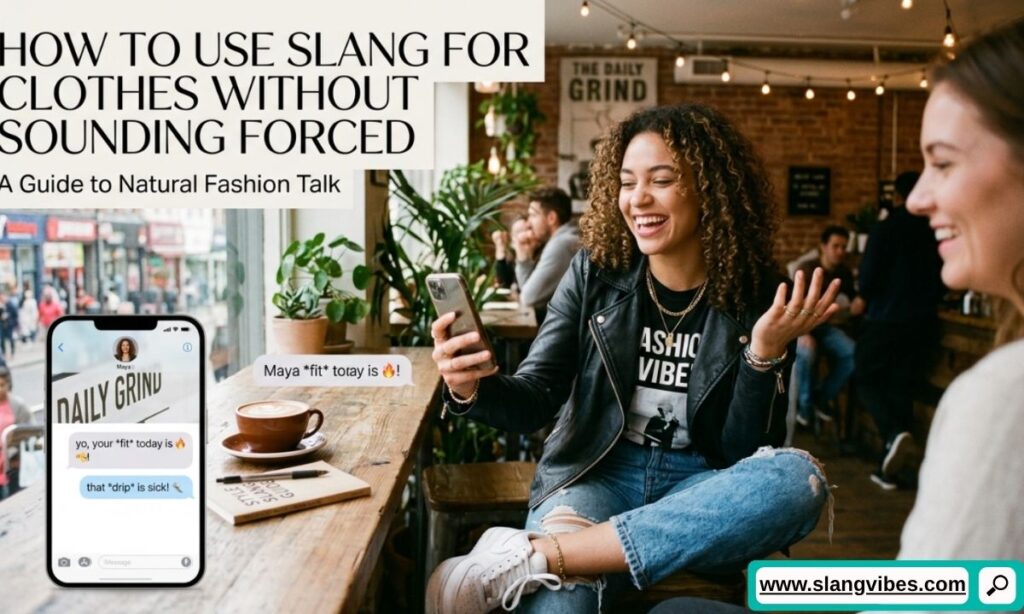
Knowing the words is one thing. Using them naturally is a separate skill entirely.
Context always comes first. Slang for clothes works well with friends, on social media captions, or in group chats. It falls flat in a job interview, a client email, or a formal presentation. Age matters too. An older Millennial forcing “no crumbs left” into a sentence often reads as trying too hard. A Gen Z speaker using the same phrase naturally sounds effortless. The safest move is sticking to slang you already hear people around you use regularly. Skip reaching for the newest term you saw once online.
A short list of quick rules:
- Match the tone of the person you’re talking with.
- Skip clothing slang in professional writing or formal settings.
- Don’t force a term you heard once and don’t fully understand.
- Let context decide the word, not the trend.
When someone uses clothing slang with you, the easiest response is playing along at the same energy level. If a friend says their fit ate, respond with something equally casual rather than a formal compliment. It keeps the conversation feeling natural instead of forced.
Dress code plays a role here too. A workplace with a strict dress code leaves little room for slang, even in casual chat between coworkers. The tone of the whole environment tends to stay formal. A creative studio or a retail job built around streetwear or fashion treats things differently. Clothing slang often becomes part of the everyday vocabulary there, right alongside talk about new arrivals or an upcoming collection.
Read More Article: MK Mean in Text: What It Really Means on Snapchat, TikTok & Instagram (2026)
FAQ
“Fit” remains the most common word people use for an outfit across the US and UK. “Drip” comes in a close second for a stylish look.
“Drip” is still widely used. It now shares space with newer aesthetic terms like “core” and “giving,” rather than standing alone.
British English still uses “clothes” as the standard word. Slang options like “gear,” “garms,” and “kecks” show up often in casual conversation.
A “fit check” means sharing a photo or video of an outfit and asking for feedback, often posted on TikTok or Instagram.
Using Gen Z slang works fine as long as it feels natural. Match it to words you already hear around you, rather than words picked up from one trending video.
Conclusion
Clothing has always come with its own language, and it keeps rewriting itself every few years. My cousin’s “no crumbs left” text felt confusing for about five minutes. Now it slots into my vocabulary like it’s always belonged there. This is how slang works. It moves fast, borrows from music and internet culture, and shifts across regions. American and British speakers sometimes sound like they’re describing completely different wardrobes.
Whether you’re keeping up with a teenager in your life, chatting with friends online, or writing about fashion for work, this range of slang for clothes helps the conversation feel natural. Pick the words fitting your voice. Skip whichever ones feel off, and let the rest evolve without you, the way language always has.

Alex Carter is a language enthusiast and internet culture expert at SlangVibes. He explains the latest slang terms and text meanings in simple, clear English so everyone stays in the loop.