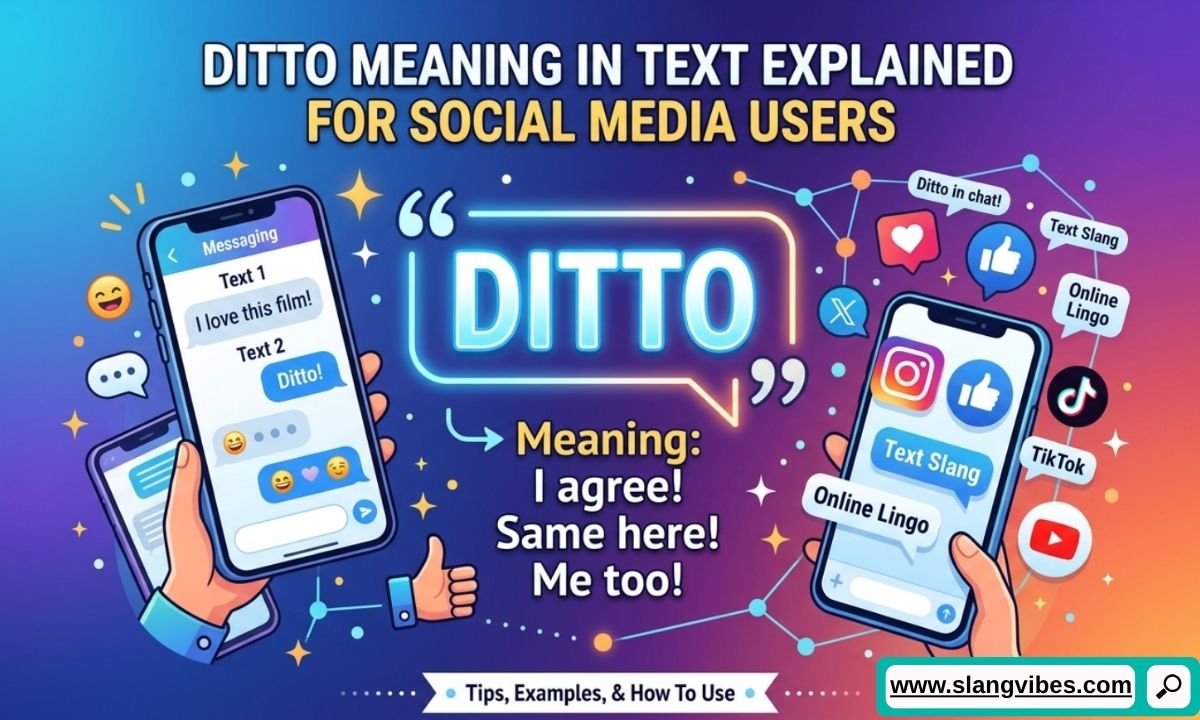
My best friend texted me “I love that song” during our group chat debate last summer. Someone replied “ditto” and the conversation moved on. But I sat there for a moment, phone in hand, wondering if “ditto” meant enthusiastic agreement or a half-hearted shrug. I’d seen the word dozens of times before, yet I still wasn’t sure what weight to give it. Honestly, the ditto meaning in text trips people up more than you’d expect, because it’s one of those words that sounds simple until it shows up in your actual conversation and suddenly the tone matters a lot. So whether you’re seeing it for the first time or you’ve been using it wrong for years, this guide covers everything you need to know.
What Ditto Meaning in Text Tells You Right Away
Before getting into the deeper layers, let’s start with the basics. The ditto meaning in text is simply “same” or “same here” or “me too.” When someone sends you “ditto,” they’re saying they feel, think, or experience the exact same thing you just described, without typing it out word for word again.
It’s an agreement shortcut. Nothing more, nothing less at the surface level.
Think of it this way: you text your friend “I’m completely exhausted and ready to sleep for a week.” They reply “ditto.” What this really means is they feel exactly the same way. They don’t need to retype the whole sentiment. They point at your words and say, “Yes. That. Me too.”
The ditto slang term works so well in texting because of how efficient it is. In a world of fast-paced online chat expressions, one word does the job of a whole sentence.
Here’s a clear example to make it stick:
Conversation Example 1:
Priya: I can’t believe how fast this week went. I barely got anything done. Mia: Ditto. I feel like Monday was five minutes ago.
Priya doesn’t need a long reply. Mia’s “ditto” signals complete understanding and shared experience. That’s the ditto reply meaning at its most straightforward.
One thing worth noting: ditto doesn’t always mean emotional agreement. Sometimes it signals that the same fact or situation applies to the person replying. So when someone says “I haven’t eaten lunch yet” and someone replies “ditto,” they’re not agreeing with a feeling. They’re saying the same thing is true for them. That’s a small but meaningful distinction in texting abbreviations explained clearly.
Read New Article: WTW Meaning in Text: What It Means on TikTok, Snapchat & Instagram (2026)
The History Behind the Ditto Meaning in Text
The ditto meaning in text didn’t start with smartphones. It goes back centuries, and knowing that history helps you understand why the word carries so much quiet credibility.
The word comes from the Italian “detto,” meaning “said.” Scribes and record keepers in the 1600s started using “ditto” in written ledgers to avoid rewriting the same word twice in a list. Instead of repeating an entry, they’d place the ditto mark, that small 〃 symbol, underneath it. If Monday’s ledger said “12 sacks of flour,” Tuesday’s entry would show 〃 and everyone understood it meant the same.
It was essentially the earliest form of copy-paste.
Over time, the word moved from paper records into everyday spoken conversation. People started saying “ditto” out loud when they agreed with something or wanted to repeat a sentiment without spelling it out. By the time texting and social media arrived, the word already had hundreds of years of practical use behind it.
That’s why, even today, ditto doesn’t feel like trendy slang. It feels grounded. It belongs in internet communication terms and in a royal charter from 1650 equally comfortably. Not many words pull that off.
Read Also : GPI Meaning in Text: Everything You Need to Know in 2026
Ditto Meaning in Text Across Every Major Social Platform
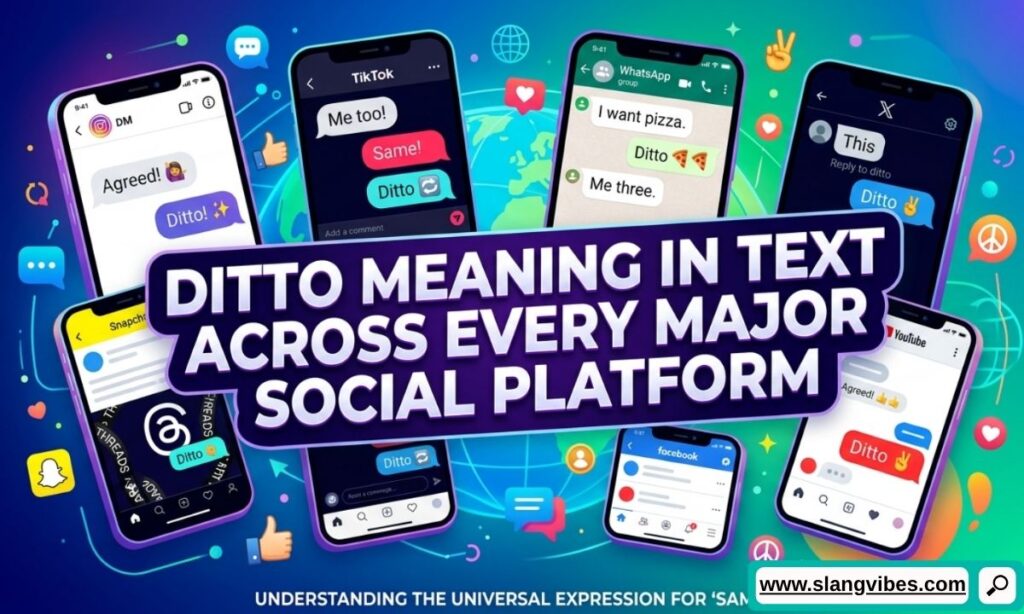
The ditto meaning in social media stays consistent in its core purpose, but the tone shifts depending on where it shows up. Platform culture shapes everything, and ditto is no exception.
Here’s a quick breakdown of how it lands differently across the apps people use most:
| Platform | How Ditto Gets Used | What It Feels Like |
|---|---|---|
| Group chats, close friend replies | Warm, casual, no overthinking needed | |
| Comments under relatable posts | Solidarity, quick agreement | |
| TikTok | Replies to shared-experience videos | Community, collective “same energy” |
| Snapchat | Quick one-word streak replies | Breezy, low-effort, keeping it moving |
| Discord | Group channels, server discussions | Neutral agreement, avoids spam |
| Twitter/X | Quote tweet or reply threads | Punchy, sometimes ironic |
The ditto meaning on Instagram leans heavily toward community. When someone posts a caption about Sunday anxiety or not wanting to start the week, a flood of “ditto” comments underneath is people bonding over a shared feeling without needing to write paragraphs about it.
The ditto meaning on TikTok works similarly, but with an added layer of irony that Gen Z brings to it. Sometimes it’s sincere. Sometimes it’s playful. The context of the video usually tells you which.
The ditto meaning on WhatsApp is probably the most personal use. Between two people in a direct message, it carries the weight of actually meaning “I feel exactly what you feel.
Read Also: EVB Meaning in Text: What It Means and How People Use It (2026)
Conversation Example 2:
Group chat, 11pm on a Sunday: Keisha: Why does Monday always come so fast? Leon: Ditto. I haven’t mentally left the weekend yet. Amara: Ditto to both of you.
Notice how “ditto” chains naturally here. Each use builds on the last. That’s how ditto meaning in chat flows in group conversations.
Ditto Meaning in Text and What It Signals Emotionally
Here’s the thing that most articles skip over: “ditto” doesn’t carry one fixed emotional weight. The same word, sent by two different people in two different relationships, lands completely differently.
Between close friends, ditto feels warm and easy. It’s shorthand for “I understand you completely and feel the same.” The brevity is part of the intimacy.
Between people who don’t know each other well, though, the ditto reply meaning shifts. A one-word “ditto” without any follow-up can read as cold, disengaged, or even dismissive. It leaves the other person wondering if they said something worth responding to at all.
Here’s the contrast in action:
Conversation Example 3:
Between best friends: Jade: I’ve been feeling so overwhelmed lately. Like everything is piling up. Sofia: Ditto. Let’s talk tonight?
That “ditto” lands with care. Sofia validates Jade immediately and follows up with connection.
Conversation Example 4:
Between two people on a first date who’ve been texting for three days: Marcus: I’m nervous about meeting up, honestly. Dev: Ditto.
That exchange is trickier. Without more context, Dev’s “ditto” might read as either sweetly relatable or flatly uninterested. Tone is everything in common texting phrases, and ditto doesn’t carry its own tone the way a longer sentence does.
Read More Articles : NTY Meaning in Text (2026): What It Means and How to Use It ⭐
Common Mistake: Assuming “ditto” always signals enthusiasm. In many casual texting responses, it’s neutral agreement, not excitement. Read the surrounding conversation before deciding how to interpret it.
Ditto Meaning in Text in Romantic and Dating Contexts
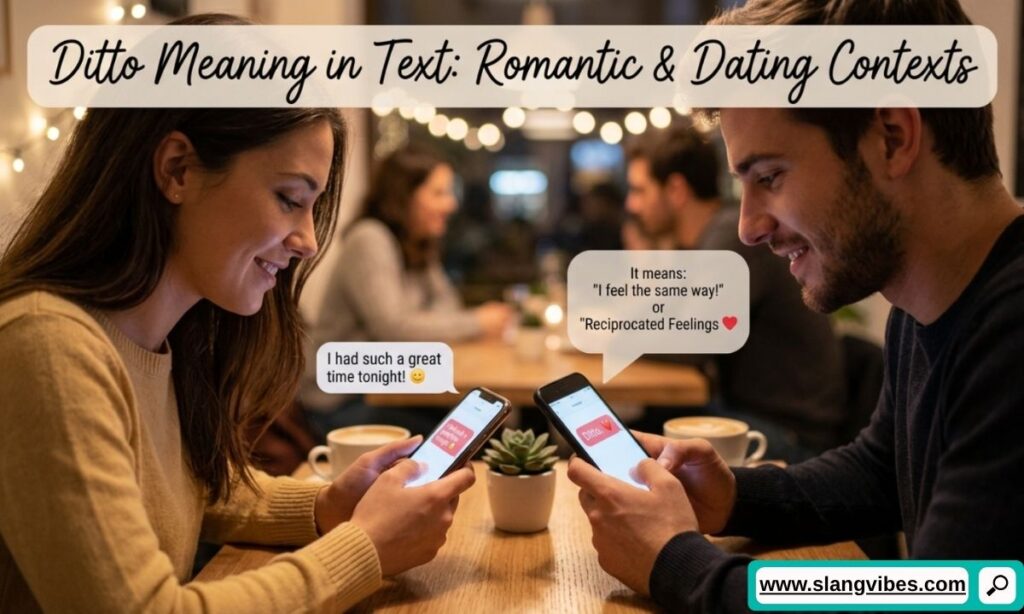
The ditto meaning in text takes on the most complexity in romantic situations. It’s where one word doing double duty gets genuinely interesting.
The most famous example comes from pop culture. In the 1990 film “Ghost,” Patrick Swayze’s character responds to “I love you” with a quiet “ditto” instead of saying it back directly. That scene changed how a generation understood the word. It became a stand-in for emotion that’s too big to say out loud. For Millennials especially, using ditto in a romantic context carries that cinematic warmth.
Between partners, ditto works well when it follows something heartfelt:
Conversation Example 5:
Naomi: I was thinking about you all day. Missed you a lot. Ravi: Ditto. Every single hour.
That exchange works because Ravi adds just enough to make the ditto feel intentional, not lazy.
On dating apps like Hinge or Tinder, the ditto meaning in social media is lighter. It keeps early conversations moving without over-committing emotionally. It’s a useful tool for agreeing on something, like “I love hiking too” becoming simply “ditto,” without making it feel too intense too soon.
Read More Articles: HN Social Media Meaning: What It Really Means on TikTok, Instagram & Snapchat (2026)
Where ditto struggles romantically is when it’s used as a substitute for emotional investment. A bare “ditto” in reply to something vulnerable can feel like a closed door instead of an open hand
Ditto vs. Same Here, Me Too, and Likewise: What’s the Real Difference?
The ditto meaning in text sits in the same family as several other agreement words in texting, but they don’t all mean the same thing. Knowing which one to reach for makes your messages land better.
Here’s how the main alternatives compare:
| Phrase | Tone Level | When It Works Best |
|---|---|---|
| Ditto | Casual, quick | Close friends, comment sections, group chats |
| Same here | Neutral, versatile | Works in almost any relationship type |
| Me too | Personal, warm | Sharing feelings or lived experiences |
| Likewise | Formal, polished | Professional settings or returning a compliment |
| I agree | Direct, clear | Discussions, decisions, expressing a position |
The biggest difference between ditto and “same here” meaning is conversational momentum. Ditto tends to close a thread. “Same here” tends to keep it open, inviting more. If you want to show agreement and keep talking, “same here” does more work. If you want to agree and let the moment breathe, ditto is cleaner.
“Likewise” meaning swings in a completely different direction. It’s the option for professional emails, formal introductions, or returning a polite compliment. You wouldn’t say “ditto” when your colleague says “Great working with you” unless the relationship is very casual.
“Me too” carries the most personal emotional weight. It places you directly inside the experience, not just alongside it.
Read More : What Does HYB Mean in Text? Popular Uses in Chats and Social Media
How Ditto Meaning in Text Changes Across Generations
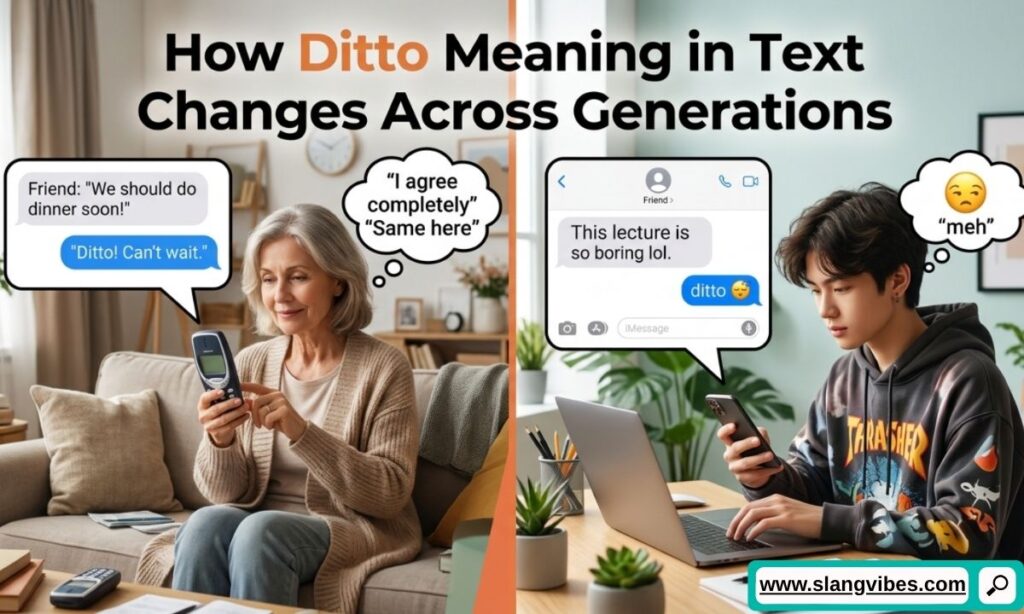
Understanding the ditto meaning in social media means understanding who’s sending it. Generation shapes interpretation more than most people realize.
Boomers tend to know the word from its formal written history. Many grew up seeing it in printed documents or ledgers. When they use ditto, it’s often deliberate and relatively formal. They mean it precisely.
Millennials carry the “Ghost” movie association. For them, ditto often comes with a soft emotional undertone. It’s nostalgic shorthand for something felt but not fully expressed. When a Millennial sends “ditto” in response to “I love this place,” they’re not just agreeing. They’re sharing a feeling.
Gen Z uses ditto with an added layer of ironic self-awareness. On TikTok especially, “ditto” in the comments works as a meme-adjacent response. Everyone knows what it means, but saying it also signals that you know the cultural weight of the word, which is its own kind of in-joke. The ditto meaning on TikTok is sincere and playful at the same time.
So when you text “ditto” to someone from a different generation, expect them to read it through their own lens. Your casual shrug of agreement might feel like a meaningful statement to them, or your heartfelt ditto might land as throwaway to someone who’s grown up treating it as digital conversation slang. Neither reading is wrong. They’re just different.
FAQ
It means they agree with you or feel the same way you just described. The emotional weight behind it depends entirely on your relationship with that person and what was said before it.
Not between friends. Between strangers or in more formal exchanges, a single “ditto” with no follow-up can feel abrupt or dismissive, so adding a word or two after it usually helps.
“Ditto” points specifically back to what the other person said, almost like quoting it silently. “Same” is broader and breezier. Both signal agreement, but ditto feels a little more deliberate and intentional.
You don’t always need to. If you want to keep the conversation going, something like “right?” or “exactly” flows naturally. If someone says “ditto” to something emotional you shared, a simple acknowledgment or emoji works well.
The 〃 symbol means “same as what’s written above.” Clerks used it in old ledgers to avoid rewriting repeated entries. It still shows up in some printed lists and formal documents today, though you won’t see it often in everyday texting.

Alex Carter is a language enthusiast and internet culture expert at SlangVibes. He explains the latest slang terms and text meanings in simple, clear English so everyone stays in the loop.