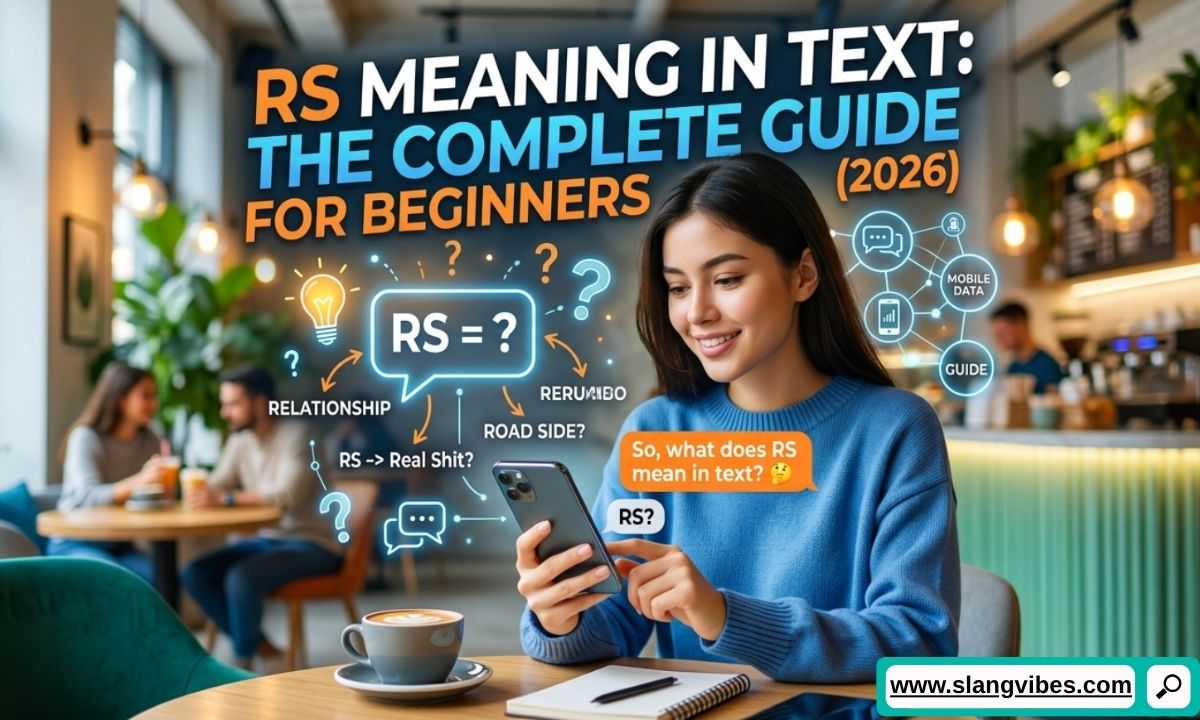
My friend Destiny sent me “RS” at 11:47 PM after I told her I was done pretending to be okay. I stared at my phone screen for a solid thirty seconds. Was she agreeing? Was she confused? Did she accidentally send half a word? I typed back “what?” like a complete rookie, and she replied with “girl, Real S*** lol.” That was the moment I finally got it. Two letters. One meaning. Zero confusion after that night.
If you’ve landed here, you probably had a similar moment. Someone dropped RS meaning in text into a conversation and your brain short-circuited trying to decode it. Don’t worry. By the time you finish reading this guide, you’ll know exactly what RS means, when people use it, how to respond to it, and the handful of other meanings it carries depending on where you see it.
What Does RS Mean in Text? The Quick Answer Every Beginner Needs
The short answer is this: RS stands for “Real S***” in everyday texting. It’s a sincerity signal, a credibility stamp, a way of saying “I mean this completely and I’m not performing for you.”
When someone sends RS after a statement, they’re telling you the message they just sent is the full, unfiltered truth. No exaggeration, No social posturing, No saying what they think you want to hear. RS strips all of that away in two letters.
You’ll see it used in two positions. It appears before a statement, like “RS I needed to hear that today,” where it functions as a front-loaded authenticity marker. It also appears after a statement, like “I’m completely burnt out RS,” where it closes the message with a sincerity seal. Both placements carry the same weight. The surrounding sentence tells you the exact emotional register the sender is working in.
Some communities write it as “RealShit” as one combined word, which carries the same meaning with slightly more intensity. The abbreviation RS and the compound RealShit operate identically in practice. Context and the people involved tell you which one fits the moment.
Here’s a fast reference before we get into the deeper sections:
| Context | What RS Signals |
|---|---|
| Personal texting between friends | Complete honesty, no filter |
| Social media comment sections | Collective validation of a genuine point |
| Gaming communities | Often refers to RuneScape, not sincerity |
| Professional or formal settings | Almost never appears here |
Roots in AAVE and Hip-Hop Culture” / “How RS Made the Jump to Digital Texting”
Slang doesn’t appear out of nowhere. RS has a specific cultural lineage, and understanding where it came from helps you understand why it carries the weight it does.
The phrase “real s***” has roots in AAVE (African American Vernacular English) and hip-hop culture, where it functioned as a spoken authenticity marker long before anyone abbreviated it. In rap lyrics, in street conversation, in community spaces where directness was valued over social polish, “real s***” was how you flagged that a statement deserved to be received seriously. It was a credibility stamp on truth-telling.
The compressed RS form spread through Twitter, Snapchat, and group chat culture as digital communication accelerated. Once a phrase carries that much cultural weight in spoken form, its abbreviation travels fast through every digital space where that same community communicates. Typing speed matters in texting. Two letters land the same sincerity as twelve with a fraction of the effort.
RS entered mainstream Gen Z vocabulary through the same cultural crossover pattern that carried most AAVE-influenced expressions into broader online use. Phrases from Black American cultural spaces move through music, into social media, and then into the general digital vocabulary of younger people. RS followed that path into everyday text exchanges across communities and demographics.
By the mid-2020s, RS was no longer a phrase that marked you as part of a specific cultural in-group. It had spread widely enough that Millennials and Gen Z users across different backgrounds were using it in personal messaging and social media comments without necessarily tracing it back to its origins.
Read also : JSP Meaning in Texting and Social Media (2026)
“The Four Other Meanings You Need to Know” / “How to Tell Which Meaning Someone Intended”
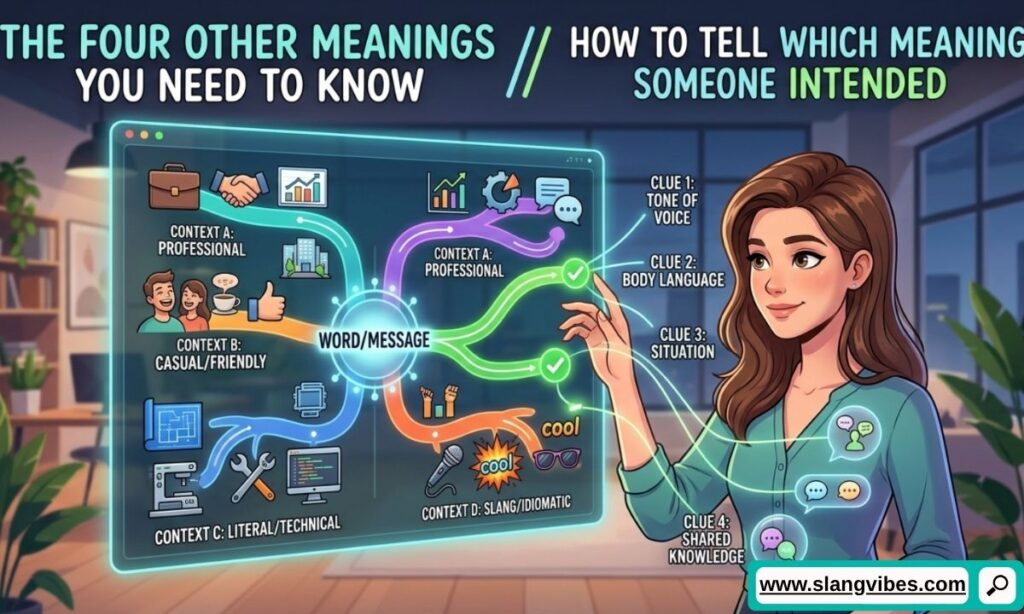
RS doesn’t always mean the same thing the context around it tells you everything you need to sort the right meaning in seconds.
Here’s the thing most articles don’t tell you: RS doesn’t mean the same thing in every context. The same two letters carry different meanings depending on where you see them, who sent them, and what the surrounding conversation is about.
The primary and most common meaning in personal text messages is “Real S***,” as covered above. But there are four other readings worth knowing.
RuneScape. In gaming communities, RS is the universally recognized abbreviation for RuneScape, a massively popular online role-playing game. Gamers, streamers, and members of the RS community use this abbreviation constantly in forums, Discord servers, YouTube comments, and group chats. If someone in a gaming context says “I’ve been grinding RS for three weeks straight,” they’re talking about the game, not signaling sincerity.
Right Side. In sports coaching, medical documentation, and certain technical fields, RS indicates direction or position. A physiotherapist might note “RS knee pain” in patient records. A football coach might diagram a play with RS marking a player’s position. This reading belongs to professional and instructional contexts, not casual messaging.
Recommended Serving.
On nutritional packaging and dietary content, RS marks the suggested serving size. This is an entirely institutional abbreviation that you won’t encounter in personal texting.
Right Said. In older British English usage, “right said” functions as an expression of agreement or confirmation, similar to “quite right” or “indeed.” The cultural reference of “Right Said Fred” (both the comedy character from an old BBC sketch and the pop duo) keeps this reading alive in some British contexts. It almost never surfaces in everyday American or global texting.
Here’s how to tell them apart when you’re unsure:
| Meaning | Where You’ll See It | Dead Giveaway |
|---|---|---|
| Real S*** | Personal texts, DMs, social media | Emotional or sincere content around it |
| RuneScape | Gaming servers, forums, Twitch chat | Gaming discussion in surrounding messages |
| Right Side | Medical notes, sports diagrams | Professional or technical document |
| Recommended Serving | Food packaging, diet content | Nutrition context |
| Right Said | Older British English content | UK cultural context, formal agreement tone |
The reading that dominates in everyday text messages across the US and UK is “Real S***” without exception. When RS shows up in a casual group chat after someone shares something genuine, that’s the meaning in play.
“Personal Messaging: iMessage, SMS, and Snapchat” / “Social Media: TikTok and Instagram
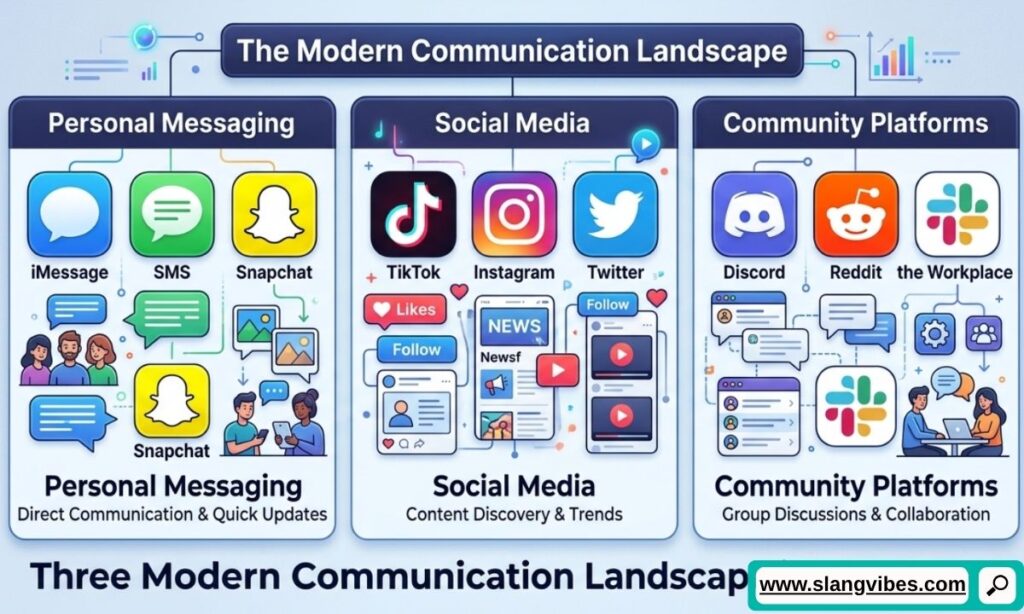
This is where most guides fall short. RS doesn’t behave identically everywhere. The platform shapes the tone, the frequency, and sometimes even the meaning. Here’s the full breakdown.
iMessage and SMS. In private text conversations between close friends, RS carries the heaviest emotional weight. These are one-to-one spaces where the sender chose to say something honest and RS confirms that honesty is intentional. It feels intimate. It signals that the conversation has moved from surface-level small talk into something real.
Snapchat. On Snapchat, RS tends to appear in short reply messages or DMs after someone sends a vulnerable story or a serious text. The ephemeral nature of Snapchat content makes RS feel even more direct because both people know the message disappears. There’s no performance for an audience. It’s the most stripped-down version of the sincerity signal.
TikTok comments. RS appears in comment sections as a collective validation reaction. A creator shares something genuinely relatable or painfully true about their life, and the comments fill with RS alongside other authenticity markers. In this context, RS functions less as a personal sincerity signal and more as a crowd-sourced stamp of “this person is speaking for all of us.”
Instagram DMs vs. comments. In Instagram DMs, RS mirrors the iMessage use case. Between two people, it’s personal and direct. In Instagram comments, it functions more like TikTok comments. The post is public, the RS reaction is semi-public, and it reads as communal validation rather than intimate sincerity.
Read also : TT Meaning in Text Messages and Social Media (2026)
“What RS Means When Someone You Like Sends It” / “How to Respond When RS Shows Up in a Flirty Context”
Nobody covers this part, and it’s one of the most common reasons people search for RS meaning in text.
When someone you’re romantically interested in sends RS, the emotional register shifts. RS in a flirty or early-dating context isn’t the same as RS between two best friends who’ve known each other for years. The stakes are different. The vulnerability is higher. And understanding what RS signals in that space matters.
Here’s what it really means when someone sends RS in a romantic conversation: they’re dropping the performance. Early dating and flirting often involves a layer of cool detachment, social posturing, and saying what you think will land well. RS cuts through all of that. When someone you’re talking to sends RS after a genuine statement, they’re telling you they’re not performing. They’re being direct with you. That’s worth paying attention to.
Example conversation:
You: I actually had a really good time tonight. I wasn’t expecting to. Them: RS, same. I usually dread first dates but that was different.
That RS before “same” is doing a lot of work. It’s confirming their reaction is genuine, not just a polite response to keep the conversation going. It means you can trust what follows.
What this really means in practice: when you receive RS from someone you like, match the energy. Don’t deflect into humor. Don’t minimize the moment. Receive the sincerity they just offered and respond at the same level of honesty. RS creates an opening. Whether you walk through it is up to you.
Example conversation:
Them: RS I’ve been thinking about you a lot lately. Not even trying to be weird about it. You: I appreciate you actually saying that. I’ve been thinking about you too.
That exchange works because both people responded to the sincerity signal with more sincerity. The RS set the tone for honest communication and both people followed it.
One thing to watch: RS in flirty texting can also appear in the ironic register. “RS you’re the funniest person I’ve talked to in months” uses the credibility stamp on a compliment to make it feel more genuine than a plain compliment would. It’s not sarcastic. It’s affectionate. The difference between ironic RS and sincere RS in romantic texting is almost always clear from the overall tone of the conversation.
RS Combined With Other Slang (“No RS,” “RS Tho,” “On RS”)
This is where the competitor articles completely drop the ball. RS doesn’t always appear alone. It combines with other slang terms to create variations that carry different shades of meaning, and knowing these combinations takes your fluency from beginner to native speaker.
“No RS.” This is a denial or correction. Someone makes a claim, and you push back with “no RS” to signal you’re not agreeing with that framing. It’s a gentle contradiction that still uses the sincerity register. Not confrontational. Not dismissive. Just honest pushback.
Friend: “You seemed fine earlier.” You: “No RS, I was struggling the entire time.”
“RS tho.” Adding “tho” softens RS slightly while keeping the sincerity intact. It’s the version of RS that acknowledges the statement might sound surprising or vulnerable, and the “tho” adds a conversational cushion. Common in casual conversation where you want to be honest without seeming overly intense.
“I miss how things used to be RS tho.”
“On RS.” This is an escalation. “On RS” carries more weight than standalone RS. It’s the difference between nodding honestly and raising your hand to be counted. The “on” prefix is borrowed from the “on God” construction that swears sincerity on something significant.
“On RS, that was the best show I’ve seen in years.”
“RS fr.” Stacking RS and FR (For Real) doubles the sincerity signal. Both abbreviations are authenticity markers, and combining them communicates that the sender wants absolutely no doubt about how genuine the statement is. Usually appears when someone’s said something vulnerable or surprising and they want to preemptively answer any skepticism.
“I don’t care what anyone else thinks anymore RS fr.”
Here’s a quick reference for all the combinations:
| Combination | What It Communicates | When to Use It |
|---|---|---|
| RS (alone) | Sincere, honest, genuine | Most common use; emotional honesty |
| No RS | Correction or honest pushback | Disagreeing while staying sincere |
| RS tho | Honest but slightly softened | Vulnerable admission with a cushion |
| On RS | Heightened sincerity, strong claim | Emphasis on something important |
| RS fr | Maximum sincerity signal | When skepticism needs to be preempted |
“Using RS With the Wrong Audience” / “Overusing RS Until It Loses Its Meaning”
Learning what RS means is step one. Learning when not to use it is what separates someone who understands the slang from someone who uses it fluently.
The biggest mistake beginners make is using RS with people who don’t know the term. If you send RS to your mom, your coworker, or anyone who doesn’t move in spaces where this slang lives, you’ll get confusion instead of connection. The credibility stamp only works when both people recognize it. With the wrong audience, it’s noise.
Overuse kills the sincerity signal. RS works because it’s selective. When someone uses RS regularly on minor observations and casual comments, it loses its weight. If everything is “Real S***,” nothing is. Save RS for moments that genuinely warrant that level of authenticity. The rarity of its appearance is part of what makes it land.
Using RS in professional settings is a reliability risk. In a Slack message to your manager, in a work email, in a LinkedIn DM to a potential employer, RS reads as unprofessional or simply confusing depending on the recipient’s age and familiarity with the term. The workplace has its own register, and RS sits firmly outside it unless you’re in a very informal startup culture where the team is all under 30 and uses this kind of language naturally with each other.
Attaching RS to something trivial undermines the whole mechanism. “RS this burrito is good” isn’t wrong exactly, but it reads as performative rather than sincere. RS belongs to genuine emotional moments, real reactions, and honest statements that need the credibility stamp because they might otherwise be doubted. Using it on something inconsequential makes the RS feel hollow.
Read also: STG Meaning in Text: What This Popular Acronym Really Means 📱💬
“RS Between Close Friends” / “RS in Romantic and Gaming Conversations” / “RS Slang Variations in Real Use”
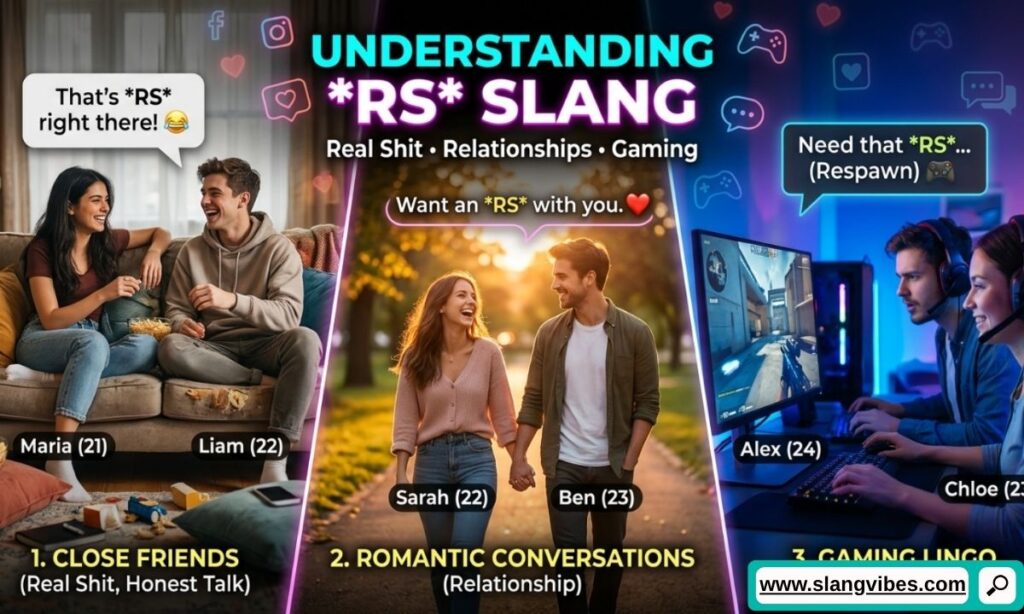
Seeing RS in real conversation formats makes everything click faster than any definition. Here are five examples across different contexts, all showing how RS actually moves through a text exchange.
Example 1: Validating a friend’s struggle
Maya: I feel like I’ve been faking being okay for so long I don’t even know what’s real anymore. Jordan: RS. You don’t have to perform for anyone. Not even me. Maya: That actually helps to hear.
The RS here lands before a statement of support. Jordan isn’t questioning Maya’s experience. RS confirms that Jordan received the vulnerability completely and responded from the same honest space.
Example 2: Agreeing with something unexpectedly true
Dev: It’s wild how a good playlist can completely change how a drive feels. Sana: RS. I literally drove for two hours without noticing because the music was that good. Dev: Exactly what I’m saying.
Low-stakes, casual, and natural. RS as a collective recognition that something is genuinely true. This is the lighter end of RS usage where the sincerity signal applies to a shared observation rather than an emotional moment.
Example 3: Early romantic conversation
Alex: I don’t usually open up this fast but you’re easy to talk to. Jamie: RS, I feel the same way. This conversation doesn’t feel like work. Alex: No it really doesn’t.
RS before “I feel the same way” confirms Jamie’s response isn’t just a polite echo. It’s a genuine reaction. The RS tells Alex that what follows can be trusted. Both people stay in the honest register from that point.
Example 4: Gaming context (RuneScape)
Tyler: Anyone still playing RS? Marcus: RS every day bro. Just hit 99 mining last week. Tyler: No way. I haven’t logged in since like 2019.
Here RS appears in a gaming server or a conversation between gamers where RuneScape is the obvious reference. Zero sincerity connotation. Context does all the work.
Example 5: The “RS tho” variation
Priya: You seemed really confident up there. Like you were born to present. Keele: I was terrified the entire time RS tho. My hands wouldn’t stop shaking. Priya: Genuinely couldn’t tell.
“RS tho” added to an admission of anxiety makes the vulnerability feel natural rather than heavy. Keele’s using the softened form to be honest without making it a big moment. The “tho” keeps it conversational.
“The Softer Side: TBH, NGL, and FR” / “The Stronger Side:
The competitor article listed these in a bullet point with zero explanation. You deserve better than that.
RS belongs to a family of authenticity slang, but each term in that family carries different weight, different tone, and serves a slightly different communicative function. Here’s where RS actually sits compared to its closest relatives.
FR (For Real) overlaps with RS significantly. Both signal honesty. The difference is in what they emphasize. FR tends to confirm that something is true, often in response to a claim or question. RS emphasizes the genuine nature of what’s being expressed, often in a more emotionally weighted context. “FR?” is a common response to something surprising. “RS” in response to something surprising would be unusual. FR asks and confirms. RS asserts and stamps.
NGL (Not Gonna Lie) is the apologetic member of this family. NGL signals honesty but acknowledges the speaker might be admitting something socially awkward or self-incriminating. There’s a slight vulnerability admission baked into NGL that RS doesn’t carry. “NGL I was jealous” carries a hint of confession. “RS I was jealous” is more direct and less apologetic.
TBH (To Be Honest) functions as a softening opener. TBH often precedes an opinion or observation that might be unwelcome or surprising. It’s the nicest member of the family. RS is blunter. TBH creates space for what follows. RS stamps what already exists.
Here’s the intensity scale from softest to strongest:
| Term | Intensity | Best Used For |
|---|---|---|
| TBH | Gentlest | Sharing an opinion that might be surprising |
| NGL | Soft-medium | Admitting something slightly awkward |
| FR | Medium | Confirming truth of a claim |
| RS | Medium-strong | Stamping genuine emotional honesty |
| Deadass | Strong | Insisting seriousness against skepticism |
| On God | Strongest | Maximum sincerity oath, hard to escalate beyond |
Knowing where RS sits on this scale tells you when to reach for it and when a different term fits better. RS is the comfortable middle. It’s strong enough to carry real weight but warm enough not to feel aggressive.
Did You Know
RS entered mainstream digital vocabulary through the same AAVE-to-internet pipeline that brought words like “lowkey,” “no cap,” and “bussin” into everyday Gen Z texting. Many of today’s most common authenticity slang terms trace back to African American Vernacular English long before social media existed.
Frequently Asked Questions
When a girl sends you RS, she’s signaling that what she just said is completely genuine, not a social performance or a polite response. In a romantic or close friendship context, it’s an invitation to match her honesty. The right response isn’t over-analysis; it’s receiving what she said at face value and responding from the same sincere space. If she says “RS I had a good time,” she means it, and the best reply acknowledges that genuinely rather than deflecting with humor or minimizing the moment.
Not quite. They’re in the same family of authenticity slang but they work slightly differently. FR tends to confirm that a statement is true, often appearing as a question or a direct confirmation. RS places a sincerity stamp on something genuine and emotionally weighted. You’d say “FR?” when something surprises you. You’d say “RS” when you want someone to know you’re speaking from a place of real honesty. The overlap is significant but the emotional weight of RS tends to sit a little higher than FR.
It depends on the relationship and the platform. Between two people who don’t know each other well, RS can feel presumptuous because it assumes a level of emotional intimacy that hasn’t been established yet. Using it in early conversations with someone you’ve just met can read as either refreshingly direct or slightly jarring, depending on the person. In professional or semi-professional contexts, it almost never belongs. Stick to RS in conversations where casual, honest, informal communication is already the norm between you and the other person.

Alex Carter is a language enthusiast and internet culture expert at SlangVibes. He explains the latest slang terms and text meanings in simple, clear English so everyone stays in the loop.