Last spring, my cousin texted me, “Heading over sans my charger.” I stared at my phone for a full minute. Was it a typo for “sands”? Did she mean something clever? I sent back a confused emoji, and she laughed at me for days. Plenty of people hit the same wall when they search for the sans meaning in text. The word looks French, sounds odd, and shows up in gaming memes too. The confusion makes sense. Here’s the short version: sans means “without.” Stick around, and you’ll learn where it came from, how people use it, and when to skip it. I’ve kept every explanation short and simple.
What Is the Sans Meaning in Text?
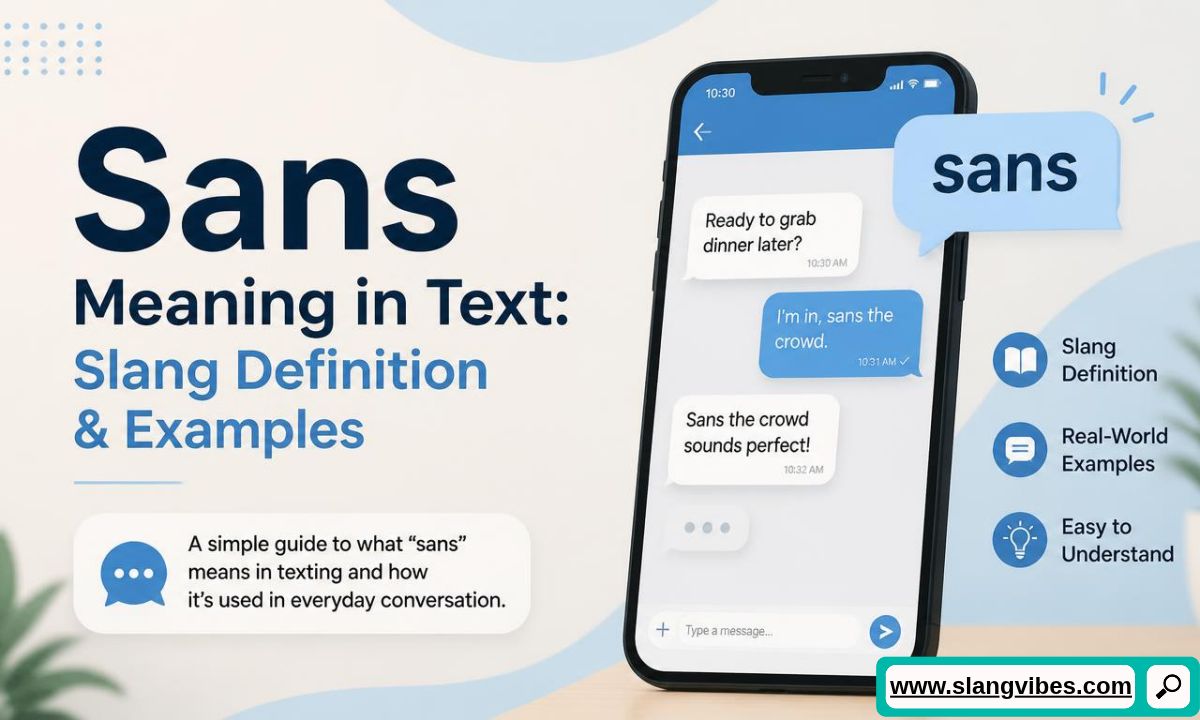
The sans meaning in text is simple. Sans is a preposition, and it means “without.” People type it before a noun to show something is missing. “Sans makeup” means no makeup. “Sans plans” means no plans. You don’t need anything else after the word.
Quick Answer: Sans means “without.” In texting, it adds a playful or dramatic tone. With a capital S in gaming chats, it names a skeleton from the game Undertale.
Here’s the thing about pronunciation. Most US speakers say “sanz,” like “fans” with a different first sound. French speakers say something closer to “sahn,” with a soft, nasal ending. Both versions work. Sans lives on screens more than in speech, so nobody will correct you.
Expect short phrases like “sans filter,” “sans drama,” or “sans sleep.” Each one adds a hint of humor to an ordinary sentence. Longer phrases work too, but short ones land best.
Sans meaning in slang mostly comes down to tone. Saying “without” sounds plain. Saying “sans” sounds a little theatrical, like a wink at the reader. Here’s a quick text exchange showing it in action:
Maya: Where are you? The party started an hour ago.
Chris: Stuck at home, sans ride.
Maya: Ha, dramatic much?
Chris: Sans transportation, sans hope.
Maya: I’ll pick you up.
Chris uses sans twice for comic effect. Maya gets the joke right away.
Read Also: Huzz Meaning in Slang (2026): What It Really Means on TikTok, Snapchat & Gen Z Culture
Sans Meaning and Where the Word Comes From
The sans meaning goes back centuries. English borrowed the word from Old French during the Middle English period. Dictionaries link the French word to Latin, which had its own word for “without.” French speakers still use it the same way today. “Sans sucre” means without sugar.
William Shakespeare used sans in As You Like It. A character named Jacques lists what old age takes away, and he repeats sans four times. The famous line shows how normal the word felt to English writers back then.
Other phrases kept the word alive. “Sans souci” means without worry. Sanssouci is also the name of a palace in Potsdam, Germany, which Frederick the Great commissioned.
Typography gave the word a second life. “Sans-serif” describes letters without small strokes at the ends. Fonts like Arial and Helvetica belong to this group.
The internet added another layer in 2015. Toby Fox released Undertale, and a skeleton named Sans became a huge meme. A later section covers him in detail.
The word never left English. The trend feels more like a revival than a new invention. Put simply, the word is old, respectable, and trendy again. Based on how people typically use the term online, it shows up most in captions, fashion posts, and vlogs. When someone types it today, they borrow a word with several centuries of history.
Read Also: WBY Meaning in Text: What It Really Means in Chats & Social Media (2026 Guide)
Sans Meaning in Text on TikTok, Instagram, and Discord
Sans meaning in text changes a little from app to app. Each platform gives the word its own flavor. Here’s a quick tour.
TikTok users treat sans as a lifestyle word. You’ll see it in outfit checks, get-ready-with-me videos, and daily vlogs. Short videos reward short captions, so the word fits. Someone might film a morning routine and add “sans coffee, sans hope.”
Instagram captions love the word because it keeps things short. A beach photo might read “Saturday, sans stress.” It sounds polished without trying hard. Travel, brunch, and skincare posts use it often. Followers usually reply with a laughing emoji or a matching joke.
On X, people use sans for quick sarcastic jokes. A post might say “Walking into Monday sans motivation.” The joke lands fast because the word is short.
Discord leans toward the gaming meaning. Servers full of Undertale fans drop Sans memes daily, so context matters. Reddit sits in the middle, with both meanings showing up in different communities.
This table shows the sans meaning in text across each platform:
| Example | Meaning | Tone/Vibe |
|---|---|---|
| “Going sans filter today” | No filter | Casual, confident |
| “Beach day, sans stress” | No stress | Calm, aesthetic |
| “Work sans brain cells” | No brain cells | Sarcastic |
| “Bro thinks he’s Sans” | Acts like the skeleton | Ironic, gamer |
The pattern is easy to spot. Lifestyle apps favor the “without” meaning. Gaming spaces favor the character.
2026 TikTok Slang Words: The Complete Guide to Viral Internet Language
Sans Meaning in Gaming: The Undertale Skeleton
The sans meaning in gaming has nothing to do with “without.” It points to a character. Toby Fox released Undertale in 2015, and Sans quickly became one of its best-known faces.
Sans is a short, laid-back skeleton in a blue hoodie. He loves puns, and his dialogue appears in the Comic Sans font. His brother, Papyrus, talks in a different font and a much louder voice.
His name comes from the font he uses. Fans love the wink. The joke works on two levels, since the name and the typeface match.
Sans also hides a serious side. One optional fight against him has a famous reputation for difficulty. His theme song, “Megalovania,” spread across YouTube and social media through countless covers.
Gamers use “Sans energy” to describe someone who looks lazy but hides real skill. Think of it this way: the friend who never studies and still aces the test has Sans energy. Here’s how it sounds in a chat:
Devon: I beat the hardest boss on my first try.
Ari: No way. You have Sans energy.
Devon: I wasn’t even trying.
Ari: Exactly what the skeleton would say.
To tell the two meanings apart, check the capital letter and the setting. A capital S in a gaming server points to the character. A lowercase sans before a noun means “without.”
Sans vs. Sans-Serif vs. Comic Sans: Common Mistakes
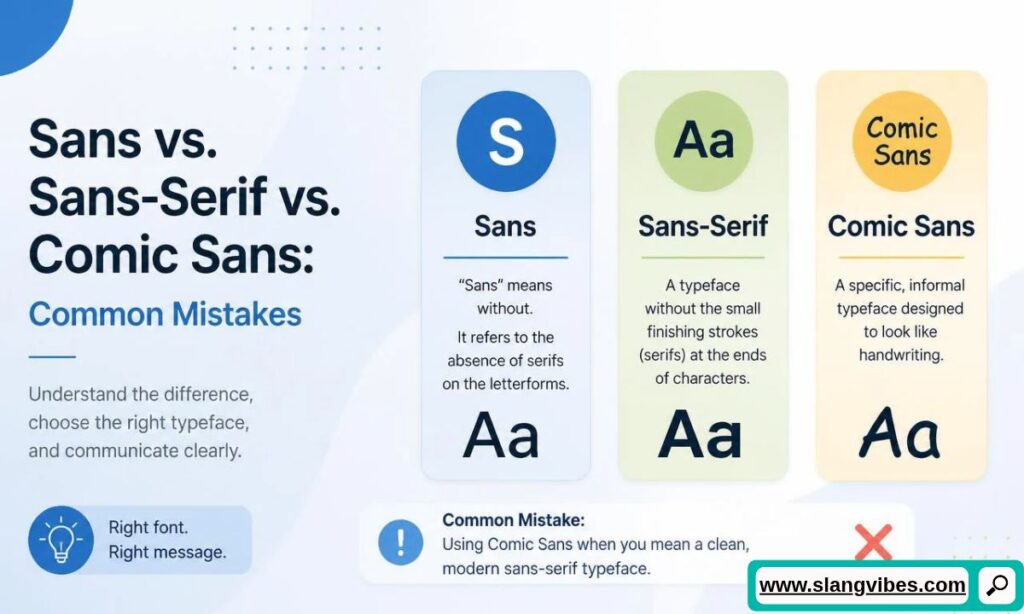
Sans meaning in text gets tangled with fonts all the time. All three terms share one root, so the confusion makes sense. Here’s how to keep them apart.
Sans by itself means “without.” Sans-serif names a font style without serifs, which are the small feet on the ends of letters. Comic Sans is one specific sans-serif font, and yes, it gave the Undertale skeleton his name.
Mistake number one is treating sans as a font word in a text. If a friend writes “sans plans,” they aren’t talking about typography. They mean no plans.
Mistake number two is adding “of.” Some people type “sans of money,” which sounds wrong. The word works like “without” and needs no extra help. Write “sans money” and move on.
Mistake number three is stretching the phrase too long. A short noun after sans reads well. A long clause afterward feels clunky and buries the joke.
Mistake number four is skipping the capital letter in gaming chats. Write “Sans” for the character and “sans” for the preposition. Fans notice, and they will gently correct you.
Say I post “Trip photos, sans filters.” A follower replies and asks which font I used. I’d laugh, because I meant no filters at all.
A quick memory trick helps. Sans always points to something missing. Keep that in mind, and the rest falls into place.
Read More Articles: Ice Drug Slang: The 2K26 Guide to Understanding Street Terms, Culture, and Real-Life Usage
How Millennials and Gen Z Use Sans Differently
Sans meaning in text shifts with the reader’s age. Based on how people typically use the term online, Millennials often treat it as a witty throwback. Gen Z leans toward irony and gaming references.
It’s common to see Millennials use sans the way they learned it in English class, French lessons, or Shakespeare plays. They keep the tone playful and slightly fancy. A typical line reads “Brunch, sans kids.” Captions like “Vacation, sans emails” fit this style perfectly.
Gen Z users often blend both meanings on purpose. A post like “Going to class sans sleep” might collect skull emojis in the replies. Everyone gets the joke. Skeleton jokes and Undertale references come naturally to them.
Emoji choices shift the tone. A skull 💀 adds dark humor, sparkles ✨ suggest an aesthetic caption, and a shrug 🤷 signals a relaxed lack of plans. Here’s how siblings might use it:
Jess: Mom asked why you showed up sans shoes.
Theo: Long story. Sans socks too.
Jess: You’re a mess.
Theo: A stylish mess, sans shame.
Age also shapes reply style. Millennials might answer with a full sentence. Gen Z often replies with a single word or a meme. Neither group finds sans strange, though older readers might need a quick explanation. The word bridges both groups, which helps it spread. Both agree on one thing. Sans works best as a light joke.
When Not to Use Sans in Text
The sans meaning in text depends on shared humor. Some settings call for plain words instead. Here’s when to skip it:
- Work emails. Imagine I write to my manager, “Report attached, sans errors.” She might smile, or she might wonder why I’m showing off.
- School essays and formal reports. Teachers expect plain language, and a stray sans stands out.
- Spoken conversation. “I’m sans money” sounds stiff at a restaurant, and people usually treat it as a joke.
- Serious moments. A message like “Going through this sans support” sounds dramatic when someone needs real help. Plain words show care.
- Readers still learning English. Slang adds confusion, and “without” gets the message across faster.
Picture a group chat with new coworkers. One reads “sans” as a typo for “sands” and replies with a question mark. Save the joke for people who’ll get it.
Formal versus informal matters here. Formal writing follows strict style rules, and slang breaks them. Informal writing, like texts and captions, welcomes playful choices. Sans sits on the line between the two, which makes it tricky. Modern business writing rarely uses it, though literary writing still does.
Ask yourself one question before you type it. Would the reader smile, or would they squint? Squinting readers deserve a plain word. Bottom line: sans fits casual chats, captions, and jokes. Plain words fit everything else.
Read More Article: Crank Slang Meaning (2K26 Guide): What “Crank” Really Means in Modern Conversations
Words Like Sans and How to Reply
Sans meaning in text has plenty of everyday cousins. Each one does a similar job with a different tone. Here’s how they compare:
| Word | How It Compares |
|---|---|
| Without | The plain, everyday version of sans |
| Minus | Casual and math-flavored, as in “minus the drama” |
| Free of | Positive tone, as in “free of stress” |
| Lacking | Formal and more serious |
| Sans | Playful, slightly dramatic, and short |
Sans wins on length and personality. Lacking wins on formality. Pick the word to match your audience.
Now for replies. If a friend uses sans as a joke, match the energy. Send a short, playful answer. If the message seems unclear, ask what they mean. Nobody minds a quick question.
Replying in kind is easy. Answer “sans ride” with “sans worries, I’m driving.” It keeps the joke going and shows you understood.
Here’s a date-night example:
Riley: Date night is on. I’m sans plans, though.
Sam: Good news. I’m sans excuses.
Riley: Smooth. Tacos at seven?
Sam: Perfect.
Work chats call for a lighter touch. Here’s a quick exchange between coworkers:
Priya: Standup moved to noon, sans slides today.
Luis: Sans slides? Best news all week.
Priya: Keep it quick, sans rambling.
Luis: No promises.
Notice the pattern. Every reply matches the tone of the original message. A joke gets a joke, and a plain message gets a plain answer.
Read Also: Slang for a Dollar: American Money Slang You’ll Hear Everywhere
Sans Meaning in Text: Frequently Asked Questions
What does sans mean in text?
Sans means “without.” People type it before a noun, like “sans makeup” or “sans plans,” to show something is missing.
How do you pronounce sans?
Most US speakers say “sanz.” French speakers say a softer, nasal “sahn.”
Is sans a real word or only slang?
It’s a real English preposition borrowed from French. Internet culture made it trendy again.
Why do gamers keep talking about Sans?
They’re referencing the skeleton from Undertale, the 2015 game by Toby Fox. He’s famous for his puns, his theme song, and a tough optional fight.
Does sans mean “no” or “zero”?
It means “without,” so it points to something missing. It doesn’t stand for the number zero.
Final Thoughts on Sans
The sans meaning in text comes down to one small word: without. Type it before a noun, and you’ve said something is missing. Add a wink, and you’ve made a joke. Gamers borrow the same word to name a laid-back skeleton from Undertale, so context always decides which meaning you’re reading.
Here’s what to remember. Lowercase sans before a noun means without. Capital Sans in a gaming chat means the character. Sans-serif and Comic Sans belong to the font world. Friends and followers enjoy the playful tone, while bosses and teachers prefer plain words.
You don’t need to memorize anything else. The word has survived several centuries, from Old French to Shakespeare to TikTok captions, and it isn’t going anywhere. Next time a friend texts you “sans plans,” you’ll know exactly what to say. Try using it once in your own caption this week, keep it short, and see who gets the joke.

Alex Carter is a language enthusiast and internet culture expert at SlangVibes. He explains the latest slang terms and text meanings in simple, clear English so everyone stays in the loop.