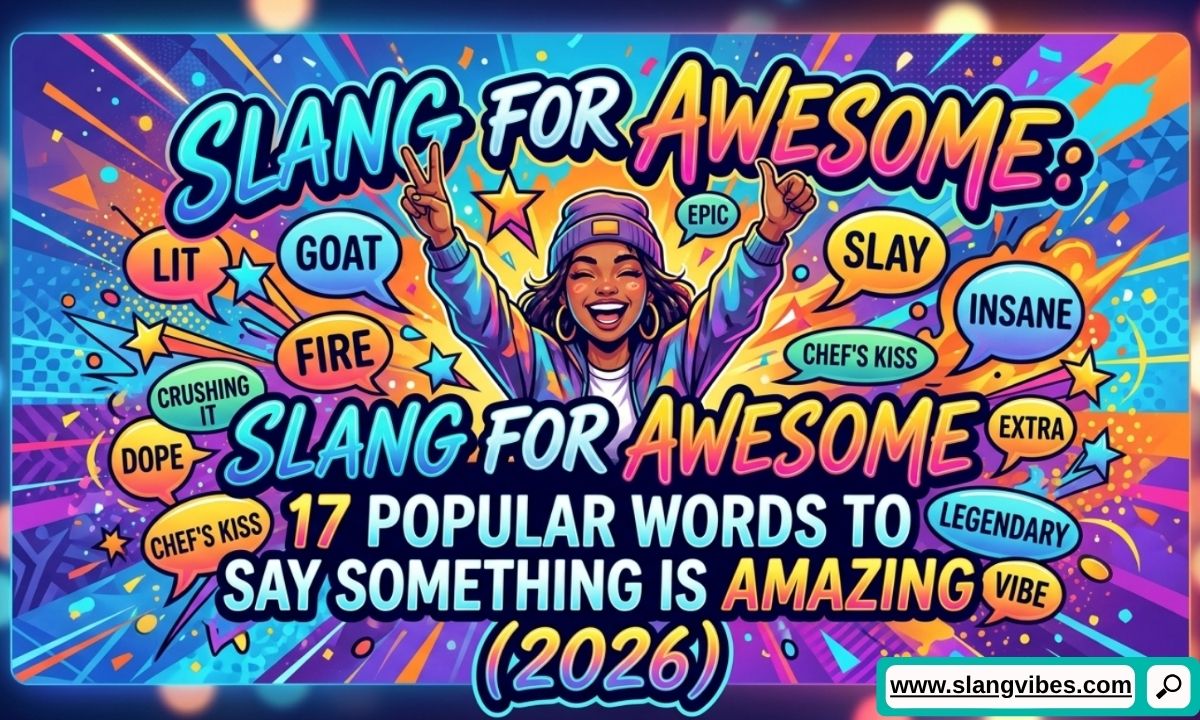
Picture this: you’re standing in line for coffee, and the two teenagers behind you are talking about a movie. One says it was “goated.” The other says it “slapped.” Neither one says “awesome,” “great,” or “amazing,” yet you somehow know exactly how much they loved this film. Slang for awesome works this way. It’s a moving target, a set of words that keeps shifting so people can sound fresh instead of tired. If you’ve felt lost trying to keep up, you’re not alone, and by the end of this guide, you won’t be.
What Does Slang for Awesome Actually Mean?
Here’s the thing: “awesome” used to carry real weight. It described something so big it inspired actual awe, like a canyon or a thunderstorm. Somewhere along the way, people started using it for pizza, parking spots, and Wi-Fi speed. Once a word gets used for everything, it stops meaning much of anything.
Slang for awesome fills this gap. It’s the constantly refreshed pool of words people reach for when they want to express real excitement without sounding flat. Some of these words come from gaming (goated), some from food culture (bussin), and some from TikTok trends that spread overnight (it’s giving). What this really means for you is simple: knowing a handful of these words helps you sound current, whether you’re texting a friend, reading your kid’s group chat, or trying to understand a coworker’s Slack message.
Online spaces move fast, and platforms like TikTok, Discord, and X push new terms into daily conversation within weeks. A word can go from unknown to overused in a single semester. That speed is part of the fun, and part of why a guide like this one needs regular updates.
17 Slang Words for Awesome, Explained
Below is the full breakdown. Each word gets a plain meaning, a real example, and a note on when it fits best. Skim the table first if you want the short version, then read the details for anything you’re still unsure about.
| Word | Meaning | Best Used For |
|---|---|---|
| Fire | Something excellent or exciting | Music, food, outfits |
| Bussin | Extremely good, usually about taste | Food specifically |
| Goated | The best in its category (Greatest Of All Time) | Skills, people, even objects |
| No cap | Genuinely amazing, no exaggeration | Emphasizing sincerity |
| Slaps | Hits hard in a good way | Songs, beats |
| Elite | Top tier, above the rest | Skills, performances |
| Iconic | Memorable and impressive | Moments, looks, quotes |
| It’s giving [X] | Carries a specific excellent vibe | Style, energy, mood |
| Sigma | Impressively independent or dominant | People, achievements (often ironic) |
| Ate (and left no crumbs) | Performed flawlessly | Performances, outfits |
| Clutch | Came through at the right moment | Sports, last-minute wins |
| Legit | Genuinely good or real | General praise |
| Peak | At its absolute best | Experiences, moments |
| Unreal | So good it seems unbelievable | Skill, luck, results |
| Next-level | Beyond the usual standard | Skills, ideas |
| GOAT | The single best of all time | People, legendary achievements |
| Dope | Cool or excellent | General praise, style |
Everyday Favorites: Fire, Dope, Legit, Unreal, Next-Level
Fire stays one of the most recognizable words for awesome. “This playlist is fire” works in almost any casual setting, and the flame emoji usually rides along with it.
Dope has stuck around for decades and still holds up as a general word for cool or excellent. Legit leans toward genuine praise, as in “that’s a legit good idea.” Unreal works when something feels almost too good to be true, like a surprise win or a stunning view. Next-level signals that something beat the usual standard by a wide margin, whether it’s a meal, an idea, or a piece of work.
Read Also: DND Meaning in Text: What It Really Means on Snapchat, TikTok & Instagram (2026)
Food and Music Slang: Bussin and Slaps
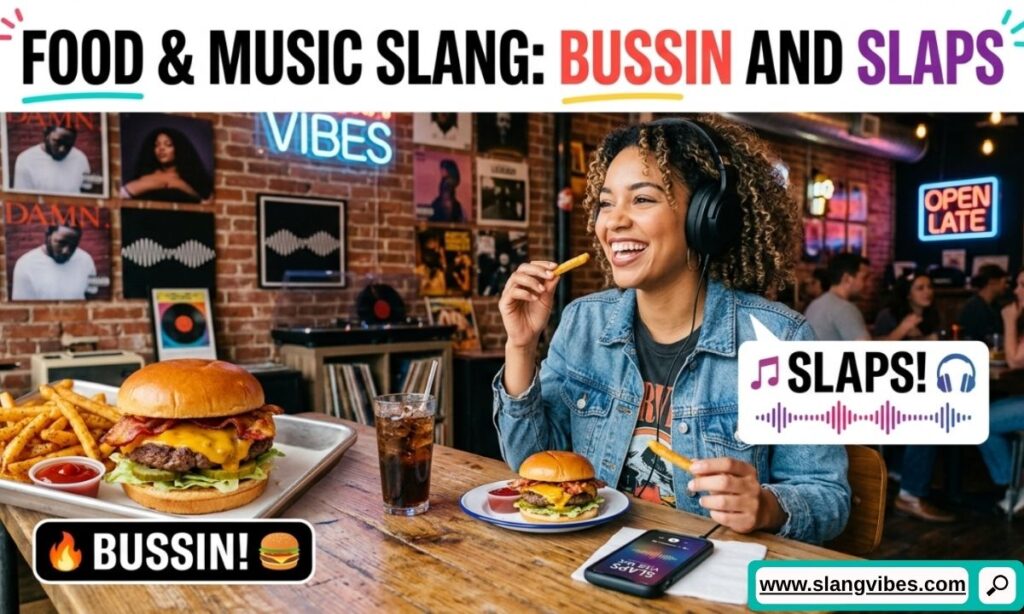
Bussin started in food slang and stayed there. Say a meal is bussin, and everyone understands you loved it. Using it outside of food (like calling a movie “bussin”) sounds a little off to most people who use the term regularly.
Slaps belongs almost entirely to music. A song “slaps” when the beat hits just right. You won’t hear people call a sunset “slaps,” and that’s part of what keeps the word feeling sharp instead of generic.
Achievement and Skill Slang: Goated, Clutch, GOAT, Ate, Elite
Goated comes straight from GOAT, short for Greatest Of All Time. Someone might call their favorite coffee shop “goated” even though nobody’s handing out trophies for coffee. The humor is part of the appeal. GOAT itself works the same way, minus the playful twist, and usually points at a person or achievement widely seen as the best.
Clutch describes coming through at exactly the right moment, especially in sports or last-minute saves. Ate (and left no crumbs) describes a performance so complete there’s nothing left to critique. “She ate that presentation” means she nailed it entirely. Elite borrows a formal-sounding word and gives it casual energy, turning a compliment into something almost ceremonial.
Vibe and Sincerity Slang: No Cap, It’s Giving, Sigma, Iconic, Peak
No cap technically means “no lie,” but people also use it to underline that a compliment is sincere. “That concert was unbelievable, no cap” tells the listener you mean this fully.
It’s giving [main character energy] or it’s giving five-star restaurant works as a full sentence structure rather than a single word. It lets someone describe a specific vibe of excellence instead of a generic one.
Sigma gets thrown around online, sometimes sincerely and sometimes as a joke about overconfidence. Context tells you which one you’re dealing with. Iconic marks something memorable, like a red-carpet look or a viral quote. Peak simply means something reached its absolute best point, as in “that was peak vacation.”
US vs UK Slang for Awesome: Same Idea, Different Words
Regional differences matter more than most guides mention. British English has its own set of casual words for amazing, and a few US terms carry completely different meanings across the Atlantic.
In the UK, you’ll often hear peng (attractive or excellent), mint (great condition or quality), bang tidy, sound (meaning good, reliable, or cool depending on context), and belter (an outstanding example of something, often used for goals in football or a great night out). A Londoner might say a meal was “peng” the same way an American teen says it was “bussin.”
One word trips people up across regions constantly: fit. In the US, “fit” is short for outfit (“I love your fit”). In the UK, “fit” describes someone attractive (“That guy is fit”). Mixing these up in the wrong context leads to some genuinely funny confusion.
Slang for awesome travels fast online, and US and UK terms increasingly blend through shared platforms like TikTok. Still, using a regional word with the wrong crowd can feel out of place, so it helps to know your audience before borrowing a phrase from across the pond.
How Millennials, Gen Z, and Gen Alpha Say Awesome Differently
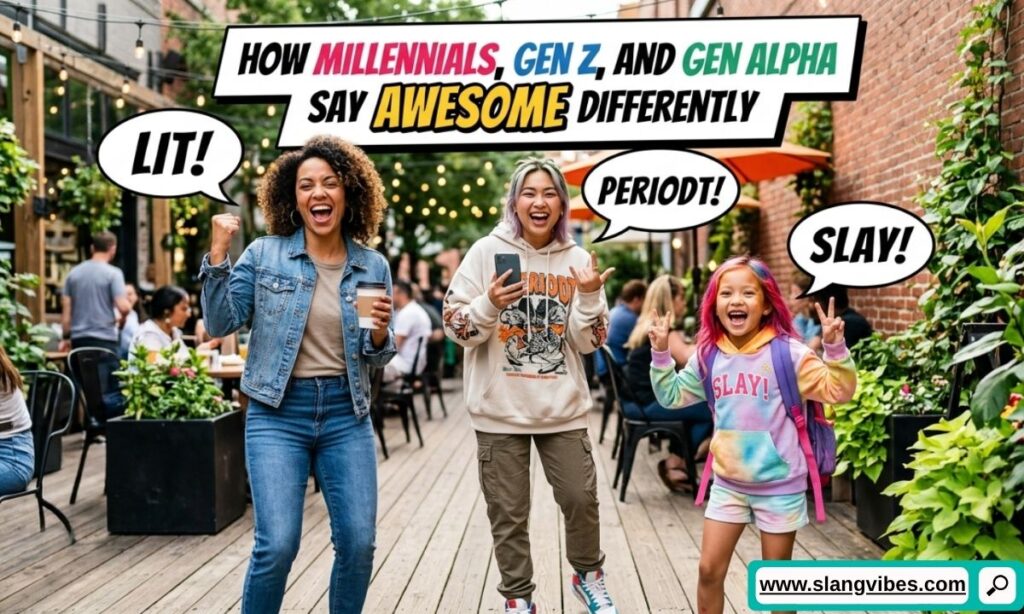
Every generation builds its own version of slang for awesome, and knowing the differences helps explain why a word that sounds normal to one person sounds foreign to another.
Millennials grew up with dope, epic, the bomb, and sick. Many of these words are still understood widely today, even if they’re used less often by younger speakers. Older Millennials and Gen X tend to reach for simpler words like great, fantastic, or impressive, and their slang tends to stay stable for years rather than months.
Gen Z popularized fire, bussin, slaps, no cap, and goated. These words spread through TikTok, gaming chats, and group texts, often gaining a specific niche use (like bussin for food) rather than a broad, catch-all meaning.
Gen Alpha, the generation coming up now, leans into more absurdist and meme-driven language, sometimes turning nonsense phrases into praise through pure repetition and irony. A word doesn’t need obvious logic to catch on; it needs to spread fast and feel funny in the moment.
None of this means one generation’s slang is more correct. It just means context and audience matter more than ever when picking the right word.
When Not to Use Slang for Awesome
Knowing the words is half the job. Knowing when to leave them out matters just as much.
Skip slang for awesome in job emails, academic writing, formal presentations, and conversations with people you don’t know well. Calling a client proposal “bussin” in a work email reads as unprofessional, even if you meant it as high praise. Standard words like excellent, impressive, or outstanding carry the same meaning without the risk.
Slang also fits certain settings better than others. A group chat with close friends welcomes casual language freely. A gaming Discord server allows more slang than a family dinner. A comment on a friend’s photo invites a casual “this is fire” far more naturally than a comment on a coworker’s LinkedIn post would.
Timing matters too. Slang for awesome changes quickly, and a word that felt fresh two years ago can sound dated fast. Using outdated slang on purpose, for comedic effect, works fine among people who get the joke. Using it without realizing it’s outdated tends to land differently.
Read More Articles: LMS Meaning in Text: What It Really Means on Snapchat, TikTok & Instagram (2026)
Common Mistakes People Make With Slang for Awesome
A few patterns show up again and again when people try to use this kind of language.
- Overloading a sentence. Stacking three or four slang words together (“this fit is fire, no cap, straight elite”) reads as forced rather than natural. One well-placed word usually lands better than a pile of them.
- Mixing up regional meanings. Calling someone “fit” in the US when you mean stylish, instead of attractive, confuses a UK listener instantly.
- Using food slang outside of food. Bussin works for meals. Applying it to a concert or a movie tends to sound off to people who use the word daily.
- Ignoring your audience. Slang built for a group chat doesn’t always translate to a work meeting, a grandparent’s living room, or a formal essay.
Common Mistake: People often assume slang for awesome is interchangeable across every context. It isn’t. A word that works perfectly for hyping up a friend’s outfit can feel completely wrong in a customer email or a college application.
Real Conversation Examples
Seeing these words in action makes them far easier to use naturally. Here are a few realistic exchanges across different settings.
Between friends, texting about a concert:
Friend 1: “How was the show last night?” Friend 2: “Bro it was fire. The opener slapped too.”
Siblings talking about food:
Sister: “Mom’s lasagna tonight was bussin, no cap.” Brother: “Facts. I had three plates.”
Coworkers in a casual Slack channel:
Coworker 1: “Just saw the new mockup for the app.” Coworker 2: “Ok this is actually elite. Design team ate.”
A dating app conversation:
Match 1: “Just got back from Portugal!” Match 2: “That sounds unreal, I need details.”
A group chat reacting to a game-winning shot:
Friend: “Did you see that buzzer beater?!” Group: “GOATED. Absolute clutch moment.”
Parent trying (and slightly failing) to use slang with their teen:
Parent: “Is this shirt fire?” Teen: “Please never say that again. But also yes.”
How to Respond When Someone Uses Slang for Awesome

Responding well doesn’t require inventing anything new. A short, matching reply usually does the job. If a friend says something “slaps,” responding with “right?” or “no way it’s that good” keeps the conversation flowing naturally. Mirroring energy matters more than mirroring exact wording.
If someone uses a term you don’t recognize, asking directly works fine too. “Wait, what does goated mean?” reads as curious, not clueless. Most people enjoy explaining slang they use often, and asking beats guessing wrong and using it incorrectly later.
Read New Article: MLM Meaning in Text: What It Really Means on Snapchat, TikTok & Instagram (2026)
Frequently Asked Questions
Fire, bussin, and goated remain some of the most widely used terms right now, with “it’s giving” close behind for describing a specific vibe of excellence.
Several exist, including peng, mint, sound, and belter, each carrying slightly different shades of meaning depending on the situation.
Generally, no. Standard words like excellent or outstanding fit professional writing better, while slang works best in casual texts, group chats, and conversations with people you know well.
Bussin describes food specifically, while fire applies broadly to music, outfits, moments, and almost anything else worth hyping up.
Some will stick around for years, like fire and GOAT, while others fade within months as new words take their place. Slang moves fast, and that’s part of what keeps it interesting.
Final Thoughts
Language never really stops moving, and slang for awesome proves this better than almost anything else in casual English. New words show up, old ones fade, and a few, like fire and GOAT, manage to stick around no matter how many trends pass through. You don’t need to memorize all 17 words from this list. Pick two or three that fit how you already talk, try them out with people who’ll get the reference, and let the rest come naturally. That’s really all slang has ever asked of anyone.

Alex Carter is a language enthusiast and internet culture expert at SlangVibes. He explains the latest slang terms and text meanings in simple, clear English so everyone stays in the loop.