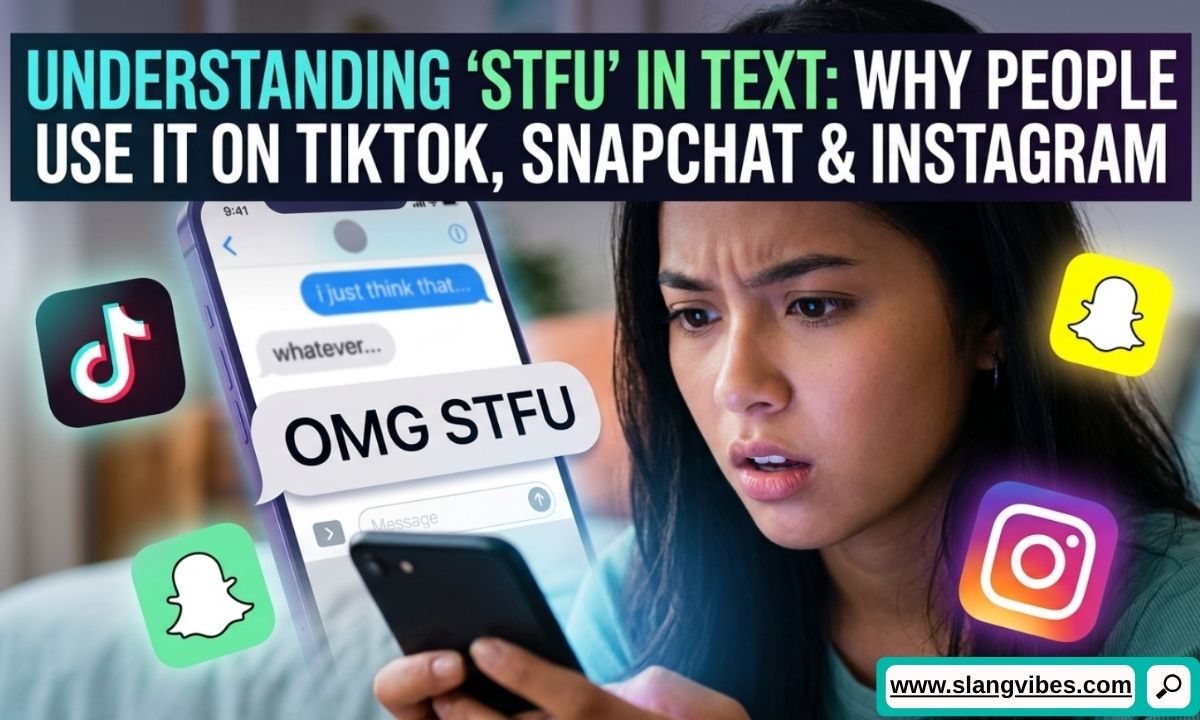
My friend texted me “STFU 😭” last month right after I told her I’d gotten engaged, and for about three seconds, I genuinely panicked. Was she mad at me? Did I say something wrong? Then she sent four more messages with exclamation points and I realized she was thrilled for me. That’s the moment I really understood STFU meaning in text isn’t as simple as the words behind the letters. If you’ve ever stared at a message wondering whether your friend just insulted you or hyped you up, you’re in good company, and this guide will clear it up for good.
Quick Answer: STFU stands for “Shut The F*** Up.” In texting and on social media, it rarely means that literally. Most of the time, it’s a reaction to something shocking, funny, or impressive, and the tone depends entirely on who’s saying it and how.
What Does STFU Actually Stand For? (Core Definition)
So, what does STFU mean in text, exactly? The letters break down to “Shut The F*** Up,” which sounds harsh on paper. However, the actual STFU meaning in text has drifted pretty far from its literal definition over the years. Today, it works more like a verbal gasp than an actual command to be quiet.
Think of it this way: when someone says “shut up, no way!” out loud in real life, they’re not actually telling you to stop talking. They’re expressing disbelief. STFU does the same job in text form, just with more attitude packed into four letters.
There are two main faces of this STFU slang meaning that you’ll run into constantly:
| Tone | What It Usually Signals |
|---|---|
| Aggressive STFU | Genuine anger, frustration, or a demand to stop talking |
| Hyped/Disbelief STFU | Shock, excitement, or “no way, tell me more” energy |
Because the STFU abbreviation carries both meanings, context becomes everything. A single text without any backstory can read as rude or as the highest compliment your friend group gives out, and only the conversation around it tells you which one you’re dealing with.
STFU Meaning in Text History: Where the Slang Came From
Before STFU showed up in your group chat, it lived on internet forums, AIM, and MSN Messenger back in the early 2000s. Acronyms like LOL and BRB were already everywhere, so STFU fit right into that shorthand culture where typing fast mattered more than typing politely.
Gaming communities pushed it even further. Picture a heated match where someone’s trash-talking through a headset; STFU became the fastest way to shut that down without breaking focus. Forums and early chat rooms picked it up next, and from there it spread into texting once smartphones made instant messaging the default way people talked.
Here’s what’s interesting, though. As STFU moved from gaming lobbies into casual texting between friends, the tone softened for a lot of users. What started as a genuine insult slowly turned into the same kind of reaction word you’d use for “no way” or “shut up, are you serious.” That shift is exactly why the STFU meaning in texting today feels so different depending on who you ask.
Read Also: TIA Meaning in Text: Snapchat, TikTok, Instagram & WhatsApp Slang Explained
STFU on TikTok: The Disbelief Reaction Comment
If you’ve spent any time scrolling TikTok comments, you’ve definitely seen this one. The STFU meaning on TikTok leans almost entirely toward shock and hype rather than anger. It’s become one of the platform’s go-to reaction comments, right up there with “not me crying” and “the way I gasped.”
Scroll through any viral video, and you’ll likely spot comments like these:
| TikTok Comment | What It Means |
|---|---|
| “STFU this is so real” | Strong agreement or relatability |
| “STFU no way 😭” | Genuine shock or disbelief |
| “STFUUUUU” | Extreme excitement, the more U’s, the bigger the reaction |
| “stfu i needed this today” | Gratitude mixed with emotional relief |
Notice the pattern? Stretching the word out with extra letters isn’t a typo. It’s intentional, and it ramps up the emotional volume of the comment. A short “stfu” might mean mild surprise, while “STFUUUUUU” basically screams that someone’s mind got blown.
This usage matters for our STFU meaning in text discussion because it shows how far the phrase has traveled from its original definition. On TikTok specifically, seeing it in your notifications almost never means someone’s upset with you. More likely, you just posted something genuinely funny, relatable, or impressive enough to earn that reaction.
STFU on Snapchat: Private Chat Tone vs. Public Use
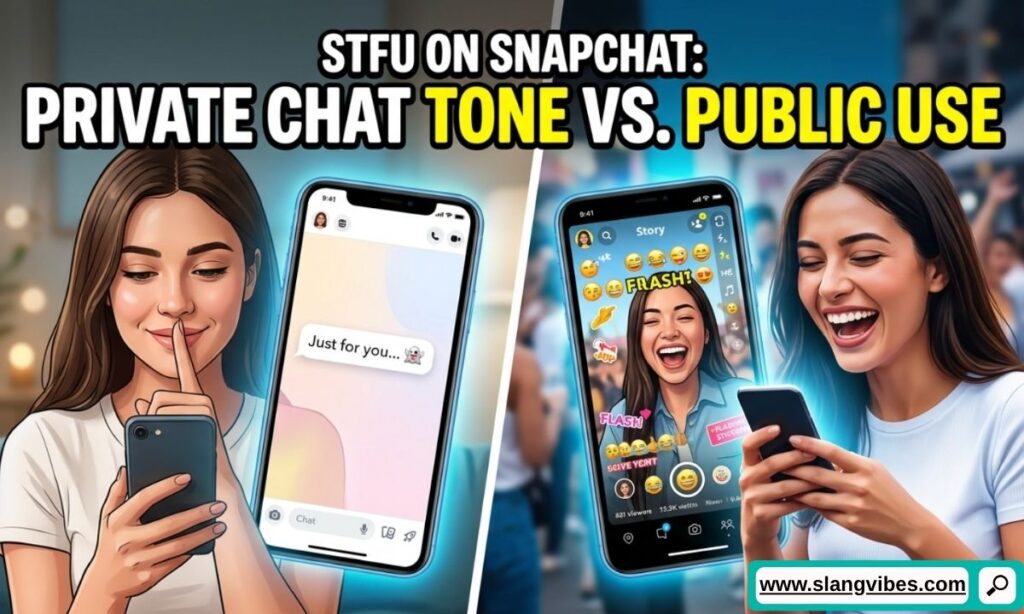
Snapchat works differently than TikTok, since most conversations happen in private chats rather than public comment sections. As a result, the STFU meaning in chat on this platform tends to feel more personal and tied to inside jokes between close friends.
Here’s a real conversation example showing how this plays out:
Text Example 1:
Jess: omg guess who just texted me back after 3 years Mia: STFU. who?? Jess: my ex from high school Mia: STFUUU spill everything right now
In that exchange, nobody’s angry. Mia’s using it purely as a “tell me more” prompt, and the rapid pace of Snapchat conversations makes this kind of shorthand feel natural rather than rude.
Text Example 2:
Dan: bro stfu, I was literally about to text you the same thing Leo: that’s so weird lol
Here, the tone stays casual and friendly, almost like saying “get out of here” in disbelief.
Because Snapchat conversations move fast and often include Snapstreaks with daily back-and-forth messages, tone gets compressed into very few words. This is where misreading things becomes a real risk. Without facial expressions or vocal tone, a flat “stfu” from someone you don’t know well can land wrong, even when zero offense was intended. If you’re texting someone new on Snapchat, it’s worth reading the rest of their message style before assuming this phrase is playful.
Read New Article: FYE Meaning in Text: What It Really Means in Messages (2026)
STFU on Instagram: Comments, DMs & Captions
Instagram blends both of the patterns we’ve already covered: public comment reactions like TikTok, plus private messaging like Snapchat. The STFU meaning on Instagram shifts depending on which of these spaces you’re in.
In comment sections under relatable posts, memes, or big personal announcements, you’ll see this kind of exchange constantly:
Text Example 3 (Instagram comment):
@user1: just signed the lease on my first apartment!! @user2: STFU CONGRATS omg I’m so happy for you
That’s pure hype, not hostility. The STFU meaning on social media in moments like this functions almost like an exclamation point with extra emotional weight behind it.
DMs work a bit differently, since they’re more private and conversational:
Text Example 4:
Ravi: I think I failed that exam ngl Sam: stfu you definitely passed, stop spiraling
Here, it’s used affectionately, almost like a gentle “stop doubting yourself” nudge between friends who know each other well.
Captions are where things get more playful and self-aware. People often caption their own posts with phrases like “stfu I can’t believe I posted this” as a way to poke fun at themselves before anyone else can. This self-deprecating use has become its own mini trend, especially among younger users who like to undercut their own confidence with humor.
Across all three formats, comments, DMs, and captions, Instagram users generally lean toward the playful interpretation rather than the hostile one, though tone still depends heavily on the relationship between the people involved.
Is the STFU Meaning in Text Always Rude? How to Read the Tone
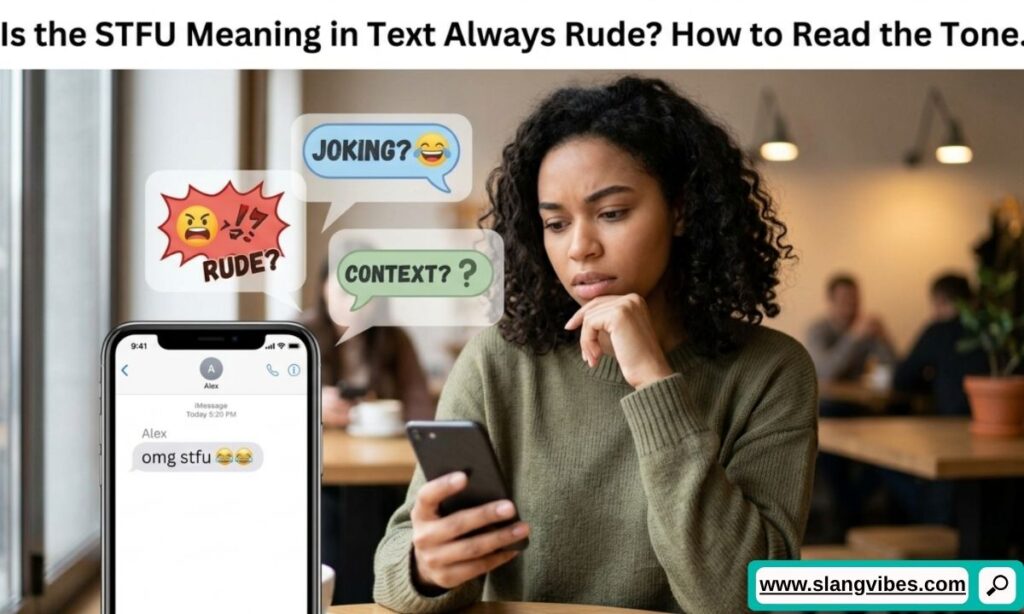
This is probably the question that brought you here in the first place. Whether the STFU meaning in text comes across as rude really depends on three things: who’s saying it, how they’re saying it, and what came before it in the conversation.
A few signals can help you read the tone accurately:
- Emojis attached: A crying-laughing emoji or heart usually signals playfulness, while no emoji at all can read as flatter or more serious.
- Punctuation style: “STFU.” with a hard period often feels sharper than “stfu lol” or “stfuuu.”
- Relationship context: Close friends use it loosely, while acquaintances or strangers are more likely to mean it literally.
- What preceded it: If you just shared exciting news, it’s almost certainly a compliment. If you just argued about something, it’s probably not.
Common Mistake: A lot of people assume STFU is always either completely harmless or always offensive. Neither assumption holds up. The truth sits somewhere in between, and skipping the context clues is exactly how miscommunication happens.
Text Example 5:
Friend A: I think you’re being unfair right now Friend B: STFU, you don’t even know the full story
This version carries real frustration. Compare that to the TikTok and Instagram examples above, and the difference becomes obvious once you know what to look for.
Gen Z vs. Millennial Usage: Has the Meaning Shifted?
One thing that consistently confuses people across generations is how differently STFU gets interpreted depending on age. Younger Gen Z users, especially those active on TikTok, tend to default to the hyped, disbelief reading almost automatically. To them, the STFU meaning in text feels closer to “no way” than to an actual insult.
Millennials, on the other hand, grew up when the phrase carried more weight as an actual command to stop talking. Many still read it that way first, even in casual settings, before context softens the interpretation.
This generational gap causes real friction sometimes. A Gen Z teenager might text their Millennial aunt “stfu that’s amazing news,” meaning nothing but excitement, while the aunt briefly wonders why she’s being told to be quiet. Neither person is wrong exactly; they’re just operating from different default readings of the same four letters.
Understanding this gap matters if you’re texting across age groups. If you’re unsure how the other person will take it, it’s often safer to add extra context, an emoji, or simply spell out your excitement instead of relying on the abbreviation alone.
STFU Meaning in Text Etiquette: When You Should Never Use It
Even with all this softening in casual use, there are still situations where sending STFU is a bad idea, no matter how playful you mean it. Knowing where the line sits protects you from awkward or genuinely damaging moments.
Avoid using it in these situations:
| Situation | Why It’s Risky |
|---|---|
| Texting parents or family elders | Likely read as disrespectful regardless of intent |
| Messaging a boss or coworker | Unprofessional, even in casual work chats |
| Early-stage dating or first DMs | Tone hasn’t been established yet, easy to misread |
| Customer service interactions | Comes across as aggressive, not casual |
| Teacher or professor communication | Crosses a clear respect boundary |
Because tone relies so heavily on shared history, using this phrase with someone you don’t know well removes all the context clues that normally make it land softly. What feels like an affectionate “no way!” between best friends can feel like a genuine insult to someone meeting you for the first time.
If you’re ever unsure, it’s worth waiting until you’ve built enough rapport with someone before testing out shorthand like this. A little patience here saves you from an uncomfortable conversation later.
Polite Alternatives to STFU Meaning in Text Without Sounding Rude
Sometimes you want that same burst of disbelief or excitement without the sharper edge. Thankfully, plenty of alternatives get the same point across.
Consider these options depending on the setting:
- “No way” or “wait, what”, a clean, universally safe option for any audience
- “Shut up” without the explicit version, slightly softer while keeping the same energy
- “stg” (stop, I genuinely can’t), a newer Gen Z favorite that avoids the harsher phrasing entirely
- Emoji-only reactions, like 😭 or 💀, which communicate shock without any words at all
Plenty of people also type a censored version, like “stfu” in lowercase without spelling it out, or even “shhh,” as a softer nod to the same idea. This stylized typing choice often signals that the sender knows the phrase is a bit much and wants to take some of the edge off.
If you’re texting someone new, a teacher, or anyone in a professional setting, swapping in one of these alternatives keeps the same enthusiasm while skipping the risk entirely. Bottom line: the emotion behind the phrase matters more than the specific letters you use to express it.
How to Respond Once You Know the STFU Meaning in Text
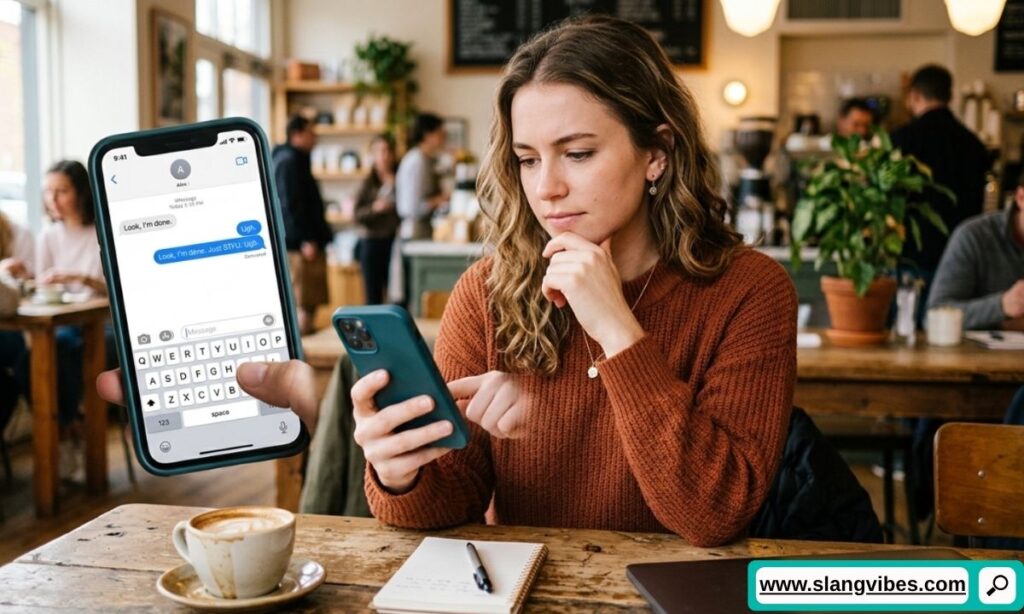
Getting this text can feel confusing in the moment, especially if you’re not sure which version you’re dealing with. Once you understand the STFU meaning in text behind the message, responding gets a lot less stressful.
First, look at what you just said before they replied. Did you share good news, a funny story, or something dramatic? If so, the STFU meaning in text here is almost certainly positive, and a simple “I knowwww right?!” keeps the energy going.
If the conversation had any tension beforehand, take it more seriously. Asking “wait, are you upset?” directly clears up confusion fast and avoids letting a misunderstanding snowball into something bigger.
And if it genuinely seems hostile or you’re talking to someone you don’t know well, you’re allowed to just disengage. Not every message deserves a reply, especially if responding might escalate things further. Trust your gut here; you know your relationship with the sender better than any guide can tell you.
Read More Article: YH Meaning in Text Messages, TikTok, Snapchat & More
Frequently Asked Questions
Between friends, it almost always means shock, excitement, or playful disbelief rather than literal anger. Context like emojis or recent news usually confirms which one it is.
Yes, in most comment sections, it functions as a hyped reaction to something impressive, funny, or relatable. It’s one of the platform’s most common ways to show genuine excitement.
Adding the crying-laughing emoji softens the phrase considerably and signals overwhelmed excitement or amusement rather than any frustration. Without an emoji, the tone can read slightly more ambiguous.
It’s generally safer to hold off until you’ve built enough rapport to know how they’ll interpret it. Early on, alternatives like “no way” or “wait, what” carry the same energy with less risk.
All caps usually signals heightened emotion, often excitement or shock rather than anger, especially when paired with extra letters like “STFUUUU.” Tone still depends on the rest of the conversation around it.

Alex Carter is a language enthusiast and internet culture expert at SlangVibes. He explains the latest slang terms and text meanings in simple, clear English so everyone stays in the loop.