Last spring, my cousin sent me a video with a single caption.
Maya: diabolo life 🔥
Me: Wait, is this a devil thing?
Maya: Ha, no. Watch the video.
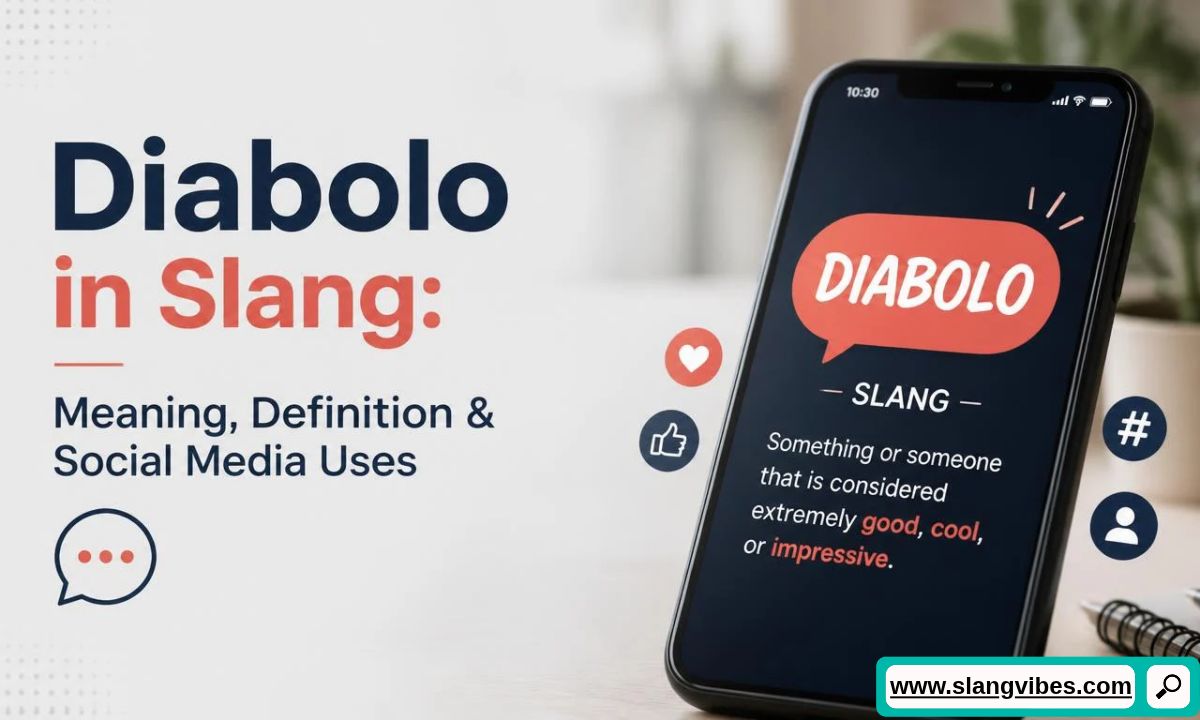
Here’s the thing. Diabolo in slang sounds darker than it is. The word names a juggling toy shaped like an hourglass, spun on a string between two hand sticks. Online, people also use it for the hobby and for the identity built around it. I felt silly after looking it up, and I bet you’ve seen the word too. This guide breaks down the meaning, the origin, and the way people use it, so you never wonder again.
Read Also: Moots Meaning in Text: Simple Explanation for Social Media Users (2026)
Diabolo in Slang: The Plain Definition
Diabolo in slang points to a juggling toy, a hobby, or a person’s online identity. Dictionaries describe the toy as a spool whirled and tossed on a string, with a stick in each hand. Picture two cones joined at their narrow tips, or an hourglass on a tightrope.
Strictly speaking, diabolo works more like a hobby word than classic slang. Still, people search for it the way they search for any unfamiliar term, so it earns a plain definition here.
Online, you’ll see the word in three main ways:
- The object: “I ordered my first diabolo yesterday.”
- The activity: “I do diabolo every weekend.”
- The identity: a bio reading “diabolo player | 3 years in.”
Dictionaries define it as a game played with the toy, which explains why people say “I do diabolo” the way they say “I do yoga.”
The tone is warm. Posts about skill toys usually come with encouragement, trick tips, and proud progress clips. You won’t find sarcasm, insults, or hidden meanings attached to the word. A comment like “nice combo, so clean” praises the trick, nothing more.
Some people also turn the word into a verb. “Want to diabolo later?” means “want to practice together?” The meaning stays steady no matter who says it, whether a seasoned performer or a total beginner.
Read Here: Pookie Meaning in Slang: The Cute Word Everyone Is Using in 2026
Diabolo Meaning vs Diablo and Diabolical: Clearing Up the Mix-Up
Spelling causes most of the confusion around diabolo in slang. Diablo is the Spanish word for devil, and it’s also the name of a well-known video game series. Diabolical is an adjective for something evil, and in British speech it often means shockingly bad. “The referee was diabolical” is a typical example.
Diabolo is a third word entirely. Add or drop one letter, and the meaning flips from a juggling toy to a devil reference. It’s common to see the words mixed up in comment sections.
Priya: My brother posted another diabolo clip.
Leo: Is it the devil game with all the loot?
Priya: No, you’re thinking of Diablo. This one is a spinning toy on a string.
Leo: Ha, my brain autocorrected it.
One more meaning is worth knowing. In France, a diabolo is a non-alcoholic drink made from lemon soda and flavored syrup, often mint or grenadine. It’s available in most French cafés and restaurants. If someone orders a “diabolo menthe” at a Paris café, nobody is juggling anything.
Context solves almost every case, and it only takes a second. Sticks, strings, and tricks point to the toy. Soda and syrup point to the drink. Fire, loot, and demons point to the game or the adjective. Check the surrounding words, the hashtags, and the video itself before you reply.
Read New Article: YH Meaning in Text Messages, TikTok, Snapchat & More
Where the Word Diabolo Comes From and Why It Sounds Like Devil
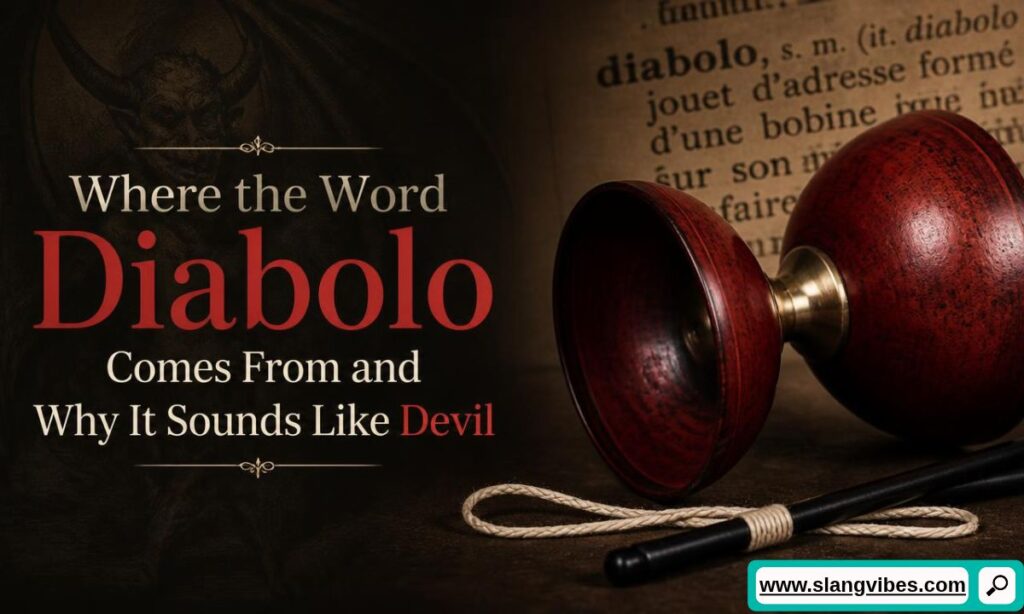
The toy has deep roots. It grew out of the Chinese yo-yo, a spinning prop with two discs joined by an axle. Traders carried versions of it to Europe, where it picked up the nickname “devil on two sticks.” It became a craze in France around 1812, then faded.
The modern design arrived in the early 1900s. A Belgian engineer named Gustave Philippart patented a rubber-ringed, two-cone version in 1905. He partnered with the English sportsman C.B. Fry to launch it to the public. Fry briefly considered the name “Trajecto” before the pair settled on “diabolo.” Copycat versions soon appeared, and the game became fashionable in France and England. Modern versions use rubber and plastic instead of the older bamboo designs.
Did You Know? Philippart’s 1905 patent also called the toy “Diable,” the French word for devil.
Here’s the thing about the name. Some writers link it to a Greek phrase meaning “to throw across,” which fits how the toy flies. Dictionary etymology points toward the Italian and Latin words for devil instead. Wiktionary treats the “throw across” link as coincidence. Sources disagree, so the safest summary is simple. The devil wordplay looks intentional, and the toy itself carries no dark meaning.
This history explains why diabolo in slang is so easy to misread. The resemblance to “diablo” is old, and the confusion is understandable.
Read Also: OTW Mean in Text: What It Really Means on Snapchat, TikTok & Instagram (2026)
How People Use Diabolo in Slang on Social Media
Based on how the term typically shows up online, diabolo in slang lives mostly on video platforms. Each platform gives the word a slightly different flavor.
On TikTok, creators post trick clips and progress diaries. Captions often read like “diabolo day 30, finally landed the toss.” Creators often name the trick in the caption, which helps viewers search for tutorials. Instagram leans toward polished reels and golden-hour practice shots, with hashtags such as #diabolo and #skilltoy. YouTube hosts longer tutorials and full performances, where comments swap technique tips.
Reddit threads tend to be questions and progress updates. A beginner might ask which diabolo to buy, and replies usually come with patient advice. On Discord and in gaming chats, the word often shows up in usernames. It signals the hobby as part of someone’s identity.
Humor shows up too. Captions like “me, three hours into one trick” poke fun at how absorbing the hobby gets. Here’s how a group chat might sound.
Kai: Day 14 of diabolo and I caught my first high toss.
Ren: Clip or it didn’t happen.
Kai: Posting it now. Ignore the tangled string.
Ren: No promises, but I’m proud of you.
Across every platform, the tone stays friendly. Comments tend to cheer on effort, and hashtags such as #diabolo link these posts together, which makes searching easy.
Read More: CMP Meaning in Text: Popular Uses Across Social Media
Using Diabolo in Slang Texts and Everyday Talk
Texting with diabolo is simple. The word works as a noun and as a verb, and the meaning stays the same in a chat window or at a park.
Picture a few everyday moments. A friend texts, “Wanna diabolo after work?” It’s an invitation to practice together. A coworker posts, “New diabolo arrived, my desk is a hazard.” It’s excitement about a purchase. A sibling sends a clip with “second try, no drops.” It’s a request for praise.
Pronunciation matters when you say it aloud. Dictionary.com lists the American version as dee-AB-uh-loh. Count four syllables, with the stress on the second. In a noisy park or a voice note, the extra syllable keeps the word from sounding like a game title. Because “diablo” sounds close, many speakers add “the juggling kind” when talking to someone new.
How should you respond? Match the energy first. Ask what trick they’re learning or how long they’ve practiced. Share a short compliment, such as “nice toss, so clean.” If you don’t know the word yet, a quick “wait, which toy is diabolo?” lands well. Hobby communities tend to welcome curious questions.
Spoken or typed, the word never carries sarcasm by itself. Tone comes from the emoji and the sentence around it. A fire emoji signals hype. A laughing face signals a funny fail. Nothing else needs decoding.
Read More Articles: WSG Mean in Text: What It Really Means on Snapchat, TikTok & Instagram (2026)
Who Uses Diabolo Slang: Gen Z, Millennials, Parents and Performers

Several groups use diabolo in slang, and each brings a slightly different spin.
Gen Z mostly meets diabolo through short video feeds. It’s common to see progress-log posts, aesthetic practice reels, and joke captions about hobby obsession. Millennials often connect the toy to circus arts, festivals, or a childhood memory of a street performer. Many in this group pick the hobby up as adults.
Parents and teachers meet the word when a child mentions it or when it appears in a search history. Some schools and community programs include circus arts, and diabolo often sits in those programs. Nothing in the word itself is inappropriate, so a quick look at the video usually settles any worry.
Performers and jugglers use the word with technical precision. They talk about tosses, spin speed, and string tension. Their posts read more like coaching notes than casual captions. They also share advice freely with beginners and newcomers alike.
UK readers will recognize the word too, since the toy gained fame in England in the early 1900s. British and American speakers use it the same way, though the first vowel sounds a touch different in British speech.
Dana: Mom saw “diabolo” in your search history.
Eli: Did she panic?
Dana: A little. I told her it’s a juggling toy.
Eli: Good. Tell her I’m ordering a set.
Common Mistakes with the Diabolo Meaning and When to Skip the Word
A few slips with diabolo in slang come up again and again. Here are the most common ones.
- Spelling it “diablo” in a post about the toy, which sends the reader toward the game or the devil.
- Assuming the word carries a dark or edgy tone. It doesn’t, so using it to sound tough falls flat.
- Calling it a yo-yo in hobby spaces. The Chinese yo-yo is an older cousin with two discs, while the diabolo uses two cones.
- Mixing it up with devil sticks. Circus groups treat these as a separate prop, and they’re often misspelled “diablo” too.
- Stressing the wrong syllable when speaking. Aim for dee-AB-uh-loh.
Knowing when to skip the word matters as well. Skip it if you mean the video game or the French drink, because the spelling invites confusion. In formal writing, introduce it once as “diabolo, a juggling prop,” then use the short form. When you speak with someone outside the hobby, add a short explanation so they don’t hear “devil.”
Picture a school newsletter listing “Diablo Club” on Fridays. Parents might picture a game night. One corrected letter turns it into a juggling club, and the confusion disappears. Small spelling choices carry real weight with this word. Check the spelling twice before you hit publish. Proofreading takes seconds.
Diabolo Slang vs Similar Skill Toy Terms
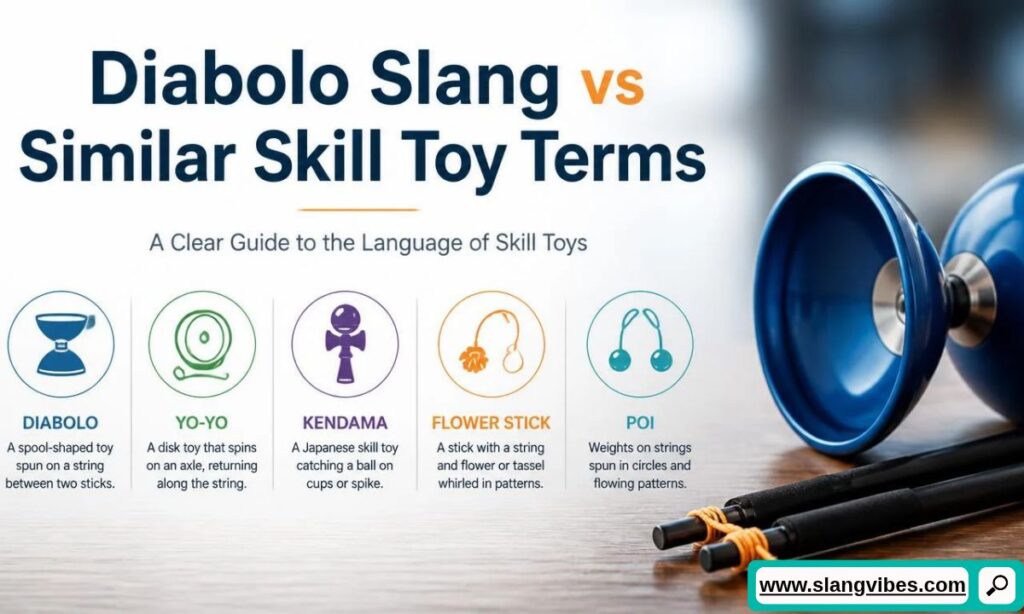
Diabolo in slang often travels with other hobby words. Fans of one toy tend to follow the others, so you’ll see these terms side by side in comments and bios. Here’s a quick comparison.
| Term | Meaning | Vibe |
|---|---|---|
| Diabolo | Hourglass-shaped spool spun on a string between two sticks | Patient, proud |
| Yo-yo | Disc on a string, thrown and returned by hand | Classic, nostalgic |
| Kendama | Japanese cup-and-ball toy | Focused, playful |
| Poi | Weighted balls on cords, swung in patterns | Flowing, graceful |
| Devil sticks | A baton kept moving with two hand sticks | Rhythmic, energetic |
Hobbyists use the phrase “skill toy” for the whole group. It signals a prop which rewards practice. Each prop rewards patience and steady practice.
Typing the correct spelling matters when you search, because “diablo” sends you toward the game. Spelling decides your results.
Noor: Do you play any skill toys?
Sam: I’m learning diabolo. You?
Noor: Kendama. Want to trade tricks on Saturday?
Sam: Yes. I’ll bring my sticks, you bring the cup and ball.
It’s common to see a kendama player comment on a diabolo clip with a friendly “respect the practice.” Cross-toy support is part of the culture.
Diabolo Meaning Made Simple
Diabolo in slang points to a spinning juggling toy, the hobby built around it, and the people who share it online. The word sounds like a devil reference because the name plays on the French word for devil. The meaning itself is friendly, skilled, and welcoming.
You now know how to read the word in a caption, a username, or a group chat. Sticks, string, and tricks mean the toy. Soda and syrup mean the French drink. Fire, loot, and demons mean you’re looking at “diablo.”
If a friend says “diabolo life,” ask which trick they’re working on. People who love a skill toy enjoy talking about their progress, so the question shows real interest. Check your spelling before you post, since diabolo has one extra “o” compared with diablo. The next time the word pops up in your feed, you’ll scroll with confidence, and perhaps even try a spin yourself.
Diabolo Slang FAQs
What does diabolo mean in slang?
Diabolo in slang points to a juggling toy spun on a string between two hand sticks. People also use it for the hobby and the online identity around it.
Is diabolo related to the devil?
The name plays on the French word for devil, since the 1905 patent also called the toy “Diable.” The toy itself carries no dark meaning.
How do you pronounce diabolo?
Say dee-AB-uh-loh, with the stress on the second syllable. Diablo has three syllables, while diabolo has four.
Is diabolo the same as diablo or diabolical?
No. Diablo is Spanish for devil and a video game series. Diabolical describes something evil or, in British speech, shockingly bad.
Is diabolo hard to learn?
It’s common to see beginners learn the basic spin first and add tricks gradually. Steady practice matters most.

Alex Carter is a language enthusiast and internet culture expert at SlangVibes. He explains the latest slang terms and text meanings in simple, clear English so everyone stays in the loop.