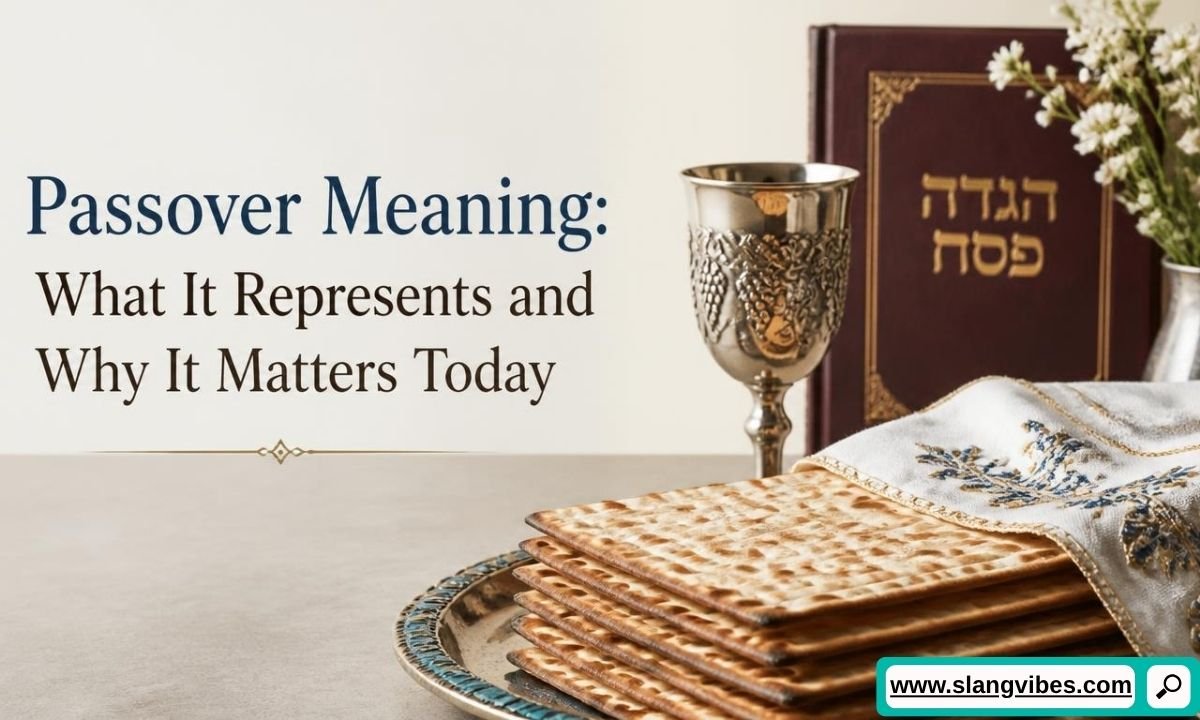
Last spring, I texted a coworker “Happy Easter!” and got back a warm but puzzled reply. She was in the middle of celebrating Passover. My face went hot. I knew the word, yet I had no idea what it stood for. If you’ve ever nodded along without knowing, you’re in good company. Here’s the thing: Passover meaning goes far beyond a date on the calendar. It carries a story about freedom, memory, and family. This guide covers the origin, the symbols, and the dates. It also shows how to reply with respect when a friend mentions the holiday. Let’s start with the basics.
Read Also: NM Mean in Text: What It Really Stands For (2026)
Passover Meaning in Simple Terms
Passover is a major Jewish holiday. It marks the Israelites’ escape from slavery in ancient Egypt. Families retell the story every spring, and the Hebrew name for the holiday is Pesach. The holiday sits at the heart of Jewish family life.
The short answer comes down to three ideas: freedom, hope, and memory. Passover celebrates freedom from oppression. It honors hope after hardship. It also asks each generation to remember its past and pass the story on to children. The core Passover meaning fits in one sentence: never forget what freedom costs.
Picture two coworkers chatting after a long Wednesday.
Maya: Are you free Thursday night?
Dev: Sorry, I’m at a Passover dinner with my family.
Maya: Oh nice. What’s Passover about, exactly?
Dev: Freedom. We retell the story of leaving slavery in Egypt, with food, songs, and questions.
Maya: Sounds meaningful. Have a great night!
Dev explains the holiday in one line, and many people do the same. The story speaks for itself. People also use the word for the full holiday, not only the dinner. The meal gets the most attention, yet the observance stretches across about a week. Some ask whether the holiday is only religious. It’s cultural and personal too. Passover is a sacred term, not slang, so treat it with the same care you’d give any religious observance.
The Origin Behind the Passover Meaning
The story behind Passover starts in the Book of Exodus, part of the Hebrew Bible. According to the text, the Israelites lived as enslaved people in Egypt for generations. Moses asked Pharaoh to let them go. Pharaoh refused, and ten plagues struck Egypt one after another.
The tenth plague gave the holiday its name. Before it arrived, the Israelites received instructions. Each family marked its doorposts with the blood of a lamb. According to Exodus, God “passed over” those homes and spared the families inside. Pharaoh finally agreed, and the Israelites left Egypt.
They left in a hurry. Their bread dough had no time to rise, so they baked flat, unleavened loaves. This detail explains why matzah sits at the center of the holiday table today. Exodus also describes a meal of roasted lamb, flat bread, and bitter herbs.
The Hebrew word Pesach connects to this idea of passing over. Over the centuries, Jewish communities turned the story into a yearly ritual. Families gather, read from a book called the Haggadah, and tell the story together. Songs, blessings, and shared food fill the evening. The Passover meaning lives in this ritual. Think of it this way: the holiday works like a family heirloom made of words. Parents hand it to children, and the chain has held for thousands of years.
Read New Articles: ISTG Meaning in Text: How People Use It in Chats and Social Media
What Passover Symbols Mean on the Seder Plate
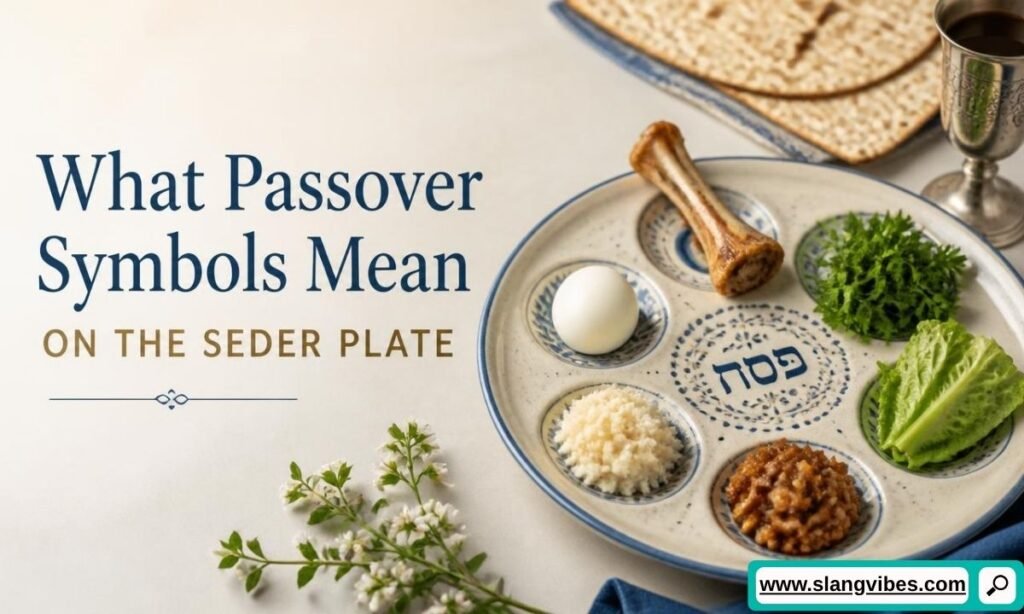
The Seder is the ritual meal held on the first night of the holiday. Each food on the table tells part of the story. Passover symbols mean something specific, and the Seder plate holds the most important ones. This table shows what each item stands for.
| Item | What It Represents |
|---|---|
| Matzah | Unleavened bread, a reminder of the hurried escape |
| Maror | Bitter herbs, the bitterness of slavery |
| Charoset | A sweet fruit and nut paste, a reminder of the mortar enslaved workers used |
| Karpas | A green vegetable dipped in salt water, linked to spring and tears |
| Zeroa | A roasted shank bone, a reminder of the Passover lamb |
| Beitzah | A roasted egg, often linked to festival offerings and new life |
The word Seder means “order” in Hebrew. The meal follows a set order of steps, from the opening blessing to the closing songs. Guests drink four cups of wine during the evening, and each cup marks a stage in the story of freedom. Some families also pour an extra cup for the prophet Elijah and open the door to welcome him.
The youngest person at the table traditionally asks four questions, starting with why this night differs from all other nights. Together, these customs carry the Passover meaning in a form you see, taste, and hear. Children learn through curiosity. Adults answer through storytelling.
Why the Passover Meaning Still Matters Today
Freedom raises a question every person faces: what does it ask of us? For many families, the Seder serves as a yearly reminder to stay alert to injustice. The Haggadah asks every person at the table to see themselves as someone who left Egypt. A person born centuries later still joins the story as a participant, not an observer.
The meal also opens with an invitation for anyone hungry to join. This custom shapes how many communities think about welcoming strangers. The Passover meaning stays relevant because the questions stay relevant. Who is free? Who still waits for freedom? What do we owe each other?
Many people also treat the holiday as a moment of personal reflection. They ask which habits, fears, or pressures hold them back. Picture a college student far from home who joins a Seder hosted by a campus group. She hears the story for the first time and leaves with a new view of freedom. Moments like this show why the holiday keeps drawing new participants.
Two friends might talk about it like this.
Priya: Why does your family still do the whole Seder every year?
Noah: Because it connects us. My grandmother tells the same stories, and I still ask the questions.
Priya: So it’s about family as much as history?
Noah: Both. Remembering together is the point.
Read Also: NTY Meaning in Text (2026): What It Means and How to Use It ⭐
Passover vs. Easter: Clearing Up the Mix-Up
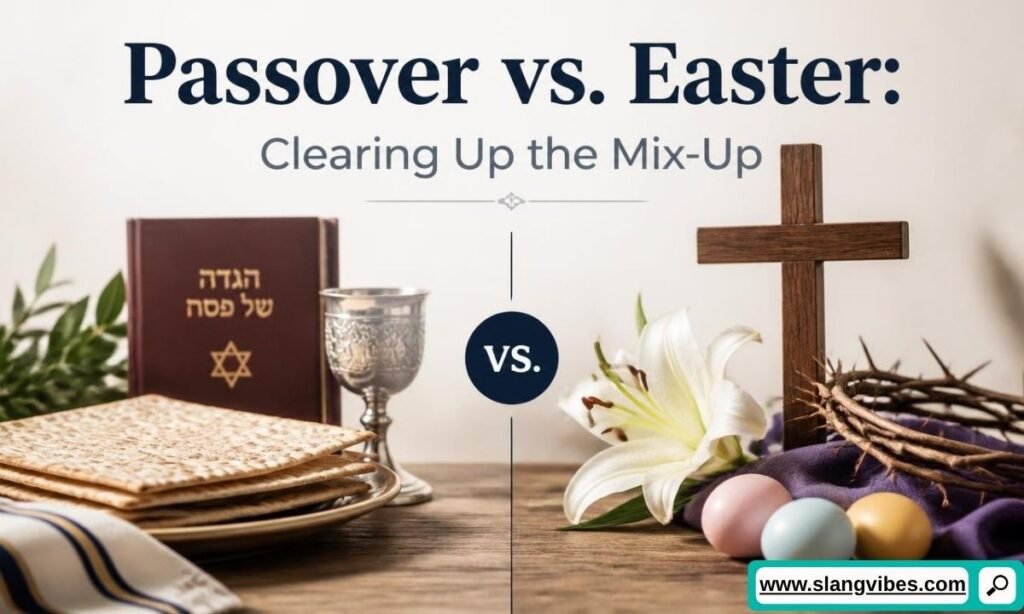
Passover and Easter confuse many people, and it’s easy to see why. Both fall in spring. A special family meal plays a role in each. Both carry themes of renewal and hope. Still, they belong to two different faiths and tell different stories.
Passover is a Jewish holiday about the Exodus from Egypt. Easter is a Christian holiday celebrating the resurrection of Jesus. History links the two in a few ways. Many Christians connect the Last Supper to a Passover meal. The word Pascha, used for Easter in many languages, traces back to Pesach. Even so, each holiday keeps its own message, its own foods, and its own songs.
The dates differ too. In 2027, Easter falls in late March, while Passover begins in late April. These are the mistakes people make often.
- Treating Passover as another name for Easter.
- Assuming every Jewish family observes the holiday the same way.
- Reducing the holiday to food rules.
- Using the word as a joke or punchline.
Common Mistake: Calling Passover “Jewish Easter” blends two separate holidays into one. Say “Passover” and let each holiday keep its own story.
The Passover meaning loses its depth when people shrink it to a comparison. A Seder looks nothing like an Easter brunch. Treat each tradition as its own, and the conversation gets easier.
What Passover Means in Practice: Dates, Length, and Food Rules
The calendar comes first. Passover begins at sundown on the 15th of Nisan in the Hebrew calendar. This is why the date shifts each year. In 2027, the holiday begins at sundown on Wednesday, April 21. It ends on April 28 in Israel and April 29 in most other places.
Length varies by location. Israel observes seven days. Many communities outside Israel observe eight, and some, including many Reform communities, keep seven. The first Seder happens on the opening night, and many communities outside Israel hold a second one on night two. The first and last days carry special weight, and many observant families step away from work on them.
Food rules shape the week. Observant families avoid chametz, which means leavened foods made from wheat, barley, spelt, rye, or oats. Many families clean their homes before the holiday to clear out every crumb. Products labeled “kosher for Passover” follow these rules.
Siblings often share this exchange at the grocery store.
Lena: Why are we buying so many boxes of matzah?
Eli: Because we skip bread all week. Matzah replaces it.
Lena: Even the cereal?
Eli: Even the cereal. Check for the “kosher for Passover” label.
Lena: Okay, this means a lot of label reading.
The Passover meaning shows up in these small choices. Each rule links back to the hurried escape from Egypt.
Read Here: HG Mean in Text: What It Really Means in Messages (2026)
How to Respond When Someone Mentions Passover
Knowing the Passover meaning helps you reply with warmth when a friend brings up the holiday. A kind, simple response works best. These options fit common situations.
- Casual: “Happy Passover! Enjoy the time with your family.”
- Warm: “Wishing you a meaningful Seder.”
- Hebrew greetings: “Chag Sameach” means happy holiday, and “Pesach Sameach” means Happy Passover. Use them with friends who share these phrases.
- Curious: “I’d love to hear more about your family’s traditions.” This invites a story without demanding a lesson.
- Workplace: Many observant Jewish coworkers take off the first two and last two days. Say “Hope you have a good break” and plan meetings around those dates.
Timing matters too. A greeting sent before the holiday starts feels thoughtful. A message sent during the week shows you remembered. Keep the tone sincere and simple, because a short note beats a long speech.
If a friend invites you to a Seder, say yes and ask whether to bring anything. Check the food rules before you pack a dish. Skip the bread, cereal, and pasta. Let your host guide you through the evening, and join the questions with curiosity.
Some responses land badly. Avoid jokes about the food. Skip the Easter comparison. Don’t ask someone to explain the entire holiday on the spot. Let them share what they want, at their own pace.
Passover Across Generations and Cultures
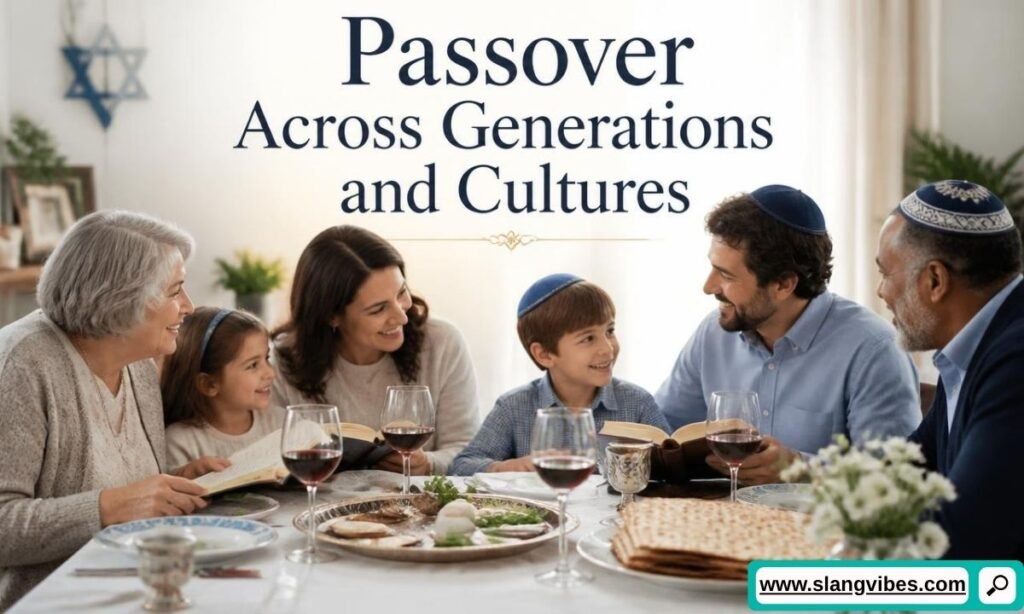
Gen Z and Millennials share Passover differently from older relatives, yet the Passover meaning stays the same. Many younger people post Seder photos, share short explainers, and host Seders for friends. In 2020, many families held Seders over video calls. Some families kept the habit to include faraway relatives. Older relatives often lead the traditions, while younger guests bring new ideas.
Culture adds more variety. Ashkenazi Jewish families, with roots in Central and Eastern Europe, traditionally avoid rice, beans, and corn during Passover. This custom is called kitniyot. Many Sephardic families, with roots in Spain, North Africa, and the Middle East, eat these foods. Some Ashkenazi communities have relaxed the custom in recent years.
Food changes from table to table. Matzo ball soup and brisket appear often in Ashkenazi homes. Other families serve dishes shaped by their own regions and recipes. In the US and UK, you’ll often see Passover on school and workplace calendars. Social media has made the holiday easier to explain, and short videos walk viewers through the plate in minutes.
A group chat between cousins might look like this.
Zoe: Are we doing the Seder over video again?
Ben: Yes. Grandma wants everyone on the screen.
Aaron: I’ll bring the charoset recipe.
Zoe: Perfect. I’ll share the Haggadah link.
Ben: Mute yourselves during the four questions!
Read New Articles: TT Meaning in Text Messages and Social Media (2026)
Common Questions About What Passover Means
What is the simple meaning of Passover?
Passover celebrates the Israelites’ escape from slavery in Egypt. The Passover meaning comes down to freedom, hope, and the duty to remember.
Is Passover the same as Easter?
No. Passover is a Jewish holiday about the Exodus, and Easter is a Christian holiday celebrating the resurrection of Jesus.
Why do people avoid bread during Passover?
The Israelites left Egypt in such a hurry, their dough had no time to rise. Observant families eat matzah instead of leavened bread.
What do you say to someone celebrating Passover?
“Happy Passover” works well. “Chag Sameach” and “Pesach Sameach” are warm Hebrew options.
How long does Passover last?
Seven days in Israel and eight days in many communities elsewhere. Some communities outside Israel keep seven.
The Lasting Meaning of Passover
Passover is a story about freedom, told by people who refuse to forget it. Each spring, families gather to retell the Exodus, taste the symbols, and ask questions. The holiday blends history, ritual, and personal reflection into one shared evening. The story is old, but each retelling feels new to the person hearing it.
The Passover meaning holds up because it speaks to every generation. Younger people find their own ways to join in, from video Seders to social posts. Older relatives keep the recipes and the songs alive. Both groups carry one message: freedom matters, and memory protects it.
If a friend mentions the holiday, listen with curiosity and reply with warmth. Skip the jokes and the Easter comparisons. Ask what their family’s Seder looks like. You’ll likely hear a story worth keeping.

Alex Carter is a language enthusiast and internet culture expert at SlangVibes. He explains the latest slang terms and text meanings in simple, clear English so everyone stays in the loop.