My friend Marcus grew a mustache for a full month before anyone said a word about it. Then his roommate walked into the kitchen, looked at him, and said, “Nice cookie duster.” Marcus stood there, coffee cup halfway to his mouth, with no idea whether he’d been complimented or roasted. This is what slang for mustache looks like in real life. It’s an entire vocabulary hiding in plain sight. The moment someone throws a term like this at you, you either laugh along or stand there looking lost. This guide breaks down 25 of the funniest, coolest, and most popular mustache nicknames people use today. It also covers where they came from and who says what.
What Does “Slang for Mustache” Mean?
Slang for mustache covers the informal words people use instead of saying “mustache” the plain way. Think of it as mustache vocabulary built for group chats, barbershops, and inside jokes rather than dictionaries. Some terms describe how a mustache looks. Others poke fun at what it does, like catching crumbs or covering the upper lip hair completely. A few are compliments dressed up as slang, calling out a sharp, well-groomed style.
Facial hair slang exists for the same reason most slang exists. People want a faster, funnier way to talk about something they see every day. A mustache sits right on someone’s face, impossible to miss, so it naturally picks up nicknames the way a car or a haircut might. Barbershop slang has leaned on this for generations, long before the internet turned every joke into a meme.
Not every term fits every mustache either. A thin, patchy mustache gets different slang than a thick handlebar style. Someone growing a mustache for Movember hears different words than someone who’s had one for years. Once you know the basic categories, the terms start making a lot more sense, and you stop feeling lost when a friend drops one on you out of nowhere.
This guide sorts the full list into clear groups, funny, classic, stylish, and regional, making it easy to jump straight to the type of term you’re curious about.
Knowing this vocabulary helps in real conversations too. It turns a confusing comment into a quick laugh instead of an awkward pause.
Read More: EMP Meaning in Text: Platform-by-Platform Guide
25 Popular Slang for Mustache Terms (Quick Table)
Here’s a fast reference before we get into detail. This table lines up 25 popular slang for mustache terms with a quick meaning and a note on where each one leans, whether it’s US, UK, or both.
| Term | Meaning | Vibe / Region |
|---|---|---|
| Stache | Short, casual word for mustache | Casual, both |
| Cookie Duster | Humorous nod to crumbs getting caught | Funny, US |
| Flavor Saver | Humorous nod to holding onto food flavor | Funny, US |
| Mouth Brow | Meme term comparing it to an eyebrow | Meme, both |
| Face Caterpillar | Thick, fuzzy mustache | Meme, both |
| Crumb Catcher | Mustache trapping food bits | Funny, US |
| Nose Neighbor | Sits right under the nose | Meme, online |
| Dirt Squirrel | Patchy, thin mustache | Funny, US |
| Soup Strainer | Classic term for a thick mustache | Old-school, both |
| Muzzy | British short form for mustache | Classic, UK |
| Lip Rug | Thick mustache compared to a rug | Casual, both |
| Face Furniture | Mustache as a facial feature | Old-school, UK |
| Old Bulletproof | Thick military-style mustache | Old-school, US |
| Gentleman’s Stripe | Neat, stylish mustache | Compliment, both |
| Retro Stache | Vintage-inspired mustache style | Trendy, both |
| Vintage Whisker | Classic, old-fashioned mustache | Nostalgic, both |
| Handlebar | Curled ends, wide style | Style term, both |
| Chevron | Thick, straight-edged mustache | Style term, both |
| Captain Bristles | Playful nickname for a bold mustache | Funny, both |
| Tache | British slang, shortened form | Casual, UK |
| Ronnie | Irish and UK slang for mustache | Casual, UK |
| Face Lace | Delicate way to describe facial hair | Playful, UK |
| Lip Sweater | Mustache as a “sweater” for the lip | Funny, both |
| Mo | Short British term, tied to Movember | Casual, UK |
| Snot Catcher | Cheeky British term | Funny, UK |
This covers all 25 at a glance. The next section breaks each one down with a little more context, so you know exactly when and how people use them.
Funny, Classic, and Cool Nicknames for a Mustache
This is where slang for mustache gets fun. Twenty five terms cover a lot of ground, so it helps to sort them into groups.
Funny and Meme-Worthy Terms
These are the ones showing up in group chats and comment sections. Cookie duster and flavor saver joke about food getting stuck in a thick mustache. Mouth brow and face caterpillar compare the mustache to something else on your face entirely, which is exactly the kind of comparison memes run on. Crumb catcher works the same way as cookie duster, with a slightly different image in mind. Nose neighbor plays on how close a mustache sits to the nose. Dirt squirrel is the one exception here, since it teases a patchy or thin mustache instead of a thick one.
Jordan: bro your mouth brow is getting real
Marcus: it's called commitment
Jordan: it's called a cookie duster and you know it
Classic and Old-School Nicknames
Soup strainer might be the most recognized old-school term on this list, describing a mustache thick enough to filter soup on the way to your mouth. Muzzy and face furniture come from older British slang, both used long before mustache memes existed online. Lip rug compares a thick mustache to carpet, and old bulletproof nods to the tough, military-style mustaches worn by soldiers and officers for decades.
Cool and Stylish Nicknames
Not all mustache slang pokes fun. Gentleman’s stripe and retro stache work as compliments, describing a sharp, intentional-looking mustache. Vintage whisker leans into old Hollywood style. Handlebar and chevron describe specific shapes rather than jokes, useful when someone wants to sound like they know their mustache styles. Captain bristles rounds out the group with a playful, nautical-sounding nickname for a bold, well-groomed mustache.
Priya: your dad's retro stache is iconic honestly
Dev: he's had this chevron since 1998
Priya: never change, uncle
British and UK-Specific Slang
A handful of these terms belong almost entirely to the UK. Tache is the short, everyday British word, used the way Americans use stache. Ronnie comes from Irish and British slang. Face lace and snot catcher lean playful, while mo ties directly back to Movember, the UK-born mustache-growing tradition. Lip sweater shows up on both sides of the Atlantic but gets used more casually in British group chats.
Oliver: growing a mo for Movember mate
Freya: your tache is barely there
Oliver: give it two weeks
US vs UK Slang for Mustache: What’s the Difference?
Slang for mustache splits fairly cleanly along regional lines once you look closely. American terms tend to joke about food and texture. Cookie duster, flavor saver, and crumb catcher all lean on the same idea, a mustache getting in the way of eating. These terms feel casual and food-obsessed, which tracks with a lot of American slang in general.
British terms take a different route. Tache, muzzy, Ronnie, and mo are shorter, older, and less focused on jokes about food. Many trace back to everyday British speech rather than internet humor, and several predate meme culture by decades. Face lace and snot catcher add a playful edge, but even these lean more toward wordplay than food-based jokes. Australia and Canada borrow from both sides, mixing British short forms with American humor thanks to worldwide Movember campaigns.
These differences come down to everyday habits more than anything else. American humor often leans on food and casual jokes, while British slang favors short, worn-in words which already sit naturally in conversation.
Some terms cross over easily. Lip sweater and soup strainer show up in both American and British conversations. Each one describes a simple, familiar image, something warm covering the lip, or something filtering what passes through it. Images like these translate well no matter where you’re from.
Knowing this split helps explain why a British friend might look confused at “flavor saver” while an American friend has never heard anyone say “tache.” Regional slang for mustache isn’t wrong in either direction. It’s built from different everyday habits and humor.
Read Also: What Does OMS Mean in Text: The Hidden Meaning You Should Know in 2026
Where This Slang Comes From
Mustache slang didn’t start online, even though the internet spreads it fast today. Some of the oldest terms tie back to military mustache culture, where thick, well-kept mustaches were common among soldiers and officers. Old bulletproof likely grew out of this world, tied to the tough, no-nonsense image soldiers carried.
Other terms come from everyday British slang predating modern internet culture by a long stretch. Words like face fungus, a cousin term to today’s list, show up in print as early as the early 1900s, usually as a good-natured insult. Muzzy and tache follow a similar path, worn into everyday British speech long before anyone typed a comment online.
Barbershop culture played a role too. Barbers have joked about client’s facial hair for generations, and terms like soup strainer likely spread through casual, in-person teasing long before anyone wrote them down.
Mustache trends have also cycled through pop culture for decades. The 1970s brought a wave of thick, confident mustaches into mainstream fashion. The 2010s hipster revival brought them back again, this time paired with waxed tips and retro barbershop styling. Each wave left new slang behind, and some of it stuck around long after the trend faded.
The internet era added a new layer rather than replacing the old one. Meme culture is responsible for terms like mouth brow and face caterpillar, both built around visual comparisons which work well as captions and reaction posts. Slang for mustache keeps growing this way, picking up new terms from wherever people are talking, whether it’s a barbershop chair or a comment section. Search trends and translation apps now help spread these words across countries fast, letting a British term catch on in the US within weeks.
How Gen Z and Millennials Use Mustache Slang Differently
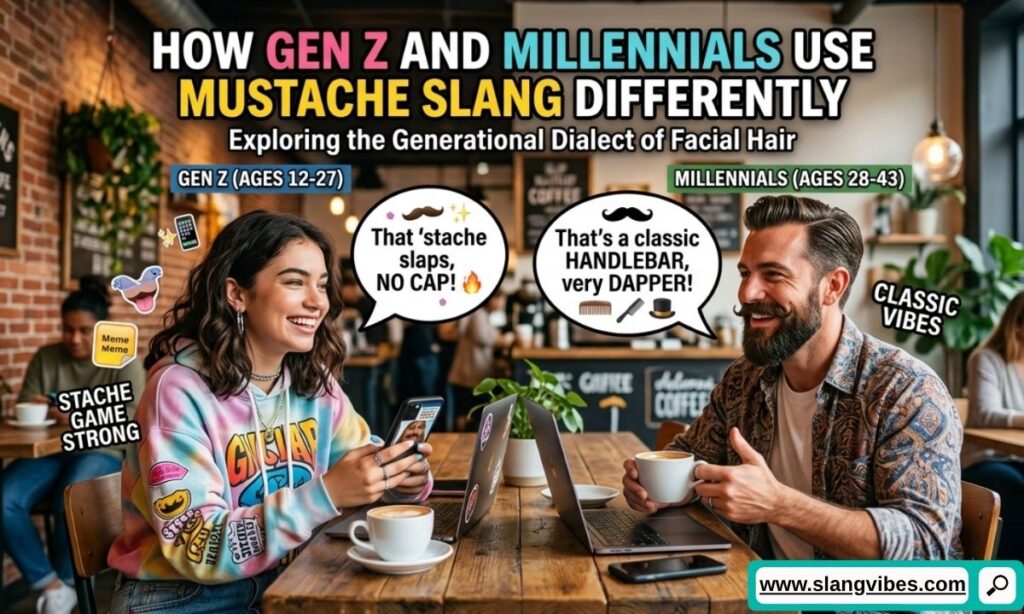
Age group changes how someone talks about a mustache almost as much as region does. Millennials tend to reach for terms with a bit of history behind them, things like flavor saver and lip rug, often picked up from older relatives, forums, or early internet humor. These terms feel established, the kind of joke you’d hear from an older cousin.
Gen Z leans harder into visual, meme-first language. Mouth brow and face caterpillar spread through TikTok and Instagram comment sections, where a quick visual comparison lands better than a longer joke. These terms move fast, often peaking for a few months before a newer term takes over.
Zoe: caption this face caterpillar 💀
Amara: mouth brow SLAYED him
Zoe: he doesn't even know we're posting this
Neither generation sticks strictly to their own terms though. Stache, soup strainer, and tache cross generational lines easily, since they’re simple, widely known, and don’t rely on a specific platform or trend to make sense. The newer, meme-driven terms are the ones most likely to fade, while the older, simpler slang for mustache sticks around no matter who’s talking.
Mustache Slang in Pop Culture and Movember
Movember plays a bigger role in mustache slang than most people realize. The movement started in Australia in 2003, encouraging men to grow a mustache through November to raise awareness for men’s health. It’s where “Mo” comes from, short for mustache, and it’s part of why the term shows up so often every fall.
Certain famous mustaches have shaped how people talk about facial hair too. Tom Selleck’s mustache has become shorthand for a thick, classic, well-groomed look, the kind people mean when they say gentleman’s stripe or retro stache. Freddie Mercury’s mustache carries a similar weight, often referenced when someone wants to describe a bold, confident style rather than a joke. Salvador Dalí’s mustache brought a completely different reputation, tied more to art and eccentricity than to tradition or humor.
Movies and television add their own layer. Mustaches tied to specific characters or eras often get pulled into everyday slang, especially when someone’s growing a mustache resembling a well-known look. Vintage whisker and retro stache both lean on this kind of cultural shorthand, letting people describe a style by pointing at a decade instead of a shape.
Workplaces and gyms often join the fun every November too. Office Movember campaigns turn words like mo and stache into shared jokes for the whole month, printed on posters and thrown around in team chats.
Pop culture keeps slang for mustache moving. New mustaches show up in movies, shows, and social feeds constantly, and each one has the potential to hand the internet a new nickname.
When to Use Slang for Mustache (and When to Skip It)
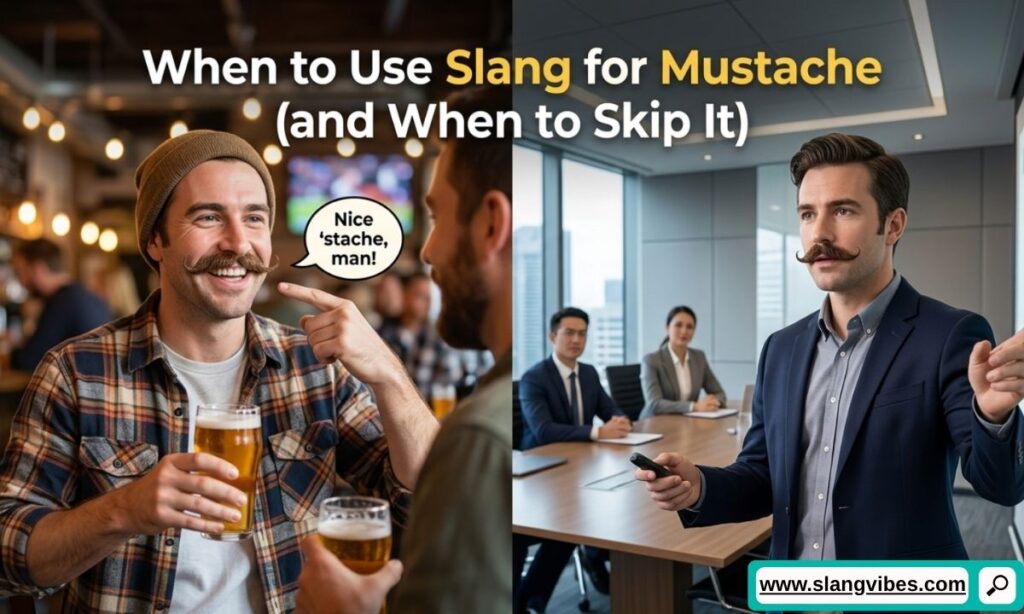
Context decides whether slang for mustache lands as funny or awkward. Among friends, terms like cookie duster or flavor saver work fine, especially if the mustache owner already jokes about it themselves. Group chats and casual conversations are exactly where this kind of slang belongs.
Work settings call for more caution. An email, a client meeting, or a formal introduction isn’t the place for tache, mo, or soup strainer. These terms read as too casual, and a plain word like mustache keeps things professional without any risk of landing wrong.
Common Mistake: Using teasing slang with someone sensitive about their facial hair. A patchy mustache is already a touchy subject for plenty of people, so terms like dirt squirrel sting more than intended, even as a joke. Read the room before using slang poking fun at thickness or coverage.
Sam: nice dirt squirrel you got going
Taylor: not the best time man, growing it for a wedding
Sam: oh no worries, looks good either way
Dating adds another layer worth thinking about. A first date isn’t the moment for dirt squirrel or crumb catcher, even as a joke, since you don’t know each other well yet. Once things get more comfortable, playful terms like stache or retro stache tend to land fine.
Ava: okay not gonna lie the retro stache is working for you
Noah: I was worried you'd say soup strainer
Ava: give it a few more weeks and we'll talk
The safest rule is simple. Use playful slang for mustache with people who already joke around with you. Save the plain word for anyone else, whether it’s a coworker, a stranger, or someone you barely know.
Read New Article: NTY Meaning in Text (2026): What It Means and How to Use It ⭐
Frequently Asked Questions
Cookie duster is a playful term for a mustache. It jokes about the mustache “dusting” crumbs off cookies while someone eats. People use it as light teasing, usually among friends who already tease each other regularly.
Flavor saver jokes about a mustache holding onto the taste of food after a meal. It’s a comedic term, mostly used in the US, and rarely meant as an insult. You’ll hear it most around big meals or holidays, when the joke feels timely.
A soup strainer refers to a thick mustache, the kind so full it looks like it might filter soup before it reaches your mouth. It’s one of the oldest terms on this list, with roots in old-school barbershop humor.
Gen Z tends to use meme-driven terms like mouth brow and face caterpillar, both spread mainly through TikTok and Instagram comment sections. These terms often peak fast and fade quickly once a newer one takes over.
Generally no. Slang for mustache fits casual settings best. Stick with the plain word “mustache” in professional emails, meetings, or formal conversations, and save the nicknames for friends.
Conclusion
Slang for mustache turns out to be a lot bigger than most people expect. It stretches from old military nicknames to memes born only last month. Twenty five terms is only a slice of what’s out there, but it covers the ones you’re most likely to hear, whether you’re in a US group chat or a UK pub. Region shapes the words, age shapes which ones feel fresh, and context decides whether a term lands as a joke or an insult.
Next time a friend calls your mustache a cookie duster or a tache, you’ll know exactly where the word came from and whether to laugh or take it as a compliment. Facial hair slang isn’t going anywhere either, since every new mustache trend seems to hand the internet another nickname to run with. Keep an ear out. The next one might already be circulating somewhere.

Alex Carter is a language enthusiast and internet culture expert at SlangVibes. He explains the latest slang terms and text meanings in simple, clear English so everyone stays in the loop.