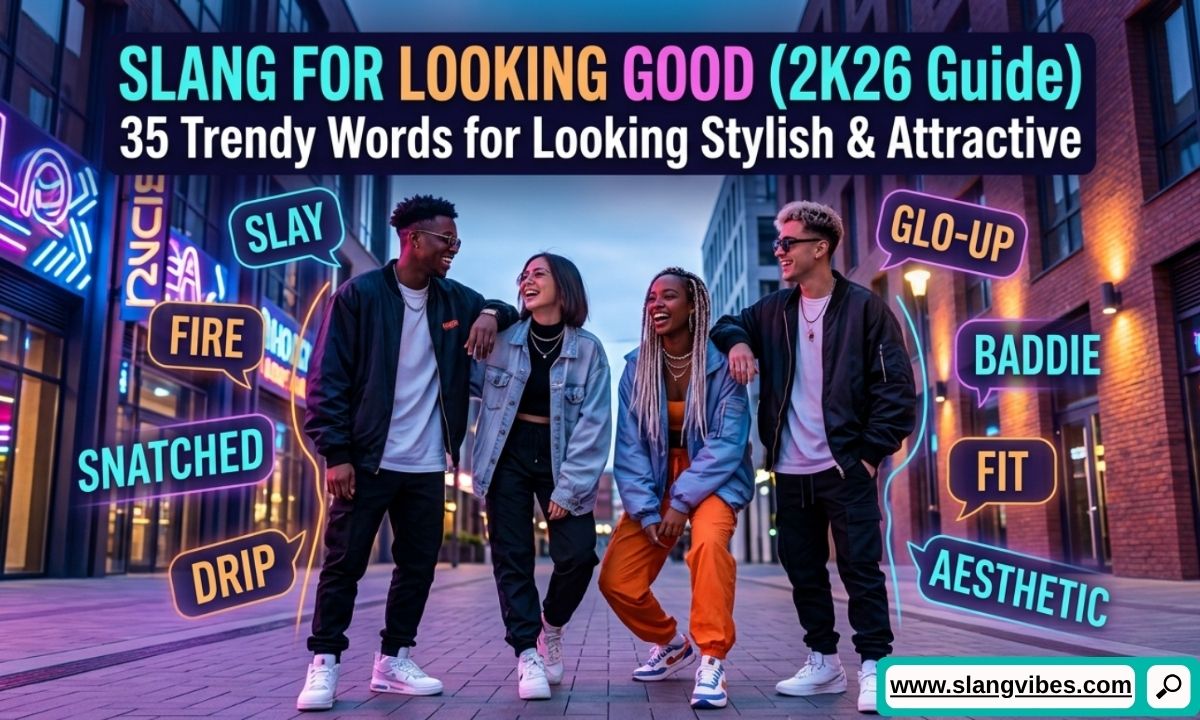
Last month, my cousin sent a selfie to our group chat. The caption said “certified snack, no cap.” I stared at it for a solid minute. Then I texted back, “wait, what does this mean?” She replied with three crying-laughing emojis and “it means you look good, obviously.” This is roughly how most people pick up new expressions today. Someone drops a word. You nod along like you already know it. Then you quietly look it up later. Slang for looking good covers exactly this kind of language. It’s the casual, fast-changing vocabulary people use in texts and comments to compliment someone’s outfit, face, or overall vibe. This guide breaks down 35 of the most common terms, from decades-old classics to the newest 2026 favorites.
What Does Slang for Looking Good Actually Mean?
Slang for looking good works as a catch-all label for informal compliments about appearance. People often lump three separate things under this label. Each one carries a slightly different meaning.
Quick Answer: Slang for looking good includes any casual word or phrase used to compliment someone’s outfit, physical appearance, or overall energy. This ranges from classics like “sharp” to newer terms like “snatched” or “aura.”
The first group covers outfit and style compliments. Think drip or a clean fit. The second group covers general physical attractiveness. Think fire or fine. The third group covers vibe and energy, with terms like glow up or aura. Here, the compliment stretches beyond clothes or looks alone. This split rarely shows up in most slang lists. It still changes how a word lands, though. Calling someone’s jacket fire differs from calling their whole presence fire.
Slang spreads through platforms rather than dictionaries. A word appears in a TikTok caption. It spreads through comment sections. From there, it either sticks around for years or fades within months. That pattern shapes almost every term below, and it’s why fashion slang, attractiveness slang, and vibe slang keep shifting every single year.
People search for this phrase for a few reasons. Some want to understand a text from a friend. Others want fresh, natural-sounding compliments instead of the same tired “you look nice.” A smaller group studies this simply out of curiosity about how modern English keeps evolving online.
Slang for a Fresh Outfit or Fit
Fashion slang describes the clothes, sneakers, and overall fit someone put together. It stays separate from face or body compliments entirely.
- Drip: an outfit that looks expensive, stylish, or well-coordinated. “His drip today is unreal.”
- Fit: short for outfit, used constantly in captions like “rate the fit.”
- Dripped out: fully dressed in a fashionable or luxury look, head to toe.
- Fresh: clean, new, and stylish, often paired with a new haircut or new sneakers.
- Clean: sharp and minimal, with nothing overdone. “That fit is clean.”
- Fly: an older but still-used word for stylish and cool.
- On point: every detail, from shoes to hair, looks intentional.
- Sharp: neat and polished, common for suits or streetwear alike.
Maya: okay that jacket is giving drip Jordan: stop, I just thrifted it Maya: the drip is unreal though, where’d you find it Jordan: literally a random flea market, I got so lucky
Slang for Someone Who’s Just Attractive
This group skips the outfit entirely. It focuses on physical attractiveness instead. The tone shifts a lot depending on which word gets used.
- Fire: extremely attractive or impressive, used for a look, a photo, or a person.
- Fine: a straightforward compliment meaning very attractive, used across generations.
- Hot: a direct, sexually charged compliment. Keep it casual and consensual.
- Hottie: a playful noun form of hot, often used lightheartedly among friends.
- Dime: someone considered a perfect ten, common in hip-hop-influenced slang.
- Snack: attractive in a fun, low-pressure way, more platonic than “hot.”
- Bad: means attractive, not negative. It’s rooted in hip-hop and R&B culture.
- Ten: a perfect score for looks, still common on dating apps and Instagram.
Notice the tone difference here. “Snack” reads as playful and safe among friends. “Dime” and “ten” lean more romantic. Reading the room matters before dropping any of these on someone you barely know.
Priya: did you see the new guy in the group project Sam: yeah he’s kind of a snack ngl Priya: I was gonna say the same thing lol Sam: don’t tell him I said that though
Slang for Glow, Confidence, and Aura
This category covers vibe over anything visual. It captures confidence, energy, and presence rather than one outfit or feature.
- Glow up: a dramatic improvement in appearance over time, often shown in before-and-after posts.
- Slay: looking amazing while carrying serious confidence.
- Serving: showing off a look with confidence, as if presenting it on a runway.
- Snatched: flawlessly put together, often used for makeup or a defined silhouette.
- Main character energy: carrying yourself like the center of attention, in a good way.
- That girl: someone whose whole aesthetic, routine, and confidence feel aspirational.
- Aura: an overall presence or energy that reads as attractive or magnetic.
These terms come up constantly on TikTok. A common caption format looks like “POV: you have main character energy today.” Worth flagging for 2026: “aura” now works as both a compliment and a point system. Younger Gen Z and Gen Alpha users treat it as a running score, where good or bad decisions add or subtract imaginary “aura points.”
Alex: bro your glow up since sophomore year is amazing Casey: appreciate that, I finally figured out skincare Alex: no but really, you’re serving right now Casey: stop I’m gonna get emotional
Read Also: What Does HMJ Mean in Text? What It Really Means on Social Media (2026)
Classic Slang Used More Often for Guys
Some words skew toward describing men. Nothing stops anyone from using them elsewhere, though. These lean more traditional. They also work well in slightly more formal settings than pure Gen Z slang.
- Dapper: elegant, classic style, often tied to suits or tailored fits.
- Suave: smooth, confident, and stylish, with a hint of charm.
- Dashing: attractive in a sophisticated, almost old-movie way.
- Clean-cut: neat and well-groomed, put together in a polished, low-key way.
These words hold up in settings where “drip” or “snatched” might feel out of place. Think a wedding or a work event. Calling a coworker “dapper” at an office party lands fine. Calling him “dripped out” probably raises an eyebrow.
Classic Slang Used More Often for Girls
Similarly, these terms skew toward describing women. They blend older compliment vocabulary with newer internet-driven words.
- Baddie: confident, stylish, and put together, with strong Instagram-model energy.
- Bombshell: strikingly attractive, often glamorous or bold in presentation.
- Doll: a sweet, retro compliment implying timeless beauty and grace.
- Foxy: attractive with a hint of confidence or seductiveness.
“Baddie” dominates among Gen Z right now. It even shows up among younger Gen Alpha audiences too. Meanwhile, “doll” and “bombshell” carry more of a vintage, pin-up feel. Both skew slightly older in tone and usage.
US vs UK Slang for Looking Good
American slang for looking good gets covered everywhere online. British slang rarely gets the same attention. It sounds completely different, too.
| US Term | UK Equivalent | Meaning |
|---|---|---|
| Fine / Hot | Peng | Very attractive |
| Fit (outfit) | Buff | Physically attractive |
| Fresh | Lush | Lovely, appealing, well put together |
| Solid / Fine | Decent | Genuinely good-looking, understated praise |
A UK teenager calling someone “peng” means roughly the same as an American teenager calling them “fire.” “Buff” in the UK almost always refers to physical attractiveness. This trips up a lot of Americans, who assume it means “jacked” or muscular. “Decent” sounds like faint praise to American ears. In British slang, though, it often means genuinely attractive. It just gets delivered with typical UK understatement.
Ellie: he’s actually so peng, I don’t know why I’m surprised Zara: buff too tbh Ellie: decent taste in clothes as well, not gonna lie Zara: ten out of ten honestly
How This Slang Shows Up in Texts and DMs
Slang for looking good rarely appears in isolation online. It usually comes paired with emojis, capitalization, or a specific caption format. This format shifts depending on the platform.
On Instagram and TikTok, fire (🔥) and hundred (💯) emojis get dropped under photos. Sometimes they replace the word entirely. A comment might read “🔥🔥🔥” with zero text, and everyone still understands the meaning. Caption formats matter too. “POV: you woke up like this” and “not me serving looks at 8am” both lean on internet-native phrasing. Both assume the reader already knows the slang behind them.
On Snapchat and in iMessage group chats, the language gets shorter and more clipped. “U ate” replaces a full sentence. “Fit check” gets sent with zero other words, just a photo and that phrase as the caption. Snapchat stories add another layer, since a quick reply like “fire 🔥” often works as the entire response to someone’s story. On X, formerly known as Twitter, slang for looking good often shows up sarcastically. Humor gets layered on top instead of a straight compliment.
Group chat: Devon: fit check 📸 Riya: okay THAT is fire Marcus: bro ate and left no crumbs Devon: 🔥🔥🔥 stop
Read More: HBU Meaning in Text: What It Really Means on Social Media
Generational Differences: Gen Z vs Millennials vs Older Generations
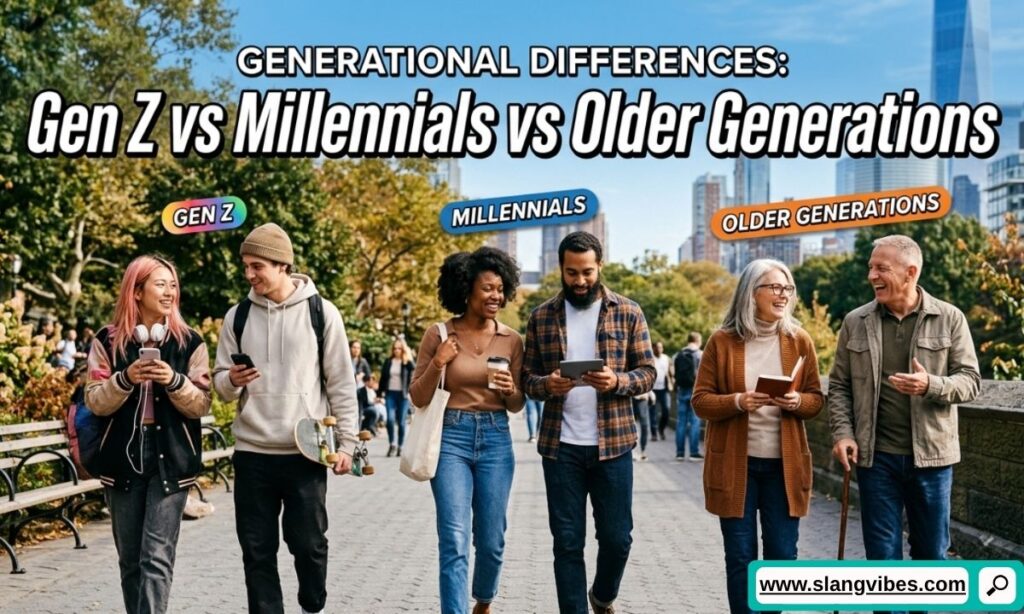
Gen Z leans hardest into rapidly shifting, platform-driven slang. Drip, snatched, serving, aura, and main character energy all trend hardest with this group. Millennials grew up with an earlier wave of internet slang. They tend to favor words like fly, fresh, fine, and on point. These terms still get used, but they sound slightly dated to Gen Z ears. Older generations, including Gen X and Boomers, generally stick to more traditional compliments. Sharp, dapper, well-dressed, or simply “you look nice” cover most of it.
This creates some funny cross-generational moments. A teenager telling a grandparent their outfit is “giving drip” might earn a confused look. A grandparent calling a teenager “sharp,” on the other hand, might get a genuine laugh instead of an insult.
Gen Alpha, the generation right behind Gen Z, already pushes some of these words in new directions. “Aura” and “aura points” spread fastest through this younger group, often turned into a running joke about who gained or lost points for a small action. Expect this layer of slang to keep evolving quickest among the youngest users online.
Jamie’s mom: you look very sharp today, sweetheart Jamie: thanks mom, appreciate the on-point styling Jamie’s mom: is that sarcasm Jamie: no I promise, sharp is a compliment where I’m from too
How to Use Slang for Looking Good Without Sounding Forced
Context decides whether slang for looking good lands naturally. The wrong moment also risks making someone sound like they’re trying too hard. A few habits make the difference.
Match the setting first. Texting a friend “you’re serving today” works fine. Saying it out loud in a work meeting does not. Match the person next. Close friends and peers generally welcome playful slang. Coworkers, teachers, or someone you just met might not share the same reference points at all. Start small rather than forcing several terms into one sentence. One well-placed word reads as natural. Five in a row reads as a performance instead.
Compliment etiquette matters here too, and most guides skip this part entirely. A word like “snatched” or “fire,” aimed at a stranger’s appearance, risks reading as overfamiliar. It might even feel uncomfortable, especially without an existing relationship. These words work best among people who already know each other. A friend’s Instagram post, where a compliment is clearly welcome, is another safe spot. Pay attention to how someone responds, too. A short “thanks” often signals the compliment landed fine, while silence or a topic change usually means it’s time to drop it. When in doubt, a genuine compliment beats a forced slang term every time.
Outdated Slang to Retire in 2026
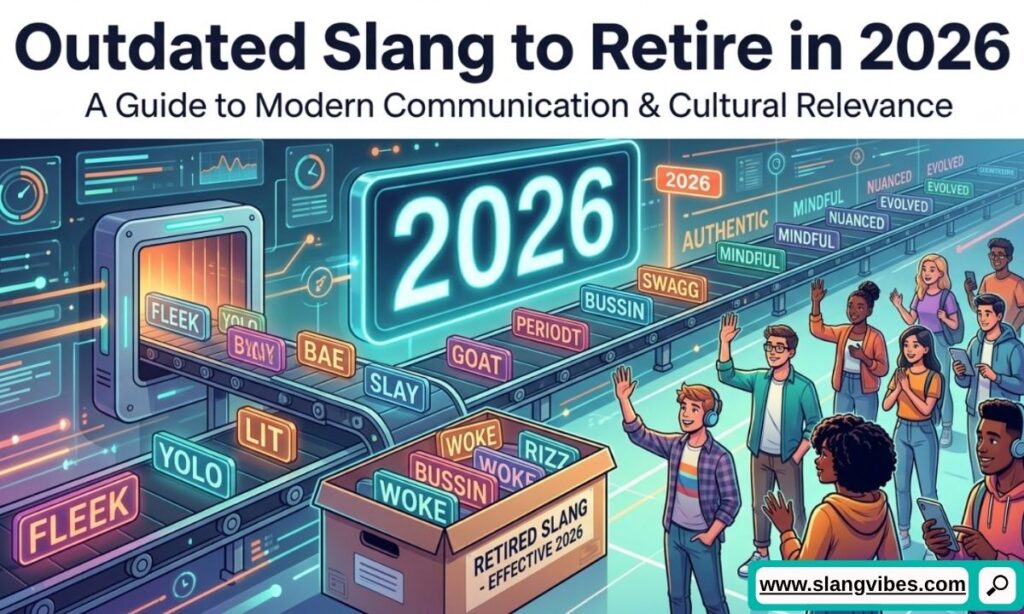
Slang has a short shelf life. A handful of once-popular terms for looking good have faded hard. Using them now reads as dated rather than trendy.
“Fleek,” especially “on fleek,” peaked years ago. It mostly shows up now as a joke or a throwback reference. “Swag,” in its 2010s form, has largely been replaced by “drip” and “aura” for describing style and presence. “Groovy” and “far out” survive only as intentional retro references. Nobody uses them as sincere compliments anymore. Even “on point,” while still understood, sounds noticeably more Millennial than Gen Z at this stage.
This doesn’t mean these words disappeared completely. Older users still say them, and they show up ironically in memes constantly. Using them sincerely toward a Gen Z audience, though, tends to land as slightly out of touch.
Read New Article: RLS Meaning in Text: What It Really Means on Social Media (2026)
Quick Reference Table for Slang for Looking Good (All 35 Terms)
Here’s every term from this guide in one scannable list, grouped by category and trend status.
| Term | Meaning | Category | Still Trending? |
|---|---|---|---|
| Drip | Stylish, expensive-looking outfit | Fashion | Yes |
| Fit | Short for outfit | Fashion | Yes |
| Dripped Out | Fully dressed in fashionable clothing | Fashion | Yes |
| Fresh | Clean, new, stylish | Fashion | Yes |
| Clean | Sharp, minimal look | Fashion | Yes |
| Fly | Stylish and cool | Fashion | Stable |
| On Point | Perfectly styled | Fashion | Declining |
| Sharp | Neat, well-dressed | Fashion | Stable |
| Fire | Extremely attractive/impressive | Attractiveness | Yes |
| Fine | Very attractive | Attractiveness | Yes |
| Hot | Sexually attractive | Attractiveness | Yes |
| Hottie | Playful attractive person | Attractiveness | Yes |
| Dime | A perfect ten | Attractiveness | Yes |
| Snack | Attractive, playful tone | Attractiveness | Yes |
| Bad | Attractive (not negative) | Attractiveness | Yes |
| Ten | Perfect score for looks | Attractiveness | Yes |
| Glow Up | Dramatic appearance improvement | Vibe/Aura | Yes |
| Slay | Looking amazing, confident | Vibe/Aura | Yes |
| Serving | Showing off a look confidently | Vibe/Aura | Yes |
| Snatched | Flawlessly put together | Vibe/Aura | Yes |
| Main Character Energy | Center-of-attention confidence | Vibe/Aura | Yes |
| That Girl | Aspirational aesthetic and routine | Vibe/Aura | Yes |
| Aura | Magnetic overall presence | Vibe/Aura | Yes |
| Dapper | Elegant, classic style | Gendered (Guys) | Stable |
| Suave | Smooth, charming style | Gendered (Guys) | Stable |
| Dashing | Sophisticated attractiveness | Gendered (Guys) | Stable |
| Clean-Cut | Neat, well-groomed | Gendered (Guys) | Stable |
| Baddie | Confident, stylish | Gendered (Girls) | Yes |
| Bombshell | Strikingly glamorous | Gendered (Girls) | Stable |
| Doll | Sweet, retro beauty | Gendered (Girls) | Stable |
| Foxy | Attractive, confident | Gendered (Girls) | Declining |
| Peng | Very attractive (UK) | Regional (UK) | Yes |
| Buff | Physically attractive (UK) | Regional (UK) | Yes |
| Lush | Lovely, appealing (UK) | Regional (UK) | Yes |
| Decent | Genuinely good-looking (UK) | Regional (UK) | Stable |
FAQs About Slang for Looking Good
“Drip,” “fire,” and “aura” currently rank among the most-used terms across TikTok and Instagram. “Serving” leads the pack for confidence-driven compliments, especially in caption form.
Yes. Drip remains one of the most widely used fashion slang terms, especially for outfits, sneakers, and overall personal style. It shows no real signs of fading yet.
“Peng” and “buff” both work as UK slang for attractive. “Lush” and “decent” cover a slightly softer version of the same compliment, often delivered with typical British understatement.
Generally, no. Save terms like “snatched” or “serving” for friends and casual settings. Stick to words like “sharp” or “well-dressed” in more formal spaces instead.
Fire works as a broad compliment for anything impressive, from an outfit to a photo. Snatched points specifically to a flawless, precise look, often tied to makeup or a defined silhouette.
Bottom Line
Slang for looking good keeps shifting because it lives on platforms, not in dictionaries. A word like “drip” or “aura” catches on through captions and comment sections. It spreads fast. From there, it either sticks around or fades within a year or two. The 35 terms above cover outfit compliments, straightforward attractiveness slang, and vibe-based words. They also cover the gendered classics and the UK-specific terms that most guides skip entirely.
These 35 words don’t need to show up in one conversation at once. Pick one or two that feel natural. Pay attention to who you’re talking to, and let the rest sink in through normal scrolling. Honestly, that’s how everyone learns this stuff anyway, one confusing text at a time.

Alex Carter is a language enthusiast and internet culture expert at SlangVibes. He explains the latest slang terms and text meanings in simple, clear English so everyone stays in the loop.