My roommate got back from a work happy hour last month and said she needed “liquid courage” before finally texting her ex. I laughed at first, then realized how many slang terms for alcohol exist beyond the handful I already knew, even though I write about language for a living. Some describe beer specifically. Others point to cheap liquor, top-shelf bottles, or the exact moment someone crosses from tipsy into fully hammered. This guide rounds up 150-plus of them, organized by drink type, region, and generation, so you never get caught blank-faced at a party again.
Slang Terms for Alcohol: The Quick Answer
Quick Answer: Slang terms for alcohol cover far more than “booze” and “brew.” They include drink-specific nicknames for beer, wine, and liquor. They also cover words for cheap or expensive bottles and terms for getting drunk. Region-specific phrases add another layer, differing between the US and UK. Context decides which term fits.
People search for slang terms for alcohol for a few different reasons. Some want to sound less formal at a party. Others hear an unfamiliar word in a group chat and need a translation fast.
Jamie: bring the sauce tonight? Riley: already grabbed a few brews, don’t worry
Exchanges like this happen constantly, especially once regional or generational slang enters the mix. A term one friend group uses daily might confuse someone from a different city or a different decade entirely.
Here’s the thing about drinking slang: it rarely stays still. New words spread through TikTok and group chats every year. Older terms like “hooch” or “firewater” stick around from decades of use. Both categories matter if you want the full picture.
Below, this guide breaks slang terms for alcohol into categories. These include classic everyday words, drink-specific nicknames, drunk and hangover slang, regional differences, and current Gen Z terms. A short final section covers when each style of slang fits the moment.
Classic and Everyday Slang Terms for Alcohol
Most people already know a handful of general slang terms for alcohol without thinking about where they came from. These words work for any drink type, which is part of why they stick around so long.
- Booze: the most common catch-all word for any alcoholic drink
- Brewski: a playful spin on beer, used loosely for any drink
- Sauce: alcohol in general, common in texting and online slang
- Hooch: cheap or homemade alcohol
- Juice: casual nickname for alcohol, popular with younger crowds
- Spirits: hard liquor as a category
- Firewater: strong, harsh alcohol
- Liquid courage: alcohol which boosts confidence before a bold move
- Nightcap: a drink before bed
- Giggle juice: alcohol which makes people laugh easily
- Rocket fuel: unusually strong alcohol
- Liquid gold: expensive or high-quality alcohol
- The good stuff: alcohol saved for special occasions
- Grog: an old nautical word for watered-down rum, now used loosely for any drink
- Poison: a joking way to ask what someone wants to drink
- Devil’s brew: a dramatic nickname for strong alcohol
- Lubrication: alcohol meant to loosen people up socially
- Tipple: a light British word for a drink, usually wine or spirits
- Hard stuff: liquor, as opposed to beer or wine
- Elixir: an old-fashioned, half-joking word for a favorite drink
- Adult beverage: a joking, formal-sounding term for alcohol
- Refreshments: a polite, joking euphemism for alcohol at a party
- Medicine: a joking euphemism for a drink someone feels they need
Each of these words for alcohol shows up across ages and regions. This makes them a safe starting point before diving into drink-specific slang.
Read Also: Basketball Terms Slang: The Ultimate Guide to Hoops Lingo (2026)
Beer Slang Terms and Nicknames
Beer carries its own dedicated slang, separate from general drinking words. Bar culture and brewery fandom keep this list growing every year.
- Cold one: a chilled beer, especially in casual settings
- Brew: beer, especially small-batch or freshly poured beer
- Suds: beer, referencing its foamy head
- Six-pack: a standard beer bundle, also short for a case
- Tinnie: British and Australian slang for beer in a tin
- Amber fluid: beer, referencing its color
- Frosty: an ice-cold beer
- Lager louts: British slang for rowdy beer drinkers, not the beer itself
- Pint: a standard beer serving in the UK, used almost as slang for beer itself
- Session beer: a lower-alcohol beer meant for drinking over a long stretch
- Crushable: modern slang for an easy-drinking beer
- Barley pop: a lighthearted nickname for beer
- Growler: a large refillable jug of small-batch beer
- Skunky: slang for beer which has gone bad or stale
- Lager: a light, crisp beer style, sometimes used loosely as slang for beer in general
- Ale: a beer style, sometimes used as a stand-in word for beer
- Draft: beer served from a tap instead of a bottle
At a bar or brewery, dropping one of these beer slang terms signals you know your way around a pint. It beats sounding like you memorized a textbook.
Wine and Champagne Slang
Wine and champagne get their own set of nicknames too. This category attracts less slang overall compared to beer or liquor.
- Vino: a casual, widely used nickname for wine
- Plonk: British slang for cheap or low-quality wine
- Bubbly: champagne or any sparkling wine
- Vin rouge: a playful, half-French way to say red wine
- Wine-o’clock: a joking phrase marking the acceptable time to start drinking wine
- Grape juice: a joking nickname for wine, usually said with a smirk
- Sparkling stuff: champagne or prosecco, used casually
- Table wine: an everyday, inexpensive wine meant for regular meals
- Rosé all day: a phrase, more than a nickname, celebrating rosé wine culture
- Champers: British slang for champagne
- Fizz: champagne or any sparkling wine, common in the UK
- Corked: wine which has gone bad, tainted by a faulty cork
- Sherry: a fortified wine, sometimes used loosely as slang for any sweet, strong wine
Elena: should we grab some bubbly for tonight Sam: yes, and grab a bottle of vino for me too
These terms lean casual and social, which fits wine and champagne’s reputation as drinks for celebration rather than heavy sessions.
Liquor and Spirits Slang Terms
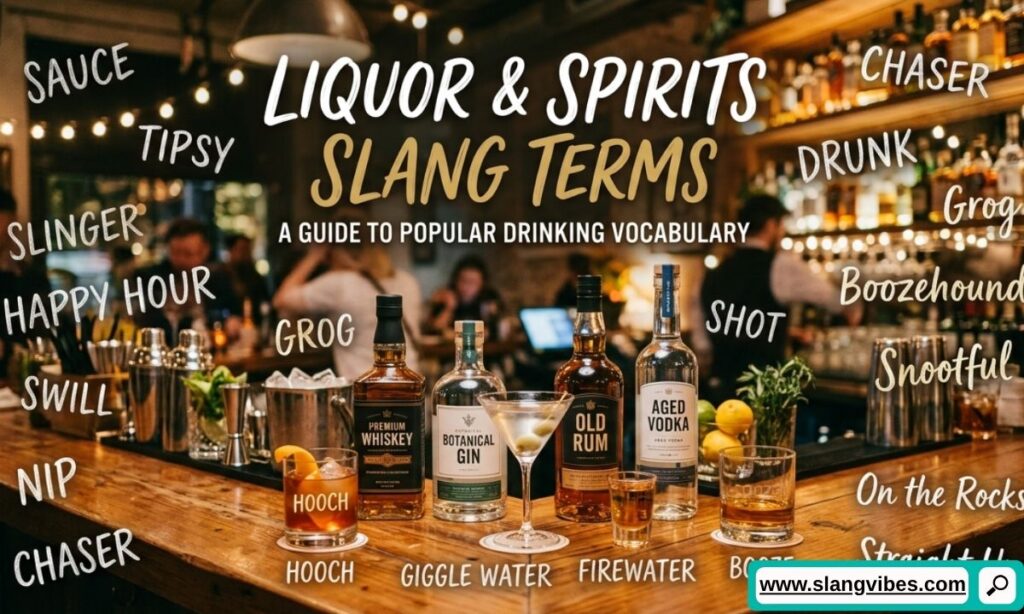
Liquor slang splits naturally by spirit type. Whiskey vodka rum tequila, and gin each pick up their own nicknames over time.
- Rotgut: cheap or low-quality whiskey
- Sipping whiskey: a smooth whiskey meant to be enjoyed slowly
- Potato juice: a joking nickname for vodka
- Vod: shorthand slang for vodka, common in the UK
- Pirate juice: a playful nickname for rum
- Cactus juice: a joking nickname for tequila
- Mother’s ruin: old British slang for gin
- G&T: shorthand for gin and tonic, used almost as its own word
- Moonshine: homemade, unaged whiskey, often made without regulation
- Well liquor: cheap, house-brand liquor served at bars
- Top-shelf: premium liquor stored on the highest bar shelf
- Neat: liquor served without ice or mixers
- On the rocks: liquor served over ice
- Chaser: a mild drink taken right after a strong shot
- Shooter: a small, quick shot of liquor
- Hard stuff: any strong liquor, as opposed to beer or wine
- White lightning: another nickname for moonshine
- Well vodka: cheap, house-brand vodka
- Proof: shorthand slang referencing how strong a liquor is
Whiskey alone picks up more nicknames than most other spirits, Whiskey culture leans heavily into tradition and regional pride, and this shows in how many words exist for it.
Cocktail and Mixed Drink Slang
Cocktails and mixed drinks come with their own slang, often tied to bartending culture and party settings.
- Mixed drink: any combination of liquor and a non-alcoholic mixer
- Highball: whiskey or another spirit served over ice with a mixer
- Jungle juice: a mixed punch made for parties, usually strong and unpredictable
- Party punch: a large-batch mixed drink meant for groups
- Signature cocktail: a drink specially created for an event or bar
- Well drink: a basic cocktail made with cheap, house liquor
- Call drink: a cocktail made with a specific requested brand
- Top-shelf cocktail: a cocktail made with premium liquor
- Shot: a small, single serving of liquor, often mixed or flavored
- Bomb shot: a shot dropped into a larger drink, then consumed quickly
- Mocktail: a mixed drink made without alcohol, sometimes used jokingly for a weak cocktail
- Slammer: a strong, fast-hitting shot or cocktail
- Punch bowl: a shared, large-batch mixed drink for parties
- Frozen drink: a blended, icy cocktail like a daiquiri or margarita
- Digestif: a strong drink taken after a meal to aid digestion
Bartenders and regular bar-goers use most of these terms daily, especially during busy happy hour shifts. Bottle service, common in clubs and lounges, comes with its own mini vocabulary too. Terms like “VIP table” and “mixer run” describe someone sent to grab more soda or juice.
Read More: 369 Meaning Slang: What It Really Means in Text, TikTok & Social Media (2026 Guide)
Slang for Cheap Alcohol vs. Top-Shelf Alcohol
Not all alcohol slang treats a drink the same way. Some terms signal a bargain bottle, while others signal something worth savoring.
Slang for Cheap Alcohol
- Rotgut: harsh, low-quality liquor
- Hooch: cheap or homemade alcohol
- Well liquor: the cheapest liquor a bar keeps in stock
- Bathtub gin: homemade gin, historically made in unsafe conditions
- Paint thinner: a joking, exaggerated nickname for harsh alcohol
- Jet fuel: another exaggerated nickname for strong, cheap liquor
- Swill: low-quality beer or liquor
- Bum wine: cheap, high-alcohol fortified wine
- Screw-top: cheap wine, referencing its twist-off cap instead of a cork
- Bar rail: the cheapest liquor lineup a bar pours
Taylor: is this the top-shelf stuff or are we doing well drinks Morgan: budget’s tight, we’re doing well drinks tonight
Slang for Top-Shelf Alcohol
- Top-shelf: premium liquor kept on a bar’s highest shelf
- Liquid gold: expensive or especially high-quality alcohol
- The good stuff: alcohol saved for special occasions
- Small batch: liquor made in limited quantities, often prized for quality
- Aged to perfection: a phrase used for well-aged whiskey or rum
- Bottle service: buying full bottles at a club or lounge, usually a premium option
- Reserve: a label often used for a distillery’s higher-end bottling
- Sipping liquor: a smooth, high-quality spirit meant to be enjoyed slowly, not shot
- Call brand: a recognizable, mid-to-premium liquor brand requested by name
Whether a drink lands in the cheap or top-shelf category often comes down to price alone. Slang like “rotgut” versus “liquid gold” makes the difference obvious before anyone checks the label. British pubs use “plonk” the same way American bars use “rotgut,” both signaling a drink nobody’s bragging about.
Slang for Getting Drunk and Hangovers
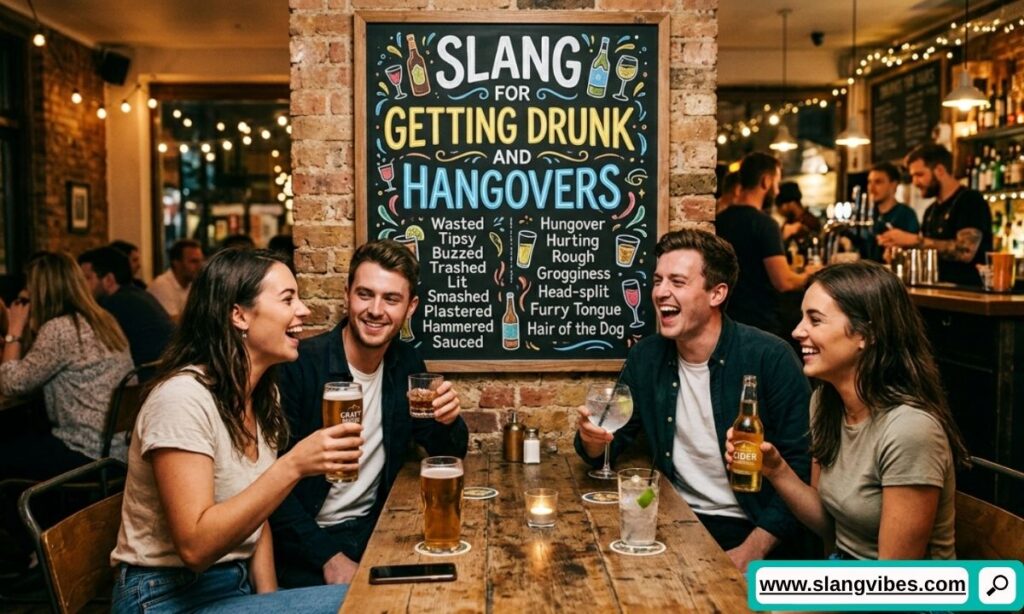
Slang for being drunk covers a wider range than most people expect. It spans mild tipsiness all the way to fully wasted.
Getting Drunk Slang
- Tipsy: mildly affected by alcohol, still fully in control
- Buzzed: a light, pleasant alcohol effect
- Lit: Gen Z slang for being drunk or having a great time
- Hammered: heavily drunk
- Wasted: extremely drunk
- Sloshed: drunk, often used playfully
- Plastered: heavily drunk, an older but still common term
- Sauced: drunk, tied closely to the word “sauce” for alcohol
- Gone: past the point of clear thinking, extremely drunk
- Smashed: extremely drunk, common across most age groups
- Blitzed: heavily drunk, often used for a fast, hard night
- Three sheets to the wind: an old nautical phrase for being heavily drunk
- Legless: British slang for extremely drunk, unable to stand steadily
- Trolleyed: British slang for heavily drunk
- Sozzled: British slang, playful and a little old-fashioned, for being drunk
Hangover Slang
- Hair of the dog: drinking again the next morning to ease a hangover
- Rough morning: a mild, joking way to describe a hangover
- Wrecked: feeling terrible the day after drinking
- Death warmed over: an exaggerated phrase for a brutal hangover
- Hangxiety: hangover-related anxiety, a newer term popular online
- Rally: pushing through plans despite a hangover
- The fear: British slang for post-drinking anxiety or regret
- Beer goggles: the effect of alcohol making people look more attractive than usual, often mentioned the morning after
Both lists show how much detail English packs into a single feeling. This range runs from a light buzz to a full-blown hangover.
US vs UK Alcohol Slang: Regional Differences
American and British drinking slang overlap constantly, but plenty of terms only make sense on one side of the Atlantic.
| US Term | UK Term | Meaning |
|---|---|---|
| Pregame | Pre-drinks | Drinking before heading out |
| Liquor store | Off-license | A shop which sells alcohol |
| Hard liquor | Spirits | Strong distilled alcohol |
| Buzzed | Tipsy | Mildly drunk |
| Chugging | Necking it | Drinking quickly |
| Keg party | House party with a barrel | A party centered on shared beer |
| Bar | Pub | A place to drink socially |
| Liquor cabinet | Drinks cabinet | Home storage for alcohol |
| Bachelor party | Stag do | A pre-wedding party for the groom |
A few terms cross over easily. “Booze,” “sauce,” and “hammered” work in both countries without sounding out of place. Others give away a speaker’s location instantly. Someone asking for “spirits” instead of “hard liquor” likely grew up in the UK. Someone heading to “the off-license” instead of “the liquor store” almost never picked up the phrase stateside.
Regional slang extends beyond the US and UK too. Australians favor “amber fluid” for beer and “wobbly boot” for drunkenness. Canadians commonly say “wobbly pops” for beer as well.
Gen Z and TikTok Alcohol Slang
Gen Z slang for alcohol spreads fast, mostly through TikTok, group chats, and meme culture.
- Sauce: alcohol in general, especially in texting or captions
- Drank: alcohol, used loosely and often ironically
- Party fuel: alcohol meant to energize a night out
- Happy juice: alcohol which lifts someone’s mood
- Vibes juice: a joking, exaggerated nickname for alcohol at a party
- Send it: a phrase encouraging someone to take a shot or drink
- Pregame playlist: not a drink itself, but the music tied to pregame drinking culture
- Locked in: slang for being fully committed to a night of drinking
- Zooted: slang for heavily drunk or heavily high, depending on context
- Feral hour: a joking phrase for the point in the night when everyone gets loud
- No chaser: drinking liquor straight, without anything to soften it
- Basic: a joking put-down for a predictable, unoriginal drink order
- Extra: slang for going overboard with drink orders or party behavior
Jordan: bringing the sauce tonight or nah Casey: obviously, already got the cooler packed
This kind of exchange shows up constantly in group chats before a party. TikTok trends also shape how quickly these words spread. Some terms fade within a season, while others, like “sauce,” stick around for years.
Old-School and Vintage Drinking Slang (With Origin Stories)
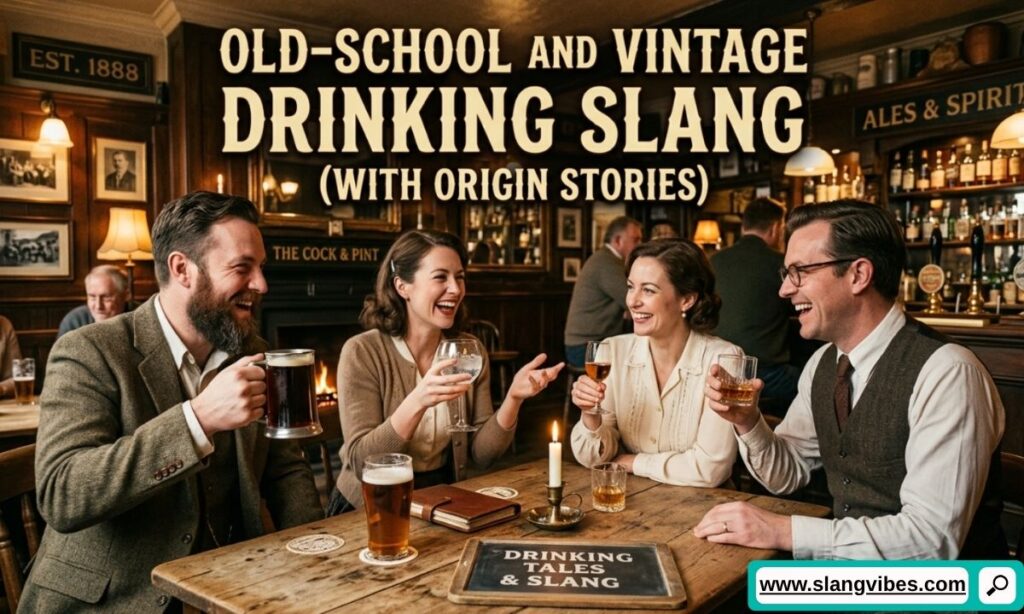
A handful of alcohol slang terms carry real history behind them, not only a catchy sound.
- Firewater: originally used to describe strong European spirits introduced to Native American communities, referencing the burning sensation of high-proof alcohol
- Grog: named after Admiral Edward Vernon, nicknamed “Old Grogram” for the coat he wore, who ordered British sailors’ rum rations diluted with water
- John Barleycorn: a personification of alcohol from English folklore, used in old ballads about grain, harvest, and drink
- Mother’s ruin: an old British nickname for gin, tied to gin’s cheap availability and heavy use during 18th-century London’s “Gin Craze”
- Moonshine: named for the practice of distilling liquor at night, away from law enforcement, to avoid detection
- Hair of the dog: an old remedy belief, drinking again the next morning to ease a hangover from the night before
- Nightcap: originally referred to a warm drink taken before bed, later shortened to describe any final drink of the evening
- Tot: British slang for a small measure of spirits, tied to old naval rum rations
These origin stories show alcohol slang has always carried more meaning than a passing trend. Some of today’s newest terms, like “hangxiety” or “sauce,” seem likely to follow the same path.
How to Use Drinking Slang Naturally
Context decides whether alcohol slang lands well or falls flat.
Casual settings, like a friend’s group chat or a backyard barbecue, welcome almost any term on this list. Professional settings call for the opposite approach. Saying “brewski” in a work email reads as strange no matter how casual the workplace feels.
Age and audience matter too. Older slang like “firewater” or “hooch” might sound like a joke to Gen Z ears. Newer terms like “hangxiety” might confuse someone from an older generation entirely.
Overusing slang in one conversation creates its own problem. Stacking five or six terms into a single sentence sounds forced rather than natural. Picking one or two terms per conversation, and letting them fit the moment, reads far more authentically.
Reading the room applies to slang terms for alcohol the same way it applies to any other slang. A term working well at a bar with friends might land badly at a family dinner. The same goes for a work happy hour with clients present. Bartenders tend to pick up on these cues fastest. Bar slang shifts constantly depending on the crowd walking through the door.
Read New Article: Addy Slang Meaning: What “Addy” Means in Text, TikTok & Snapchat (2K26 Guide)
Frequently Asked Questions
Booze remains the most common of all slang terms for alcohol across the US and UK. It works in almost any casual setting.
Gen Z commonly uses terms like sauce, drank, party fuel, and happy juice. Most of these spread through TikTok and group chats.
American terms like “pregame” and “liquor store” become “pre-drinks” and “off-license” in the UK. Plenty of terms like “booze” and “hammered” cross over easily, though.
Terms like sloshed, plastered, and three sheets to the wind bring humor to describing drunkenness. Each one carries its own tone and history.
Casual texting and social captions work fine for alcohol slang. Formal writing, professional emails, and official documents call for standard, plain language instead.
The Bottom Line on Alcohol Slang
Slang terms for alcohol keep multiplying because drinking culture never slows down. New words show up through TikTok trends, bar culture, and regional habits. Old words like “firewater” and “grog” stick around from centuries of use.
Knowing a wide range of these terms helps in more situations than one. A quick “cold one” fits a backyard barbecue. A knowing “top-shelf” comment fits a nicer bar. A joking “hangxiety” fits a group chat the morning after.
The words themselves matter less than picking the right one for the room. Slang for alcohol works best when it feels natural, not forced, and when the person hearing it understands the reference.
Next time someone at a party asks what you’re drinking, you’ll have more than a dozen ways to answer. Chances are, you’ll have a story behind at least one of them too.

Alex Carter is a language enthusiast and internet culture expert at SlangVibes. He explains the latest slang terms and text meanings in simple, clear English so everyone stays in the loop.