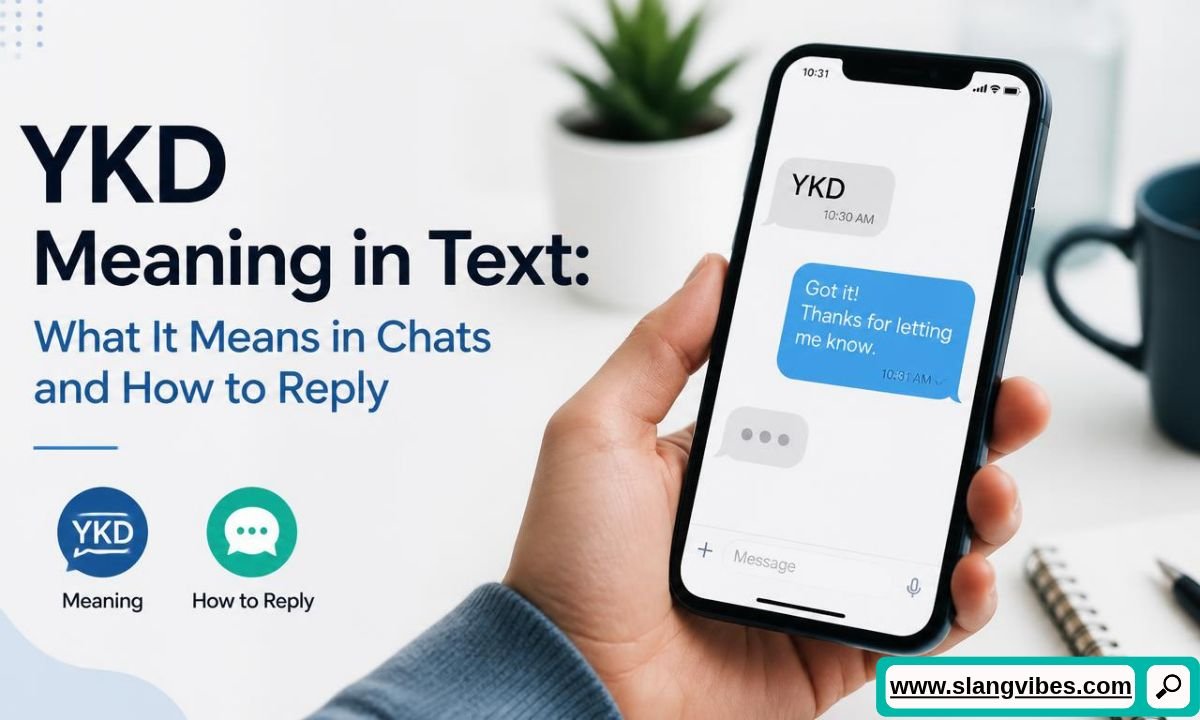
A friend of mine posted a photo of her new sneakers last month. Her cousin replied with one word: YKD. She stared at the screen for ten minutes, guessing at the YKD meaning in text before she finally asked me. Sound familiar? You’ve likely seen those three letters in a comment or a DM and wondered if you missed a memo. Here’s the short version. YKD stands for “you know dat,” a casual, spoken-style spelling of “you know it.” People send it to show agreement, confidence, or shared understanding. This guide covers what it means, how tone shifts it, and how to reply without sounding lost.
Read Also: What Does SB Mean in Text? Definition, Slang, Usage & Examples (2026)
YKD Meaning in Text: The Short Answer
The YKD meaning in text is “you know dat.” It works like saying “you know it” or “you already know.” People type it as a quick reaction when they agree with something or want to show confidence.
Acronym or Phonetic Spelling?
Technically, YKD is both. The Y and K come from “you know,” and the D comes from “dat.” Dat is how many people type the word when they say it casually. Written out, the phrase mirrors relaxed speech.
Nobody has pinned down a verified first use. Based on how the term is typically used online, it spread through quick chats and comments, not through one viral moment. Treat any confident origin story with caution.
Think of it this way. A friend posts a gym selfie with the caption “new personal best.” You reply “YKD.” You’re telling them you saw it coming, and you’re proud.
You might be wondering how this differs from plain “you know.” The extra D matters. “You know” asks someone to follow along. “You know dat” tells them you’re already on the same page.
People also use it to answer compliments. If someone says “you’re good at this,” a quick YKD says you agree, with a wink.
The abbreviation also works as a full sentence on its own. Instead of typing “yes, you know it’s true,” people send three letters and move on.
Read Here: GNG Meaning in Text Explained with Real Chat Examples
YKD in Chats on Snapchat, TikTok, Instagram, and WhatsApp
The YKD meaning in text stays the same across apps, but the mood shifts with the setting. Private chats feel closer. Public comments feel louder.
On Snapchat, YKD often shows up between close friends. It works like an inside joke. Fast, short messages fit the app’s pace, so three letters work well.
Maya: We’re still the best duo in this group.
Chris: YKD.
Maya: Say it louder for the people in the back.
On TikTok and Instagram, people drop it into comments and captions. A comment like “this outfit hits, YKD” adds hype. A caption like “late night grind, YKD” adds a touch of confidence, sometimes a little bragging. Comment sections move quickly, so short reactions get noticed faster than long ones.
Instagram story replies are another common spot. Someone posts a concert photo, and a friend answers “YKD” with a fire emoji. The reply says you were there in spirit.
WhatsApp feels more conversational. Group chats use YKD to back up a friend without typing a full sentence. When one person sends it, others often echo it. Think of it as a verbal high five.
Dev: Bro, we always win game night.
Omar: YKD.
Dev: Rematch Friday?
Omar: Obviously.
In plain SMS texting, YKD is less common. Older contacts might not recognize it at all, so a quick explanation never hurts.
YKD Meaning in Text Changes With Tone
Three letters carry a lot of attitude, so the YKD meaning in text shifts with the mood behind it. Read the room before you read the message.
Here are five common moods, each with a quick scenario.
- Hype: A friend announces a promotion and you reply “YKD” with a fire emoji. It means everyone saw this coming.
- Playful: Someone brags about their cooking and you answer “YKD, no debate.”
- Sarcastic: A coworker calls himself the office genius and you answer “YKD… sure.” The dots flip the meaning.
- Flirty: Your crush says you’re their favorite person and you send “YKD” with a wink.
- Annoyed: A sibling says “you always do this” and you snap back “YKD, and?”
Quick Answer: Capital letters with a period make YKD sound firm. Lowercase “ykd” with an emoji sounds relaxed and friendly.
Punctuation changes the vibe too. “YKD.” reads firm and final, “ykd lol” feels light. “YKD??” sounds confused or teasing. A laughing emoji softens the message, while an eye-roll turns it cold.
When you’re unsure, look at the sender’s usual style. Someone who types in lowercase with lots of emoji likely means it warmly. A friend who rarely uses slang and sends “YKD.” might be making a point.
Context counts as much as symbols. The same YKD after a compliment and after an argument carries two different messages.
Read Also: What Does NPC Mean in Slang? The Real Meaning Behind It
Who Uses YKD in Texting: Gen Z, Millennials, and Everyone Else
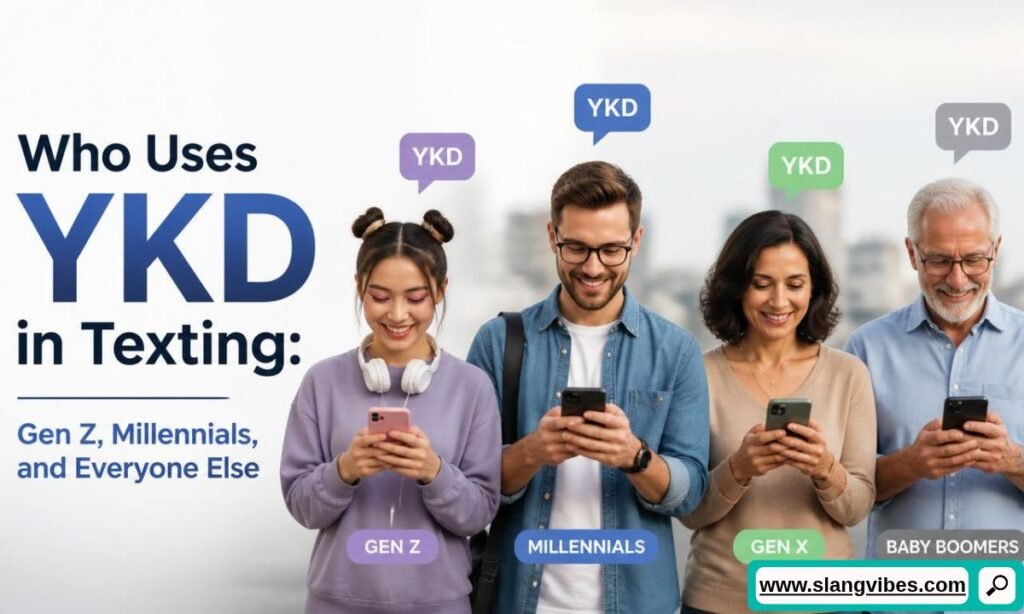
The YKD meaning in text is less familiar to older readers, so audience matters. Based on how the term typically appears online, it turns up most among Gen Z and younger Millennials. It fits fast typing and playful, spoken-style spelling. It’s common to see younger users pick up slang from friends and short videos, then carry it into private chats.
You’ll see it mostly in US and UK English-speaking chat communities. It rarely appears on formal platforms such as LinkedIn.
Many people past their mid-thirties never run into it. Parents and older relatives might read it as a typo or a keyboard slip.
Picture a parent spotting YKD in the family group chat. They might reply “Who’s YKD?” and assume it’s a name. A kind explanation keeps everyone included.
Zara: Got the job offer today.
Leo: YKD.
Zara: Are you saying yes, or did your thumb slip?
Leo: It means you know it. I’m proud of you.
Zara: Ha, okay. Translate next time.
Here’s a quick caution. Respelled slang like “dat” sounds natural from people who talk this way every day. From someone who doesn’t, it might read as imitation, and friends often notice.
Use YKD if it matches your normal voice. Skip it if you’d feel like you’re wearing a costume. Authentic texting always beats trendy texting, and friends notice the difference.
How to Reply to YKD in Text
Knowing the YKD meaning in text is half the job. The other half is a reply which matches the sender’s mood.
Start by reading the tone. Is the sender hyped, joking, flirting, or annoyed? Then pick a response from the list below.
- Casual: A friend agrees with your take. Reply “Right?” or “Exactly.”
- Playful: Reply “Always,” “You already know,” or “Say it louder.”
- Flirty: Reply “Only with you,” “You know me too well,” or “Always thinking about me?”
- Neutral: Reply “Yep,” “Fair enough,” or “True.”
- Sarcastic: Reply “Okay, okay, I hear you” or “Do you? Tell me more.”
Keep replies short. YKD is a three-letter message, so a long paragraph in response feels mismatched.
Say a coworker sends “YKD” after you share a project win. A short “Thanks, it was a team effort” works well. It keeps the tone friendly and professional.
When the tone stays unclear, ask. Typing “wait, what do you mean?” is a friendly move. Nobody minds a quick check, and it beats guessing wrong.
Another option is mirroring their style. If they send short lowercase messages, answer with short lowercase messages. Matching the energy tells them you’re on the same page.
Timing counts too. YKD is a quick-fire message, so a quick-fire answer fits. A reply two days later feels stiff, and the moment has already passed.
Read New Articles: LMAO Meaning in Text: What It Really Means on Snapchat, TikTok & Instagram (2026)
When Not to Use YKD in Text
The YKD meaning in text is casual, so some settings call for full sentences. Slang works best between people who share the same context.
Skip YKD in these situations:
- Work emails and client messages
- School essays and assignments
- Job applications and cover letters
- Messages to older relatives who prefer plain language
- First messages to people you haven’t met yet
Informal team chats are the one exception, and only when everyone already uses slang. Slang also travels poorly across age groups. A message which reads as friendly to you might look unclear to a stranger.
Priya: Report’s ready for the client call.
Ben: YKD.
Priya: Is this a yes or a no?
Ben: Sorry, I meant yes. I’ll confirm in writing.
Priya: Thanks. Full sentences for the client, please.
Here’s a simple test. If you’d feel odd saying “you know dat” out loud in the room, send something else. Your reader’s comfort comes first.
Professional settings reward clarity. A three-letter reply saves you two seconds and costs you a clear message. This trade rarely pays off.
School works the same way. Teachers read hundreds of messages, and a discussion post reading “YKD, great point” looks careless, even when you meant it kindly. Picture a student replying “YKD” to a scholarship coordinator. The coordinator has to guess, and the follow-up email costs a day.
Read More Articles: Ditto Meaning in Text Explained for Social Media Users
YKD Meaning in Text vs YK, YKW, YKYK, and YN

Look-alike abbreviations cause plenty of confusion. This table puts the YKD meaning in text beside its closest relatives.
| Term | Meaning | Tone/Vibe |
|---|---|---|
| YKD | You know dat | Confident, playful |
| YK | You know | Filler, checking understanding |
| YKW | You know what | Setting up a point, light irony |
| YKYK | You know you know | Insider nod, knowing |
| YN (Y/N) | Your name, a placeholder in fan fiction | Neutral, depends on community |
The difference lives in the ending. YK asks the reader to follow along. YKD agrees with the reader. YKW sets up a reveal. Scan for the final letter before you reply, since it changes the whole feel. Capitalization stays optional, so “ykd” and “YKD” mean the same thing.
Here’s an example. “The movie was long, yk?” asks for agreement. “The movie was long, YKD” says you already knew.
YKYK deserves its own note. People send it when only insiders will get the reference, like a photo of a local food spot captioned “YKYK.” Strangers scroll past.
YKW works as a setup. A message like “She said she’d be on time, YKW” hints at a punchline the reader already guesses.
YN has other meanings in some communities, so check the context before you assume. When two similar abbreviations show up in one chat, look at the full sentence. The surrounding words usually settle it for you, even without a dictionary.
Common Mistakes With YKD in Text
Most mix-ups with the YKD meaning in text come from missing context. These five slip-ups show up again and again.
- Reading sarcasm as agreement. Dots and flat punctuation change the meaning.
- Assuming everyone knows it. Friends outside your circle might be lost.
- Mixing it up with YK. One asks a question, the other makes a statement.
- Overusing it. Ten YKD replies in a row sound lazy.
- Using it in the wrong setting, such as work or school.
Here’s how a group chat handles the confusion.
Nia: Who’s driving Saturday?
Tom: YKD.
Nia: Does this mean you’re driving?
Sam: Pretty sure he’s agreeing with something. Tom, which one?
Tom: Ha, I meant I’m in. Not driving.
Notice how Sam steps in with a question instead of guessing. Group chats work best when someone asks early. Skipping the follow-up is another slip. If YKD leaves a plan unclear, such as who’s driving, confirm the details in plain words.
Overuse deserves a closer look. If every reply to every message is YKD, friends stop reading it as a reaction and start reading it as a habit. Mix it with real sentences so each YKD lands.
Watch the question mark too. A “YKD?” usually signals teasing or doubt, not agreement. Your reader might take it as a challenge.
The fix is simple. When your message might be read two ways, add a few extra words. “YKD, I’m in” removes the guesswork.
Frequently Asked Questions About YKD in Texting
What does YKD mean in text?
The YKD meaning in text is “you know dat,” a casual way to say “you know it.” People use it to show agreement or confidence.
Is YKD the same as YK?
No. YK means “you know” and works as a filler or a check-in. YKD adds “dat” and works as agreement.
Is YKD rude or sarcastic?
Not by default. Tone decides. A flat period or an ellipsis might make it sound sarcastic, so read the full message before you react.
How do you reply when someone sends YKD?
Match the mood. Try “Always,” “Exactly,” or “You know me too well,” or ask what they mean. A short, friendly answer works best.
Is it okay to use YKD at work or school?
Only in informal chats with people who use slang. Choose full sentences for emails, essays, and clients.
Final Thoughts on Using YKD in Chats
Now you’ve got the full picture. The YKD meaning in text comes down to “you know dat,” a quick way to show agreement, confidence, or shared understanding. Three letters carry one clear message, and tone does the heavy lifting. A lowercase “ykd” with a laughing emoji feels warm. A firm “YKD.” or “YKD…” might sound sharp.
Remember the look-alikes. YK asks for agreement, YKW sets up a point, and YKD says you already know. Keep it for friends and relaxed group chats. Save full sentences for work, school, and relatives who still text in complete paragraphs.
When a message leaves you stuck, read the tone first, then match it. If the tone stays unclear, ask. Nobody minds a quick “wait, what do you mean?” Slang moves fast, and a friendly question beats a wrong guess.

Alex Carter is a language enthusiast and internet culture expert at SlangVibes. He explains the latest slang terms and text meanings in simple, clear English so everyone stays in the loop.