My little cousin texted me one word last month: “blicky.” I stared at my phone for a solid minute, completely lost. Was it a nickname? A brand-new word? Turns out he’d picked up a new piece of slang for gun from a drill video without thinking twice.
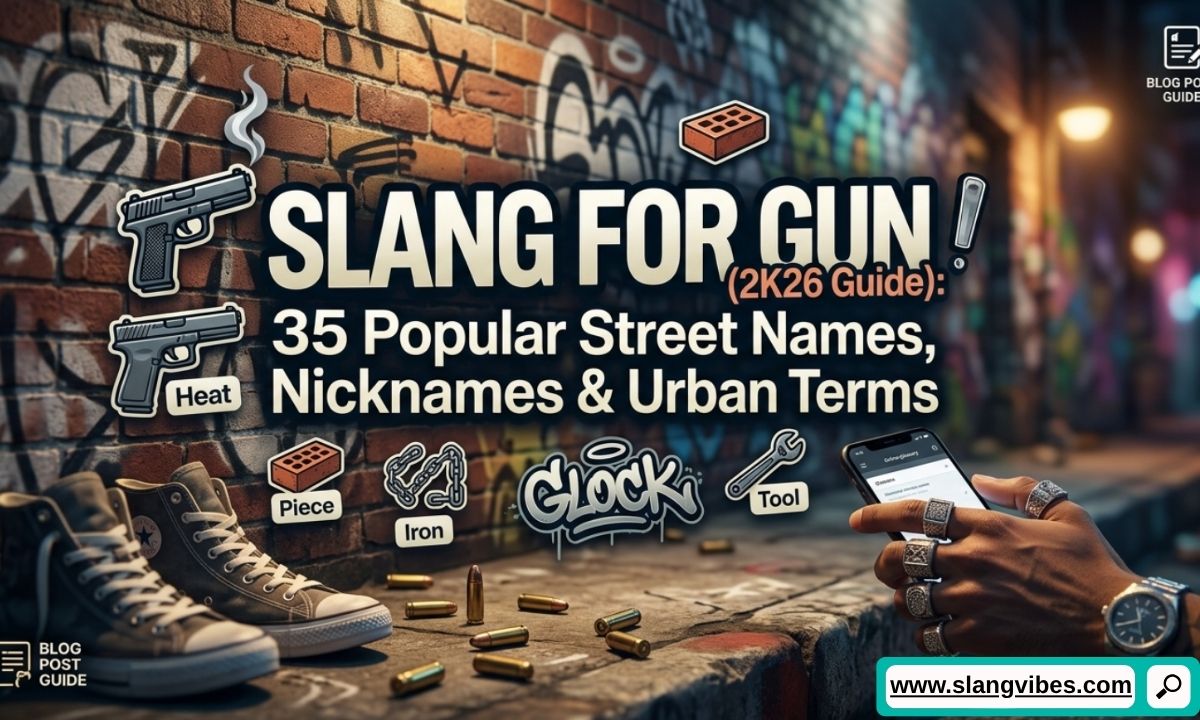
This moment showed me how fast this kind of language moves. Slang for gun covers dozens of words people use instead of saying firearm or pistol outright. The list keeps growing every year. Some terms come from old crime films. Others come straight from rap lyrics, group chats, or gaming servers. This guide breaks down 35 of the most common ones, where they came from, and how people use them today.
Quick Answer: The Most Common Slang for Gun Terms
If you only remember a handful of words, start here. These terms show up most often across music, texts, and everyday conversation right now.
| Term | Meaning | Region/Style | Still Trending |
|---|---|---|---|
| Piece | A gun, often carried quietly | US, general | Yes |
| Strap | A gun carried for protection | US, hip-hop | Yes |
| Skeng | A gun (or knife, depending on context) | UK, drill | Yes |
| Chopper | An automatic weapon | US, drill/trap | Yes |
| Blicky | A handgun | US/UK, drill | Yes |
| Heater | A firearm | US, older crime slang | Declining |
| Nine | A 9mm handgun | US, hip-hop | Yes |
Piece and strap remain the two most universal choices in US English. Almost anyone familiar with hip hop gun slang recognizes them right away. Skeng and blicky dominate on the UK side, especially among younger speakers who grew up on drill and grime. Heater still shows up in older crime shows and gangster films, though it sounds dated to younger listeners now. Some words overlap across categories too. Nine works in both hip-hop slang and general handgun descriptions. Shooter shows up on both sides of the Atlantic too, though with slightly different shades of meaning.
Each section below covers a full group of terms. You’ll see where each word started and how people use it in real conversation.
Old-School Slang for Gun: Classic and Vintage Terms
Before drill music and group chats, gangster films and detective novels shaped how people talked about guns. Many of these terms sound dated now. They still pop up in classic movies, older rap tracks, and internet nostalgia posts. This is old-school slang for gun at its most theatrical.
- Heater: A general word for a firearm, popular in 1930s pulp fiction and still heard in gritty crime talk today.
- Piece: A gun someone carries, often mentioned quietly. This one never left the current gun vocabulary.
- Iron: A gun, common in older crime films and detective shows.
- Roscoe: Vintage revolver slang, tied to 1920s and 1930s detective fiction.
- Gat: Comes from the Gatling gun and now covers nearly any firearm. Prohibition-era slang, later picked up by rap artists.
- Rod: An old street word for a gun, mostly heard in film noir dialogue now.
- Blower: An older British and American term for a gun, rarely used by younger speakers.
- Barker: A pistol, named for the loud bark of gunfire. This term dates back centuries.
Most of these terms carry a nostalgic, almost theatrical feel today. Younger speakers rarely reach for roscoe or barker in daily conversation. Writers and filmmakers still lean on them for atmosphere, though.
Read More: Ice Slang Meaning: What “Ice” Really Means in Text, Rap & Street Culture (2026)
Street and Hip-Hop Words for a Firearm
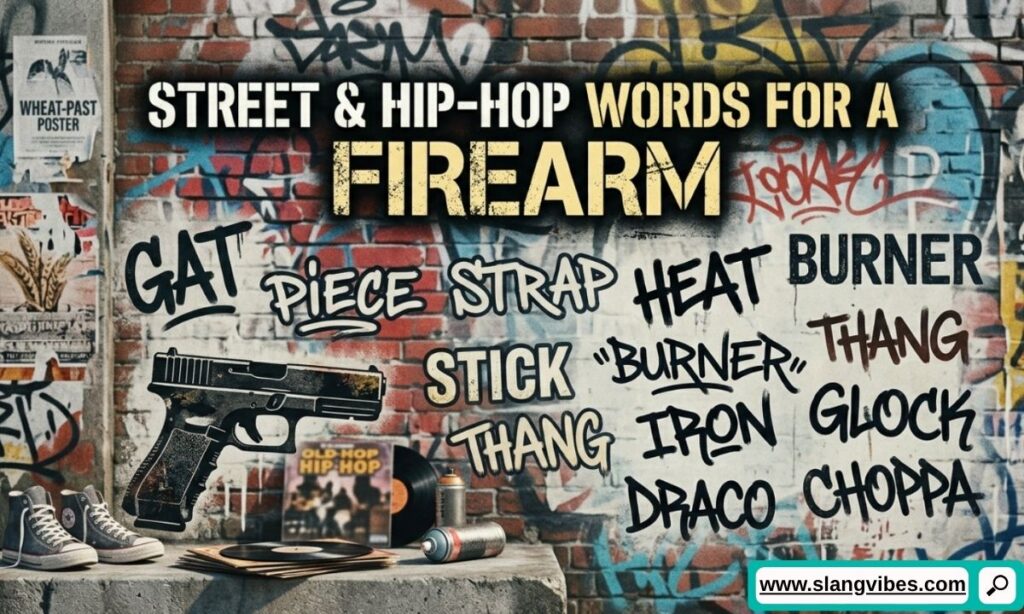
Hip-hop culture shaped a huge share of modern gun slang. These terms spread through music long before social media picked them up. Most remain common in everyday conversation and rap slang for guns today. This street language for guns keeps evolving every time a new song drops.
- Strap: A gun carried for protection, one of the most widely used terms across US slang.
- Burner: A gun meant to be disposable or hard to trace, a favorite in crime movies and older rap.
- Chopper: An automatic weapon, especially common in drill and trap music.
- Toolie: A euphemistic word for a gun, treating it like any other tool.
- Biscuit: A firearm, mostly a handgun, rooted in Southern hip-hop slang.
- Ratchet: A firearm in this context, though the word also means messy or over the top in other sentences.
- Nine (or Nina): A 9mm handgun, one of the most specific and widely recognized terms on this list.
- Cuete: A Spanish-influenced word for a gun, common in West Coast and Latino hip-hop culture.
Context matters a lot with these words. Ratchet, for example, means something totally different outside a gun-related sentence. Listeners rely on the surrounding conversation to catch the right meaning, especially online where tone doesn’t come through. Southern rap leans on biscuit and toolie, while West Coast tracks lean more toward cuete and strap.
Jordan: yo mike got a new nine
Sam: for real
Jordan: yeah he’s been showing it off all week
Sam: tell him to chill lol
British Street Terms for a Gun
UK drill and grime culture built its own vocabulary for firearms. Most of it stays separate from the US slang for gun terms covered above. A handful of these words also double as knife slang, so context decides the meaning.
- Skeng: A gun, or sometimes a knife, borrowed from Jamaican patois and spread through UK drill.
- Blicky: A handgun, common across US and UK drill scenes alike.
- Banger: A gun in UK slang, unrelated to the US meaning of a great song.
- Ting: A general word covering a gun, a person, or an object depending on the sentence.
- Whistle: An older British term for a gun, fading out of common use.
- Shooter: A gun, used in both the US and UK, though British speakers lean on it more as a plain, everyday descriptor.
Skeng carries the widest reach right now. It shows up across drill lyrics, group chats, and headlines covering youth violence in London. Blicky crossed over from US drill and now feels equally at home on either side of the Atlantic. Ting stays the trickiest of the bunch. One word covers so many meanings, and only the sentence around it tells you which one applies. Banger trips up a lot of American listeners. Most only know the word from music slang, where it means a great song rather than a weapon.
Priya: heard road man had a blicky on him last night
Zara: who told you
Priya: group chat, everyone’s talking about it
Zara: wild
Read New Article: Slang Word for Cool: 20 Modern Alternatives Used by Gen Z (2026)
Gen Z and Internet Slang for a Pistol
Gen Z gun slang moves through TikTok captions, gaming chats, and meme pages rather than movies or older rap tracks. Some of these words started as jokes and stuck around.
- Blaster: A gun, often used in a playful or gaming-inspired way.
- Popper: A small gun, mentioned casually rather than seriously.
- Clicker: A gun, named for the trigger or hammer sound.
- Spinner: A revolver, referencing the spinning cylinder, trending in online captions.
- Blam: A sound-effect word standing in for gunfire, common in memes and short video captions.
These words carry a lighter tone than older street slang. Blaster and clicker especially show up in gaming weapon slang. The term describes an in-game item as often as a real firearm. Platform matters here too. TikTok and Instagram comments favor short, punchy words like blam and popper. Longer gaming Discord threads use blaster and spinner more often, since players already share a common vocabulary around in-game weapons. These terms carry little weight outside casual online spaces. Most read as playful rather than threatening.
Gun Nicknames by Type: Handguns, Rifles, and Shotguns
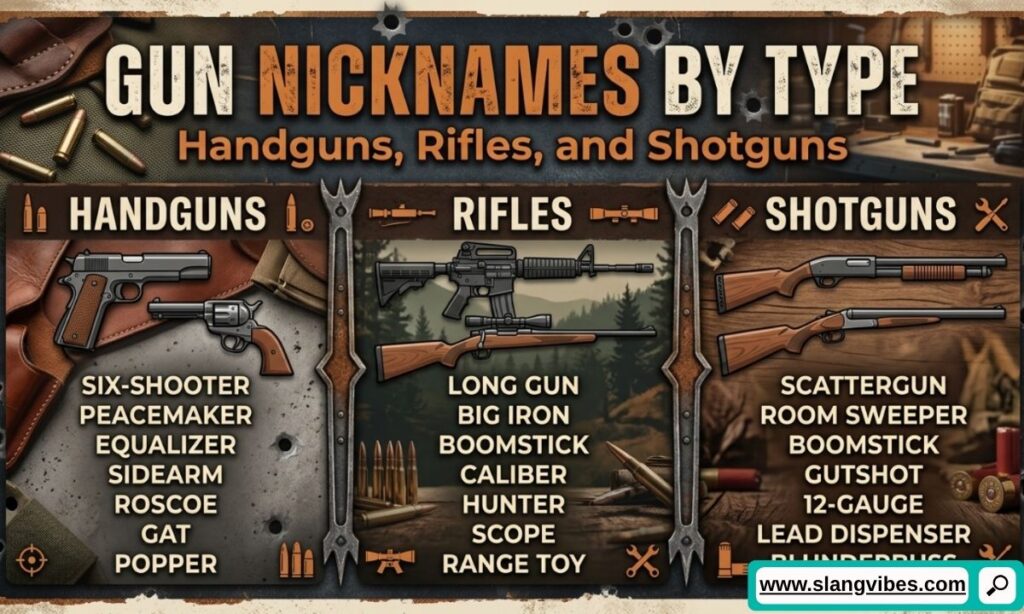
Some slang describes a general firearm. Other words point to a specific type, size, or caliber. Sorting terms this way makes handgun slang, rifle slang, and shotgun slang easier to tell apart.
- Pocket Rocket: A small, easily concealed handgun, sometimes mentioned in concealed carry slang conversations.
- Stick: A rifle or long gun.
- Boomstick: A shotgun, popularized by classic horror-comedy films.
- Cannon: A large or unusually powerful handgun.
- Deuce-Deuce: A .22 caliber gun.
- Fo-Fo: A .44 caliber gun, common in West Coast hip-hop.
- Fire Stick: An older term for a rifle or long gun, dating back to 19th century England.
- Lead Spitter: An automatic or rapid-fire weapon, described in a dramatic way.
Caliber-based slang like deuce-deuce and fo-fo shows up mostly in rap lyrics and older street conversation. It rarely appears in everyday texting. Stick and boomstick stay more common, since they describe a gun’s shape and function rather than a specific number. This makes them easier for casual listeners to pick up without extra context. Pocket rocket also crosses into legal and self-defense conversations. The term often comes up around small handguns bought for personal protection rather than street use.
Marcus: he pulled up with a cannon
Devon: like an actual cannon
Marcus: nah a big handgun lol
Devon: oh gotcha
Gun Slang in Music, Movies, and Pop Culture
Gun slang in movies and gun slang in rap music built most of the vocabulary covered so far. Crime films from the 1930s through the 1970s introduced roscoe, heater, and iron to mainstream audiences. Those words stuck around in film noir long after real slang moved on.
Rap music picked up the torch starting in the 1980s and 1990s. It spread terms like strap, burner, and nine far beyond the neighborhoods where they started. Drill and trap music continued this pattern more recently, pushing chopper, skeng, and blicky into mainstream listening across the US and UK.
Gaming culture added its own layer. Terms like blaster and cannon show up constantly in shooter games and sci-fi settings, often stripped of any real-world weight. A player calling a weapon a blaster in a match carries a different tone. It reads a lot lighter than someone using the same word to describe an actual firearm.
Gun slang on social media tends to borrow from all three sources at once. A single caption might mix a movie-era word with a drill term and a gaming reference. Platforms flatten regional and generational lines faster than music or film ever did. Music genres borrow across borders too. UK drill artists reference US slang, and American rappers pick up UK terms in return.
How Gun Slang Shifts by Region and Generation
Location changes the word list almost as much as age does. East Coast slang leans on piece and heater. West Coast and Southern slang favors cuete, biscuit, and fo-fo. UK slang runs almost entirely separate, built around skeng, blicky, and ting.
Generation shapes word choice too. Older speakers who grew up on film noir and classic gangster movies still reach for roscoe, iron, and barker without a second thought. Millennials came up during the golden era of 1990s and 2000s rap. Burner, heat, and nine feel like their natural vocabulary. Gen Z gun slang skews toward chopper, skeng, blicky, and spinner. Drill music and short-form video shaped this list far more than film or older rap did.
These lines rarely stay fixed for long. Cross-regional collaborations in music, along with social media, blend vocabulary across borders faster than any single generation used to manage alone. A term born in South London often reaches a Los Angeles group chat within weeks. The reverse happens with about the same speed.
Alex: my uncle still calls every gun a roscoe
Priya: so old school
Alex: he watched too many black and white movies growing up
Priya: honestly kind of charming
Read Also: White Heart Emoji Meaning: Love, Friendship & Hidden Symbolism
Why This Slang Matters for Parents and Teachers
Recognizing common firearm slang terms helps adults follow along when kids reference music, texts, or social posts. It cuts down on immediately assuming the worst. Most everyday use stays casual, tied to a song lyric, a game, or a joke among friends rather than an actual threat.
Context still matters more than any single word. A teenager quoting a drill lyric with the word chopper reads differently from a specific, targeted comment aimed at another person. Tone, setting, and who the message goes to all shape how seriously a phrase should get taken.
Schools and parents benefit from staying calm and curious rather than reactive. Asking a kid what a word means, or where they heard it, opens a conversation instead of shutting one down. Concerning language paired with a real name, location, or plan deserves a serious response. Involving a trusted adult, counselor, or authority makes sense in those cases.
Staying familiar with current terms, rather than relying on outdated assumptions, helps separate ordinary slang from an actual warning sign.
Journalists covering youth crime stories run into a similar challenge. Getting a term wrong, or treating slang as inherently sinister, undermines trust with the community being covered. Accuracy here works the same way it does with any other unfamiliar dialect or subculture.
When to Use This Slang (and When to Skip It)
Setting decides whether any of these words land as normal or wildly out of place. Casual conversation among friends, fan discussions about music, or storytelling all give slang for gun terms room to breathe.
Formal writing, workplace messages, school assignments, and legal contexts call for plain language instead. Swapping in strap or chopper during a serious conversation reads as confusing at best. It reads as alarming at worst, especially in a text or email where tone gets lost easily.
Online spaces deserve extra caution. A joke landing fine in person turns into a genuine threat in a screenshot, once tone, facial expression, and shared context disappear. Schools, workplaces, and platforms often apply zero-tolerance policies around weapon references, regardless of intent behind the message. Song lyrics, memes, and fan pages carry far more room for this language than a text sent straight to a specific person. The audience and stakes change completely.
The safest approach treats this vocabulary like any other slang. It’s fine among people who share the same context, and risky once the shared context disappears. When in doubt, plain words like firearm or gun communicate the same idea without any risk of being misread.
Devon: don’t say strap in the group project chat lol
Marcus: why not
Devon: teacher’s in there now
Marcus: oh good call
Common Mistakes People Make with Gun Slang
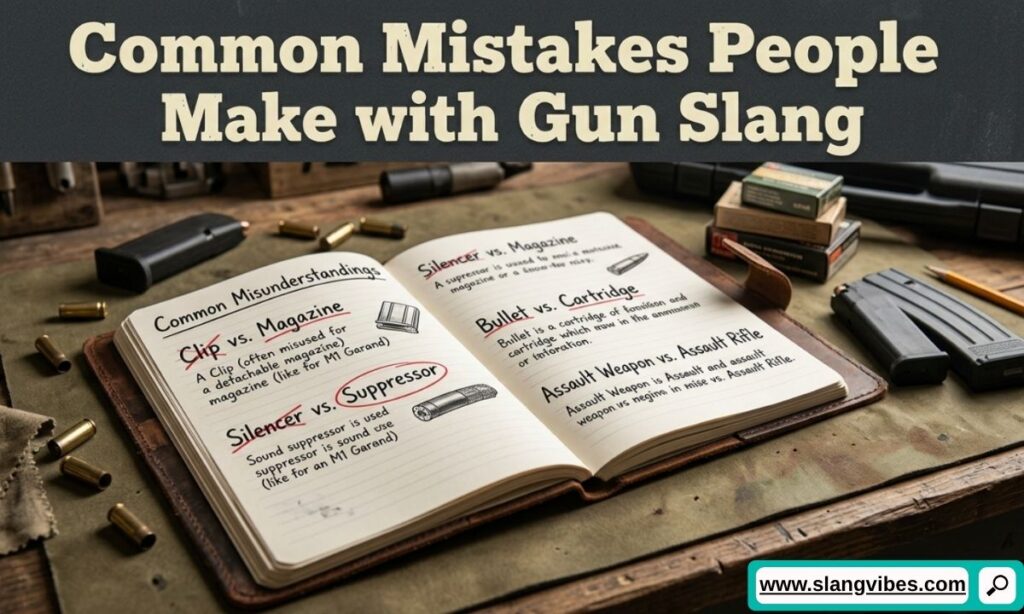
Outdated words trip people up first. Reaching for roscoe or barker among Gen Z listeners lands as try-hard rather than authentic. Those terms belong to a different era entirely.
Regional mixing causes confusion too. UK terms like banger and ting carry completely different meanings in US slang. Assuming a word works the same on both sides of the Atlantic leads to mixed-up conversations fast.
Using street slang in professional or academic settings ranks among the biggest missteps. A résumé, work email, or classroom essay calls for plain language, not casual firearm slang borrowed from music or texting.
Treating slang as universal rather than cultural rounds out the list. A term popular in Southern hip-hop, like biscuit, might sound unfamiliar to someone raised on UK drill slang. The reverse holds true as well. Assuming intent from a single word causes problems on both sides. A joke read as a threat, or a real warning dismissed as a joke, both come from skipping context instead of reading the full conversation.
Confusing slang with legal terminology causes problems too. A word like piece or heater fits casual conversation. It doesn’t match the specific weapon classifications a court or police report would use. Mixing the two in a serious document reads as unprofessional at best.
Frequently Asked Questions
Piece and strap remain the two most recognized terms across US English, while skeng and blicky lead the way in the UK.
Skeng started as Jamaican patois for a weapon and moved into UK drill and grime culture, where it now mostly means gun.
Yes. UK terms like skeng, blicky, and ting come from drill and grime scenes. US terms like strap and heater trace back to hip-hop and older crime films.
Rap artists often swap in slang for style, rhythm, and cultural identity rather than repeating one word throughout a verse.
Not much in everyday conversation. Both terms mostly survive in classic films, older rap references, and internet nostalgia posts.
Final Thoughts on Gun Slang
This guide covered 35 slang for gun terms, from courtroom-era words like roscoe to platform-native ones like spinner. A word like roscoe belongs to a different era than blicky or skeng. Both describe the same object anyway. Learning this vocabulary helps you follow a song lyric, a text thread, or a movie scene. It matters less for adding new words to your own speech.
Some terms fade fast. Others, like piece and strap, stick around for decades because they work in almost any setting. Skeng and blicky look set to stay common in UK and US slang for years. Drill music keeps spreading online, with no sign of slowing down.
Language around firearms keeps changing, and new terms keep replacing old ones. Staying familiar with the current wave, rather than the outdated one, makes conversations, lyrics, and headlines easier to follow.

Alex Carter is a language enthusiast and internet culture expert at SlangVibes. He explains the latest slang terms and text meanings in simple, clear English so everyone stays in the loop.