My friend Dre texted me last week: “I’m tired ash, don’t call me.” I stared at my phone for a full minute. Ash? Like burnt wood? I almost sent back a fire emoji and a confused face. One tiny word sent me searching. Turns out I’d missed a whole wave of texting language. Ash slang is short for “as hell,” and people drop it after an adjective to turn the volume up. Once you see the pattern, you’ll spot it everywhere, from TikTok comments to group chats. Here’s what the term means, how it connects to spoken language, and how to use it without sounding awkward.
Read Also: Type Meaning in Slang: What It Really Means in Text (2026)
What Does Ash Slang Mean?
Ash slang means “as hell.” People attach it to an adjective to make the feeling stronger. Say you’re “hungry ash,” and you’re starving. Say a movie is “funny ash,” and you laughed hard.
The tone stays flexible. You hear “happy ash” and “mad ash” with equal ease. The word doesn’t change the adjective’s meaning. It only raises the intensity, the way “so” or “super” does in everyday speech.
Quick Answer: Ash means “as hell.” Place it right after an adjective, as in “tired ash” or “good ash,” to add emphasis.
Pronunciation helps here. Say “as hell” fast, and the two words blend into a soft “ash” sound. This is why the spelling feels natural once you hear it out loud.
You’ll see it most in casual spaces like texts, captions, comments, and voice chats. You’ll rarely see it in emails, reports, or anything formal. Think of it as friend-only language with plenty of speed and attitude.
Context matters, too. A friend who texts “cold ash” wants you to feel the chill with them, not read a weather report. Many people also treat the word as a speech habit. After a while, “ash” shows up in nearly every sentence. Repetition turns a trendy word into a personal style, and friends start to recognize you by it. This habit explains why one person’s texts sound full of ash while another’s never use it.
Read New Article: DW Meaning in Text: What It Really Means on Snapchat, TikTok & Instagram (2026)
Where Ash Slang Comes From
Ash slang ties closely to African American Vernacular English, often called AAVE. In fast speech, “as hell” blends into one soft sound. The “s” and the “h” slide together, and the result sounds like “ash.”
Here’s the thing: no single post or person gets credit for the term. Based on how the term is typically used online, it began in spoken conversation and moved into text. People like to type the way they talk. Slang has a long history of phonetic spelling. Think of “gonna,” “wanna,” and “tryna.” Each one follows the same path from speech to screen.
From there, social platforms did the rest. Short posts and quick captions reward short words. Typing three letters beats typing two full words, so “ash” spread fast through group chats, comment sections, and video captions.
Culture matters here, too. Slang from AAVE carries history and identity with it. Many people notice a difference between using a word naturally and borrowing it for a joke. You don’t need to avoid the word. You should, however, use it with respect for where it comes from. Skip the exaggerated accent, keep the tone friendly, and let the word do its job.
Knowing the origin also explains why ash feels so spoken. It started as a sound before it became a spelling. When you read “tired ash” out loud, you hear the original phrase right there in the middle of the sentence.
How to Use Ash in a Sentence
Using ash slang correctly comes down to one rule. Place “ash” right after the adjective it boosts. “Cold ash” works. “Ash cold” doesn’t.
A few quick examples show the pattern:
- “This pizza is good ash.”
- “I’m bored ash in this waiting room.”
- “You look cute ash in this picture.”
Feelings and states work well too. “I miss you ash” is common in texts between partners and close friends. The word attaches to the feeling, so the sentence stays simple.
Tone and emojis shape the message. A laughing face adds humor. A heart softens a flirty line. A skull emoji tells your friend you’re dying of laughter. Without emojis, the words alone carry the mood, so pick your adjectives with care.
Here’s how it looks in a real chat:
Dre: how was the gym Maya: sore ash, I’m limping Dre: lol you did legs again Maya: yep. worth it tho, I feel strong ash
Placement has some flexibility. Most people put ash at the end of a short phrase. Others drop it mid-sentence, as in “I’m tired ash and heading to bed.” Both read fine as long as the adjective comes first. Short sentences work best. A long, formal sentence with ash feels like a tuxedo with sneakers.
Notice where Maya places ash. It follows “sore” and “strong,” and nothing else in the sentence changes.
Read More Articles: GPI Meaning in Text: Everything You Need to Know in 2026
Ash Slang on TikTok, Instagram, and X
Ash slang shows up across every major platform, but each one gives it a slightly different feel.
On TikTok, ash lives in captions and comments. Picture a video of a messy bedroom with the caption “lazy ash today.” Viewers reply “same ash,” and the thread grows from there.
On Instagram, it fits Stories and DMs better than polished grid posts. Imagine a friend replying to your outfit photo with “your fit is fire ash.” It feels warm and unfiltered.
On X, space matters. Ash is shorter than “as hell,” so it suits sarcastic one-liners and quick rants. Picture a post like “this Monday is long ash.” It’s dry, short, and relatable.
Here’s a quick snapshot of the vibe on each platform:
- TikTok: relatable captions and comment replies
- Instagram: casual DMs and Story reactions
- X: sarcastic jokes and short rants
- Group chats: fast reactions between close friends
Creators also say the word aloud in videos while the caption repeats it. This overlap teaches new viewers fast. Short clips make perfect homes for short words. Someone asks what ash means in the comments, and another viewer usually explains.
Group chats deserve a mention too. Speed rules there, and nobody wants to type extra letters at midnight. Ash fits right in. Watch any comment section for a day, and you’ll notice the pattern. The adjective changes, but the ash stays put.
Read Also: TMI Meaning in Text: How Gen Z Uses It on Social Media
Ash vs AF, ASL, and Ashy
Several lookalikes confuse people. This table sorts them out:
| Term | Meaning | Tone/Vibe |
|---|---|---|
| Ash slang | As hell | Mild, casual, playful |
| AF | Stronger swear version of “as hell” | Bolder, sometimes harsh |
| ASL | Age, sex, location, or American Sign Language | Depends on context |
| Ashy | Dry, pale-looking skin | Descriptive, not an intensifier |
AF does the same job as ash, but it swaps in a swear word. Many people pick ash when they want emphasis without cursing. This keeps things easier in mixed company.
ASL sits in a different lane. Older chat rooms used it to ask for age, sex, and location, and it also stands for American Sign Language. Read the full message before you decide which meaning fits.
Ashy deserves its own note. It describes dry, flaky skin, usually after cold weather or a day without lotion. It has nothing to do with intensity. Context tells you quickly: ash follows an adjective, while ashy describes skin.
Ash also works as a first name or a tree, so check the surrounding words. In a text like “Ash is coming over, I’m excited ash,” the first Ash is a person. Position tells you everything.
Try a quick swap test too. If “as hell” fits the spot, you’re reading the intensifier. “Tired as hell” works, so “tired ash” makes sense. “Skin as hell” doesn’t, which tells you ashy is a different word.
Read More Articles: What Does JP Mean in Text? Popular Meanings and Real Examples
Who Says Ash? Gen Z, Millennials, and UK Readers

Based on how the term is typically used online, Gen Z uses ash slang most often. Many Millennials pick it up from younger siblings, coworkers, or their feeds. They tend to use it in jokes with close friends. Older speakers know “as hell” well, but they rarely shorten it.
UK readers often meet the word online first. Everyday British speech leans on words like “proper” and “mad” for emphasis. Regional slang also varies from city to city, so no single rule fits everyone.
It’s common to see Gen Z type in lowercase with no punctuation, which makes ash feel like part of a casual flow. Millennials often add punctuation or an emoji, which gives the same word a more deliberate feel. Usage also varies by friend group, so listen before you copy.
Here’s a chat between two cousins:
Priya: landed in Manchester, freezing ash Tom: you mean freezing proper Priya: nope, freezing ash. learned it on TikTok Tom: fair enough, but skip it around Nan Priya: deal
Both versions do the same job. Only the flavor changes by region, and neither one is wrong.
If you’re a Millennial worried about sounding forced, the fix is simple. Use ash with friends who already use it. Drop it if the room goes quiet. Slang lands best when the people around you share it.
X Meaning in Text: What It Really Means and How People Use It (2026)
When Not to Use Ash in Text
Picture this. You finish a big project and email your manager, “The report is done ash.” The message confuses at best and looks sloppy at worst. Ash slang belongs to casual spaces, and a work inbox isn’t one of them.
Use ash in these situations:
- You text friends or siblings.
- You comment on a TikTok or Instagram post.
- You want emphasis without a stronger swear word.
- The mood is relaxed and playful.
Skip ash in these situations:
- You write to a boss, teacher, or client.
- You draft an essay, résumé, or cover letter.
- You talk to someone who doesn’t follow slang.
- The topic is serious, like bad news or an apology.
Older relatives add another wrinkle. A grandparent who reads “cold ash” might wonder about burnt wood, the way I did with Dre. A first message to someone new works better in plain words too, since slang reads as familiar and familiarity takes time. When you feel unsure, send one plain message first. Watch how the other person writes, then match their style. Matching beats guessing every time.
Parents often ask about the word. Ash sits on the milder end, since the spelling hides the swear. Some families and schools still treat “hell” as off-limits, so house rules matter. Either way, ash belongs in friend chats, not homework.
Common Ash Mistakes and How to Reply to an Ash Text
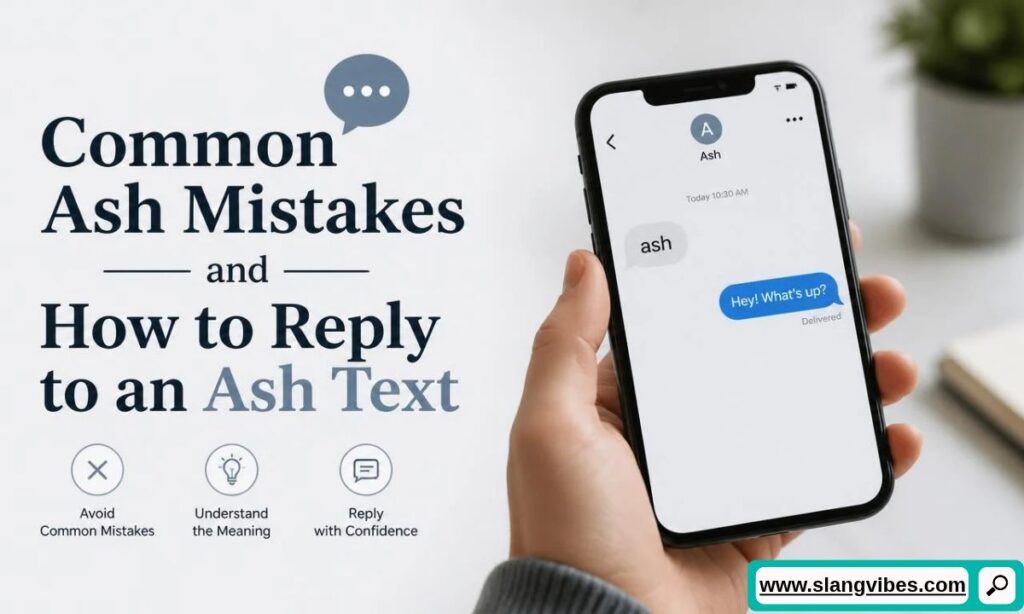
Even simple slang trips people up. Watch for these slips:
- Placing ash before the adjective, as in “ash tired.”
- Attaching it to a noun, as in “pizza ash.”
- Using it in every sentence until it loses punch.
- Mixing it up with ashy.
Tone slips deserve a warning too. Ash raises the volume of any feeling, including sad ones. A friend who reads “I’m upset ash” will take it seriously, so save it for moods you want to emphasize. When someone sends a heavy ash text, reply with care before humor. A quick glance at how the other person writes shows whether slang fits.
Replying is easier than it looks. You have three easy options: echo the word, swap in your own intensifier, or skip slang altogether. Match the energy, and you’re done.
Here’s a dating example:
Jordan: you free tonight Sam: yes, bored ash Jordan: perfect, pizza and a movie Sam: sounds good, I’ll bring snacks
Group chats work the same way:
Alex: exam tomorrow and I’m stressed ash Riley: same, my brain is fried Casey: study group at 7, I’m bringing snacks Alex: you’re a lifesaver
Notice Riley never uses ash, and the reply still lands. A simple “same” or “mood” keeps the chat moving. Ash slang works best when it feels natural, so don’t force it.
Frequently Asked Questions
Is ash slang a swear word?
No. Ash stands for “as hell,” but the word itself isn’t a curse. Most people treat it as mild and casual.
Do people say ash out loud?
Yes. It sounds like a quick, soft “ash” at the end of a phrase, close to how “as hell” blends in fast speech.
What is the difference between ash and ashy?
Ash adds emphasis, as in “cold ash.” Ashy describes dry, pale-looking skin.
Does ash go before or after the adjective?
After. Say “tired ash,” not “ash tired.”
Is ash popular in the UK?
It’s common to see it among UK users online. Everyday speech there leans on words like “proper” and “mad.”
Final Thoughts on Using Ash the Right Way
Ash slang takes “as hell,” trims it down, and drops it right after an adjective for extra punch. You’ve seen how the word sounds, how it connects to AAVE, and how it shows up across TikTok, Instagram, and X. You also know the safe zones: friends, siblings, comments, and casual chats. Work emails, essays, and formal messages call for plain words instead.
The best habit is to listen first. Notice how your friends place ash, match their rhythm, and keep your tone friendly. Overuse wears the word out fast, so save it for moments when you mean it. If someone sends you an ash text, a simple reply like “same” keeps the conversation moving.

Alex Carter is a language enthusiast and internet culture expert at SlangVibes. He explains the latest slang terms and text meanings in simple, clear English so everyone stays in the loop.