Last year, my cousin dropped one word into our family group chat: “sus.” I stared at my screen. I figured it was a typo for “sis,” so I replied with a heart. Everyone laughed at me. If you’ve ever frozen at those three letters, you’re in good company. Here’s the thing: sus meaning is simpler than it looks, but tone changes everything. Sus is short for suspicious, and people use it for anything shady, odd, or hard to believe. It shows up in gaming lobbies, comment sections, and text threads. You’re about to learn what it means, where it came from, and how to answer when someone calls you sus.
Read Also: Slang for Friends: 100+ Popular Terms People Use in 2026
What Is the Sus Meaning in Slang?
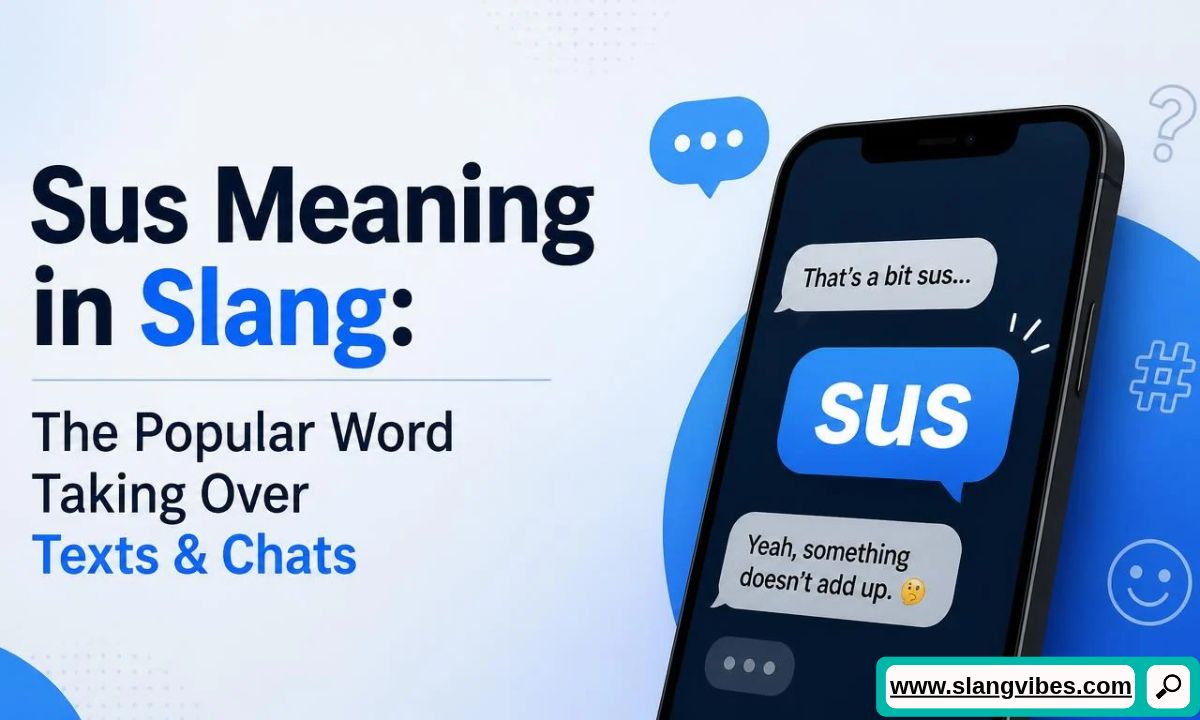
In slang, sus means suspicious or shady. When someone calls you sus, they think you’re hiding something, stretching the truth, or acting odd. The word works as a quick shortcut for “I don’t trust this.” Gamers, teens, and coworkers all use it often.
Think of it this way. A friend cancels plans ten minutes before dinner. Another friend swears the leftovers vanished on their own. Both moments earn a “sus.” The word fits almost anywhere “suspicious” fits, only faster and more casual.
Tone matters most. Between friends, sus usually sounds playful. Online, it sometimes carries a real accusation. You’ll hear phrases like “acting sus” and “being sus,” and both describe behavior worth an eyebrow raise.
Here’s a typical exchange:
Maya: Why did you clear your browser history before handing me your laptop?
Jordan: Because I’m planning a surprise party.
Maya: Okay, but the timing is so sus.
Jordan: Fine, I’ll show you the guest list. Wait, no, I won’t.
Notice how Maya’s tone stays light. She’s teasing, and the word signals curiosity more than blame.
Sus also describes things, not only people. A deal too good to be true earns the label. So does a review with no details or a story with missing pieces. The core sus meaning stays the same: something feels off, and you want an explanation.
Read More: GTFO Meaning in Chat: Snapchat, TikTok, Instagram & WhatsApp
Sus Meaning and Origin: From British Slang to Among Us
This word goes back further than most people guess. It started as a short form of “suspect” or “suspicion,” and sources trace it to British police slang. Old UK “sus laws” let police stop and search people on suspicion. Dictionaries record the word decades before the internet existed. Many people credit Among Us with inventing it, but the roots run deeper.
You might be wondering where the internet boom came from. The answer is a video game. Among Us launched in 2018 and stayed under the radar for two years. Then lockdown players found it, and streamers pushed it to millions of viewers. By September 2020, memes about “red is sus” filled every feed.
Here’s why the game worked so well. Players act as crewmates, and hidden impostors sabotage the ship. Everyone argues about who seems off. “Sus” gave players a fast, low-stakes way to point a finger without a full accusation. It works like a polite shove toward the likely culprit.
Fun Fact: In 2020, sus placed second in Germany’s Youth Word of the Year, though the word is English.
The game didn’t change the sus meaning. It handed an old word a huge new audience. Kids who never played Among Us still picked up sus from friends, comments, and videos. This is how a bit of police shorthand became everyday texting language.
Read New Article: NOLA Slang 101: Master New Orleans Street Talk Like a Local
What Does Sus Mean on TikTok, Discord, and Snapchat?
Sus keeps its core idea on every platform, but the tone shifts. Here’s how people use the word in the places you’ll see it most.
- TikTok: Comment sections fill with “this story is sus” under dramatic storytime videos. Creators also use it in captions to tease a plot twist.
- Discord and gaming chats: This is sus’s home turf. Players call out a strange move, a lucky shot, or a quiet teammate in seconds.
- Snapchat and Instagram: People send it as a quick reaction to a weird screenshot or a vague reply. It reads casual and throwaway.
- X and Reddit: Users apply it to accounts and posts with missing details. The tone runs sharper, closer to fact-checking.
Gamers vote fast, and the chat moves faster. Here’s a typical gaming moment:
Kai: Why were you alone in Electrical?
Riley: I was fixing wires.
Kai: Sure. You look sus to me.
Mina: Same. Vote Riley.
Riley: You’re all wrong, I swear.
Notice the playful panic. Nobody means harm. In a game, a sus call is part of the fun.
Sus also spreads through captions. A creator writes “my roommate has been acting sus lately,” and viewers stay for part two. The phrase works as a hook because curiosity comes built in. Watch the platform, and you’ll rarely misread the vibe.
Read Here: TTM Meaning in Texting (2026): What It Really Means in Chats & Social Media
Sus Meaning in Texts vs. Real Life
Tone shifts between a typed message and a spoken sentence. Let me share a quick scenario. I once texted a friend about weekend plans, and she answered with only “sus.” No emoji. No punctuation. I spent ten minutes rereading my message, sure I’d offended her. She was joking. I’d phrased the plan in a strange way, and she wanted to tease me.
Here’s the thing: text strips away tone of voice. Spoken sus usually sounds playful because your voice does the work. Typed sus feels flatter, so people add clues.
These clues help you read the room:
- 🤨 signals raised eyebrows and light teasing.
- 👀 means “I’m watching, and I’m curious.”
- 🚩 marks a real warning sign, often in dating talk.
- “Susss” stretches the word for comic effect.
- A lone “sus” with no emoji leaves room for doubt, so ask if the tone feels off.
Out loud, sus appears after “this is,” “you’re,” or “so.” On a screen, it stands alone as a reply or comment. Saying a bare “sus” in conversation sounds unfinished, but typing it feels natural. Younger speakers say it out loud without thinking.
When in doubt, check the sender and the setting. A close friend usually means a joke. A stranger on a thread usually means a real doubt. Once you know the sus meaning, the clues matter more than the word.
Read Also: Zesty Meaning in Slang: Real Definition, Examples & Social Media Uses (2026–2027)
How Gen Z, Millennials, and Gen Alpha Use Sus

Sus meaning stays steady across generations, but each group leans on it differently. Gen Z treats sus as everyday vocabulary. Many Gen Zers use it for jokes, side-eyes, and quick reactions without a second thought. Millennials picked it up through gaming and memes, so they often use it with a wink. It’s common to see younger users stretch it into “sussy” or “sussy baka.” Older relatives usually hear it as a new word, or they remember it from Among Us.
UK and US speakers also split slightly. British speakers often spell it “suss” and use “suss out” to mean figuring something out. “I’ll suss out the problem” means “I’ll work out what’s wrong.” Americans lean toward “sus” as a plain label for shady behavior.
Here’s how it sounds between siblings:
Dani: Why does Mom keep smiling at her phone?
Eli: She’s texting someone. Super sus.
Dani: Think it’s Dad’s friend?
Eli: No idea. I’m checking the group chat.
Dani: Okay, detective.
Notice how the word moves between family members without any fuss. Gen Z and Gen Alpha treat it as normal speech, so no one stops to explain it. Age rarely blocks understanding, since context explains the word.
If you’re older and want to try it, keep it light. Use sus with a joke, a 🤨, or a grin, and nobody will tease you for trying too hard.
Read Also: IDM Meaning Decoded: What It Truly Stands For Online (2026)
Sus vs. Sketchy, Shady, Fishy, and Cap: Which Fits?
The sus meaning overlaps with several other words, yet each one carries its own flavor. Picking the right term keeps your message clear. Here’s a quick comparison.
| Term | Meaning | Tone/Vibe |
|---|---|---|
| Sus | The core sus meaning: suspicious or shady | Playful to sharp |
| Sketchy | Questionable or unsafe | Casual, slightly older |
| Shady | Dishonest or untrustworthy | Direct, a little harsh |
| Fishy | Something smells wrong | Old-fashioned, mild |
| Cap | A lie or exaggeration | Gen Z, blunt |
Some quick scenarios show the difference. Your friend says he finished the project in an hour. You say “cap,” because you doubt the claim. A stranger asks for your password. You say “sketchy,” because the danger feels real. A coworker disappears every day at 2 p.m. You say “sus,” because the pattern looks odd and you want answers.
Here’s the difference in one breath. Cap attacks a statement. Sketchy describes risk. Shady points at a person’s character. Sus covers all three with a lighter touch, which explains why it spread so fast.
Fishy still shows up, though it often sounds older. Sketchy and sus often swap places in casual speech. Context decides which word lands best. If you want gentle teasing, pick sus, If you want to warn someone, pick sketchy or shady, If you doubt a story, pick cap. Each word has its fans, so trust your ear.
Called Sus? How to Respond Without Panicking
Knowing the sus meaning makes this moment less scary. In most cases, the other person is teasing, and a light reply keeps the mood easy. First, read the tone. A 🤨 or a joke means play along. A cold, stand-alone “sus” from someone upset means you should ask a direct question.
Here are three reliable moves:
- Joke back: “Guilty. I ate the last slice.”
- Explain briefly: “My phone died, I swear.”
- Ask for clarity: “What seems off to you?”
Each option keeps the exchange friendly and shows you aren’t hiding anything. Here’s how it plays out on a first date:
Priya: You ordered the same dish as me. Sus.
Marcus: Great minds think alike.
Priya: Or you stalked my Instagram.
Marcus: Okay, I looked at one photo. Two, tops.
Priya: Now it’s confirmed. Sus.
Marcus kept things playful and admitted the harmless truth. Honesty works best because teasing fades quickly when you stay open.
If the accusation feels serious, switch to plain language. Say, “I hear you. Let me explain what happened.” Sus stays slang, so a real concern deserves a real conversation. Skip over-defending too. Long explanations often make a light tease sound like a big deal. You don’t owe anyone a speech for a simple joke. Silence also works for a one-word tease, since a 😅 answers plenty.
Read New Article: LMS Meaning in Text: What It Really Means on Snapchat, TikTok & Instagram (2026)
Common Mistakes With Sus and When to Skip It

Even with the sus meaning down, a few mistakes trip people up. Here are the most common ones.
- Using it for a serious accusation. Sus softens the claim, so a real problem needs clearer words.
- Overusing it. Calling everything sus drains the joke.
- Misjudging the audience. Older coworkers or clients might not know the word.
- Ignoring tone. A teasing sus to a stranger sounds rude.
Formal versus informal matters too. Skip sus in job applications, client emails, reports, and anything a manager reads closely. Use “suspicious,” “questionable,” or “unusual” instead. Picture this: you email a client and say your pricing change “looks sus.” The client now wonders about your professionalism. A calm “this looks inconsistent” would have worked better. Another slip is dropping sus into a message where the stakes feel high, like a layoff or a breakup. Slang works best when everyone shares the code.
A Note on Sensitive Use
Some people use sus to question someone’s identity or sexuality. This usage exists online, though it ranks as a minor use. It stings when aimed at a person, so skip it. Keep sus for behavior, stories, and situations, never for who someone is.
Parents often ask about safety. The word itself is mild, and it isn’t profanity. Most kids use it the way older generations said “fishy.” Your best move is to ask how your child means it in context.
The Bottom Line on Sus
The sus meaning boils down to one idea: something feels off. The word started as police shorthand. Among Us gave it a massive boost. Now it lives in group chats, comment sections, and everyday speech. Gen Z and Gen Alpha use it without effort, and Millennials use it with a smile.
Tone decides everything. Between friends, sus works as a gentle tease. Online, it sometimes signals real doubt. Emojis, timing, and the sender’s history give you the clues you need. When someone calls you sus, stay light, stay honest, and answer the real question underneath.
Keep the word out of formal writing, and steer it away from anyone’s identity.
Next time those three letters pop up on your phone, you won’t stare at the screen like I did. You’ll smile, pick a reply, and move on. The word has stuck around well past its gaming peak. Keep it in your toolkit and use it with care.
FAQ
What Is the Sus Meaning in a Text Message?
Sus means suspicious or shady. A friend sends it to tease you or to doubt a story. Check the emoji and your history with the sender to judge the tone.
Is Sus From Among Us?
The short answer is no. The word existed for decades as short for suspect or suspicion. Among Us made it famous in 2020.
What Does Sussy Baka Mean?
It’s a meme phrase mixing “sus” with “baka,” the Japanese word for fool. People use it as a silly jab, not a serious insult.
Is Sus a Bad Word, or Is It Safe for Kids?
Sus isn’t profanity, and most kids use it to mean suspicious. Check the context if someone aims it at a person’s identity.
Is It Spelled Sus or Suss?
Both appear. Americans mostly write “sus,” while British speakers often write “suss,” especially in “suss out.”

Alex Carter is a language enthusiast and internet culture expert at SlangVibes. He explains the latest slang terms and text meanings in simple, clear English so everyone stays in the loop.