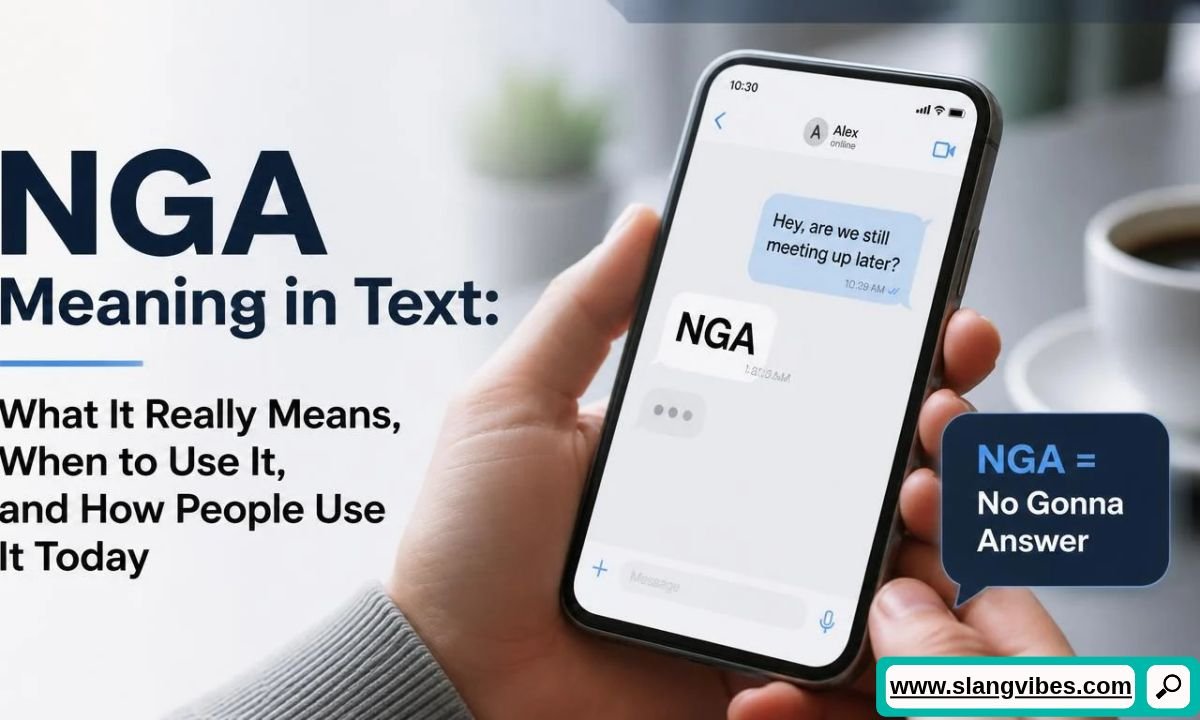
You’re scrolling through TikTok comments at midnight. Someone types “nga” under a funny clip, and fifty people answer with laughing emojis. You pause. Is it a joke, a typo, or something heavier? Searching for the NGA meaning in text is a smart move, because the answer carries real social weight. Here’s the short version. NGA is a censored spelling of the n-word, and it brings serious history with it. Whether anyone should type it depends on who they are, who they’re talking to, and where they’re posting. This guide covers the meaning, the roots, the usage, and the best replies.
Read Also: WB Meaning in Text: What It Really Means on Social Media (2026)
NGA Meaning in Text: The Short Answer
Quick Answer: NGA is a censored spelling of the n-word, typed in place of the full word in chats, comments, and captions.
The NGA meaning in text comes down to one thing. It stands in for the n-word. Specifically, it replaces the version ending in “a.” People type “nga” instead of the full spelling for a few reasons. Some want to skip platform filters. Others want to soften how the word looks on screen. Many simply copy what they see in comment sections.
The abbreviation works as a casual noun. People use it the way they’d use “guy” or “dude” in a sentence. You’ll see lines like “this nga is hilarious” or “where’s he at?”
Shortening the spelling doesn’t erase the history behind it. Online, the term shows up in memes, group chats, and captions. Its tone shifts with the speaker. Among close friends, it often reads as casual or teasing. From a stranger, it often reads as rude or hostile. Context decides nearly everything.
Emojis often shift the mood. A laughing face softens the line, while a flat reply with no emoji reads colder. The word itself stays the same, though. Readers judge the sender first and the sentence second. Which is why one comment earns a laugh and another earns a report.
Where the NGA Slang Comes From
NGA slang traces back to the n-word itself, so its story starts with the history of the full word. For generations, the n-word served as a slur aimed at Black people. Many Black Americans later adopted the “-a” ending in everyday speech, especially in music, comedy, and casual conversation. Within those communities, people use it with a meaning far from the slur. People outside those communities are widely told to leave it alone.
The shortened spelling “nga” came later, and it grew up online. Based on how the term is typically used, people typed it to dodge word filters and keep posts visible. Rap lyrics, memes, and short video comments spread the spelling fast. Once popular accounts used it, plenty of followers copied the habit without a second thought.
Here’s the thing. Many people who type NGA online never learned the background. They saw it in a comment and repeated it. Knowing the roots helps you read the term correctly. It also explains why the same three letters feel friendly in one chat and hostile in another.
Opinions differ widely, even inside Black communities. Some people embrace the word, and others reject it fully. Outsiders shouldn’t read this debate as a green light. Anyone studying the NGA meaning in text needs this background first.
Read Also: CYC Meaning in Text: Complete Guide to This Popular Texting Slang
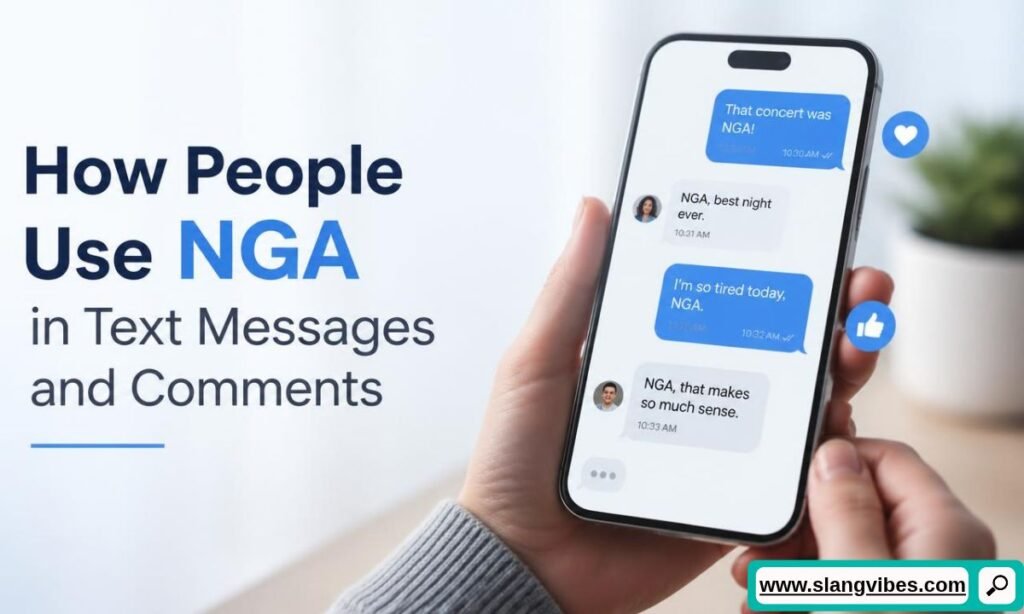
NGA meaning in text shifts from app to app, so every platform has its own habits. Comment sections on TikTok and Instagram use it as a quick reaction to funny or shocking clips. Group chats use it for teasing. Gaming lobbies sometimes use it as an insult.
Many platforms filter or limit the full word. The shorter spelling shows up often because of it. Moderation systems vary, and posts with the term still get flagged or removed. Moderation flags sometimes limit how far a post travels.
Captions and usernames follow similar patterns. Some creators use the term in joking captions, and the replies split fast. Supporters laugh along, while others report the post.
Here’s how a group chat between close friends might look:
Marcus: bro nga fell asleep during his own birthday dinner
Eli: no way, send the pic
Marcus: sending now, he’s still mad
Here’s a different scene, where someone asks about the word:
Priya: Why does everyone in the comments type “nga”?
Dev: It’s a censored version of the n-word
Priya: Oh. So I shouldn’t type it back?
Dev: Right. Skip it unless you know the context well
Notice the difference. The first chat shows insiders using the word casually. The second shows a person learning why outsiders hold back.
Who Should Use NGA, and Who Shouldn’t
Picture this. You’re in a group chat with college friends, and someone types “nga” in a joke. You want to match the vibe. Before you reply, pause.
Among Friends
Many Black speakers use the term among themselves, and the meaning inside those circles differs from the slur. Many non-Black people choose to skip it entirely, and for good reason. It often causes real offense, even when the speaker means well. A friendly tone doesn’t guarantee a friendly reception.
Mixed groups add risk. One friend laughs, another feels hurt, and nobody says a word at first. Silence doesn’t mean approval.
A simple rule works here. If you’re unsure, leave it out. Nobody ever lost a friendship by skipping a word.
At Work and School
Professional and school settings call for zero use. Many workplaces and schools treat the shortened spelling like the full word. A screenshot of one message often leads to a warning, a suspension, or worse. Group chats feel private, but screenshots travel fast.
Work chats on Slack and Teams keep permanent logs, which makes the risk even higher. The same caution applies to public posts. Think long term too. A message sent at nineteen still exists at twenty-five. Employers, teachers, and future contacts read old comments more often than people expect.
Read Here: What Does KK Mean in Text? How People Use It on Snapchat and TikTok
NGA meaning in text lands differently across age groups and countries. Based on how the term is typically used online, Gen Z meets it first in comment sections and short videos. Millennials often remember the full word from music and old forums, so fewer of them type the censored version. Many millennials also recall early forums where filters blocked words, so censored spellings feel like old workarounds.
A few quick scenarios show the gap:
- A 19-year-old types it under a meme without a second thought.
- A 38-year-old reads the same comment and wonders if the account got hacked.
- A teen in Manchester sees the word in a US creator’s video and repeats it, unsure of the weight.
In the US, the term connects to a long and painful national history, and many readers react strongly. In the UK, it often arrives through American music and social media. UK slang has its own favorites, like “mate,” “bruv,” and “fam.” Many UK users read NGA as an imported term.
Younger readers in both countries often learn the term from short videos, not from books or conversations. They miss the context behind the spelling more often as a result.
Regardless of country, the safest approach stays the same. Know the history before you type it.
Read Also: NM Mean in Text: What It Really Stands For (2026)
Common Mistakes With NGA in Text
NGA meaning in text trips people up in a few predictable ways. Here are the mistakes to watch for:
- Treating it as harmless because the spelling is short.
- Mixing it up with NGL, which means “not gonna lie.”
- Reading it as a typo, a name, or random keyboard noise.
- Assuming every NGA is slang, when some are names of organizations.
- Using it in a mixed audience, where listeners read it differently.
The NGL mix-up happens often, since the letters look close. Here’s how one confused reader got sorted out:
Alicia: Someone replied “nga” to my post. Is it a typo for “NGL”?
Chris: Not quite. NGL means “not gonna lie.” NGA is the censored n-word.
Alicia: Good to know. I’ll leave the comment unanswered.
Another common slip involves defending the word by pointing to music. Lyrics come from artists with a particular background, and their use doesn’t transfer to listeners. Quoting a song in a comment section won’t shield anyone from the reaction.
Each slip looks small in the moment. Together, they explain why so many NGA threads end in arguments.
One more tip. Check the surrounding words before you decide what a comment means. A message about a museum trip with “NGA” in it likely points to an art gallery, not slang.
NGA vs Similar Slang: Bro, Fam, and NGL
NGA meaning in text sits apart from friendly address terms. The table below shows the gap.
| Term | Meaning | Tone/Vibe |
|---|---|---|
| NGA | Censored spelling of the n-word | Heavy, depends on speaker |
| Bro | Friend or buddy | Friendly, widely accepted |
| Fam | Close friend or group | Warm, casual |
| Dude | Casual way to address someone | Relaxed, everyday |
| NGL | “Not gonna lie” | Honest, informal |
Bro, fam, and dude work almost anywhere casual. They carry no painful history, so most readers hear them as friendly. NGL looks like NGA but belongs to a different family. It adds honesty to a sentence, not a label for a person.
If you want a casual word for a friend, pick from the safe list. They get the same laugh without the risk.
Think of it this way. A friendly address term works like a handshake, and nearly everyone accepts it. NGA works more like a password. Only people with the right context know when it fits, and everyone else guesses wrong.
Formal writing has no place for any of these words. Emails, essays, and cover letters use names and titles. Casual chats use looser vocabulary, but even casual chats have limits. Mixing registers confuses readers. A casual “bro” in a group chat feels normal, while the same word in a formal email feels odd.
Read More Articles: ISTG Meaning in Text: How People Use It in Chats and Social Media
How to Reply When Someone Sends You NGA
Getting a message with NGA in it feels awkward. Knowing the NGA meaning in text makes replies easier. You have several options, and the right one depends on who sent it. A friend deserves a calm, honest reply. A stranger deserves distance.
Here’s a friendly boundary with a friend:
Zoe: nga you coming tonight or what
Sam: Hey, not a fan of the word. But yes, I’m in
Zoe: Fair enough, I’ll type it differently
Here’s a firmer reply to a stranger:
Unknown: who is this nga
Taylor: I won’t reply to messages like this. Please stop.
If a message feels hostile, block the sender and report it through the app. Save a screenshot first if you plan to escalate. For a casual comment in a public thread, ignoring it is also fine. You don’t owe a reply to every message.
A short, steady response beats a long argument. Say what bothers you, then move on. Take a breath before you answer, since a calm reply keeps control in your hands.
Wording matters too. Use “I” statements, like “I’m not comfortable with the word.” They sound calm and are hard to argue with. In a group chat, message the person privately first. Public call-outs often make people defensive, while a private note gives them room to adjust.
FAQs
What does NGA mean in text?
The NGA meaning in text is a censored spelling of the n-word. People type it in chats, comments, and captions.
Is NGA offensive?
Often, yes. Many people read it as the full word, so tone, speaker, and audience all matter.
Is NGA okay for anyone to use?
No. Many Black speakers use it among themselves, while many others choose to skip it. When in doubt, leave it out.
Why do people type NGA instead of the full word?
Many people use it to dodge filters, soften the look, or copy trends they see online.
Does NGA stand for anything else?
Yes, outside of slang. NGA also names groups like the National Gallery of Art and the National Governors Association. Context shows which one applies.
Conclusion
The NGA meaning in text is clear once you know the background. It’s a censored spelling of the n-word, and it carries the history of the full word wherever it appears. Friends in some circles use it casually. Strangers, coworkers, and teachers often read it as an insult. The same three letters shift from joking to hurtful depending on who types them and who reads them.
You don’t need to use the term to understand it. Knowing the meaning helps you read comments correctly, answer awkward messages with confidence, and avoid trouble in group chats. When you’re unsure, skip it. Plenty of other words get a laugh without risking anyone’s trust. They never leave a reader wondering what you meant.

Alex Carter is a language enthusiast and internet culture expert at SlangVibes. He explains the latest slang terms and text meanings in simple, clear English so everyone stays in the loop.