Last week my cousin sent me a TikTok with the caption “not him being zesty again 😭”. I had zero idea what she meant. I asked her straight up. She laughed and told me to look it up myself. So I did, and what I found went deeper than expected. If you landed here after seeing the same comment somewhere online, here is the zesty meaning in slang. This is the honest version, not the watered-down one most guides give you.
Zesty Meaning in Slang: The Quick Answer
In slang, zesty describes someone acting bold, dramatic, flamboyant, or full of personality. People use it about a person’s walk, voice, dance moves, outfit, or overall vibe. The word started as a food term describing something tangy or full of flavor. Online, it shifted toward describing people instead of dishes.
Here is the short version. When someone calls a person or a post zesty, they mean the energy feels exaggerated or theatrical. Tone changes everything here. Among friends, it often reads as a light compliment about confidence and personality. In other settings, it carries a sharper edge, hinting at stereotypes around masculinity and behavior.
Quick Answer: Zesty means bold, dramatic, flamboyant energy. It reads as playful praise among friends and, depending on who says it, occasionally as a backhanded tease.
A few traits people point to when calling something zesty:
- Exaggerated hand gestures or facial expressions
- A dramatic walk, pose, or dance move
- Bold fashion choices or over-the-top styling
- A theatrical way of talking or reacting
These traits are neutral on their own. Context decides whether the word lands as praise or as a jab. The section below explains why this split exists.
Read Also: Whipped in Slang: The Real Meaning Behind the Viral Term
The Real Origin of Zesty meaning in Slang
Zesty did not start as a TikTok invention. Urban Dictionary carried an entry for the word back in 2009. It described someone who looks or dresses in a way read as gay. This definition sat mostly unnoticed for over a decade.
Everything changed in January 2022. A TikTok video from creator @david_is_lamee showed a group of young men posing around a house. The style was exaggerated and effeminate. The clip spread fast. The hashtag #zesty followed right behind it, racking up tens of millions of views within months.
Black creators and AAVE speakers used the term first in this newer wave. They applied it to men acting flamboyant or over the top. The tone leaned toward teasing, similar to how “sus” or “extra” gets thrown around in a group chat. By August 2022, Know Your Meme had logged a full entry documenting the trend. Zesty became one of the year’s defining slang exports.
From there, the word spread past its original context. Meme pages picked it up. Comment sections started using it on dance videos, fashion posts, and reaction clips regardless of who appeared in them. Plenty of people using the word by 2023 and 2024 had no idea about its earlier meaning at all. They picked it up from captions and ran with it, no history attached.
This gap between where the word came from and how it gets used today explains most of the confusion people run into. It also sets up the next question.
Is Zesty a Compliment or an Insult?
This is the question most casual definitions skip, and skipping it misses the point of the word entirely. Zesty carries a coded history tied to effeminate and gay stereotypes. It works similar to how being called “gay” worked as a schoolyard insult for years. Calling someone zesty taps into a similar idea, minus the direct label.
Among close friends, the word often lands soft. A friend group might use it to hype up someone’s confidence, bold fashion, or dramatic flair. It works the same way “extra” or “iconic” gets used. Said with warmth, it reads as playful admiration.
The tone shifts fast outside those friend groups. A stranger commenting “zesty” under someone’s video often carries a mocking edge. So does a classmate using it about a peer’s mannerisms. It becomes a coded way to point out perceived femininity in a man without saying the word directly.
Picture a scenario: a guy posts a dance video full of big, expressive moves. A friend comments “you’re so zesty for this 😭” and he laughs, because the tone between them is affectionate. Now picture a stranger leaving the same comment under a video of someone simply talking with animated hand gestures. The intent reads completely different, even though the word stayed identical.
Some people within the LGBTQ+ community have leaned into the word and reclaimed it. They wear it as a badge instead of a jab. Others find it exhausting, another coded way to police how men move or talk. Both reactions make sense, and neither one is wrong.
Read New Article: Slang for Gun (2K26 Guide): 35 Popular Street Names, Nicknames & Urban Terms
Zesty slang for Guys vs Girls
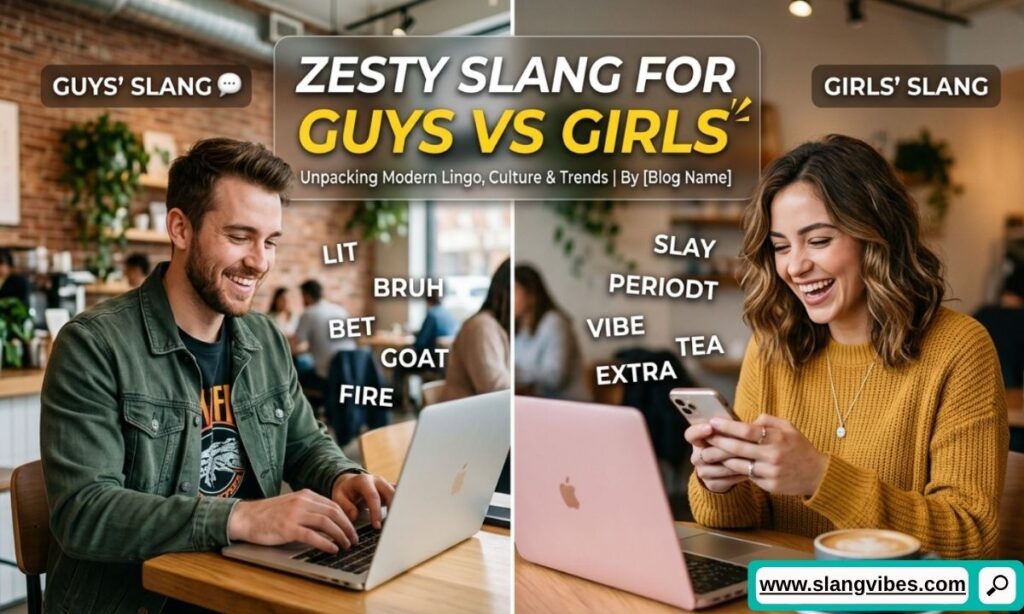
The word does not carry equal weight across genders. This gap matters for anyone learning how to use it well.
Applied to guys, zesty leans hardest on its original coded meaning. Calling a guy zesty typically points at mannerisms read as feminine. Think exaggerated gestures, a certain walk, or a dramatic tone of voice. The joke often sits close to questioning someone’s sexuality without stating it outright, even among friends meaning no harm by it.
Applied to girls, the word usually skips this layer entirely. Calling a girl zesty tends to describe boldness, confidence, or dramatic flair without the same coded history attached. A girl posting a bold fashion choice or a big personality moment gets called zesty too. She might as easily get called “extra” or “iconic,” with no hidden meaning underneath.
This uneven weight shows up as a real pattern across comment sections. Videos of guys acting animated draw the word constantly, often from strangers. Videos of girls doing the same thing rarely trigger the same reaction. When they do, the tone reads far more straightforwardly positive.
This does not make the word off-limits for either gender. It simply means a comment aimed at a guy carries different stakes than the same comment aimed at a girl. Worth keeping in mind before hitting send.
How to Use Zesty in a Sentence
Seeing a definition is one thing. Hearing the word in real conversation makes it click faster. Here is how it shows up in texts, comments, and group chats.
Friends teasing each other about a dance video:
Maya: bro why is your dance so zesty 😭 Jordan: I KNOW I went off lol Maya: ate honestly
Siblings reacting to a dramatic outfit choice:
Priya: mom said you dressed zesty for picture day Rohan: mom is right and I stand by it Priya: lmaooo fair
A group chat commenting on a viral clip:
Devon: this guy in the video is so zesty 💀 Sam: the confidence is unmatched ngl Devon: say less, icon behavior
Notice the pattern across all three exchanges. Nobody explains the meaning mid-conversation. Everyone already reads the tone from emojis and the relationship between speakers. This is normal for slang living mostly in texting and comments instead of formal writing.
Pairing zesty with emojis changes the read too. 🔥 and 😍 push it toward a compliment. 😭 and 💀 lean playful or exaggerated, closer to affectionate teasing. Without any emoji, tone gets harder to guess. This is part of why the word trips people up outside close friend groups.
Read More: Slang for Looking Good (2K26 Guide): 35 Trendy Words for Looking Stylish & Attractive
Zesty Meaning on TikTok, Instagram, Snapchat, and Discord
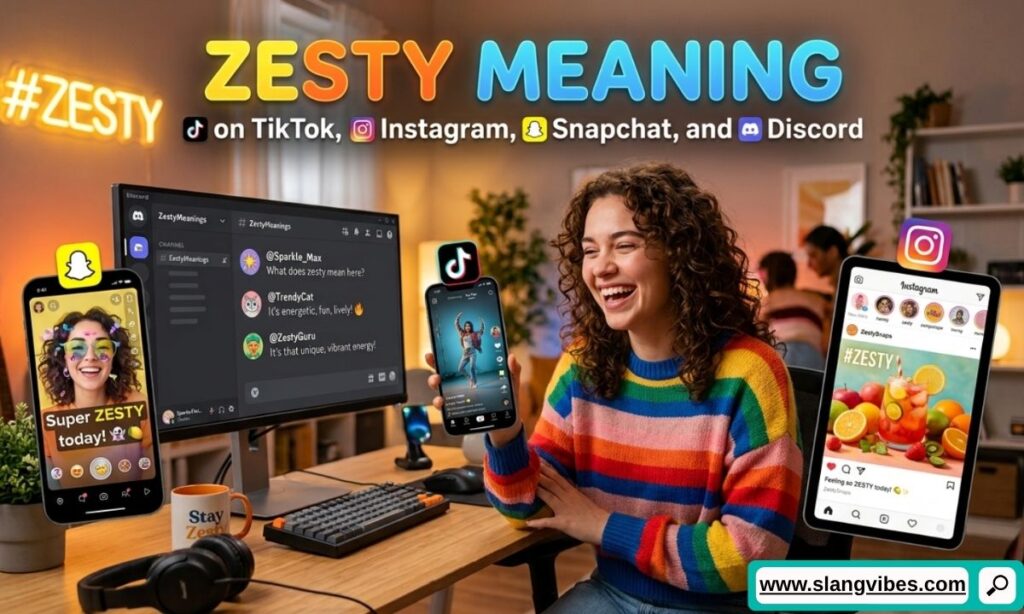
Usage shifts slightly depending on where you run into it.
On TikTok and Instagram
TikTok is where zesty exploded, and it stays the word’s home base. Captions like “zesty behavior 💀” or “certified zesty moment” show up under dance clips, fit checks, and comedic reaction videos. Instagram comment sections borrowed the same pattern, especially on Reels showing bold outfits or dramatic poses.
On both platforms, the word usually points at a specific moment rather than someone’s entire personality. One exaggerated gesture in an otherwise normal video is often enough to earn the label.
On Snapchat and Discord
Snapchat usage stays closer to private texting. Friends send it as a caption on a Snap showing off a fit or a funny face. It is almost always meant warmly since the audience is already close.
Discord tells a different story. In gaming servers, zesty gets applied to flashy plays, over-the-top victory dances, or dramatic voice chat reactions. It works less about identity there and more about theatrical energy in the moment. This is closer to how “extra” gets used among gamers hyping each other up.
Across every platform, the same rule holds. Tone, audience, and relationship decide whether zesty reads as a compliment or a jab, far more than the platform itself does.
Zesty in the US and UK
The word started in American slang, and usage still leans heavier there. TikTok carried it worldwide fast, though adoption speed varied by region.
In the US, zesty sits comfortably next to established slang like “extra,” “iconic,” and “sending me.” American Gen Z picked it up quickly. The coded history traces back to Black American creators and AAVE, a language source shaping much of current US internet slang.
UK slang already had its own word covering similar ground: “camp.” British audiences often reach for camp when describing flamboyant, theatrical behavior, especially in older or more mainstream contexts. Zesty arrived later through TikTok. Younger UK users active on the platform adopted it, sitting alongside camp rather than replacing it.
One practical difference stands out. British commenters occasionally use zesty with a gentler edge than American commenters, since the coded history feels less locally rooted there. This is not a firm rule, more a general pattern showing up across comment sections and group chats.
Either way, the core meaning travels well. A US TikTok user and a UK TikTok user watching the same clip likely reach for the word in a similar spirit. The cultural weight underneath still differs slightly by region.
Read Here: Slang for Mustache (2K26 Guide): 25 Funny, Cool & Popular Nicknames
Zesty vs Spicy, Extra, and Other Similar Slang
Zesty sits in a crowded field of slang describing bold personalities. Here is how it compares to its closest relatives.
| Term | Core Meaning | Typical Vibe |
|---|---|---|
| Zesty | Flamboyant, dramatic, over-the-top energy | Playful, occasionally coded or mocking |
| Spicy | Bold, edgy, provocative | Confident, sometimes controversial |
| Extra | Over-the-top, dramatic reactions | Exaggerated, mostly lighthearted |
| Sassy | Confident, cheeky attitude | Playful, rarely negative |
| Flamboyant | Showy, theatrical self-expression | Neutral to positive, less coded than zesty |
The biggest difference between zesty and the rest of this list comes down to history. Spicy, extra, and sassy describe behavior without tying it to stereotypes around gender expression or sexuality. Flamboyant comes closest to zesty in meaning, though it carries less baggage and fits comfortably into formal writing too.
Swapping zesty for a word like extra or sassy works well whenever the coded history feels like too much weight for a lighthearted comment. Nobody loses meaning by making the switch. The compliment still lands, minus the risk of the joke reading as mean-spirited toward someone’s identity.
When You Might Want to Skip Saying Zesty

Slang works differently depending on the room. A few situations where zesty tends to backfire:
- Professional settings. Calling a coworker or client zesty, even as a joke, risks sounding unprofessional at best and inappropriate at worst.
- Talking about someone’s identity without consent. Using the word about a person’s perceived sexuality or gender expression, especially behind their back, edges into mockery fast.
- Conversations with strangers online. Without an established relationship, tone is nearly impossible to read, and the word lands harsher than intended more often than not.
- Around kids without context. Parents and teachers hearing the word secondhand often miss the coded history behind it entirely.
Here is a workplace example showing how fast this goes sideways:
Alex: haha you’re being so zesty in this meeting Priya: wait, meaning what exactly? Alex: oh it’s a compliment I swear Priya: I’ll take your word for it lol
Alex meant no harm, and Priya took it in stride. Still, the exchange shows the gap slang like this creates between generations and friend groups. A word feeling completely normal in a group chat carries different weight elsewhere. It shifts the moment it crosses into a setting built on fewer shared assumptions.
The safest rule: save zesty for people who already share the context and the joke. Everywhere else, a simpler compliment gets the same point across with none of the risk.
Read New Article: Jody Military Slang Meaning (2K26 Guide): Origin, History & Real-Life Military Use
Why Zesty Slang Is Still Trending in 2026
Slang usually burns out within a year or two. Zesty broke this pattern, and a few things explain the staying power.
First, the word is short, punchy, and fun to say out loud. This helps any slang term survive longer than average. Second, it works across a wide range of content: dance videos, fashion posts, gaming clips, meme formats. Versatility keeps it useful long after the original TikTok wave faded.
Third, and this one likely matters most, the word carries enough ambiguity to stay interesting. Since tone decides the meaning so heavily, using zesty still feels like a small social risk every time. This ongoing tension keeps people engaged with it instead of treating it as a stale, fully-decoded term.
Gen Alpha picked it up from older siblings and cousins. This kept the word alive into a second generational wave most 2022-era slang never reaches. Millennials mostly encounter it secondhand, through kids, coworkers, or comment sections, without using it themselves as often.
Whether the word sticks around past 2026 is impossible to predict. Slang cycles fast, and today’s favorite often turns into tomorrow’s punchline. For now, zesty remains one of the more recognizable pieces of Gen Z vocabulary circulating across TikTok, Discord, and everyday texting.
Frequently Asked Questions
What does zesty meaning in slang?
Zesty describes bold, dramatic, or flamboyant energy in a person’s behavior, style, or content. The zesty meaning in slang leans playful among friends and sharper in other settings.
Is zesty a compliment or an insult?
Both, depending on context. Among friends it usually reads as praise for confidence and personality. From strangers or in mocking contexts, it often carries a coded jab tied to stereotypes about masculinity.
Where did zesty slang come from?
It traces back to a 2009 Urban Dictionary entry. The word exploded on TikTok in January 2022 after a viral video showed a group posing in an exaggerated, effeminate style.
Is it okay to call yourself zesty?
Plenty of people do, especially within LGBTQ+ spaces where the word has been reclaimed. Using it about yourself sidesteps most of the tone confusion coming with someone else applying the label.
Is zesty still used in 2026, or is it fading out?
It remains active across TikTok, Discord, and group chats, though usage has softened compared to its 2022 peak. Newer slang keeps arriving, but zesty has not disappeared yet.
Final Thoughts
Zesty carries more history than a quick scroll through TikTok comments reveals. What started as coded language for effeminate behavior turned into a mainstream Gen Z compliment, tease, and meme format all at once. The word works because it stays flexible. It fits a dance video, a bold outfit, or a dramatic reaction depending on who says it and why.
Knowing the zesty meaning in slang means understanding both sides of it. Among friends who share the joke, it works as a fun, expressive word. Around people outside those circles, it deserves a bit more care, given the weight it still carries for some.

Alex Carter is a language enthusiast and internet culture expert at SlangVibes. He explains the latest slang terms and text meanings in simple, clear English so everyone stays in the loop.