Last spring, my friend texted me a selfie with the caption “topknot day, no notes.” I stared at it for a full minute. Was she talking about her hair? Her mood? Some new aesthetic I’d missed? Topknot in slang is one of those terms which look simple but leave people guessing. It shows up in captions with no explanation. Turns out she meant her hair, and the mood came along for the ride. Here’s the thing: the word works on two levels, and context tells you which one applies. Let’s sort out what it means, where you’ll see it, and how to use it without sounding off.
What Does Topknot in Slang Mean?
Topknot in slang starts with a hairstyle, so let’s cover the hair first. A topknot is hair gathered high on the head and tied into a knot. Some people wear it neat. Others wear it loose and messy.
The slang layer sits on top of the hairstyle. Based on how the term is typically used online, people say topknot to describe a quick, casual hair day. It often comes with a relaxed mood. Think gym visits, lazy Sundays, or a rushed morning.
Quick Answer: A topknot is a high bun or knot of hair. In slang, the word usually points to a casual, low-effort look with a carefree feel.
Tone matters here. The word is friendly and mostly neutral. It rarely reads as an insult in a caption or a text. You’ll often see phrases like “topknot day” or “topknot mode” when someone’s hair is up and they’re ready to go.
Here’s how it sounds in a real chat.
Maya: Running late, sorry! Topknot day for me.
Jess: Ha, same. Mine’s been up since Tuesday.
Maya: Zero shame. Coffee first?
Jess: Always.
Notice what happens. Both friends mean the hairstyle, and both hear the relaxed mood behind it. Nobody needs a dictionary to follow along. Both meanings travel together, which is why one caption fits a photo of a bun and a photo of a sweatshirt day.
Read Also: FJB Meaning in Text (2K26 Guide): Full Form, Origin & Social Media Use
Where the Word Topknot Comes From
The word topknot is much older than any social media caption. People have tied their hair on top of the head for centuries, in many parts of the world. The style has carried different meanings depending on the culture.
Here are a few well-documented examples:
- Japanese samurai wore a knot called a chonmage, and sumo wrestlers still wear a version of it today.
- Many Sikh men keep their hair uncut and tie it up on the head, as part of their faith.
- Korean men in the Joseon era wore a topknot known as sangtu.
- Some men in ancient Athens wore a knot style called a krobylos.
In Western pop culture, the topknot got a new life in the 2010s. Messy buns showed up on red carpets, in gyms, and in hair tutorials. The man bun trend followed, and both styles moved onto social media feeds. Social media is where the casual, caption-friendly meaning took hold.
The exact moment the slang use began isn’t easy to pin down, and no single source settles it. What’s clear is the connection. Online users borrowed a familiar hairstyle word and attached a relaxed mood to it.
Because some of these styles carry cultural and religious weight, the word deserves some care. For some people, a topknot is part of their identity and their faith.
Read Also: Ghetto Slang Meaning (2K26 Guide): 30 Popular Terms, Origins & Real Usage
How Topknot in Slang Shows Up on TikTok, Instagram, and X
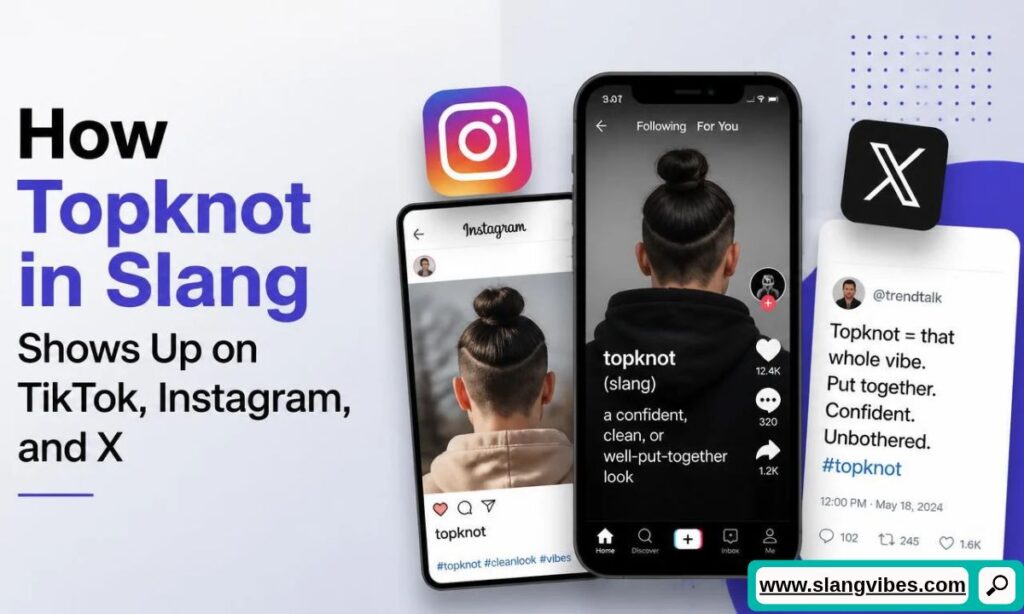
Topknot in slang travels easily across platforms, but the flavor changes a little on each one. Here’s what you’ll typically see.
TikTok and Instagram lean visual. Creators post hair tutorials, get-ready-with-me clips, and outfit checks. The caption often names the hairstyle and sets the mood. Try something like “topknot and iced coffee kind of morning.”
Hashtags follow the same pattern. Creators tag tutorials with topknot or messy bun, and viewers search those tags for styling ideas. This habit keeps the word tied to real hair, even when the mood takes over.
X leans toward jokes. People tease themselves about a rough day and a hair knot holding everything together. The humor is light and relatable.
Group chats sit in the middle. Friends send selfies with a quick label, and the word does double duty as description and vibe check. Short captions do most of the work. One line, one emoji, and the word topknot set the scene.
Here’s a group chat example.
Dani: Selfie check before dinner?
Priya: Topknot again, I see.
Dani: It’s my signature at this point.
Marcus: Honestly the topknot works. Leave it.
Dani: Approved by the committee.
Across all of these spaces, the tone stays warm. The usual response is a compliment or a joke about a shared messy morning. Read the caption, glance at the photo, and the meaning usually clicks.
Read More: Addy Slang Meaning: What “Addy” Means in Text, TikTok & Snapchat (2K26 Guide)
Topknot Meaning in Texting vs. Real Life
Topknot in slang behaves differently in a text than in a spoken chat. Typed, the word feels light and easy. Spoken, it leans back toward the plain hairstyle.
Picture this. You text a friend, “Topknot kind of day, sorry in advance.” She reads it and knows you’re running low on effort but feeling fine. The message carries hair and mood in one line.
Now flip the scene. You walk into a friend’s kitchen and say, “I’m so topknot today.” She squints at your head and asks what you mean. Out loud, the mood meaning needs more setup.
Here’s why. Texts come with a photo, an emoji, or a thread of earlier messages. Those clues fill in the meaning fast. Spoken words come without clues, so listeners default to the literal hairstyle.
A simple rule keeps you safe. In writing, use the word for both hair and mood. In person, use it for hair, and add a few words when you mean the mood. Try “my hair’s in a topknot and I’m feeling relaxed.”
Voice notes fall in between. Tone of voice and a laugh usually carry the mood, though a quick explanation never hurts.
Emoji help too. A shrug emoji sets a casual tone. A heart or sparkle emoji adds warmth. Whatever the format, your friends’ reactions tell you fast whether the message landed.
Who Says Topknot? Gen Z, Millennials, US and UK Usage
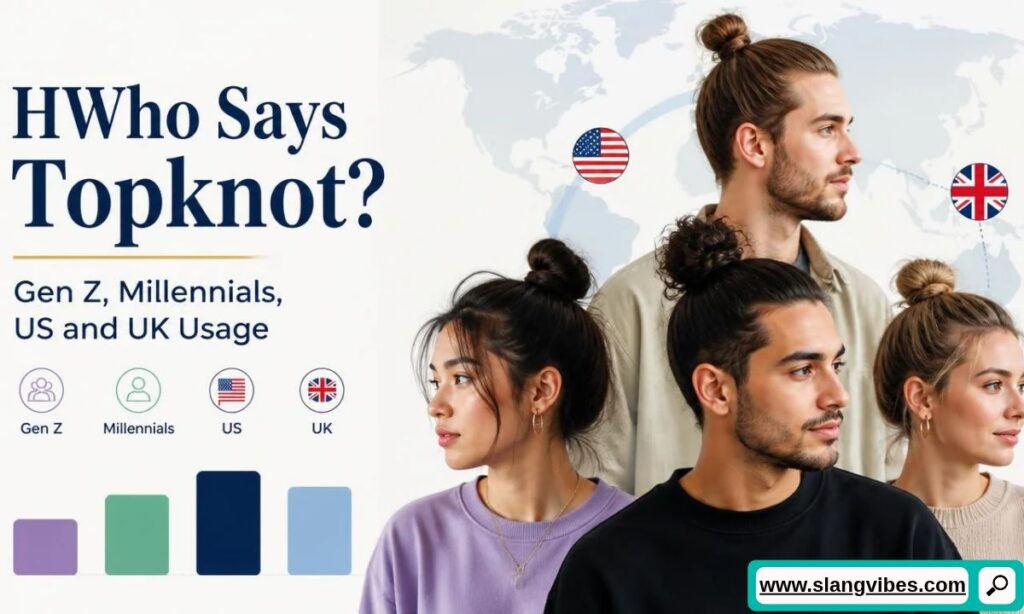
Topknot in slang shows up across age groups, but each group uses it a little differently. Here’s how the pattern tends to look, based on how the term is typically used online.
Gen Z leans on the mood meaning. Captions like “topknot era” or “topknot energy” fit the playful, label-everything style of short video. The word often comes with humor and a wink.
Millennials tend to stay closer to the hairstyle. Many grew up during the messy bun boom. The word brings back gym bags, lazy weekends, and hair ties on every wrist. Millennials also use it for a relaxed mood, usually with a photo attached.
Older readers often know the word from its hairstyle meaning alone. Some of them see the slang use and assume it’s a typo or a trend name.
Regional use looks similar. Readers in the US and UK generally share the same meaning, and spelling is the main difference. “Top knot” as two words appears in both places. Both spellings are fine.
Here’s a sibling text exchange.
Ava: Mom says my topknot looks like a pineapple.
Ben: She’s right. It’s leaning.
Ava: Rude. It’s called topknot energy.
Ben: It’s called a hair tie failure.
Ava: Blocked.
Notice the humor. Siblings tease each other with the word, and the joke lands because both know the hairstyle and the mood.
Read Here: Slang for Clothes: What People Really Call Their Outfits (2026)
Topknot vs. Messy Bun vs. Man Bun vs. Top Bun
Topknot in slang sits next to a few close cousins. People swap these words all the time, but each has its own feel. Here’s a quick comparison.
| Term | Meaning | Vibe |
|---|---|---|
| Topknot | Hair tied in a knot or bun high on the head | Casual, relaxed, sometimes traditional |
| Messy bun | A loose bun with strands hanging out | Cozy, careless, cute |
| Man bun | A bun or knot worn by a man | Trendy, sometimes joked about |
| Top bun | A bun placed high on the head | Neutral, descriptive |
Topknot and top bun are the closest pair. Both describe placement. Topknot carries more history and a slightly more stylish sound, while top bun reads as a plain description.
Messy bun focuses on the loose, unfinished look. A topknot might be neat, sleek, or tousled. This range makes topknot the broader word.
Man bun describes the wearer, not the shape. It became popular in the 2010s and often gets teased online. Topknot sounds more neutral, and some people prefer it for this reason.
Choosing between them depends on what you want to say. Want to stress the sloppy charm? Say messy bun. Want a neutral word for a high knot? Say topknot. Want to mention a guy’s hairstyle in a joking way? Man bun works, though many people wear it without any joke intended. Whichever you pick, the surrounding context does most of the work.
Common Mistakes With Topknot in Slang
Most mistakes with topknot in slang come from missing context. A few are easy to avoid once you know them.
The first mistake is assuming the word always means a mood. Plenty of people only mean the hairstyle, so read the photo and the caption together before you reply.
The second is using the word for a hairstyle worn for faith or tradition. A Sikh man’s uncut hair, a sumo wrestler’s chonmage, or a traditional Korean sangtu carries real meaning. Calling these “topknot energy” or treating them as a fashion joke misses the point and might hurt someone. Ask yourself whether the wearer chose the style for looks or for identity. When in doubt, skip the slang.
The third is overusing the word in formal settings. Slang belongs in captions and casual chats, not in work emails or reports.
Here’s a coworker example.
Leo: Love the topknot vibes today.
Nina: Thanks! Do you mean my hair or my outfit?
Leo: Both, honestly.
Nina: Next time add a few words. I checked my hair twice.
Adding a few words solves the problem. Try “love your topknot” for hair or “love the relaxed look” for the mood.
The word itself isn’t offensive. Tone is where trouble starts, so keep jokes away from anyone’s faith or heritage. A moment of thought before you post saves an awkward apology later.
Read New Articles: Basketball Terms Slang: The Ultimate Guide to Hoops Lingo (2026)
Topknot Slang: When to Use It and How to Respond
Topknot in slang works best in relaxed, friendly spaces. Here’s where it fits.
Use it in these situations:
- Captions on hair tutorials, selfies, and get-ready-with-me videos
- Casual texts with friends who know your style of humor
- Light jokes about your own low-effort day
- Compliments on a friend’s hairstyle
Skip it in these situations:
- Work emails, reports, and formal meetings
- Comments about anyone’s religious or cultural hairstyle
- Conversations with people who might read it as a joke at their expense
Now, what if someone compliments your topknot? Keep the reply simple. Picture a coworker saying “Love your topknot today.” You reply, “Thanks! It was a five-minute job.”
Or a friend comments under your photo, “Topknot queen.” You answer with a heart and “Only on my best days.”
If someone teases you gently, match the tone. A partner texting “Topknot again?” gets “It’s a lifestyle” as a fair comeback.
Dating chats follow the same rule. Early on, a light compliment like “Your topknot looks great on you” lands well. Keep the focus on the style and the mood, and skip anything heavier.
When you don’t know what someone means, ask. A quick “Hair or vibe?” takes three seconds and saves confusion.
Bottom line: read the room, keep the tone kind, and let the topknot do its thing.
FAQ
What does topknot mean in slang?
Topknot in slang means a high bun or knot of hair, often with a casual, relaxed mood attached. Context tells you whether someone means the hair, the vibe, or both.
Is a topknot the same as a messy bun?
They overlap, but they aren’t identical. A messy bun is loose and unfinished, while a topknot sits high and might look neat or tousled.
Is topknot offensive?
No, the word itself is neutral and friendly. Avoid joking about topknots worn for faith or culture, since those carry real meaning for the wearer.
Do guys wear a topknot?
Yes. Many men wear topknots, and the style is often called a man bun. The word topknot has no gender attached.
Is topknot okay for kids to use?
Yes. The word describes a hairstyle and carries no hidden or adult meaning.
Conclusion
Topknot in slang carries two layers. The first is a hairstyle: hair tied high on the head, neat or messy. The second is a relaxed mood, often shared in captions, group chats, and jokes about a low-effort day. Most people who use the word mean both at once.
You learned where the hairstyle comes from, and why some versions carry deep cultural and religious meaning. You also saw how the word shifts between texting and real life. It also sits alongside messy bun, man bun, and top bun.
The safest approach is simple. Read the caption, look at the photo, and match the tone. Keep the word friendly, and keep jokes away from anyone’s faith or heritage.
Slang keeps moving, so expect new twists on this one. Next time a friend texts “topknot day,” you’ll know exactly what to say. Reply with a compliment, ask “hair or vibe?” if needed, and enjoy the low-effort win.

Alex Carter is a language enthusiast and internet culture expert at SlangVibes. He explains the latest slang terms and text meanings in simple, clear English so everyone stays in the loop.