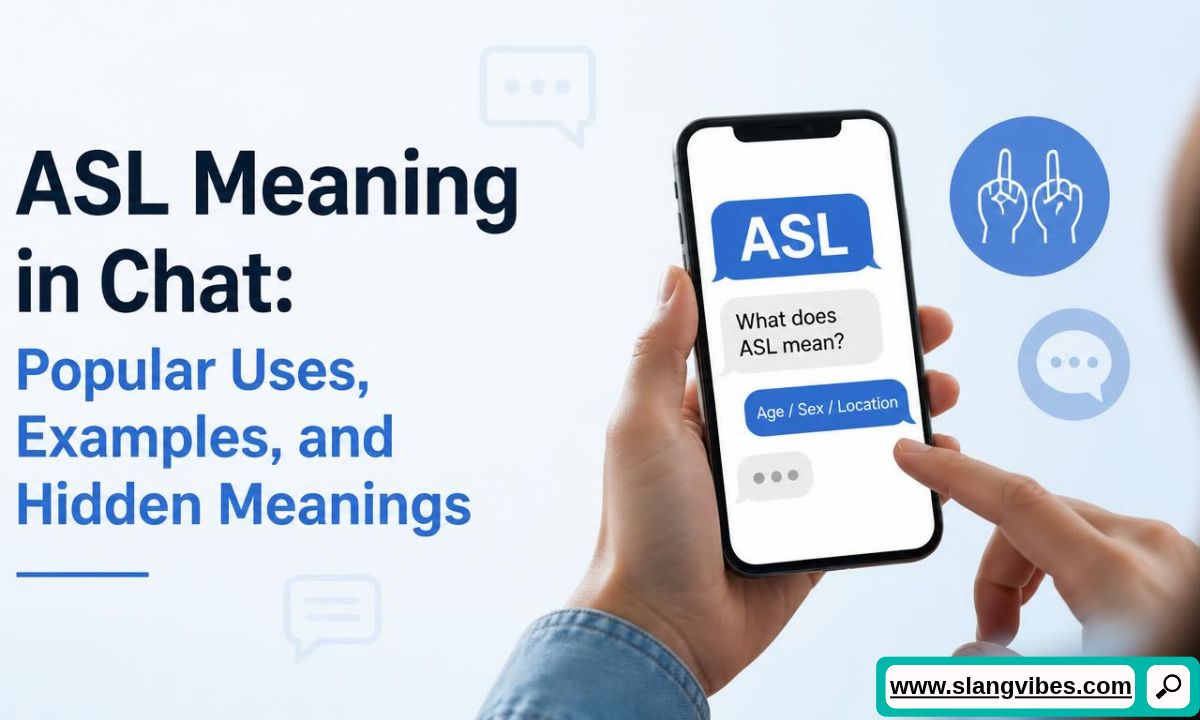
Last month my friend texted me, “Finals week, I’m tired asl.” I pictured her signing up for a sign language class. The guess was off by a mile. Later I laughed about it, though I still felt silly. ASL meaning in chat is one of those puzzles where three letters point to three different ideas. Most of the time, the answer is “as hell,” used for emphasis. Sometimes it’s American Sign Language. In old chatrooms, it meant age, sex, and location. Here’s the thing: the words around it give the answer away. This guide shows you how to read each version, spot hidden tones, and reply without any awkward guessing.
Read Also: DW Meaning in Text: What It Really Means on Snapchat, TikTok & Instagram (2026)
ASL Meaning in Chat: The Short Answer
Three meanings cover nearly every message you’ll see. Here’s a quick breakdown of each one:
- As hell: The most common use today. It follows an adjective and adds emphasis. For example, “cold asl” means “extremely cold.”
- American Sign Language: The natural language used by many Deaf people in the United States. Talk of classes, interpreters, or signing points here.
- Age, sex, location: An old chatroom question, often typed “a/s/l.” It asks a stranger for personal details.
Consider how “as hell” works: it needs a word to boost. Standing alone, ASL tells you nothing. Writers attach it to feelings, looks, tastes, and weather. Try “happy asl,” “broke asl,” or “sleepy asl.” Each one amplifies the word before it.
Think of it this way: the word right before ASL usually tells you the answer. An adjective means “as hell.” A mention of learning or signing means the language. A lone “ASL?” from a stranger points to the chatroom meaning.
Here’s how the slang version looks between two friends:
Maya: Did you finish the chem exam?
Jordan: Yes, but it was hard asl
Maya: Same. My brain is fried
Jordan: Pizza after this, yes?
Jordan means the exam was extremely hard. Nobody asks about sign language, and nobody wants a location. The adjective “hard” sits right before ASL, so the slang reading wins. Keep the ASL meaning in chat simple: adjective first, emphasis second.
Read Also: GPI Meaning in Text: Everything You Need to Know in 2026
Where ASL in Chat Came From
The ASL meaning in chat has three separate roots, and each one has its own timeline.
The chatroom version belongs to early internet culture. In early chatrooms, strangers met in public rooms with no photos. Typing “a/s/l?” was a quick way to learn who you were talking to. Replies followed a pattern, like “27/f/Ohio” or “24/m/London.” Picture a college student in the late 1990s, watching a chat window scroll past on a dial-up connection. The phrase lived there.
The slang version grew from spoken English. People have long said “tired as hell” or “cold as hell” for extra punch. Texting rewards short messages, so writers clipped “as hell” down to three letters. Nobody owns the exact start date, so I won’t invent one.
The sign language version has the oldest story of all. American Sign Language took shape in the United States. Laurent Clerc, a Deaf teacher from France, and Thomas Hopkins Gallaudet opened a school in Hartford, Connecticut.
Fun Fact: The school opened on April 15, 1817. The same date became National American Sign Language Day in 2019.
Each root explains the confusion. Three groups of people landed on the same three letters for different reasons. Knowing the history helps you respect each version when you meet it. A Deaf friend who says ASL means the language, full stop.
ASL Meaning in Chat on Snapchat, Discord, and TikTok
Platform shapes the ASL meaning in chat, or at least the way people type it. Fast, short-message apps push writers toward lowercase and no punctuation.
On Snapchat and group chats, “asl” shows up in quick reactions. Friends use it to hype each other up or complain together. Here’s a group chat from a Friday night:
Priya: Got my hair done today
Leo: Send a pic
Priya: Okay but I’m nervous asl
Dani: Stop, you’re gonna look great
Nobody in the chat mistakes it for a language class.
Discord and gaming lobbies use ASL for trash talk and praise. Voice chat is fast, so typed comments stay short. Here’s a typical match recap:
Kai: We lost again lol
Rex: The last round was sweaty asl
Kai: Run it back?
Rex: Yep, five minutes
Rex calls the last round extremely intense. “Sweaty” is gamer slang for playing with full effort.
TikTok comments follow the same pattern, as in “this sound is annoying asl.” Sign language lessons and Deaf creators also appear on the app, so the topic of the video matters.
Age plays a role too. Based on typical online use, younger users tend to read ASL as “as hell” first. Many Millennials remember a/s/l from early chat, so a bare “ASL?” makes some of them pause. Lowercase usually signals the slang. Capitals tend to show up when people mean the language.
Read More: TMI Meaning in Text: How Gen Z Uses It on Social Media
Hidden Meanings Behind ASL in Chat
The ASL meaning in chat shifts with tone as much as with vocabulary. Small cues change how the slang lands.
Lowercase “asl” reads relaxed and playful. Capitals, as in “I’M TIRED ASL,” read louder and more dramatic. A trailing “tho” softens the comment, as in “pretty asl tho.” “Asl fr” adds sincerity because “fr” means “for real.”
Sarcasm hides in plain sight too. Picture a roommate who texts, “Cleaning at midnight, so happy asl.” The word “happy” says one thing. The timing says another. Read the whole message, not one word.
Flirting works the same way. Someone who writes “you look good asl” is giving a strong compliment. The intensity comes from the sentence, so the abbreviation alone doesn’t signal romance.
UK chats lean on “proper” or “well” instead, as in “proper tired” or “well annoyed.” Here’s how ASL stacks up against similar intensifiers:
| Term | Meaning | Tone/Vibe |
|---|---|---|
| ASL | As hell | Casual, playful, common among friends |
| AF | The stronger, saltier cousin of “as hell” | Louder, more blunt |
| Hella | Extremely, a lot of | Relaxed, linked to the US West Coast |
| Fr | For real | Sincere, agreeing |
| Proper | Extremely | British, friendly |
| Mad | Extremely | Common in some US cities |
Each term adds weight to the word before it. ASL sits in the friendly middle. It’s milder than AF and works in most casual chats.
Read More: What Does JP Mean in Text? Popular Meanings and Real Examples
How to Tell What ASL Means in a Chat
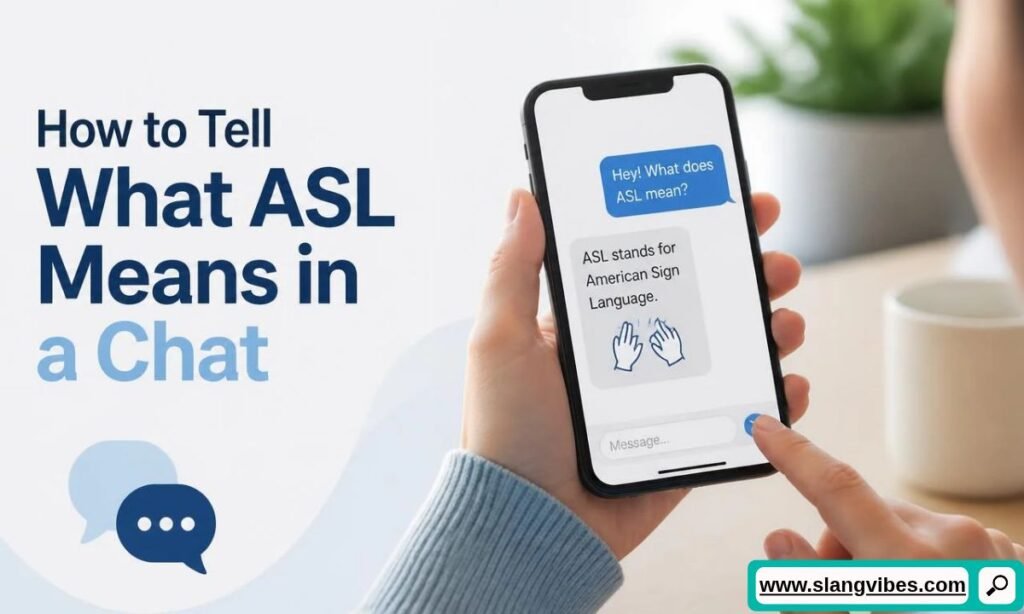
Reading the ASL meaning in chat takes three quick clues. Run through them in order and you’ll land on the right answer. Here’s the checklist:
- Word before it: An adjective like “tired” or “cute” signals “as hell.” A word like “learn,” “class,” or “interpreter” signals the language.
- Topic and platform: School, accessibility, and Deaf community talk point to the language. Slang-heavy apps point to “as hell.”
- Sender: A friend using lowercase after an adjective means emphasis. A stranger sending a lone “ASL?” means the old chatroom question.
The first clue wins most of the time. Here’s a workplace example:
Nina: Are you free to help with the ASL interpreter booking?
Marcus: Sure, which event?
Nina: The Friday town hall
Marcus: Booked. I’ll email the details
“Interpreter” and “booking” settle it. Nina means American Sign Language, and the tone is professional. No slang is involved.
Tricky cases pop up. Take “I’m learning ASL.” The verb “learning” points to the language, even with no adjective nearby. Now take a bare “ASL?” from a friend. The message holds no clues, so a quick question is the smart reply.
Punctuation helps too. A question mark after a bare ASL leans toward the chatroom ask. An exclamation point after an adjective leans toward hype. When clues clash, ask. “Do you mean the language or the slang?” costs nothing.
Common Mistakes With ASL Meaning in Chat
Most mix-ups come from a handful of repeat errors. Here are the five worth avoiding.
Mistake one is assuming a single meaning. Say I text my cousin, “Rough week, tired asl.” She replies with a link to a sign language class. We laugh, but the mix-up shows how fast context slips.
Mistake two is answering “ASL?” from a stranger. In old chatrooms, the question asked for your age, sex, and location. Today, an unknown account opening with it is asking for personal details. Treat it as a red flag. You don’t owe anyone those answers. Reply with “Why do you ask?” or skip the chat entirely.
Mistake three is reading romance into the abbreviation. A friend who writes “you’re hilarious asl” is laughing with you. The sentence carries the feeling, so judge the full message before you assume anything.
Mistake four is treating the language like slang. American Sign Language has its own grammar and history. Using ASL for “as hell” in a thread about signing blurs the topic. Match the abbreviation to the conversation.
Mistake five is ignoring the platform. Gaming chats and class chats use the same letters in different ways. Check where the message appeared before you reply.
A quick fix works for all five. Pause, scan the message, and ask if the meaning stays unclear.
When Not to Use ASL in Chat
Knowing the ASL meaning in chat also means knowing when to hold it back. Context decides what sounds fine.
Formal versus informal comes down to audience. Ask yourself who reads the message and what they expect. A friend expects a casual tone. A hiring manager expects polish.
Skip the slang in formal emails, job applications, and messages to clients. Imagine telling a manager, “Slammed asl this week.” It reads sloppy, even when the tone is friendly. Write “extremely busy” instead.
School follows the same logic. An essay, a discussion post, or a message to a professor calls for full words. “The experiment was difficult asl” would earn a raised eyebrow. “The experiment was extremely difficult” earns a nod.
Here are a few easy swaps:
- “Tired asl” becomes “exhausted.”
- “Busy asl” becomes “swamped” or “extremely busy.”
- “Good asl” becomes “excellent.”
- “Hard asl” becomes “challenging.”
Group chats with mixed ages deserve care too. A grandparent or an older relative might read ASL as the language, or as nothing at all. A clear sentence avoids confusion.
The language meaning works anywhere. If you’re discussing accessibility, interpreters, or classes, use ASL freely. Professional settings welcome it. The slang version is the only one needing a filter. One more rule: skip the slang when the thread is about Deaf culture or signing. Pick the formal word and move on.
Read New Articles: IYKYK Slang Meaning: The Internet Phrase You Need to Know
How to Reply When Someone Sends ASL
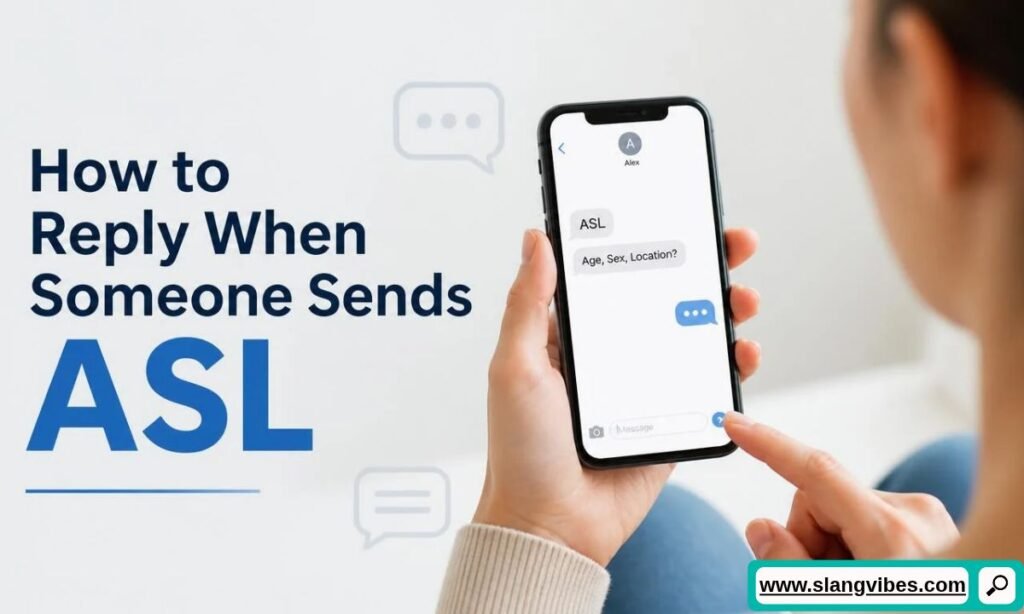
The right reply depends on the ASL meaning in chat, so match the sender’s energy. Short and warm usually wins.
If a friend uses the slang, keep it light. “Same,” “Facts,” and “I felt it” all work. Playful teasing fits too, as in “ASL is doing a lot of work in this sentence.”
Tone matching matters. If the sender writes in all caps, answer with energy. If the message is lowercase with no punctuation, keep your reply short and relaxed. Emojis help. A laughing face or a crying face shows which way the feeling leans.
Here’s a dating-chat example:
Alex: This playlist you sent is good asl
Sam: Okay, I’m taking it as a win
Alex: Take it, you earned it
Sam: Next song is on me
Sam reads the compliment correctly and answers with humor. Sam doesn’t ask what ASL means, because “good” sits right before it.
When the meaning is unclear, ask. Try “Do you mean the language or the slang?” It sounds friendly and removes guesswork.
For strangers sending a bare “ASL?”, skip the details. Reply with “Why do you ask?” or block the account. You never owe personal information to an unknown person.
If someone mentions learning the language, respond with curiosity. Ask how long they’ve studied, or what drew them to it. People enjoy sharing a new skill.
FAQs About ASL in Chat
What does ASL mean in chat?
The ASL meaning in chat is usually “as hell,” used to boost an adjective. It also stands for American Sign Language and, in older chatrooms, age, sex, location.
What does ASL mean when a girl or guy texts it?
The meaning stays the same for anyone. After an adjective, it adds emphasis, and the full sentence shows whether it’s flirty.
Does ASL still mean age, sex, location?
Yes, though it’s less common today. It shows up in old-style chat spaces and from strangers asking for personal details. You don’t have to answer.
Is ASL the same as AF?
Close, but not identical. Both add emphasis to an adjective, yet AF reads stronger and blunter.
Is it safe to answer “ASL?” from a stranger?
Skip it with strangers. Age and location are personal details, so keep them private. Ask why they want to know, or block the account.
Using ASL in Chat With Confidence
The ASL meaning in chat comes down to three options. Most of the time, it means “as hell” and boosts the adjective before it. When the topic is signing, classes, or interpreters, it names American Sign Language. When a stranger types “ASL?” with nothing else, it echoes the old chatroom question about age, sex, and location. You owe the stranger no answer.
Tone adds the hidden layer. Lowercase feels relaxed, capitals feel dramatic, and “tho” or “fr” shifts the mood. Sarcasm and flirting live in the full sentence, so read everything before you decide.

Alex Carter is a language enthusiast and internet culture expert at SlangVibes. He explains the latest slang terms and text meanings in simple, clear English so everyone stays in the loop.