My friend Priya sent me a screenshot last month. Someone had commented under her dad’s gardening photo with three fire emojis and one word: DILF. She texted me, “Okay, what is this?” I had no clue either. I stared at it for a full minute, then went searching. Her dad, for the record, never found out. The DILF meaning turned out to be simpler than I expected, and a lot more awkward. DILF is slang for an attractive dad, and it started as a crude phrase. Below, you’ll find where the word came from and how people use it. You’ll also learn how to avoid saying it at the wrong moment.
Read Also: K Meaning in Text: What It Really Means in Chats, TikTok, Snapchat & Instagram (2K26 Guide)
DILF Meaning in Plain English
The DILF meaning comes down to one idea: an attractive dad. People use the word when they find a father good-looking, charming, or confident. Most of the time it works as a compliment, though a playful and slightly flirty one.
The letters stand for “Dad I’d Like to” followed by the f-word. Yes, the root is crude. This origin explains why the word still raises eyebrows at work and around family. Even speakers who mean no harm get side-eye.
Quick Answer: DILF means an attractive dad. It’s informal, flirty slang with a crude root, so save it for people who share the joke.
Here’s the thing: most people online use it lightly. A comment under a photo of an actor who plays a dad. A joke in a group chat. A caption on a meme. The tone is teasing more than serious.
Think of it this way. The word describes a vibe as much as a person. A dad who looks put together, handles his kids calmly, and carries himself well earns the label. Sometimes a man who isn’t a parent gets it too, which we’ll cover in the FAQ.
You’ll hear the term most from people in their teens, twenties, and thirties. Older speakers know it, but many wouldn’t say it out loud. Anyone, whatever their gender, might use it about a dad they find appealing. Context decides whether it lands as a joke, a flirt, or an insult.
Where DILF Came From
The DILF meaning didn’t appear out of nowhere. The term follows the pattern of MILF, a similar acronym for an attractive mother. Many people link MILF’s spread to the 1999 film American Pie. DILF followed as the matching term for dads.
No one has a verified first-use date for DILF. Slang rarely comes with a birth certificate. Anyone who gives you an exact year is guessing. What we do know is how the word traveled. It started in crude humor, moved into forums and comment sections, and then landed on social media feeds.
Memes and comment sections helped it spread. Fans began using the word under photos of actors, musicians, and athletes who also happen to be fathers. Once the jokes multiplied, the word lost some of its shock value. Many people now treat it as a lighthearted label, not an explicit statement.
Still, the original phrase hasn’t disappeared. It hangs in the background every time someone types the word. This explains why a coworker, a teacher, or someone’s actual parent might wince at it.
Language shifts like this happen often. A rude word gets softened by repetition, and the crude root fades from daily use. The meaning stays the same underneath, even when the mood around it changes.
Read Also: STSU Meaning in Text: What It Really Means on Facebook, TikTok & Instagram (2026)
DILF Meaning on TikTok, Instagram, and Group Chats
Platform changes the tone of the DILF meaning more than most people realize. The word wears a different outfit in each place.
On TikTok, you’ll see it in comments under videos of dads dancing, cooking, or chasing toddlers around a yard. The tone is jokey. People pair it with 😂 or 🔥 and rarely mean it seriously.
Instagram leans toward celebrity dads. Someone posts a photo with his kids, and the comments fill up with 😏 and 🔥 within an hour. The flirt level runs a bit higher here.
Group chats are where the word gets personal. Friends tease each other about a neighbor, a teacher, or a friend’s dad.
Maya: Did you see Ethan’s dad at pickup? Jordan: The tall one with the golden retriever? Maya: Yep. Total DILF. Jordan: Stop, he’s right there! Maya: Okay, okay. Whispering now.
Direct messages sit somewhere in the middle. Two people share a post and trade jokes about the comments.
Chloe: Did you see the comments on the actor’s post? Dev: The one with his daughter? Every third comment says DILF. Chloe: The internet has no chill. Dev: Honestly, the photo is adorable. They’re being dramatic.
In both chats, the word carries a wink, not a serious statement.
How Gen Z, Millennials, and Older Readers Hear DILF
The DILF meaning stays the same across age groups, but comfort levels shift a lot. Age changes how loud the crude root sounds.
Gen Z tends to use the word ironically. Picture a 20-year-old scrolling through comments under a trailer for a movie about a single dad. Someone writes “DILF” and gets ten thousand likes. Nobody involved takes it seriously. It reads more like a reaction sticker than a sentence.
Millennials grew up around the MILF era of jokes, so DILF feels like a natural sibling. A 32-year-old might use it in a group chat with close friends, usually with a flirty edge. The same person would likely never say it at a school meeting.
Gen X and older readers know the word, but many hear the crude root loudly. Imagine your aunt reading a “DILF” comment under a family photo from your cousin’s graduation. She might not laugh. She might feel protective of the dad in the picture.
Based on how the term is typically used online, US and UK readers treat it about the same way. Both groups understand it and both treat it as informal, cheeky slang.
The takeaway is simple. Know your audience before you type it. A joke your friends love might fall flat with your family.
Read Here: DND Meaning in Text: What It Really Means on Snapchat, TikTok & Instagram (2026)
DILF vs MILF, Zaddy, Daddy, Silver Fox, and Dad Bod
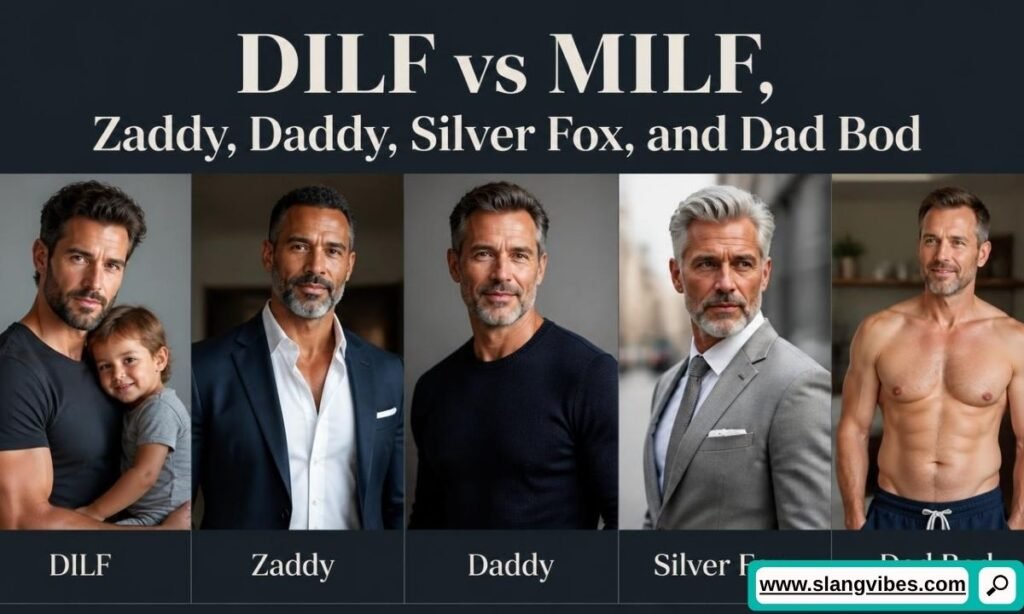
The DILF meaning gets tangled with a few similar words, so here’s a quick side-by-side comparison.
| Term | Meaning | Tone/Vibe |
|---|---|---|
| DILF | An attractive dad | Playful, flirty, crude roots |
| MILF | An attractive mom | Playful, flirty, crude roots |
| Zaddy | A stylish, confident man, no kid required | Admiring, trendy |
| Daddy | Slang with shifting meanings, based on context | Often flirty or sexual |
| Silver Fox | An attractive older man with gray hair | Admiring, polished |
| Dad Bod | A relaxed, softer build | Affectionate, humorous |
Notice the pattern. DILF needs a dad. Zaddy doesn’t. Silver fox needs gray hair, and dad bod describes a body, not an attraction level.
People mix up DILF and daddy the most. They sound close, but they point in different directions. DILF is about fatherhood and looks. Daddy, as slang, carries several meanings depending on who says it and where. When you’re unsure, pick the term with the clearest meaning, or skip the label and give a plain compliment.
Zaddy is the friendliest of the group. It praises style and confidence, with no reference to parenthood. If you want to compliment a well-dressed guy without the crude root, zaddy is the safer pick.
When Saying DILF Goes Wrong
The DILF meaning stays playful only when the audience shares the joke. Outside this circle, the word turns awkward fast.
Work comes first. Comments about a coworker’s looks sometimes lead to uncomfortable talks with HR, even when the speaker meant nothing by it. Formal settings call for formal language, and this word isn’t formal.
Family events come next. Your grandmother, your cousin’s kids, and the dad’s own partner all hear the word differently than your friends do.
Strangers rank third. A person you’ve never met has no way to know your tone. What sounds like a wink to you reads as a come-on to them.
Group settings add another layer. A joke shared in a big chat reaches people you never planned to include, and not everyone reads the tone the way your close friends do.
Here’s how a slip happens at the office.
Alex: Did you see the new VP’s photos from the retreat? Sam: The one with his kids at the lake? Alex: He’s such a DILF. Sam: Alex, please don’t say it in the office chat. Alex: Oh no. Wrong channel? Sam: Wrong everything. Delete it.
Notice how quickly Sam steps in. A written message also leaves a record, and screenshots travel. If you wouldn’t say a line out loud in a meeting, don’t type it in a work channel.
Read New Articles: SYBAU Meaning in Text: What It Really Means and How People Use It (2026)
Common Mistakes With the DILF Meaning
Most slip-ups with the DILF meaning come from assuming everyone hears the word the way you do.
The first mistake is skipping the parent requirement. Strictly speaking, a DILF is a dad. Some people stretch the word to cover any man with calm, fatherly energy. Still, a man with no kids might feel confused or put on the spot when you use it.
The second mistake is treating it as harmless everywhere. Say you tag a friend’s dad in a joke comment. Your friend sees the notification first. Now there’s an awkward text thread waiting for you.
The third mistake is using it near kids. Picture a school pickup line where you whisper the word and a seven-year-old repeats it to his dad. Nobody wins this scene.
The fourth mistake is aiming it at someone directly, without knowing how they feel. Imagine replying “DILF” under a coworker’s post, and your boss follows you both. A comment meant for a laugh turns into a long explanation.
The fifth mistake is mixing it up with similar terms. Calling a childless man a DILF and calling him a zaddy send different messages.
The fix is easy. Pause for two seconds and ask who might read it. If the answer includes anyone you wouldn’t say it to in person, pick another word.
How to Respond When Someone Calls You a DILF
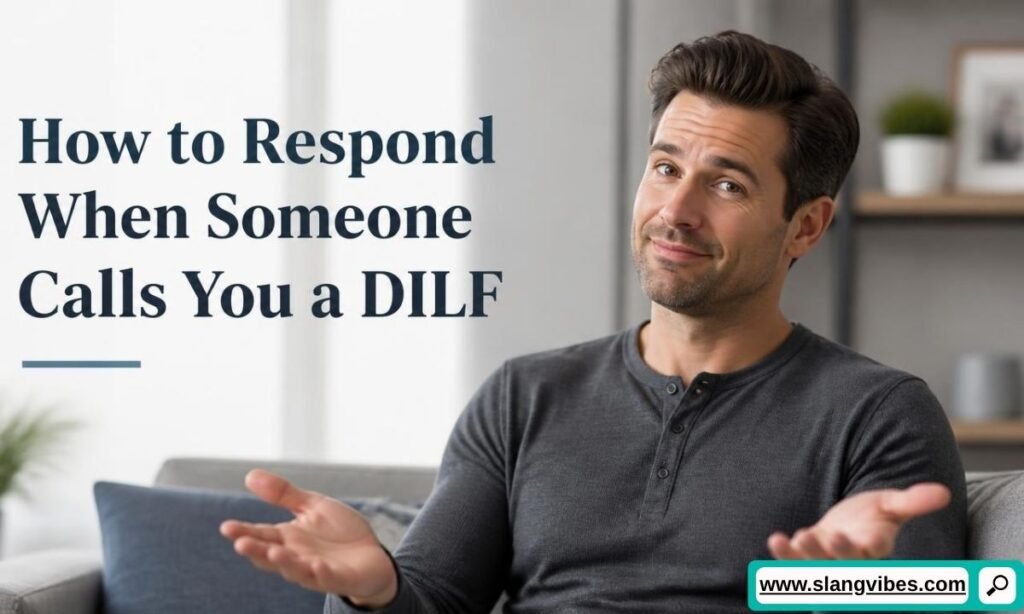
Knowing the DILF meaning helps you reply with confidence when it’s aimed at you. You have three solid paths, and each one is fair.
Play along if you feel comfortable. A joke back keeps the mood light and shows you took no offense.
Sam: Your photo from the wedding got tagged DILF about ten times. Marcus: Ha. I’ll take it. Tell them I accept payment in compliments. Sam: Mom saw it too. Marcus: Okay, now I’m worried.
Say thanks and move on if you feel neutral. A short “Thanks, appreciate it” closes the topic with no drama.
Set a boundary if the word feels off. You don’t owe anyone a long explanation. A clear, calm sentence works best.
Taylor: Hey DILF 😏 Chris: Thanks, but I’d rather you not call me DILF. Taylor: Sorry, I was joking. Chris: No worries. Keep it friendly, please.
Match your reply to the setting. A friend teasing you at dinner deserves a laugh. A stranger or coworker using it in an unwanted way deserves a firm answer. Timing matters too. A quick reply in the moment often lands better than a long message hours later, and a short answer leaves less room for confusion. If the comment appears on a public post, you also have the option to delete it or ignore it.
Read More Articles: WTW Meaning in Text: What It Means on TikTok, Snapchat & Instagram (2026)
Frequently Asked Questions
What does DILF stand for?
It stands for “Dad I’d Like to” followed by the f-word. People now use it as playful slang for an attractive dad.
Is DILF a compliment or an insult?
Most people mean it as a flirty compliment. The crude root means the DILF meaning still lands badly in formal or family settings.
Does he have to be an actual dad to be called a DILF?
Strictly, yes. Online, people sometimes apply it to any man with calm, fatherly energy. Still, a parent is the starting point.
What’s the difference between a DILF and a zaddy?
A DILF is a dad. A zaddy is a stylish, confident man of any age, parent or not.
Is it okay to say DILF at work or around family?
No. Save it for friends who share the joke, and skip it around kids, coworkers, and relatives.
What to Remember Before You Say DILF
The DILF meaning is simple on the surface. It’s slang for an attractive dad, born from a crude acronym and softened by years of memes and comment sections. Most people now use it as a playful, flirty compliment. Plenty of others still wince at its roots.
Here’s what to keep in mind. Platform sets the tone, age shapes comfort, and the audience decides whether a joke lands. Zaddy, MILF, silver fox, and dad bod each describe something different, so don’t swap them freely. At work, around family, or near kids, skip the word entirely.
If someone aims it at you, pick the reply matching your mood. Laugh it off, thank them, or set a clear boundary. All three are fair.

Alex Carter is a language enthusiast and internet culture expert at SlangVibes. He explains the latest slang terms and text meanings in simple, clear English so everyone stays in the loop.