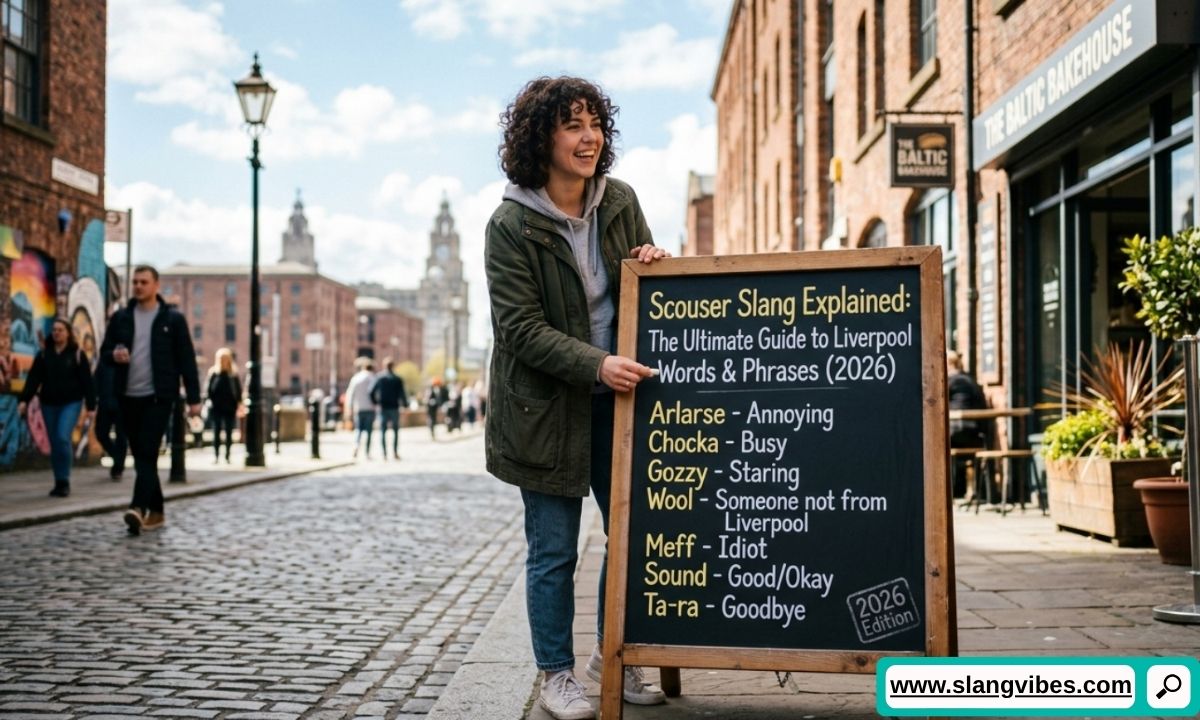
Picture this scene. You’re on a train pulling into Liverpool Lime Street, and the woman next to you turns to her mate and says, “Eh, our kid’s gone and got a right cob on ’cause I never brought him scran.” You nod along, smiling, understanding nothing. Three years ago, I stood on this platform completely lost in a language I technically spoke. Scouser Slang Explained is exactly what you need if you’ve ever felt this kind of confusion. Liverpool’s dialect runs on its own rules, shaped by decades of Irish influence, maritime history, and working-class culture, all packed into one loud, funny, warm way of talking. This guide breaks down the words locals use every day, from classic Scouse sayings your nan might know to the Gen Z slang spreading across TikTok right now.
Scouser Slang Explained: The Story Behind Liverpool’s Dialect
Scouser slang refers to the words and phrases spoken by people from Liverpool, often called Scousers. The dialect sits apart from other Northern England slang because of Liverpool’s history as a major port city. Ships arrived from Ireland, Wales, and further afield for generations, and each wave of newcomers left a mark on local speech.
The word “Scouse” itself started as food, not language. Sailors ate a cheap stew named lobscouse, made from whatever meat and vegetables were on hand. Liverpool’s working-class docks adopted the dish, and the nickname stuck to the people who ate it.
Did You Know? The word “Scouse” comes from “lobscouse,” a sailor’s stew eaten across Northern European ports. Liverpool held onto the name long after other cities dropped it, turning a meal into an entire identity.
Irish immigration shaped the accent as much as the vocabulary. Liverpudlian slang carries a rhythm closer to Dublin than to nearby Manchester or Leeds. Linguists often point to 19th century Irish arrivals as the reason. Add in decades of dock work, football culture, and tight-knit neighborhoods. You get a dialect built for speed, humor, and identity rather than formality.
Anfield’s matchday chants and Beatles-era Merseybeat culture pushed this vocabulary far beyond Liverpool’s own streets. Both exports carried the accent and a handful of local words to audiences well outside England.
Understanding where this Scouse dialect comes from makes the individual words easier to remember. Every slang term on this list connects back to one of three roots: the docks, Ireland, or the city’s working-class humor.
Scouse Slang Greetings and Everyday Conversation Starters
Before diving into individual words, it helps to hear Scouse slang in motion. Locals rarely greet each other with a plain “hello.” Instead, you’ll hear a mix of questions, nicknames, and quick check-ins packed into a few words.
“Alright la?” works as the standard opener between mates, with “la” standing in for “mate” or “friend.” The expected reply is often “sound” or “yeah, sound, you?” rather than a full sentence. Among older Scousers, “queen” makes a comeback as a warm way to greet a woman, regardless of age or relationship.
Here’s how a typical exchange plays out between two friends bumping into each other on Bold Street:
Maya: Alright la? Josh: Sound, you? Maya: Yeah, made up, got a new job today.
These greetings shift depending on who’s talking. Younger Scousers still use “la,” but they mix it with modern phrases picked up online. Older generations lean on “queen” or “lad” more heavily. Either way, the tone stays warm and quick, built for fast exchanges rather than long conversations.
Saying goodbye follows the same rhythm. “Ta-ra” replaces “bye” in almost every casual setting. It’s often paired with “la” for extra warmth, as in “Ta-ra la, see you Friday.” Some older residents still greet strangers with “Y’alright, love?” regardless of whether they know the person at all.
Learning these opening lines gives you a working entry point into wider Liverpool slang phrases. Most conversations start this way before moving into more specific words for people, food, or feelings.
Read Also: CMP Meaning in Text: Popular Uses Across Social Media
Scouse Slang Words for People
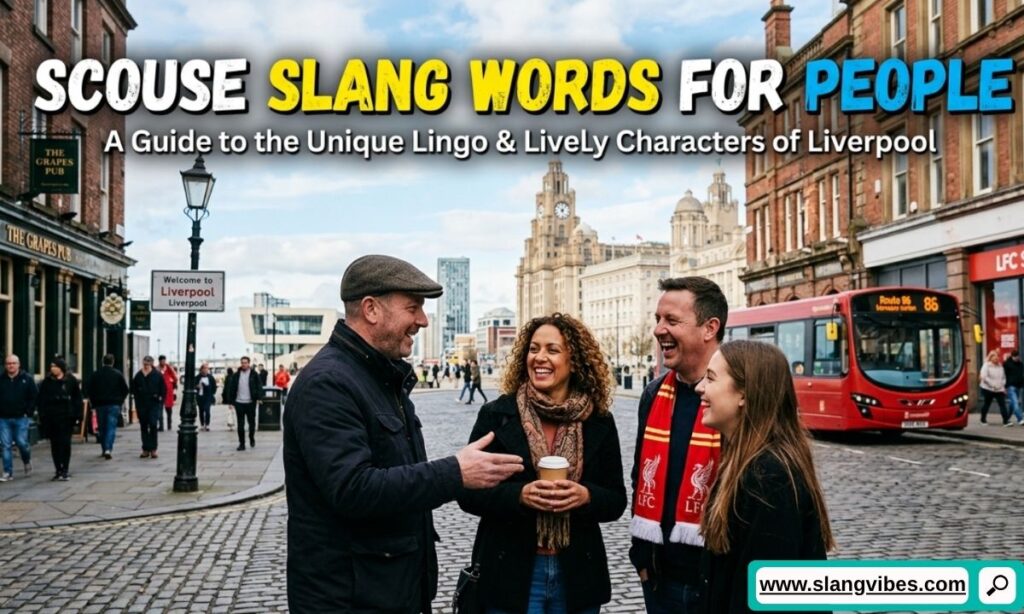
Liverpool slang draws sharp lines around identity. Some words show affection, and others draw a clear boundary between “real” Scousers and everyone else.
Friendly and Familiar Terms
“La” and “lad” both mean friend or mate, used constantly in daily chat. “Queen” makes a comeback as a warm greeting for a woman of any age. “Our kid” works for a sibling of any age, while “arl fella” usually points to a father or an older male relative. Both terms carry warmth rather than distance, even when used to complain about someone.
Identity Terms and Playful Insults
“Wool” refers to someone from outside Liverpool, usually from towns like St Helens or Widnes. This person picked up a Scouse-adjacent accent without growing up in the city itself. “Plazzy Scouser,” short for plastic Scouser, targets people who claim Liverpool roots without living there. It’s often a lighthearted jab rather than a serious insult.
Calling someone a “soft lad” after a clumsy moment keeps teasing light. The same goes for calling someone an “arl arse” after unwanted advice.
A few more terms round out this category:
| Term | Meaning | Tone |
|---|---|---|
| La / Lad | Friend, mate | Friendly |
| Wool | Someone from outside Liverpool with a similar accent | Teasing |
| Plazzy Scouser | Someone who claims Liverpool identity without living there | Playful jab |
| Queen | Warm, respectful term for a woman | Affectionate |
| Arl Arse | Someone acting bossy or superior | Mild insult |
| Soft Lad | Affectionate name for someone who did something silly | Playful |
| Divvy | A mild insult for someone acting clueless | Playful insult |
| Arl Fella | Dad or an older man | Familiar |
| Our Kid | Brother or sister | Familiar |
Picture someone born and raised twenty minutes outside the city center, speaking with a near-identical accent, and telling everyone they come from Liverpool itself. Locals would likely call this person a wool within seconds, half joking and half serious.
These identity-based terms rarely feel mean-spirited to insiders, but tone matters. Calling a stranger a wool at a bar carries a different weight than teasing a longtime friend the same way.
Read More: Louisiana Slang Words: The Ultimate 2K26 Guide to Bayou Talk & Local Lingo
Food, Drink, and Night-Out Slang
Food and drink slang shows up constantly in everyday Scouse language, especially among younger crowds planning a night out.
“Scran” means food, plain and simple, used the same way whether someone means a proper meal or a quick snack. “Bevvy” covers any alcoholic drink, from a pint at the local to cocktails before a night out. “Out on the lash” describes a heavy night of drinking, usually planned in advance with a group. “G’wed” works as encouragement, roughly matching “go on then” or “go for it.” People often use it when someone hesitates before ordering another round.
“Carry out” means alcohol bought from a shop to drink at home rather than a bar. Someone who’s had too much to drink gets called “bevvied,” a step past a casual bevvy.
Here’s how these words show up on a casual date:
Ellie: Fancy grabbing some scran before the film? Ryan: Go on then, I’m starving. Ellie: We’ll grab a bevvy after too, if you’re up for it.
This kind of exchange happens across Liverpool every weekend. It plays out between new couples, old friends, or coworkers heading out after a shift. The words carry no formality at all. This makes them feel wrong in a restaurant review or work email, but perfect for group chats and casual plans.
Anyone learning Liverpool slang words for the first time tends to pick these up fastest. Food and drinks come up in nearly every conversation.
Read Here: Slang Terms for Alcohol: 150+ Popular Drinking Words and Nicknames (2026 Guide)
Scouse Words for Everyday Objects, Places, and Money
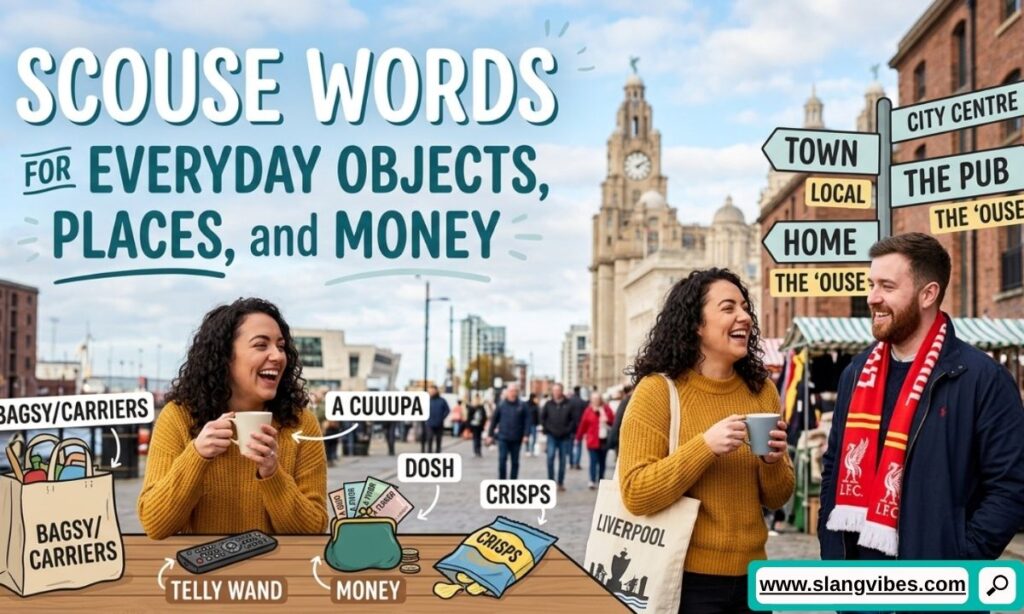
Beyond people and food, Liverpool vocabulary covers clothes, places, and body parts most visitors never see coming.
“Kecks” means trousers or pants, used casually among friends and family. “Clobber” refers to clothes in general, often paired with a compliment about someone’s outfit. “Webs” or “trabs” both mean trainers, depending on which part of the city you’re standing in. “Jigger” describes a narrow alleyway between houses, a word tied directly to Liverpool’s older residential streets. “Barnet” means hair, borrowed from wider Cockney rhyming slang but used comfortably across Merseyside. “Ozzy” shortens hospital into one quick, familiar word.
| Term | Meaning |
|---|---|
| Kecks | Trousers |
| Clobber | Clothes |
| Webs / Trabs | Trainers |
| Jigger | Alleyway |
| Barnet | Hair |
| Ozzy | Hospital |
| Skint | Broke, no money |
| Gaff | House or home |
“Skint” describes having no money at all, often said with a shrug rather than embarrassment. “Gaff” means house or home, as in “come round mine, back at the gaff by six.”
A visitor walking through a Liverpool neighborhood might hear a local say, “Nip down the jigger, it saves ten minutes.” They’d have no idea an alley sits nearby. These words rarely appear in textbooks, yet they shape how directions, outfits, and daily plans get discussed across the city.
How to Describe Feelings and Reactions Like a Scouser
Scouse slang shines brightest when describing how someone feels about food, weather, or a situation.
“Boss” means excellent, used for anything from a meal to a match result. “Made up” signals genuine happiness, often tied to good news like a new job or exam result. “Mingin” describes something disgusting, whether it’s a smell, a taste, or a bad decision. “Chocka” means completely full or packed, describing anything from a bus to a stressed-out head. “Baltic” means freezing cold, a nod to Liverpool’s old trading routes across the Baltic Sea. “Heavy” describes something impressive or intense, often used for music or a big night out. “Antwacky” means old-fashioned, aimed affectionately at outdated fashion or technology. “Buzzin'” describes excitement or pride, often paired with good news the same way “made up” gets used. “Sound as a pound” takes the everyday word “sound” and stretches it into a fuller compliment. It’s usually aimed at someone reliable rather than something exciting.
Here’s a quick coworker exchange showing a few of these words together:
Priya: How was the meeting? Tom: Proper chocka in there, no room to move. Priya: Sounds baltic outside as well. Tom: Freezing out there. Made up it’s Friday though.
Notice how these words stack together in normal conversation, often two or three per sentence. It rarely sounds forced to a local ear. Learning this pattern matters more than memorizing definitions one at a time, since Scousers rarely use slang in isolation.
Read New Article: NF Meaning in Text: What It Really Means in Chats, TikTok, Snapchat & Instagram (2K26 Guide)
Scouse Slang Verbs and Phrases in Action
Beyond single words, Liverpool slang phrases often center on verbs describing behavior, avoidance, or trouble.
“Jibbing off” means standing someone up or skipping plans entirely, often used when someone bails last minute. “Swerve” means avoiding something on purpose, whether it’s a boring meeting or an awkward ex at a party. “Geggin in” describes butting into a conversation uninvited, usually aimed at someone nosy. “Going to town” on someone means telling them off. The phrase confuses outsiders expecting a literal trip into the city center. “Cob on” describes a bad mood, as in someone sulking after an argument. “Graft” means working hard, covering everything from a job to studying for exams. “Gis” shortens “give us,” used constantly when asking for something small, as in “gis a lift into town.”
Picture a sibling group chat where one person cancels weekend plans last minute. The others might say this person is “jibbing everyone off again.” Someone else adds they’ve clearly “got a cob on” about something unrelated. Nobody needs an explanation. Every Scouser understands the tone instantly.
These phrases carry more emotional weight than simple definitions suggest. A single word like “swerve” replaces an entire sentence of explanation. This is part of why Scouse slang moves so quickly in daily conversation.
Gen Z vs Millennial Scouse Slang: How It’s Evolving Online
Modern Liverpool slang keeps shifting as younger generations mix classic Scouse words with internet culture.
Millennials tend to lean on traditional terms like “boss,” “sound,” and “bevvy,” picked up from parents and grandparents. Gen Z Scouse slang blends these same words with TikTok trends, gaming chat, and group message shorthand. The result is a hybrid style unique to this generation. Terms like “scran” and “heavy” show up constantly in captions and comments. They’re often paired with emojis or reaction videos rather than spoken conversation alone. TikTok captions built around Scouse humor regularly rack up views from outside Merseyside. They introduce words like “boss” and “scran” to an audience who never set foot in Liverpool.
Older Scousers, meanwhile, hold onto words like “antwacky,” “ozzy,” and “chocka” without much interest in newer internet slang. These phrases stay alive purely through daily habit rather than trend cycles.
Here’s how a Gen Z group chat might read among siblings:
Chloe: mam’s doing me head in lol Liam: swerve her then, come town with us Chloe: she’ll have a cob on for weeks if I do Liam: fair enough, jib her off tomorrow instead
This kind of message thread barely resembles a Millennial text from ten years earlier. The underlying words still stay rooted in the same Scouse dialect. Social media speeds up how quickly these phrases spread beyond Liverpool. Local slang turns into something strangers across England recognize from viral clips alone.
How to Use Scouser Slang Explained Without Sounding Like a Plazzy Scouser
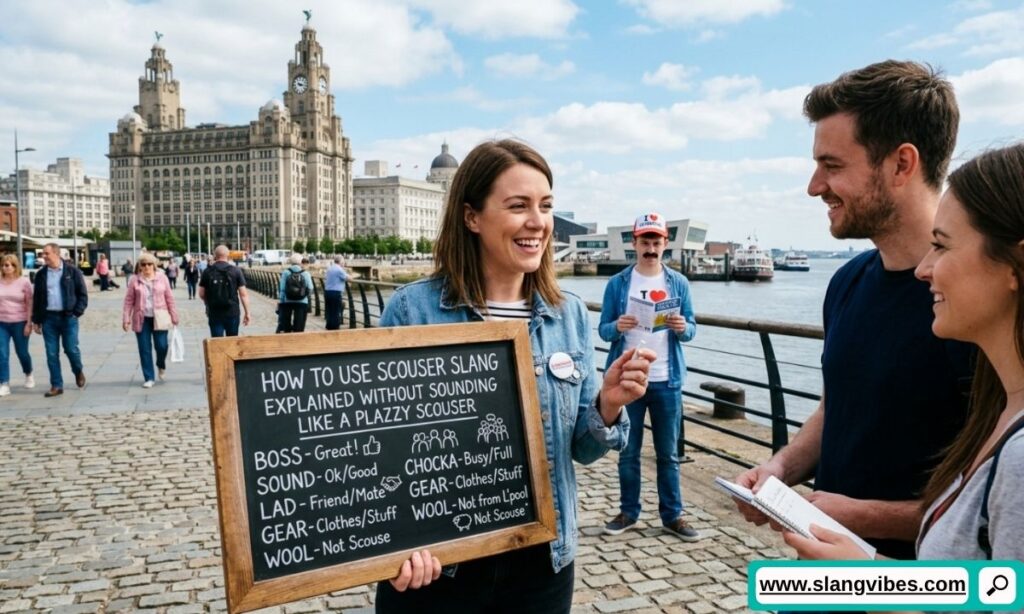
Learning Scouser slang words is one thing. Using them naturally without sounding forced takes a bit more care.
Match the tone of the room before dropping slang into conversation. A relaxed chat with friends welcomes words like “boss” or “made up.” A job interview or formal email calls for standard British English instead. Overusing slang in a single sentence often gives away an outsider trying too hard. Pace matters as much as vocabulary.
Pay attention to context clues before repeating a word you’ve heard once. “Wool” and “plazzy Scouser” carry playful jabs among locals. They land differently coming from a visitor who picked the term up an hour earlier. Watching how Scousers use a word among themselves, before trying it yourself, avoids most awkward moments.
A few practical habits help:
- Start with softer, widely used words like “sound” or “scran” before moving to sharper terms like “wool.”
- Save identity-based slang for situations where you already know the local well.
- Avoid slang entirely in professional writing, interviews, or formal introductions.
- Listen more than you speak during your first few conversations in the city.
- Ask a local what a word means rather than guessing from context alone.
Locals generally appreciate visitors showing genuine interest in Liverpool English, as long as the effort feels sincere rather than performative. Getting one or two words right in natural conversation lands far better than forcing five words into a single sentence.
Read More Articles: Slang for Gun (2K26 Guide): 35 Popular Street Names, Nicknames & Urban Terms
Scouser Slang Explained: Frequently Asked Questions
What does “Scouser” mean?
A Scouser is someone from Liverpool. The name traces back to “lobscouse,” a sailor’s stew common across the city’s old docks. Locals wear the name with pride. It now represents an entire regional identity rather than a food reference alone. Football chants and Beatles-era music helped carry both the accent and a few Scouse words well beyond the city itself.
Is Scouse slang still used by young people today?
Yes. Words like “boss,” “scran,” and “sound” stay common among Gen Z Scousers. They’re often blended with newer internet slang picked up from TikTok and group chats. The core vocabulary barely changes even as new phrases get added around it.
What’s the difference between a Scouser and a wool?
A Scouser grows up in Liverpool itself. A wool comes from a nearby town such as St Helens or Widnes, with a similar accent but no direct city roots. The distinction matters more to locals than outsiders might expect. Both groups often support the same football team and share plenty of vocabulary, so outsiders rarely notice the difference right away.
Is it okay for outsiders to use Scouse slang?
Yes, especially in relaxed settings among friends who already know the local well. Forcing slang into formal situations or unfamiliar company tends to feel unnatural rather than friendly.
Where does the word “Scouse” come from?
It comes from lobscouse, a cheap stew eaten by sailors and dock workers across Northern Europe. Liverpool held onto the name long after other port cities dropped it, turning a meal into a lasting nickname.
Wrapping Up Scouser Slang Explained for Good
Scouser slang carries centuries of dock work, Irish migration, and working-class humor packed into a handful of words. Simple greetings like “alright la” and sharper phrases like “jibbing off” each tell a small piece of the city’s story. Millennials and Gen Z Scousers keep the dialect alive in different ways. They mix traditional sayings with new internet habits, proving Liverpool’s language keeps growing rather than fading.
Whether you’re moving to Liverpool, visiting for a match, or chatting with a Scouser online, one thing holds true. Dropping one or two words naturally goes further than memorizing an entire glossary. Start small. Try “sound” instead of “okay” in your next casual text. Notice how differently a conversation feels once the local rhythm kicks in. The vocabulary here gives you a real starting point. The rest comes from listening closely the next time a Scouser starts talking. Keep this list handy for your next trip to Liverpool, and the words will start to feel familiar faster than you expect.

Alex Carter is a language enthusiast and internet culture expert at SlangVibes. He explains the latest slang terms and text meanings in simple, clear English so everyone stays in the loop.