My friend Mia texted me last week with a screenshot from her date. He’d captioned a photo of her “my pookie,” and she followed up with three question marks. This mix-up sums up why this guide exists. Slang for boyfriend shifts fast. Baby and babe still work, but new terms roll in every few months from TikTok, group chats, and meme culture. This guide covers the classics, current Gen Z picks, texting abbreviations, regional terms, and a few names worth skipping. By the end, you’ll know which one fits your relationship.
What Counts as Slang for Boyfriend (And Why It Keeps Changing)
Slang for boyfriend covers every informal word people swap in for the standard term. Think nicknames, texting shortcuts, and stage-specific labels like “talking stage” or “situationship.” These words never show up in a dictionary as official replacements. They spread through friend groups, group chats, and social media instead.
This category moves faster than most slang. A relationship term feels personal. It changes with culture, music, and whichever platform teens and twenty-somethings are using this year. TikTok alone pushes out new terms of endearment every few months. Some catch on everywhere. Others stay local to one app or one friend group.
Context shapes every word on this list. “Babe” fits a casual text but sounds off in a work email. “Ride or die” works among close friends, though it might sound dramatic in front of his parents. Knowing which term fits which setting matters as much as knowing what the word means.
This guide sorts boyfriend slang into groups. These include timeless nicknames, current Gen Z picks, older Millennial terms, texting abbreviations, regional variations, and relationship-stage language. Each section explains where a term came from, who still uses it, and when to reach for it. A few entries also come with a heads up about tone, since not every nickname lands the way you’d expect. Skim the whole guide first, or jump straight to the section matching your relationship right now. Each category stands on its own, so there’s no need to read start to finish.
Classic Nicknames for Boyfriend Still Worth Using
Some pet names for boyfriend have stuck around for decades. These are the words most people reach for first, and they still sound natural in 2026.
Baby and babe top the list. Both work in texts, in person, and in captions. Babe reads slightly more casual than baby, though most people use them the same way.
Boo comes from an older French word for “beautiful.” It made its way into everyday English through music and pop culture. It’s affectionate without sounding too formal.
Sweetheart and honey lean more traditional. Older couples use them often. Plenty of younger couples pick them up too, especially when they want a softer tone than “babe.”
Hubby, used playfully, treats a boyfriend like a husband before marriage happens. Couples in long-term relationships use it as an inside joke more than a literal claim.
Love and darling show up less often in the US but remain common across the UK and Ireland, adding a soft, old-fashioned touch to everyday conversation.
Here’s how one of these might show up in a real text thread:
Jordan: what time are you picking me up babe Sam: 7, don’t worry Jordan: love you hubby Sam: we’re not married lol
These terms rarely go out of style because they don’t depend on any platform or trend. A boyfriend from 1995 or 2026 recognizes every word above without needing an explanation. This staying power makes classic boyfriend nicknames a safe starting point, especially around people outside your friend group.
Read More: Ghetto Slang Meaning (2K26 Guide): 30 Popular Terms, Origins & Real Usage
Gen Z Slang for Boyfriend in 2026
Gen Z slang for boyfriend moves through TikTok captions and group chats faster than any other category on this list. A word tops every For You Page one month and fades out the next.
Pookie leads the pack right now. It started as a soft, almost baby-talk nickname and turned into one of the most-used pet names online. Couples use it to sound extra affectionate, sometimes with a teasing edge.
Zaddy describes a boyfriend who’s stylish, confident, and a little older-acting than his years. It’s a compliment, though it works best in lighthearted contexts rather than serious ones.
Bae still shows up constantly, even though people have joked about its decline for years. It’s short for “before anyone else,” though most people use it without thinking about the origin.
King works as a respectful, admiring nickname. It’s often paired with a proud caption on Instagram or a comment under his selfie.
Platform matters here too. TikTok comments lean toward playful, over-the-top terms like zaddy or pookie. Twitter and X threads favor shorter, drier options like bae or king. Instagram captions sit somewhere in between, mixing sentimental wording with trendy one-word labels.
My person carries more emotional weight than most terms on this list. Couples reach for it when they want to say someone feels like home, not simply a romantic partner.
Picture a caption under a couple’s photo reading “my pookie forever” with a string of heart emojis. Or picture a friend asking who someone’s texting and getting “my king, obviously” as the reply. These terms show up constantly in bios, captions, and comment sections, which is part of why they spread so quickly.
Millennial Boyfriend Slang Still Going Strong
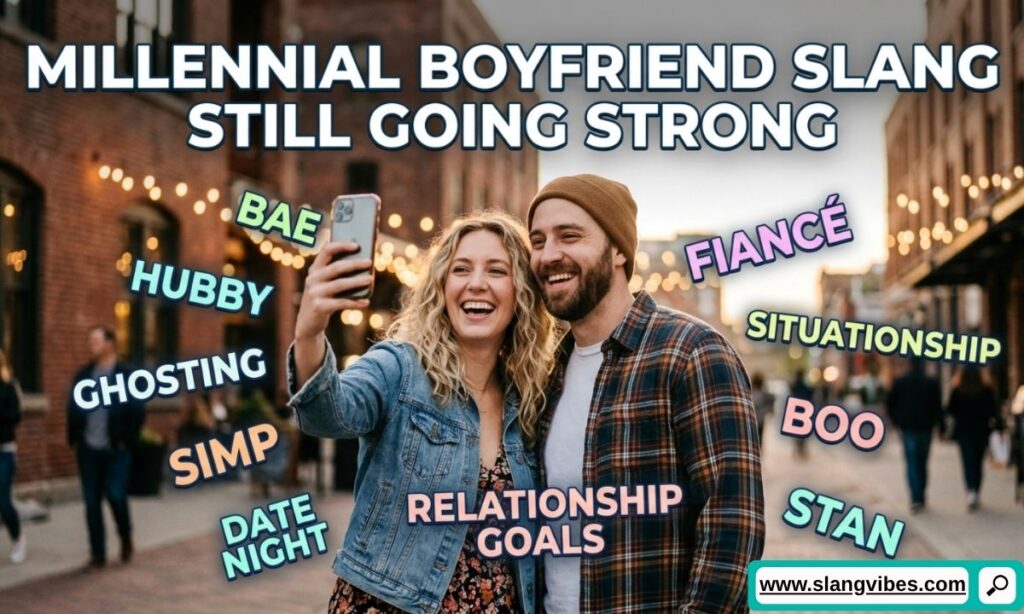
Millennial boyfriend slang came up during the early days of social media. Back then, MySpace and early Instagram shaped how people talked about relationships online. A lot of it stuck.
Ride or die describes a partner who stays loyal no matter what happens. It carries a dramatic tone on purpose, borrowed from action movies and hip hop culture before it became a relationship term.
Better half suggests your boyfriend completes you in some way. Millennials use it half-jokingly most of the time, often in a group setting rather than a private text.
Main man and main squeeze both point to a primary romantic partner. Main squeeze sounds a bit dated now. It still pops up in casual conversation among people in their thirties and older. It traces back to 1990s slang, before it crossed into early internet culture during the 2000s. This history explains why the term feels more nostalgic than trendy today.
Significant other, often shortened to SO, works as a neutral term for any romantic partner regardless of gender. It fits well in mixed company or online posts where you’d rather skip pet names entirely.
Here’s a typical exchange between siblings:
Priya: is your ride or die coming to the wedding Alex: obviously, he’s my plus one Priya: cute, tell your better half I said hi
These terms sound a bit more grounded than Gen Z picks. Millennials tend to reach for slang with an established feel. It’s something proven through years of use, rather than a term still finding its footing online.
Read Here: Hood Slang Meaning (2K26 Guide): Popular Street Terms & Their Real Meanings
Texting Abbreviations for Boyfriend (Quick Reference Table)
Texting abbreviations for boyfriend lean on short forms built for speed. These show up constantly in group chats, captions, and quick replies where spelling out a full word wastes time.
BF remains the most recognized abbreviation, used across texts, dating apps, and social media bios. SO stands for significant other and works well when you want a gender-neutral option. Bby, a shortened spelling of “baby,” shows up mostly in DMs and comment sections rather than formal writing. HB, short for “hot boyfriend,” pops up in captions when someone wants to compliment a partner’s looks without spelling it out.
| Abbreviation | What It Means | Where You’ll See It |
|---|---|---|
| BF | Boyfriend | Texts, dating apps, bios |
| SO | Significant other | Group chats, posts |
| Bby | Baby | DMs, comments |
| HB | Hot boyfriend | Captions, compliments |
| MCM | Man Crush Monday | Instagram, X, weekly tags |
MCM works differently from the other abbreviations here. Instead of naming a boyfriend directly, it tags a weekly post showing him off online, usually paired with a photo and a caption. The tag started as a joke among close friends and turned into a recognizable weekly trend across Instagram and X.
Abbreviations like these save time, though they carry less warmth than a full nickname. Save BF and SO for quick references or captions. Save the fuller nicknames for moments where the sentiment matters more than the speed. These abbreviations don’t replace real nicknames. They get the point across fast when time’s tight.
Regional Boyfriend Terms Around the World
English-speaking countries don’t all use the same words for a boyfriend. Location changes plenty about which word sounds natural.
In the UK, chap and fella both describe a boyfriend casually, especially among older Millennials and Gen X. “My other half” works as a common British phrase too, similar to “better half” but used more often across age groups.
In Australia, bloke refers to a man generally, though people commonly say “my bloke” to mean boyfriend or husband. The tone stays relaxed and unbothered, matching the broader Australian style of speech.
Partner has become the default term across most English-speaking regions, especially in professional or mixed-company settings. It skips gender assumptions entirely. This makes it useful for LGBTQ+ couples. It also works for anyone who prefers a neutral term over a gendered one like “boyfriend” or “husband.”
American English tends to favor playful, trend-driven slang. British and Australian English lean more toward understated, older phrases passed down through generations rather than born on social media. A term like “bloke” or “chap” rarely trends online. Plenty of people still use these words daily without ever posting them.
In Ireland, “himself” sometimes stands in for boyfriend or husband in casual conversation, often said with a knowing tone among friends. Canadian English mostly mirrors American slang, though “my boy” carries a slightly more casual, hometown feel north of the border. These regional differences don’t make one term more correct than another. They simply reflect how language adapts to local habits.
Knowing these regional terms helps avoid confusion when talking with someone from outside your own country. This matters especially online, where audiences mix constantly.
Read More: Slang for Looking Good (2K26 Guide): 35 Trendy Words for Looking Stylish & Attractive
Boyfriend Slang by Relationship Stage
Not every relationship term applies the moment two people start talking. Slang for boyfriend shifts depending on where the relationship truly stands. Before the talking stage even starts, people often use “crush” to describe someone they’re interested in but haven’t approached yet.
During the talking stage, before anything’s official, people use words like “my person” loosely or simply say “we’re talking.” Nobody claims boyfriend status yet, so slang stays vague on purpose. Somewhere between the talking stage and an official label, people often use “exclusive” to mark a step forward without fully committing to boyfriend status yet. This stage-specific vocabulary keeps expectations clear without forcing a bigger conversation before anyone’s ready.
A situationship sits in a gray area between casual and committed. People in this stage often avoid nicknames entirely, sticking with a first name or a noncommittal “we’re figuring it out.”
Once someone becomes an official boyfriend, the fuller range of nicknames applies. Bae, babe, my guy, and king all fit here, since the relationship has a clear label attached.
“Husband material” or “husband energy” describes a boyfriend who acts committed, dependable, and ready for something long-term. There’s no actual proposal needed for the phrase to apply. Couples use these phrases half-jokingly to signal where a relationship seems headed.
A conversation between two people in the early stages might look like this:
Taylor: so are you guys official Riley: not yet, we’re still figuring it out Taylor: but you call him bae in your stories Riley: different vibe, don’t read into it
Matching slang to relationship stage keeps the label honest. Calling someone your boyfriend before it’s official creates confusion. Sticking with vaguer terms during a situationship keeps expectations realistic on both sides.
Boyfriend Nicknames Worth a Second Thought
Not every word on a slang list still sounds natural today. A few boyfriend nicknames read as dated or risky depending on who’s listening.
Heartthrob describes an especially attractive boyfriend. The word feels more like something from a magazine headline than everyday speech now. It still works in a joking context, though less often than it used to.
Prince sounds sweet in theory, but it often comes across as overly formal or storybook-ish outside a playful moment. Save it for teasing rather than serious conversation.
Boy toy carries a joking tone among close friends, though it sometimes sounds dismissive or reductive depending on the setting. Using it around a boyfriend who doesn’t know the phrase well risks a confused or hurt reaction.
Mister, used jokingly, often sounds sarcastic rather than sweet depending on delivery. Texting it to a boyfriend who takes things at face value risks the joke landing wrong. Shorty, once common in early 2000s slang, now reads as dated outside a nostalgic or ironic context. These aren’t off-limits entirely. They work better with the right audience and a clear, shared sense of humor.
Common Mistake: People often assume every slang term from a list works in any setting. Tone and audience matter more than the word itself. A nickname landing as cute in a group chat might feel awkward said out loud in front of his coworkers.
Before using a newer or edgier term, picture the setting first. A private text allows more playfulness than a caption meant for a wider audience.
Read New Article: Slang for Gun (2K26 Guide): 35 Popular Street Names, Nicknames & Urban Terms
How to Pick the Right Boyfriend Nickname for Him

Choosing slang for a boyfriend works best when the word matches his actual personality rather than a trend.
For a playful boyfriend who jokes constantly, funny names for boyfriend like pookie, babe, or loverboy fit naturally. These words carry a teasing energy matching someone who doesn’t take himself too seriously.
For a protective or steady boyfriend, terms like my guy, my man, or king feel more fitting. These carry a tone of respect and loyalty rather than pure cuteness.
For a quieter, low-key boyfriend, simpler terms work better. Babe, baby, or his actual name paired with “my person” avoid drawing extra attention. This suits someone who’d rather skip the spotlight.
For a dramatic or over-the-top relationship dynamic, terms like ride or die or husband energy fit well. They match the bigger personality of the relationship itself.
For a creative or artsy boyfriend, softer, more original terms like loverboy or my person fit the personality better than generic picks. A nickname pulled from an inside joke works even better here, since it feels specific rather than borrowed from a list.
A coworker asking for advice might hear something like this:
Dana: what do I even call him, we’ve been dating two months Priya: what’s his vibe, is he chill or extra Dana: pretty chill honestly Priya: then skip the dramatic stuff, babe or my guy works fine
The right nickname doesn’t need to impress anyone outside the relationship. It needs to feel natural coming out of your mouth and comfortable for him to hear. Start with something simple, and let a more specific term develop naturally as the relationship grows.
Read Also: Slang for Friends: 100+ Popular Terms People Use in 2026
Frequently Asked Questions
What’s the most popular slang for boyfriend right now?
When people search for the most popular slang for boyfriend, bae, babe, and pookie top the list for casual, current use, especially online. BF stays the most common abbreviation for quick texts, dating app bios, and social media captions, since it’s short, familiar, and works in almost every casual context.
Is bae still used in 2026?
Yes. Despite years of jokes about it fading out, bae remains common in captions, texts, and everyday conversation. It’s lost a bit of its novelty, but it hasn’t disappeared, and plenty of couples still use it without a second thought.
What do British people call their boyfriend?
Chap, fella, and “my other half” show up often in the UK, alongside standard terms like babe and boyfriend itself. Bloke covers a similar role in Australian English, though it refers to men generally before narrowing down to a boyfriend specifically.
What’s the difference between boo and bae?
Boo tends to sound a little softer and more sentimental, while bae feels more casual and fits well in captions or quick texts. Both point to the same idea, a person someone cares about romantically, and the choice usually comes down to personal habit rather than any real rule.
Is it okay to use slang for your boyfriend in front of family?
It depends on the term and the family involved. Classic words like babe or sweetheart usually read as fine around most relatives. Newer slang like pookie or zaddy might need a quick explanation first, since older family members likely haven’t come across these terms yet.
Conclusion
Slang for boyfriend keeps growing because relationships stay personal, and people want words reflecting exactly how they feel. Classic picks like babe and baby still work everywhere. Gen Z terms like pookie and zaddy dominate captions and comment sections right now. Millennial staples like ride or die and better half haven’t gone anywhere. Abbreviations like BF and SO handle the quick, practical moments.
No single word matters more than the tone behind it. A nickname works when it fits the relationship, the setting, and the two people using it. Skip a trendy term if it doesn’t feel natural. Don’t worry about picking the “right” one from a list.
Next time a friend, sibling, or date drops a new term into a text, you’ll recognize where it came from. You’ll also know exactly how to use it back. Boyfriend slang will keep shifting every year, but the basics covered here carry you through whatever comes next.

Alex Carter is a language enthusiast and internet culture expert at SlangVibes. He explains the latest slang terms and text meanings in simple, clear English so everyone stays in the loop.